Daily Kenya

Categories
Business

EABC Takes Part in Berlin Mission to Strengthen Cooperation with German Institutions

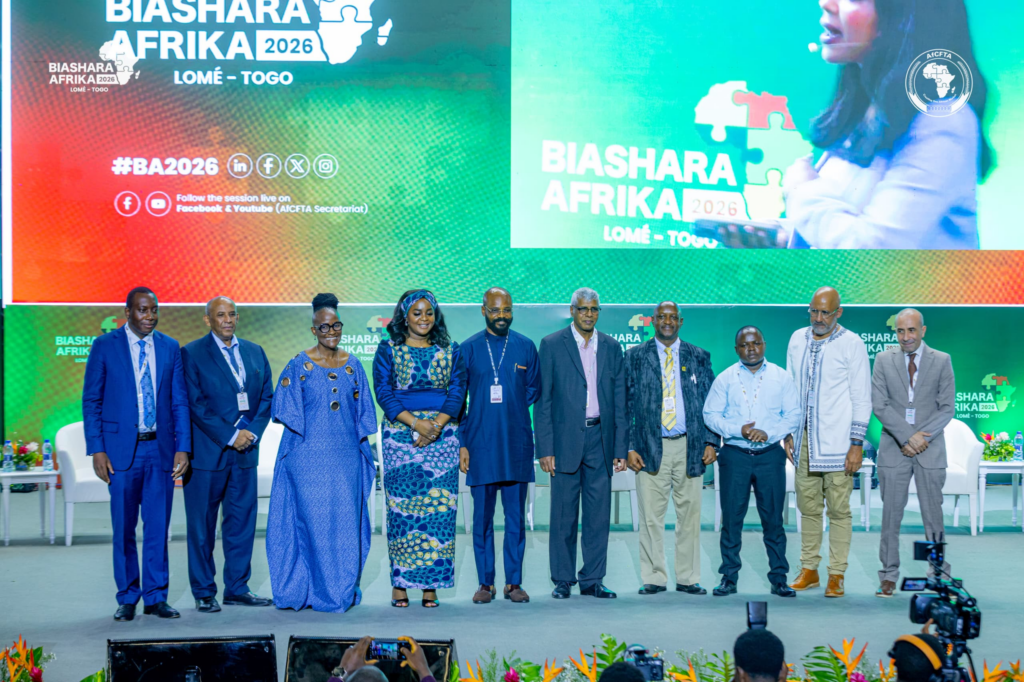
The East African Business Council (EABC) participated in the Berlin Mission aimed at strengthening dialogue, learning, and cooperation between African business associations and German institutions. The mission was organized by Konrad-Adenauer-Stiftung.

During the mission, Mr. Ahmed Farah, EABC Executive Director engaged with German business associations, chambers of commerce, policymakers, development institutions, BusinessEurope, and private sector leaders. Discussions focused on the role of strong and representative business associations in policy advocacy, trade and investment promotion, SME development, industrialisation, and implementation of the African Continental Free Trade Area.

A key lesson from Germany’s experience is that business associations are most effective when they are transparent, credible, independent, well-organised, and able to speak with one voice on behalf of the private sector. Structured dialogue between business and government was highlighted as essential for building trust, improving policies, and creating a predictable environment for investment and economic growth.

With the AfCFTA now operational, African business associations have an even greater responsibility to lead, coordinate, and advocate with purpose. Associations must help businesses understand emerging market opportunities, address barriers to cross-border trade, promote investment, and support the growth of competitive African industries.

This mission has strengthened EABC’s capacity to advocate for improved regional trade and investment policies. Members stand to benefit form expanded partnerships with European and African institutions, and enhance access to market intelligence and business networks.

EABC remains committed to advancing a more integrated, competitive, and prosperous East Africa while contributing to a stronger and more coordinated African private sector voice across the continent.


Categories
Business

MAXIMUM RETAIL PETROLEUM PRICES IN KENYA FOR THE PERIOD 15TH MAY2026 TO 14TH JUNE 2026

In accordance with Section 101(y) of the Petroleum Act 2019 and Legal Notice No.192 of 2022, the Energy & Petroleum Regulatory Authority (EPRA) has calculated the maximum retail prices petroleum products which will be in force from 15th May 2026 to 14th June 2026.
In the period under review, the maximum allowed petroleum pump prices for Super Petrol and Diesel increases by KShs.16.65/litre and KShs.46.29/litre respectively while the price of Kerosene remain unchanged.
The prices are inclusive of the Value Added Tax (VAT), in line with the VAT Act, 2013, the Finance Act, 2023, the Tax Laws (Amendment) Act 2024 and the revised rates for excise duty
adjusted for inflation as per Legal Notice No. 194 of 2020. The Authority has calculated the prices basis 8% VAT on petroleum, products pursuant to Legal Notice No.70 dated 15th April 2026.
Further, the Government will in this cycle, cushion the consumers through the Petroleum Development Levy (PDL) Fund by utilizing approximately KShs.5 Billion to subsidize the prices of Diesel and Kerosene.
The average landed cost of imported Super Petrol increased by 10.00% from US$823.27 per cubic metre in March 2026 to US$906.23 per cubic metre in April 2026; Diesel increased by 20.32% from US$1073.82 per cubic metre to US$1291.98 per cubic metre while Kerosene
increased by 1.59% from US$1311.93 per cubic metre to USS1332.73 per cubic metre over the same period.

Categories
Business

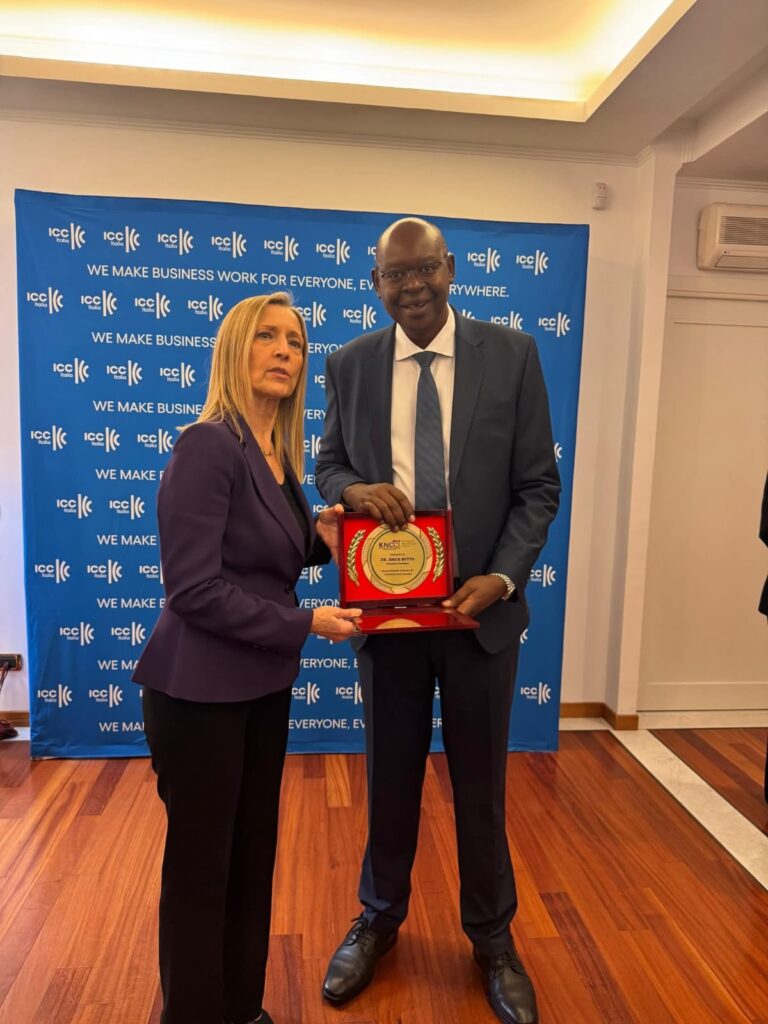
KNCCI President Dr. Eric Ruto meets ICC Secretary General Barbara Didonno

KNCCI President Dr. Eric Ruto, alongside the KNCCI delegation in Italy, met with ICC leadership at their offices, where they were received by Secretary General Barbara Didonno and Chief Operating Officer Ercole Vitto.

He was accompanied by Director Cynthia Kamau and Chairman Salim Mohamed.The ICC noted its membership of nearly 200 entities, including Italian companies, lawyers, accountants, Unioncamere and other associations.

Also in attendance was Mr. Velom Vezetti, a marketing consultant keen on partnering with Kenyan businesses. The Secretary General, who also serves as a professor at Luiss University, discussed potential collaboration with KNCCI through the Chamber Business Academy, focusing on business training, exchange programs and postgraduate opportunities.

Discussions centered on strengthening business ecosystems, fostering enterprise linkages, facilitating collaborations, deepening private sector engagement and enhancing information sharing between ICC and KNCCI.

ICC invited KNCCI to its upcoming conference and exhibition in October, while KNCCI extended an invitation to ICC for its 60th anniversary celebrations scheduled for 7th–9th October 2026 in Nairobi

Categories
Business Kenya Uncategorized

Kenya’s GDP projected to grow by 4.9% in 2022, says NCBA Economic Outlook report

Kenya’s GDP projected to grow by 4.9% in 2022, says NCBA Economic Outlook report

Nairobi, June 20th 2022: Kenya’s Gross Domestic Product (GDP) is projected to expand by 4.9 %in 2022, says NCBA Economic Outlook Report; a 0.3 percentage point decline from their initial 5.2% forecast in November 2021. 

The downgrade reflects the negative spillover effects of the Russia-Ukraine crisis, an uncertain external landscape, tightening local and external credit markets, domestic election jitters, and climate-related concerns, according to the NCBA Group research.

The research also argues that the third quarter will be most challenging due to a combination of election-induced lull and the full effects of the lingering external shocks especially the knock on effects of the Russia-Ukraine crisis. The bank, however, is optimistic about prospects for the final quarter, boosted by prospects of a trend reversal in business investments from the much expected transition dividends.

Rising inflation and interest rates have been a major concern for Kenyans as food and energy costs hit record highs. Elevated inflation is eroding household real income, lowering standards of living and dampening consumption. The growing threat of a cost of living crisis comes against a backdrop of limited fiscal space, suggesting that scope for government intervention is significantly limited.

According to the report, supply chain shocks will be prolonged by the Russia-Ukraine crisis, whose end is still not in sight, with negative ramifications for production and distribution of food and energy and consequently, prices.

“Food inflation is expected to remain in double digits this year, owing to long-term disruptions in global food supply networks, domestic weather shocks, high input costs, and growing transportation and value-addition costs,” says NCBA Group Managing Director John Gachora, Energy prices will continue to rise with the uncertainty around Russia’s output, OPEC+ production decision and the ability of the US and other energy producers to scale up output. For Kenya, the report argues that the elimination of gasoline subsidies will accelerate inflation towards double digits. The threat of excessive inflation will be exacerbated by a weak shilling, the report adds.

According to the report, NCBA does not foresee any significant post-election disruption owing to Kenya’s demonstrated institutional capability to manage election disputes in a way that limits any disruptions to the economy. However, the report attributes the election anxiety to the ongoing combination of global economic and social challenges.

The report also discusses the shilling’s continued weakness against the dollar, which can be ascribed to the balance of payment shocks from the Russia-Ukraine conflict and capital reversal due to rising global interest rates and a strong US dollar.

“We expect the deteriorating global sovereign credit outlook, along with other highly leveraged and frontier economies, to underpin further capital reversal and diversion away from Kenya in the short term,” says Raphael Agung’, NCBA’s Chief Economist. “So far, domestic interest rates are still significantly low relative to the premium being demanded by investors.”

Facebook
Twitter
LinkedIn
Pinterest
Pocket
WhatsApp

Never miss any important news. Subscribe to our newsletter.