Nairobi Woman Representative Hon. Esther Passaris has called for full rotational presidency to make Kenya truly inclusive.
Speaking today, Mheshimiwa said after having leadership from Rift Valley and Mount Kenya, it is time for the presidency to move to other regions.
“We have had Rift Valley in the leadership. For 2032, I want Governor Wanga to be the President of Kenya and I would like the Mountain to rally behind Governor Wanga because we need to rotate that seat so that Kenya becomes inclusive.”
Hon. Passaris said she dreams of a Kenya where every region tastes the presidency.
“I want to see a Coastarian become President. I want to see a Westerner become President. A Nyanza become President. A Kisii become President. Even a Teso one day become President. The seat has to move after William Samoei Ruto. The seat has to move from Rift Valley and Mount Kenya. It has to come to other regions. Let’s look at the eight provinces. Let’s deliver a woman.”
She affirmed her support for her party leader and ODM Chairperson, H.E. Gladys Wanga.
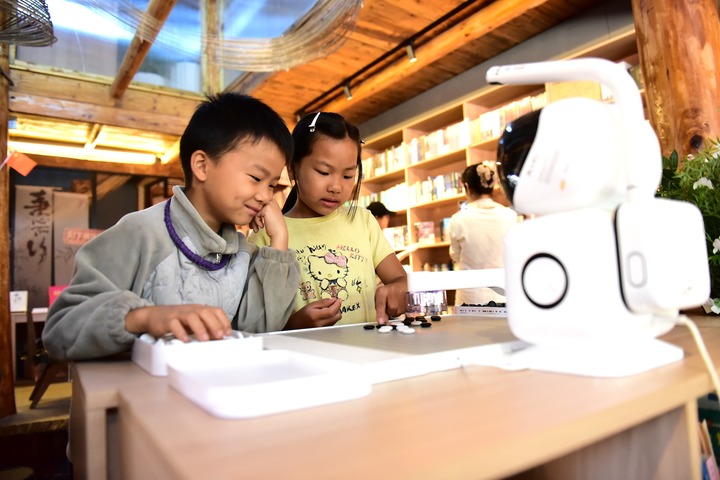
Children play a board game with an AI robot at Basha Village in Congjiang County, southwest China’s Guizhou Province, Oct. 6, 2026. (Photo by Shi Honghui/Xinhua)
SHANGHAI, Oct. 10 (Xinhua) — Shoppers crowded into stores across China to try the latest artificial intelligence (AI) gadgets during the week-long National Day holiday, as smart devices continue to transition from the showroom to the mass market.
At Z·Pilot, an AI experience store in Shanghai, China’s financial hub, a furry AI pet robot drew a steady stream of browsers during the holiday. When the robot was presented with a toy carrot, its digital eyes lit up in a “feeding” expression; a gentle touch revealed a warm surface, close to lifelike.
“Companionship products are doing well,” a staff member said. The fast-selling AI pets offer voice and tactile interaction along with long-term memory, gradually adapting their personality to their owners over time — delivering the feel of a pet without the upkeep.
AI glasses attracted similar interest. “When traveling abroad, if you don’t know how to say something in the local language, you can just translate it directly,” a staff member said while demonstrating a pair of the glasses. Beyond real-time translation, the hot-selling devices offer navigation, teleprompting, photo and video capture, letting users leave their phones in their pockets.
At a JD.com mall in Shanghai’s Qibao area, 3D printers became a magnet for families, with parents and children building model boats and cars on the spot. Many parents said they were buying the printers to bring home what their children had learned in school, turning the devices into hands-on toys for kids to design and print their own models.
Ms. Qi, who brought her child to a robotics store in the city, said she wanted the child to engage with the technology early. “Let children explore hands-on and get a feel for how AI will shape the way they live, learn and work,” she said.
The trend is not unique to Shanghai. In Hangzhou, capital of east China’s Zhejiang Province, a tech-mall branded as Wensan was a popular spot for locals and tourists to check out the latest gadgets during the break. Serving as a micro tech supermarket, it brought together more than 700 smart products, ranging from AI companion robots and AI glasses to smart rings and exoskeletons, catering to consumers across all age groups.
In Beijing, a robotics and AI experience brand under Shoucheng Holdings now operates eight stores in the city. Its outlets offered more than 200 robot and AI hardware products, and drew long queues of consumers during the holiday. A representative for the brand said in-store feedback pointed to particularly strong performance in companion-style AI products, entertainment-oriented smart devices and interactive robotics.
Retailers say the momentum is measurable. According to data released this week by Chinese retail giant Suning.com, foot traffic at its flagship stores rose 50 percent year-on-year from Oct. 1 to 7, while sales of AI-equipped home appliances climbed more than 40 percent. Smartwatches, AI glasses and action cameras all posted solid gains.
The surge sits inside a broader AI boom built on a wave of homegrown models. Tools such as DeepSeek, Kimi and Doubao have become everyday fixtures for millions of Chinese users.
On the industry side, the numbers are equally telling: China’s AI enterprises surpassed 6,000 last year, with the core AI industry posting strong year-on-year growth.
China had more than 140 humanoid robot developers in 2025, with shipments reaching 14,400 units — accounting for 84.7 percent of the global market, per an industry research report.
Policy support has further deepened the integration of AI and consumption. In June, eight government departments, including the Ministry of Commerce, issued guidance to boost AI-enabled consumption, calling for more AI-powered products and expanded AI-driven services.
A subsequent action plan on smart home consumption extended this push, letting localities set their own subsidy categories and standards under the 2026 trade-in policy, including support for whole-house smart home purchases.
“Consumer uptake of AI products is accelerating from a phase of novelty toward mass adoption,” said Fan Chunyan, vice president of Suning.com. “Demand for smart devices, immersive experiences and ongoing services will continue to rise.” ■
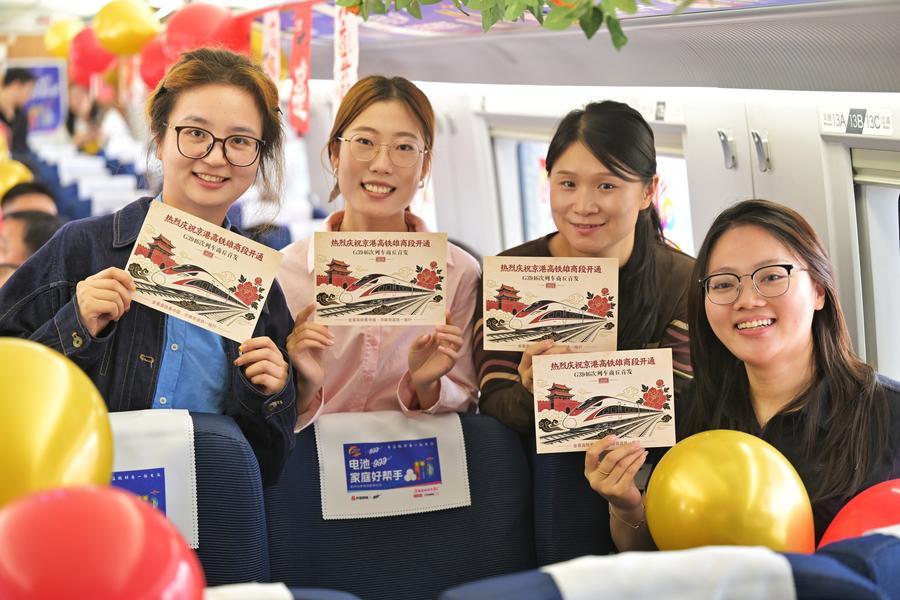
Passengers show the commemorative cards for the inaugural high-speed train G3946, which runs from Shangqiu to Xiong’an, Sept. 28, 2026. (Photo by Wang Wei/Xinhua)
BEIJING, Oct. 10 (Xinhua) — Liu Zengyuan, a railway engineer, watched familiar fields slip past the train window. This time, he was not heading to a construction site, but going home for the National Day holiday on the high-speed line he had helped build, just days after it opened.
This line, which officially entered service on Sept. 28, links Xiong’an in north China’s Hebei Province with Shangqiu in Henan Province in central China. For Liu, it has cut the trip from Renqiu, his workplace in Hebei, to his hometown of Heze in east China’s Shandong Province, from four or five hours to only two.
On the same day, China opened three other high-speed rail sections, connecting Xi’an with Ankang in Shaanxi Province in northwest China, Yichang with Xingshan in central China’s Hubei Province, and Harbin with Yichun in Heilongjiang Province in the country’s northeast. During the National Day holiday, from Oct. 1 to Oct. 7, these new lines made it easier for people to visit relatives, and brought new vitality to tourism along the routes.
During the holiday, a Beijing resident surnamed Wang took his family by high-speed rail to Hengshui Lake, a national nature reserve in Hebei Province. He was pleasantly surprised to find the journey so convenient, as the trip took less than two hours, and a shuttle bus at the station took them straight to the scenic area.
This new line ended the history of Hengshui having no high-speed trains directly running to Beijing. Thanks in part to the new rail line and local promotions, 32 A-level scenic spots across Hengshui received 715,000 visitors during the holiday, soaring 202.84 percent year on year.
“Cities are much closer now, not just on the map but in everyday life,” said Qu Xiaoyuan, an Ankang cultural and tourism official. His brother, who works in Xi’an, called him the day the Xi’an-Ankang high-speed railway opened, joking that he could dash to Ankang for a nice meal at home and still be back in Xi’an that night.
The line has cut travel time between the two cities from three hours to as short as 45 minutes. Ankang, a mountainous city in southern Shaanxi, is rich in ecological resources, and the new railway has taken a growing number of holiday travelers to its forests and rivers.
Ankang West Station, a new station built for the high-speed line, handled 50,800 outgoing passengers during the holiday, which was more than expected. The city also launched shuttle services linking the station with major scenic spots, where visits rose over 40 percent year on year.
As these new lines draw passengers from a wider area, weekend and short-holiday tourists may increase significantly, driving demand for multi-purpose and experience-oriented tourism products, Qu said.
Further east, the Yichang-Xingshan line brings destinations like southwest China’s Chongqing and central China’s Wuhan and Zhengzhou within two hours of Xingshan, weaving the Three Gorges, dense forests and cloud-shrouded peaks scattered along the route into easy, spontaneous trips.
Xingshan Station handled 14,216 outgoing passengers during the seven-day holiday, up 54.61 percent year on year. Local businesses in the city used high-speed rail tickets to link hotel discounts and reduce or scrap scenic spot admission fees.
Meanwhile, the northernmost high-speed railway in China connects Harbin, a major ice-and-snow tourism destination, with Yichun, a popular summer retreat and forest tourism spot. It cuts railway travel time between these two cities from about seven hours to roughly two hours, making it easier for more tourists to include Yichun in their holiday plans.
“Yichun used to be a ‘maybe’ destination because getting there was a hassle, but thanks to the new high-speed rail, it’s now a ‘must-go’,” said a Shanghai visitor surnamed Zheng, adding that the new line has made the stay of his family in Heilongjiang more colorful.
Wang Wei, director of the Yichun Municipal Bureau of Culture, Radio, Television and Tourism, said the new railway will bring Yichun into Harbin’s “two-hour economic circle,” creating new opportunities for its winter tourism, forest study tours and forest wellness tourism.
Ma Botao, of the China Railway Economic Planning and Research Institute, said for cities newly connected to the railway network, seizing the opportunity depends on how well they position themselves.
“Generally, large cities focus on research and development, finance and headquarters economy, while small cities should leverage their local agriculture, ecology, tourism and distinctive industrial strengths to undertake supporting manufacturing, agricultural product processing, and wellness and cultural tourism, serving as both industrial supporting bases and leisure backyards for central cities,” Ma explained.
Behind these expectations lies a network that keeps growing. By the end of 2025, the country’s total operating railway mileage had reached 165,000 km, including more than 50,000 km of high-speed rail.
Under national plans, China’s high-speed rail network is projected to hit 70,000 km by 2035, featuring eight north-south vertical lines and eight east-west horizontal lines. Once complete, the network will connect major cities, city clusters and key economic zones across the country.
From bustling transport hubs and crowded scenic areas to fully booked restaurants and busy shopping districts, strong travel flows and vibrant consumption during the 7-day National Day holiday highlighted the resilience and momentum of China’s holiday economy. #GLOBALink
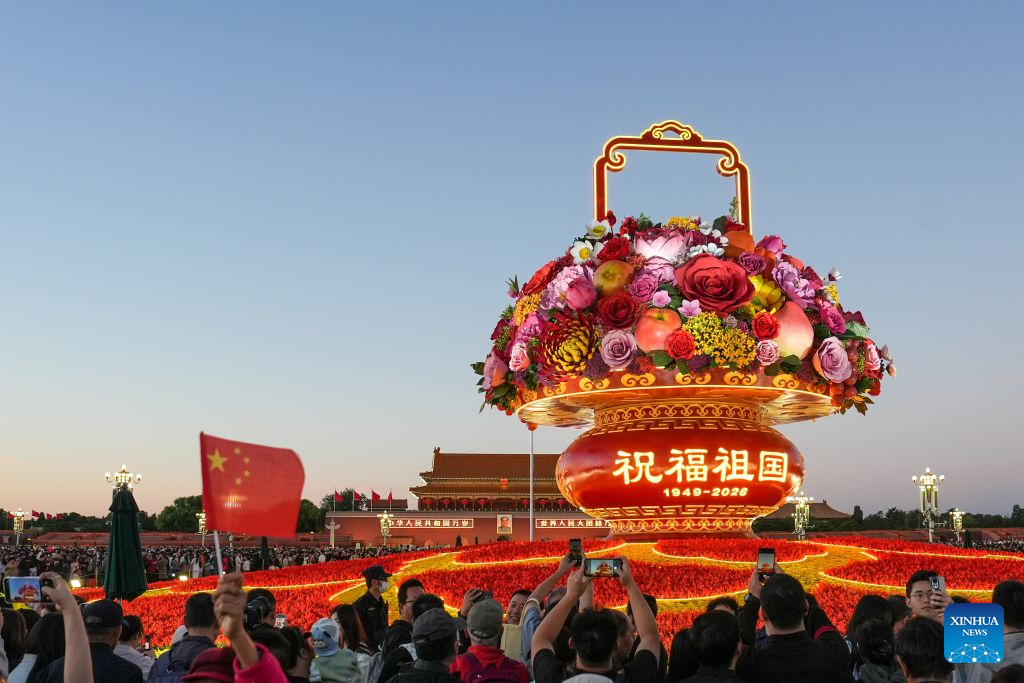
Tourists view a giant floral basket installation at Tian’anmen Square in Beijing, capital of China, Oct. 1, 2026. China recorded 826 million domestic tourist trips during the seven-day National Day holiday, with tourism spending totaling 738.38 billion yuan (about 109.67 billion U.S. dollars), the Ministry of Culture and Tourism said Friday. On a daily average basis, the number of domestic trips rose 6.3 percent from the eight-day National Day and Mid-Autumn Festival holiday in 2025, while tourism spending increased 4.3 percent, according to the ministry. (Xinhua/Ju Huanzong)
BEIJING, Oct. 9 (Xinhua) — China saw 826 million domestic tourist trips during the recent seven-day National Day holiday, with tourism spending totaling 738.38 billion yuan (about 109.67 billion U.S. dollars), the Ministry of Culture and Tourism said on Friday.
On a daily average basis, the number of domestic trips rose 6.3 percent from the eight-day National Day and Mid-Autumn Festival holiday in 2025, while tourism spending increased 4.3 percent, according to the ministry.
The holiday witnessed a vibrant cultural scene, with 180 large-scale performances held nationwide, including 125 concerts and 55 music festivals.
Beyond cultural performances, the integration of tourism with culture, commerce and sports continued to deepen. Mass-participation sports events and digital innovations offered visitors new experiences and helped drive tourism-related consumption.
Meanwhile, around 40 percent of tourists visited revolutionary sites or took part in activities such as flag-raising ceremonies and patriotic performances.
This trend takes on added significance this year, which marks the 90th anniversary of the victory of the Long March (1934-1936). The arduous journey helped lay the foundation for the eventual victory of the Chinese revolution.
Dai Bin, president of the China Tourism Academy, said the flow of visitors to revolutionary landmarks reflects people’s emotional identification with revolutionary traditions.
When they travel, they don’t just want to see history. They also want to draw deeper inspiration from the revolutionary legacy for their lives today, Dai noted.
Measures to boost tourism consumption have also helped expand holiday options for visitors and enhance their travel experiences.
Under a nationwide cultural and tourism consumption campaign running from late September through October, local authorities have organized a variety of activities and distributed more than 310 million yuan in consumption subsidies. ■
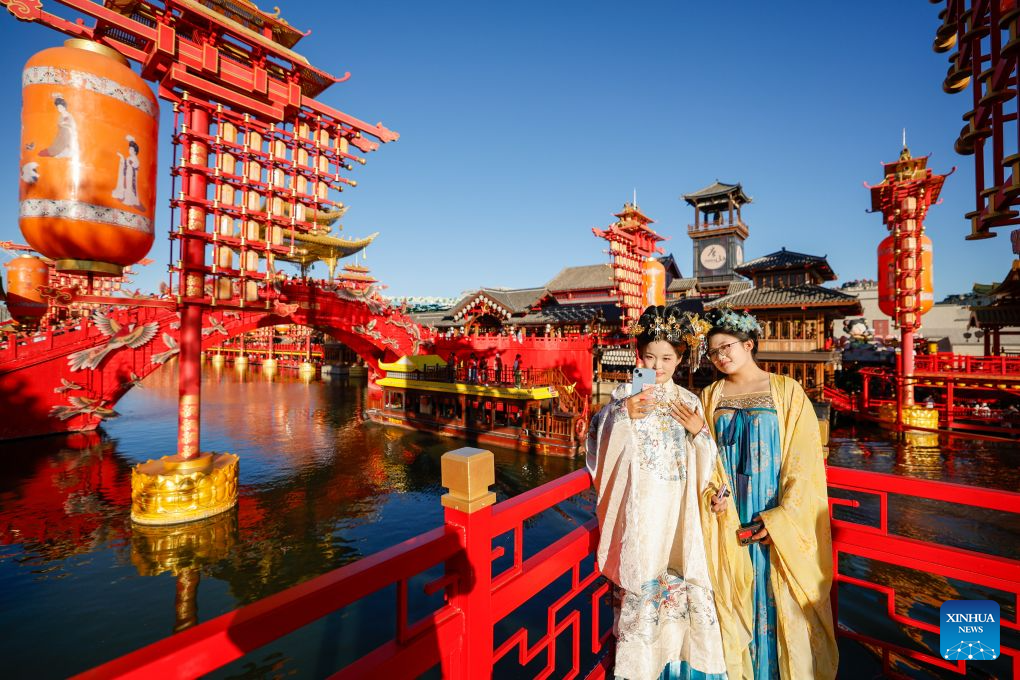
Tourists in traditional costumes take selfies at the Hetou Old Street scenic area in Fengnan District of Tangshan City, north China’s Hebei Province, Oct. 1, 2026.
China recorded 826 million domestic tourist trips during the seven-day National Day holiday, with tourism spending totaling 738.38 billion yuan (about 109.67 billion U.S. dollars), the Ministry of Culture and Tourism said Friday.
On a daily average basis, the number of domestic trips rose 6.3 percent from the eight-day National Day and Mid-Autumn Festival holiday in 2025, while tourism spending increased 4.3 percent, according to the ministry. (Xinhua/Mu Yu)
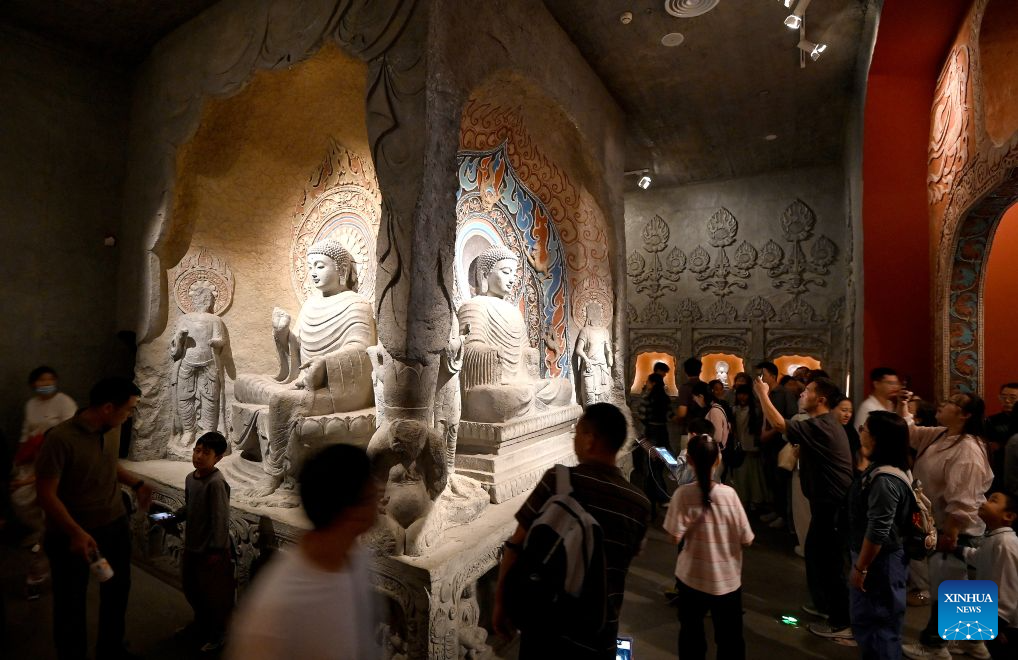
Tourists visit the Handan Museum in Handan, north China’s Hebei Province, Oct. 2, 2026.
China recorded 826 million domestic tourist trips during the seven-day National Day holiday, with tourism spending totaling 738.38 billion yuan (about 109.67 billion U.S. dollars), the Ministry of Culture and Tourism said Friday.
On a daily average basis, the number of domestic trips rose 6.3 percent from the eight-day National Day and Mid-Autumn Festival holiday in 2025, while tourism spending increased 4.3 percent, according to the ministry. (Photo by Hao Qunying/Xinhua)
Tourists feed animals at a wild life-themed amusement facility in Yiyang County, central China’s Henan Province, Oct. 3, 2026.
China recorded 826 million domestic tourist trips during the seven-day National Day holiday, with tourism spending totaling 738.38 billion yuan (about 109.67 billion U.S. dollars), the Ministry of Culture and Tourism said Friday.
On a daily average basis, the number of domestic trips rose 6.3 percent from the eight-day National Day and Mid-Autumn Festival holiday in 2025, while tourism spending increased 4.3 percent, according to the ministry. (Photo by Huang Zhengwei/Xinhua)
Tourists ride camels at the Mingsha Mountain and Crescent Spring scenic area in Dunhuang, northwest China’s Gansu Province, Oct. 4, 2026.
China recorded 826 million domestic tourist trips during the seven-day National Day holiday, with tourism spending totaling 738.38 billion yuan (about 109.67 billion U.S. dollars), the Ministry of Culture and Tourism said Friday.
On a daily average basis, the number of domestic trips rose 6.3 percent from the eight-day National Day and Mid-Autumn Festival holiday in 2025, while tourism spending increased 4.3 percent, according to the ministry. (Photo by Zhang Xiaoliang/Xinhua)
A drone photo shows tourists visiting the Zhangye Danxia scenic area, renowned for its Danxia landforms featuring striking red sandstone formations, in Zhangye, northwest China’s Gansu Province, Oct. 4, 2026.
China recorded 826 million domestic tourist trips during the seven-day National Day holiday, with tourism spending totaling 738.38 billion yuan (about 109.67 billion U.S. dollars), the Ministry of Culture and Tourism said Friday.
On a daily average basis, the number of domestic trips rose 6.3 percent from the eight-day National Day and Mid-Autumn Festival holiday in 2025, while tourism spending increased 4.3 percent, according to the ministry. (Photo by Cheng Lin/Xinhua)
Visitors watch a robot performance at the Binzhou Science and Technology Museum in Binzhou City, east China’s Shandong Province, Oct. 7, 2026.
China recorded 826 million domestic tourist trips during the seven-day National Day holiday, with tourism spending totaling 738.38 billion yuan (about 109.67 billion U.S. dollars), the Ministry of Culture and Tourism said Friday.
On a daily average basis, the number of domestic trips rose 6.3 percent from the eight-day National Day and Mid-Autumn Festival holiday in 2025, while tourism spending increased 4.3 percent, according to the ministry. (Photo by Chu Baorui/Xinhua)
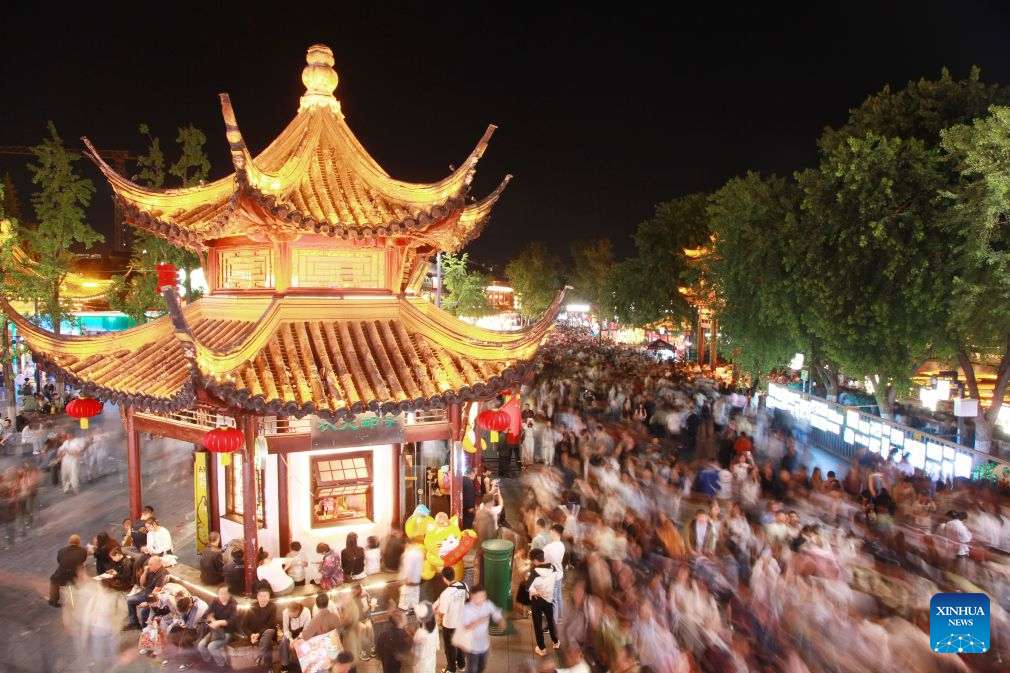
Tourists visit the Fuzi (Confucius) Temple scenic area in Nanjing, east China’s Jiangsu Province, Oct. 5, 2026.
China recorded 826 million domestic tourist trips during the seven-day National Day holiday, with tourism spending totaling 738.38 billion yuan (about 109.67 billion U.S. dollars), the Ministry of Culture and Tourism said Friday.
On a daily average basis, the number of domestic trips rose 6.3 percent from the eight-day National Day and Mid-Autumn Festival holiday in 2025, while tourism spending increased 4.3 percent, according to the ministry. (Photo by Liu Jianhua/Xinhua)
A drone photo shows tourists watching the sunrise at the Hengshan Mountain scenic area in Hengyang City, central China’s Hunan Province, Oct. 6, 2026.
China recorded 826 million domestic tourist trips during the seven-day National Day holiday, with tourism spending totaling 738.38 billion yuan (about 109.67 billion U.S. dollars), the Ministry of Culture and Tourism said Friday.
On a daily average basis, the number of domestic trips rose 6.3 percent from the eight-day National Day and Mid-Autumn Festival holiday in 2025, while tourism spending increased 4.3 percent, according to the ministry. (Photo by Cao Zhengping/Xinhua)
Tourists have fun at the Silver Beach resort in Beihai, south China’s Guangxi Zhuang Autonomous Region, Oct. 3, 2026.
China recorded 826 million domestic tourist trips during the seven-day National Day holiday, with tourism spending totaling 738.38 billion yuan (about 109.67 billion U.S. dollars), the Ministry of Culture and Tourism said Friday.
On a daily average basis, the number of domestic trips rose 6.3 percent from the eight-day National Day and Mid-Autumn Festival holiday in 2025, while tourism spending increased 4.3 percent, according to the ministry. (Photo by Jiang Keqing/Xinhua)
Tourists have fun during a water-splashing event in Jinghong City, southwest China’s Yunnan Province, Oct. 2, 2026.
China recorded 826 million domestic tourist trips during the seven-day National Day holiday, with tourism spending totaling 738.38 billion yuan (about 109.67 billion U.S. dollars), the Ministry of Culture and Tourism said Friday.
On a daily average basis, the number of domestic trips rose 6.3 percent from the eight-day National Day and Mid-Autumn Festival holiday in 2025, while tourism spending increased 4.3 percent, according to the ministry. (Photo by Li Yunsheng/Xinhua)
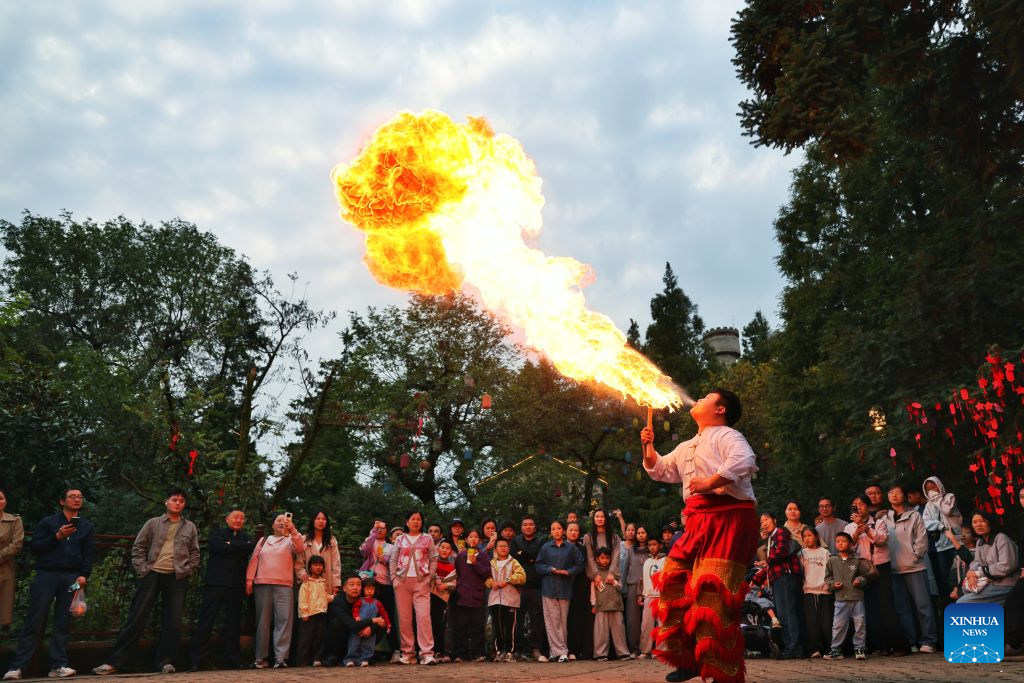
Tourists watch a fire-breathing stunt performance at the Jigongshan scenic area in Xinyang City, central China’s Henan Province, Oct. 4, 2026.
China recorded 826 million domestic tourist trips during the seven-day National Day holiday, with tourism spending totaling 738.38 billion yuan (about 109.67 billion U.S. dollars), the Ministry of Culture and Tourism said Friday.
On a daily average basis, the number of domestic trips rose 6.3 percent from the eight-day National Day and Mid-Autumn Festival holiday in 2025, while tourism spending increased 4.3 percent, according to the ministry. (Photo by Nie Pin/Xinhua)
Tourists visit the Yiwu Botanic Garden in Yiwu City, east China’s Zhejiang Province, Oct. 7, 2026.
China recorded 826 million domestic tourist trips during the seven-day National Day holiday, with tourism spending totaling 738.38 billion yuan (about 109.67 billion U.S. dollars), the Ministry of Culture and Tourism said Friday.
On a daily average basis, the number of domestic trips rose 6.3 percent from the eight-day National Day and Mid-Autumn Festival holiday in 2025, while tourism spending increased 4.3 percent, according to the ministry. (Photo by Shi Kuanbing/Xinhua)
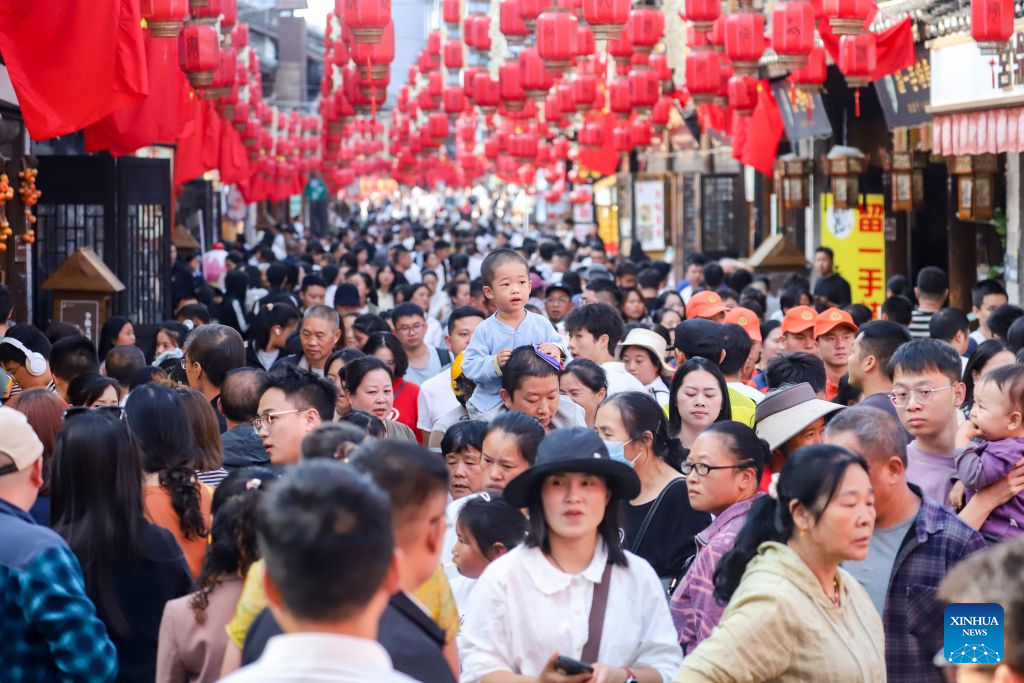
Tourists visit the Anshun ancient town in Anshun City, southwest China’s Guizhou Province, Oct. 6, 2026.
China recorded 826 million domestic tourist trips during the seven-day National Day holiday, with tourism spending totaling 738.38 billion yuan (about 109.67 billion U.S. dollars), the Ministry of Culture and Tourism said Friday.
On a daily average basis, the number of domestic trips rose 6.3 percent from the eight-day National Day and Mid-Autumn Festival holiday in 2025, while tourism spending increased 4.3 percent, according to the ministry. (Photo by Lu Wei/Xinhua)
An aerial drone photo taken on Aug. 18, 2026 shows a view of Yudu County, east China’s Jiangxi Province. (Xinhua/Zhou Mi)
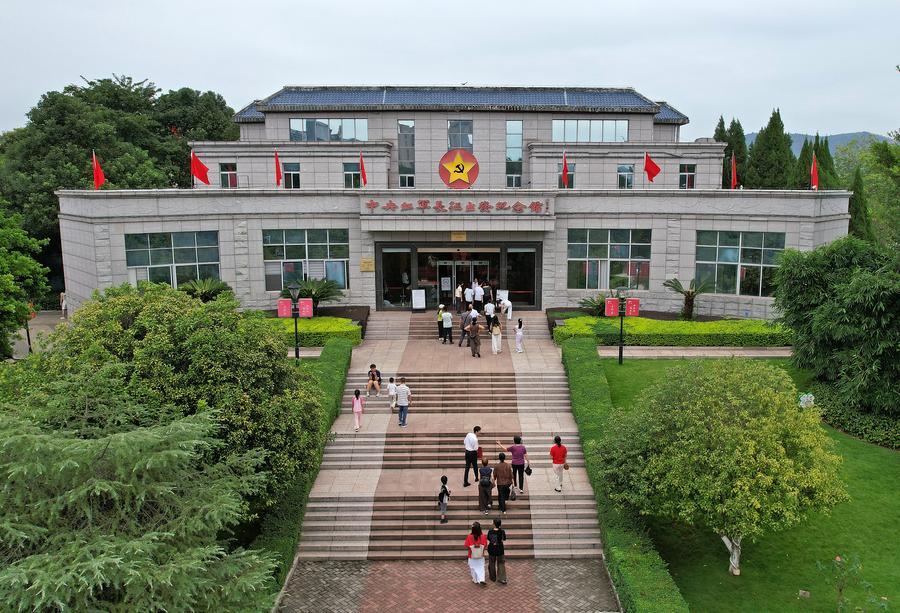
NANCHANG, Oct. 8 (Xinhua) — The former ferry crossing is about half an hour’s walk from the home of Sun Guanfa, 77, in Yudu, a hilly county in east China’s Jiangxi Province.
For his father, the journey from this riverbank more than nine decades ago was part of an epic.
In October 1934, some 86,000 soldiers of the Red Army crossed the Yudu River to embark on what later came to be known as the Long March.
In a country beset by foreign invasion, social turmoil and destitution, the fledgling Red Army, led by the Communist Party of China (CPC), was fighting for national independence and the liberation of the Chinese people. But at the time, it was encircled by the overwhelming and much better-armed Kuomintang forces.
What followed was an epic military maneuver: from Yudu, Red Army troops trekked roughly 12,500 kilometers across China, crossing snow-covered mountains and treacherous marshlands, all the while battling enemy forces. They eventually reached the country’s northwest, where, in 1936, they were joined by several other Red Army branches, marking the victorious conclusion of the Long March.
This military maneuver preserved the Red Army. It also gave the CPC a new foothold in northwest China, from which it built up its strength, fought back against invading Japanese troops and eventually toppled the corrupt Kuomintang regime, leading to the founding of the People’s Republic of China in 1949.
In Yudu, the Long March is not simply a chapter in a history book. It is a family story.
More than 17,000 residents joined the departing army. Only 277 were recorded as eventually returning home, said Zhong Min, a guide at a museum built beside the river to commemorate the departure.
Her voice still catches when she says that number.
Her maternal great-grandfather died fighting the encirclement campaigns. Her husband’s grandfather marched away with the troops and was never heard from again. Sun’s father fell in a battle that saw the forces of the Red Army reduced to just over 30,000.
“We are not telling other people’s stories,” Zhong said. “We are telling our own families’.”
Here, the Long March is measured not only in kilometers and battles, but in the people who left home knowing they might never return.
For Sun, the legacy of that generation is deeply personal. Under a local tradition, Sun was adopted as the son of the soldier who left the riverbank and never returned, so that the soldier’s family line could continue.
“People of my father’s generation were willing to give their lives so ordinary people could be liberated,” Sun said.
On the same riverbank in 2019, Chinese President Xi Jinping spoke of what had enabled the Party and the Red Army to come back from the brink of destruction time and again: firm ideals and convictions, and strong willpower.
“We must not forget our Party’s original aspiration and founding mission,” said Xi, also general secretary of the CPC Central Committee and chairman of the Central Military Commission. The Party’s long-stated mission, dating to its founding in 1921, is to seek happiness for the Chinese people and rejuvenation for the Chinese nation.
During the visit, Xi placed a flower basket at a monument commemorating the Red Army’s departure and bowed in tribute. He then walked behind the monument to a railing overlooking the river and stood there for a long while.
The river remains. For Xi, it was also a place from which to look ahead to China’s future.
“We came to this place to revisit what it was like when the Red Army set out,” he told local people gathered nearby. “Today we are on a new journey — to build a modern socialist country. We must carry on the work of those who came before us, gear up anew, and set out once more.”
That new journey was unfolding against a vastly changed backdrop. When Xi visited Yudu, the nationwide campaign he had launched to combat poverty was entering its final stage.
It would culminate in the elimination of absolute poverty in a nation of 1.4 billion. Nearly 100 million rural residents were lifted out of poverty under Xi’s “targeted poverty alleviation” campaign, which mobilized the entire Party and the nation.
Xi announced the victory, as a key part of building a moderately prosperous society in all respects, in 2021 when the CPC marked its centenary.
A drone photo taken on Oct. 2, 2026 shows tourists at a memorial hall marking the departure of the Long March by the Central Red Army in Yudu County, east China’s Jiangxi Province. (Photo by Zeng Xiaomao/Xinhua)
During his 2019 visit, Xi saw for himself whether the former revolutionary base areas were on track to meet their poverty-reduction targets.
At Sun’s home, he walked through the main hall to the backyard and checked the kitchen and the bedrooms. There was rice and cooking oil in the kitchen, and the bathroom was clean.
Xi asked about the family’s income and how Sun’s son and daughter-in-law made a living, where their children went to school, and what the school meals were like.
“By the time they grow up, we will have achieved the rejuvenation of our nation,” Xi said, pointing to Sun’s two grandchildren.
China aims to basically realize socialist modernization by 2035 and build a great modern socialist country in all respects by the middle of this century, according to the vision set by the Party.
Earlier, at the museum where Zhong served as a guide, Xi had stopped before a map of China made from straw sandals.
The display recalled how local people worked through the night to make straw sandals for the soldiers, many of whom fought barefoot. They also dismantled doors, bed boards, roof beams and even timber intended for coffins to build pontoon bridges, helping the soldiers cross the Yudu River.
“The country has developed and people’s lives have improved, but we must remember where it all came from,” Xi said. “We must not forget our revolutionary forefathers and those who died for the revolution, or the people of the old revolutionary base areas.”
Nowadays, golden waves of selenium-rich rice ripple around the 700-year-old village, and rows of modern vegetable greenhouses stand nearby. In the residential area, white-walled houses with gray-tiled roofs sit amid trees, while pavilions nestle between them.
“Now we have wages from working, rent from our guesthouses and dividends from our shares,” Sun said. “Our annual income has tripled to more than 200,000 yuan (around 29,000 U.S. dollars).”
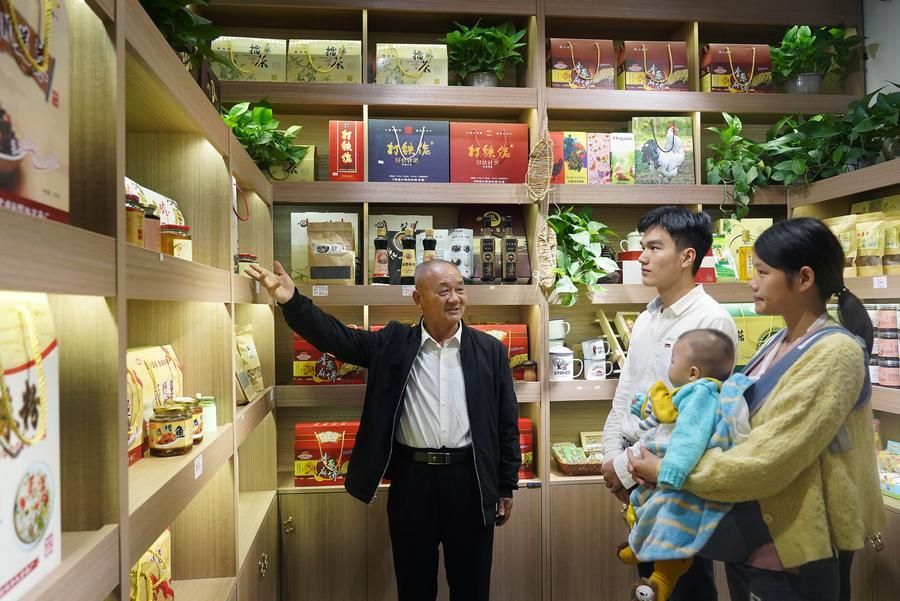
This file photo taken on Oct. 21, 2020 shows Sun Guanfa (L) introducing local agricultural products to tourists in Tantou Village, Yudu County, east China’s Jiangxi Province. (Xinhua/Wan Xiang)
The transformation extends well beyond Yudu.
Much of southern Jiangxi, once cut off from the outside world by rugged mountains, is far more connected. High-speed rail links it with the city of Shenzhen, the country’s economic powerhouse close to Hong Kong. Expressways also reach every county, and paved roads now extend into villages.
For local business owners, it no longer means spending two days and two nights on the road to source a critical part. Now they can hop on a high-speed train, pick up what they need in the morning and return that afternoon, drastically speeding up the development of a prototype.
The change is not only about getting around. Industries such as non-ferrous metals and advanced materials, electronics and information technology, and textiles and apparel have taken root here. For ordinary people, the changes are closer to home. Housing has improved, drinking water is safer, and schools and medical care are more accessible.
More people can now earn a living without leaving their hometowns. In March, the Hong Kong Polytechnic University launched a facility dedicated to research into smart wearables and smart clothing in Xingguo, a county next to Yudu.
This summer, Yudu welcomed students from more than 170 universities across China who came to retrace the Long March at the places where it began. Many realized that the Red Army soldiers who set out were their age.
“Standing where those young soldiers began their journey gave me a deeper understanding of what they accomplished,” said Liu Fanshuo, an undergraduate studying automation.
Today, five modern bridges span the Yudu River near the crossings where local people once built pontoon bridges to help the Red Army cross.
On the banks, Sun pours hot tea for tourists whose lives might have been very different had those soldiers never crossed. ■
When history of devolution in Kiambu County will be written, one name will stand out in golden letters for restoring dignity, stability and professionalism in the Kiambu County Assembly – Hon. Wakili Charles Thiong’o, the incumbent Speaker of the Kiambu County Assembly.
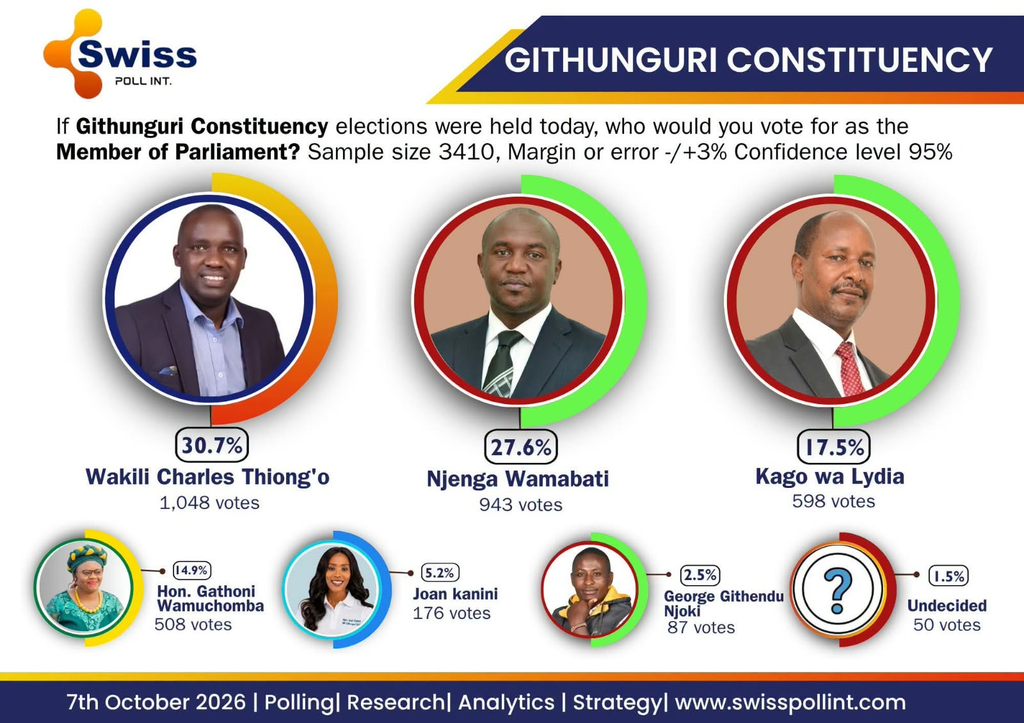
A recent opinion poll by Swiss Poll International released on 7th October 2026 has confirmed what residents of Githunguri and Kiambu at large have known for a long time. If elections were held today, Wakili Charles Thiong’o would be elected as the next Member of Parliament for Githunguri Constituency with a resounding 30.7% of the vote, translating to 1,048 votes out of a sample of 3,410 voters, with a margin of error of +/-3%.
The poll places him well ahead of his closest competitor Njenga Wamabati at 27.6% and Kago wa Lydia at 17.5%, while the incumbent MP Hon. Gathoni Wamuchomba trails at 14.9%. This is not just a poll. It is a vote of confidence in tested, proven and transformative leadership.
A SPEAKER LIKE NO OTHER
Since assuming the office of the Speaker of the Kiambu County Assembly, Hon. Charles Thiong’o has redefined what legislative leadership means under the 2010 Constitution.
Those who have interacted with the County Assembly before his tenure will tell you of a House that was often characterized by chaos, endless wrangles and political theatrics. Wakili Thiong’o walked in and brought order, decorum and sobriety.
As a learned Wakili and a firm believer in the rule of law, he has been a strict custodian of Standing Orders. He has ensured that debate in the Assembly is issue-based, respectful and focused on service to the people of Kiambu, not personal interests.
Under his stewardship, the Kiambu County Assembly has become one of the most functional, productive and respected County Assemblies in the entire Republic of Kenya. Motions are debated on merit. Oversight is real. Legislation is people-centered.
CHAMPION OF DEVOLUTION AND DEVELOPMENT
Hon. Thiong’o understands that the County Assembly is not a theatre for politics but a temple for development. He has provided leadership that has enabled MCAs from both sides of the political divide to work together for the common good of Kiambu.
Under his speakership, the Assembly has passed crucial pro-mwananchi legislations touching on youth empowerment, support for farmers, access to healthcare, Early Childhood Education, water provision, and business-friendly by-laws that have made Kiambu the destination for investment in Kenya.
He has been at the forefront in fighting for the independence of the County Assembly, ensuring that the Assembly remains truly independent and performs its three core mandates without fear or favour: Legislation, Representation and Oversight of the County Executive.
His firm but fair leadership has protected public resources. Through strengthened oversight committees, his Assembly has ensured that every shilling meant for the people of Kiambu is accounted for. Corruption and misuse of public funds have no place in the Assembly he leads.
A LEADER OF THE PEOPLE
What makes Wakili Charles Thiong’o different is his humility and accessibility. Despite holding one of the most powerful offices in Kiambu County, he has remained a man of the people.
He is always available to listen to wananchi, to MCAs, to village elders, to youth and to women leaders. He never discriminates. He respects everyone. He is a leader who believes that leadership is service, not a title.
In Githunguri, his home constituency, his development track record is legendary. He has personally supported education through bursaries and mentorship for needy students, he has supported farmers to access markets, he has empowered youth groups and women groups, and he has stood with families in times of need.
Residents describe him as a calm, intelligent, visionary and God-fearing leader who does not engage in insults or divisive politics. He is a unifier. He brings people together.
LEGAL BRILLIANCE AND SOBRIETY
As a Wakili, Hon. Thiong’o brings legal brilliance to the legislative process. He has ensured that all laws passed by the Kiambu County Assembly are constitutionally sound, legally robust and implementable. This has saved the County from endless court battles that cripple other counties.
He has also mentored young MCAs and staff of the Assembly, inculcating in them a culture of professionalism, research-based debate and respect for institutions.
National leaders and speakers from other counties frequently visit Kiambu to benchmark on how he runs the Assembly. That alone is testimony to his exemplary leadership.
WHY GITHUNGURI WANTS HIM AS MP
It is therefore no surprise that the people of Githunguri are now calling on him to bring the same transformative leadership to the National Assembly as their Member of Parliament.
Githunguri Constituency needs a leader who can articulate their issues at the national level with confidence, legal acumen and strategic lobbying power. Githunguri needs a leader who can push for better roads, better tea and coffee prices, better markets for milk and farm produce, better educational infrastructure and more opportunities for the youth.
Wakili Charles Thiong’o is that leader. He has the networks in Nairobi and across the country. He has the respect of national leadership. He has the education and the experience to deliver.
The poll results showing him leading with 30.7% is just the beginning. On the ground, the wave is unstoppable. From Githunguri Town, to Ikinu, to Githiga, to Komothai, the message is one: It is time for Wakili Thiong’o.
CONCLUSION
At a time when many Kenyans have lost faith in political leadership, Hon. Charles Thiong’o stands out as a shining example of what good leadership should be: honest, humble, hardworking, visionary and God-fearing.
As Speaker of the Kiambu County Assembly, he has served with distinction and left a legacy of stability, dignity and development. As the next MP for Githunguri, he will do even more.
Githunguri deserves the best. And the best is Wakili Charles Thiong’o.
When history of devolution in Kiambu County will be written, one name will stand out in golden letters for restoring dignity, stability and professionalism in the Kiambu County Assembly – Hon. Wakili Charles Thiong’o, the incumbent Speaker of the Kiambu County Assembly.
A recent opinion poll by Swiss Poll International released on 7th October 2026 has confirmed what residents of Githunguri and Kiambu at large have known for a long time. If elections were held today, Wakili Charles Thiong’o would be elected as the next Member of Parliament for Githunguri Constituency with a resounding 30.7% of the vote, translating to 1,048 votes out of a sample of 3,410 voters, with a margin of error of +/-3%.
The poll places him well ahead of his closest competitor Njenga Wamabati at 27.6% and Kago wa Lydia at 17.5%, while the incumbent MP Hon. Gathoni Wamuchomba trails at 14.9%. This is not just a poll. It is a vote of confidence in tested, proven and transformative leadership.
A SPEAKER LIKE NO OTHER
Since assuming the office of the Speaker of the Kiambu County Assembly, Hon. Charles Thiong’o has redefined what legislative leadership means under the 2010 Constitution.
Those who have interacted with the County Assembly before his tenure will tell you of a House that was often characterized by chaos, endless wrangles and political theatrics. Wakili Thiong’o walked in and brought order, decorum and sobriety.
As a learned Wakili and a firm believer in the rule of law, he has been a strict custodian of Standing Orders. He has ensured that debate in the Assembly is issue-based, respectful and focused on service to the people of Kiambu, not personal interests.
Under his stewardship, the Kiambu County Assembly has become one of the most functional, productive and respected County Assemblies in the entire Republic of Kenya. Motions are debated on merit. Oversight is real. Legislation is people-centered.
CHAMPION OF DEVOLUTION AND DEVELOPMENT
Hon. Thiong’o understands that the County Assembly is not a theatre for politics but a temple for development. He has provided leadership that has enabled MCAs from both sides of the political divide to work together for the common good of Kiambu.
Under his speakership, the Assembly has passed crucial pro-mwananchi legislations touching on youth empowerment, support for farmers, access to healthcare, Early Childhood Education, water provision, and business-friendly by-laws that have made Kiambu the destination for investment in Kenya.
He has been at the forefront in fighting for the independence of the County Assembly, ensuring that the Assembly remains truly independent and performs its three core mandates without fear or favour: Legislation, Representation and Oversight of the County Executive.
His firm but fair leadership has protected public resources. Through strengthened oversight committees, his Assembly has ensured that every shilling meant for the people of Kiambu is accounted for. Corruption and misuse of public funds have no place in the Assembly he leads.
A LEADER OF THE PEOPLE
What makes Wakili Charles Thiong’o different is his humility and accessibility. Despite holding one of the most powerful offices in Kiambu County, he has remained a man of the people.
He is always available to listen to wananchi, to MCAs, to village elders, to youth and to women leaders. He never discriminates. He respects everyone. He is a leader who believes that leadership is service, not a title.
In Githunguri, his home constituency, his development track record is legendary. He has personally supported education through bursaries and mentorship for needy students, he has supported farmers to access markets, he has empowered youth groups and women groups, and he has stood with families in times of need.
Residents describe him as a calm, intelligent, visionary and God-fearing leader who does not engage in insults or divisive politics. He is a unifier. He brings people together.
LEGAL BRILLIANCE AND SOBRIETY
As a Wakili, Hon. Thiong’o brings legal brilliance to the legislative process. He has ensured that all laws passed by the Kiambu County Assembly are constitutionally sound, legally robust and implementable. This has saved the County from endless court battles that cripple other counties.
He has also mentored young MCAs and staff of the Assembly, inculcating in them a culture of professionalism, research-based debate and respect for institutions.
National leaders and speakers from other counties frequently visit Kiambu to benchmark on how he runs the Assembly. That alone is testimony to his exemplary leadership.
WHY GITHUNGURI WANTS HIM AS MP
It is therefore no surprise that the people of Githunguri are now calling on him to bring the same transformative leadership to the National Assembly as their Member of Parliament.
Githunguri Constituency needs a leader who can articulate their issues at the national level with confidence, legal acumen and strategic lobbying power. Githunguri needs a leader who can push for better roads, better tea and coffee prices, better markets for milk and farm produce, better educational infrastructure and more opportunities for the youth.
Wakili Charles Thiong’o is that leader. He has the networks in Nairobi and across the country. He has the respect of national leadership. He has the education and the experience to deliver.
The poll results showing him leading with 30.7% is just the beginning. On the ground, the wave is unstoppable. From Githunguri Town, to Ikinu, to Githiga, to Komothai, the message is one: It is time for Wakili Thiong’o.
CONCLUSION
At a time when many Kenyans have lost faith in political leadership, Hon. Charles Thiong’o stands out as a shining example of what good leadership should be: honest, humble, hardworking, visionary and God-fearing.
As Speaker of the Kiambu County Assembly, he has served with distinction and left a legacy of stability, dignity and development. As the next MP for Githunguri, he will do even more.
Githunguri deserves the best. And the best is Wakili Charles Thiong’o.
The recent endorsement of Somali President Hassan Sheikh Mohamud’s democratic agenda by prominent youth leader Engr. Abdiweli Ali Musse underscores a pivotal moment in Somalia’s ongoing political evolution: the struggle to transition from decades of clan-based indirect representation to a direct “one person, one vote” universal suffrage system.
Musse, Director of the Somali Youth Leadership and Initiatives Center, publicly declared full backing for the federal government’s proposed electoral model, issuing an explicit rallying call to the nation’s youth to prepare for direct participation at the ballot box. Beyond a simple political endorsement, Musse’s statement brings to the fore the demographic and institutional realities shaping East Africa’s poorest and most fragile state.
A Half-Century Civic Void
Somalia’s trajectory toward direct democracy has been stalled for over 50 years. The nation’s last universal suffrage, multi-party parliamentary election took place in March 1969. Following the October 1969 military coup led by Siad Barre and the subsequent collapse of the central government in 1991, formal democratic mechanics ceased.
To restore basic governance in the early 2000s, Somali leaders adopted the “4.5 clan model”—a political compromise designed to share power equally among the four major clan families, with the remaining fraction designated for minority groups. Under this indirect system, clan elders select delegates, who then choose members of the Federal Parliament. Parliament, in turn, elects the President, as seen in the federal elections of 2012, 2017, and May 2022.
While effective at preventing total power monopolies in a post-conflict era, the indirect model has increasingly faced criticism for disenfranchising the majority of the population and fostering clientelism. “From 1969 to today, a generation that has never voted is waiting,” Musse pointed out, framing the return to direct elections as a generational right rather than merely a procedural choice.
The Power of the Demographic Majority
The strategic weight of Musse’s endorsement lies in Somalia’s demographic structure. Young people under 30 make up over 70 percent of the national population. Raised during the post-1991 reconstruction era, this demographic boasts higher rates of digital literacy and formal education than preceding generations, yet they remain largely excluded from the traditional elder-dominated 4.5 political mechanism.
By calling for civic readiness, youth empowerment, and national unity over political factionalism, youth leaders are positioning young Somalis not just as voters, but as the primary stakeholders in the state-building process. Transitioning to universal suffrage offers a pathway to dismantle clan-based bottlenecks, allowing political parties to build constituencies based on policy platforms rather than lineage.
Realizing the One-Person, One-Vote Mandate: Opportunities and Obstacles
President Hassan Sheikh Mohamud’s administration has made universal suffrage a central pillar of its constitutional and legislative agenda. However, executing a direct election in Somalia poses complex operational and political challenges across security, consensus, and infrastructure.
Ongoing counterinsurgency operations against Al-Shabaab remain the primary security hurdle to establishing and protecting physical polling centers across regional states. On the political front, Federal Member States and central government authorities must maintain a delicate consensus regarding the implementation of electoral laws, voter registration, and political party frameworks. Furthermore, establishing comprehensive biometric voter registries and civic infrastructure after five decades of absence demands substantial technical support and rapid institutional capacity building.
Musse urged political actors, civil society, and international development partners to support the federal government’s electoral timeline. Whether Somalia can fully execute a one-person, one-vote model in the upcoming cycle remains a subject of intense debate among political observers. However, the vocal mobilization of the youth majority indicates that the demand for direct democratic franchise is becoming an irreversible force in Somali politics.
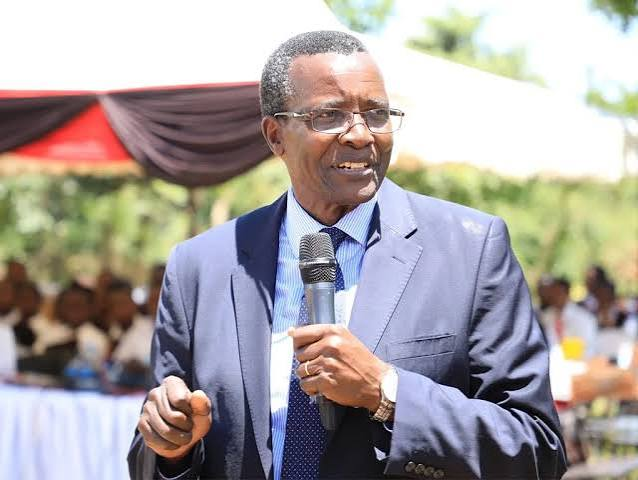
Former Chief Justice and United Green Movement (UGM) co-party leader Hon. David Maraga on Tuesday sharply criticized the Kenyan government’s public health management following the country’s first confirmed Ebola death, accusing authorities of compromised airport surveillance and misaligned national priorities.
In an official statement released Tuesday, Maraga expressed deep condolences to the bereaved family and criticized the government’s response mechanisms after Cabinet Secretary for Health Aden Duale confirmed the imported case.
According to official timelines, the patient—a Kenyan citizen traveling from the Democratic Republic of the Congo via Kampala, Uganda—entered the country through Jomo Kenyatta International Airport (JKIA) on Oct. 3. The individual was isolated only after seeking medical attention at Nairobi Hospital and subsequently succumbed to the virus on Oct. 5, leaving at least 28 identified contacts under tracing protocols.
“I indict this government for endangering our healthcare workers and citizens,” Maraga stated, pointing to gaps in point-of-entry screening procedures that allowed a gravely ill passenger to bypass enhanced airport checks.
Maraga also raised broader geopolitical and policy concerns, alleging that the administration had prioritized hosting a foreign Ebola containment facility at Laikipia Air Base over fortifying internal screening mechanisms to safeguard domestic public health.
Demanding immediate corrective measures, the opposition leader called for comprehensive support for all identified contacts, total transparency regarding laboratory testing capacities and contact tracing, and a recalibration of health policies to prioritize sovereign security and citizen welfare.
The Ministry of Health has assured the public that contact tracing, contact monitoring, and emergency response teams are actively engaged to prevent further community transmission.
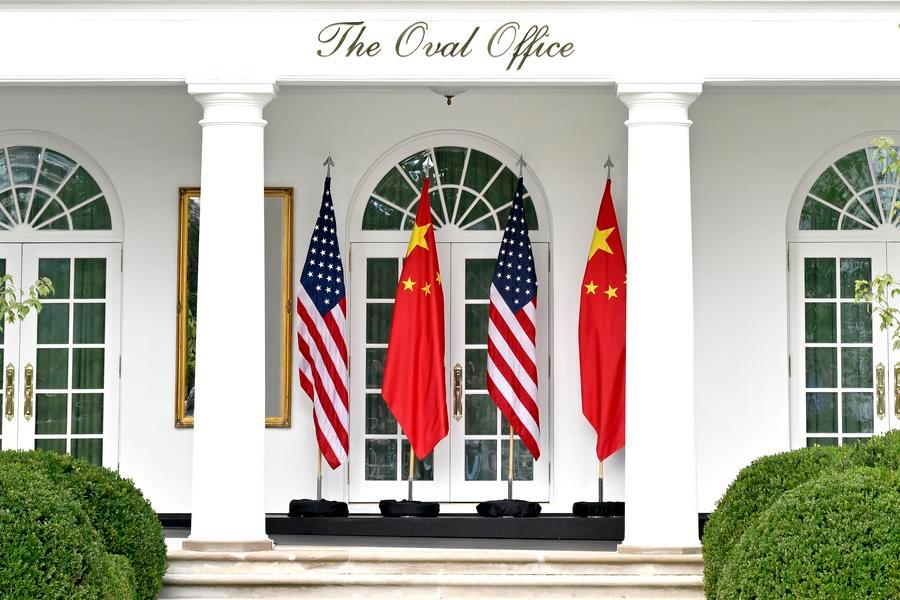
U.S. President Donald Trump holds a welcome ceremony for Chinese President Xi Jinping, who is on a state visit to the United States, at the White House in Washington, D.C., the United States, Sept. 24, 2026. (Xinhua/Yin Bogu)
NAIROBI, Oct. 1 (Xinhua) — High-level China-U.S. engagement has created conditions for managing differences and promoting cooperation, helping foster a more stable international environment for world peace, said a former African Union (AU) official.
“The significance of Chinese President Xi Jinping’s visit to the United States has gone far beyond bilateral relations themselves,” said Erastus Mwencha, former deputy chairperson of the AU Commission, in a written interview with Xinhua.
From last year’s meeting in Busan, South Korea, to U.S. President Donald Trump’s state visit to Beijing in May this year, and now with Xi’s visit to the United States, these exchanges by the two leaders have sent an important signal — in the face of differences, the two countries still seek to manage them through dialogue, he said.
“Dialogue is becoming a tool for strategic risk management,” he said, adding that maintaining direct communication between the two leaders can help enhance mutual understanding and provide channels for handling sensitive issues and preventing miscalculation.
As major countries, a constructive China-U.S. relationship of strategic stability based on respect, fairness and reciprocity has far-reaching impacts across trade, investment, finance, technology and supply chains, he noted.
Responsibly managing differences and maintaining communication will not only benefit both countries, but also help reduce uncertainty in the global economy and international security, he said.
But managing differences is not the end, Mwencha said, adding that a constructive China-U.S. relationship of strategic stability can further serve as a driving force for international cooperation, creating more space for development in the Global South, including Africa.
Maintaining stability in China-U.S. relations can also help reduce the external uncertainty faced by developing countries, make the international trade and investment environment more predictable, and create more favorable conditions for cooperation in infrastructure, energy and health, he said.
Mwencha highlighted emerging technologies such as artificial intelligence (AI), noting that the two sides have agreed to establish a dialogue on AI to exchange views on its risks and benefits.
A visitor takes photos of the Dawning 8000 (Dengfeng) AI Supercluster of Sugon displayed during the 2026 World AI Conference and High-Level Meeting on Global AI Governance in Shanghai, east China, July 19, 2026. (Xinhua/Chen Haoming)
If China and the United States can find room for cooperation in areas such as AI safety governance, technology standards, research and talent development, more countries could share in the opportunities brought by scientific and technological progress, he said.
Mwencha expressed the expectation that a constructive China-U.S. relationship of strategic stability can create conditions for more inclusive multilateralism, enabling the Global South and other developing countries to participate more fully in global governance.
The international community faces challenges including climate change, food security, public health and AI governance, none of which can be addressed independently by any single country, he said.
Greater communication and cooperation among major countries can help reduce confrontation and division, creating space for international cooperation through multilateral venues such as the United Nations, Mwencha added.■