
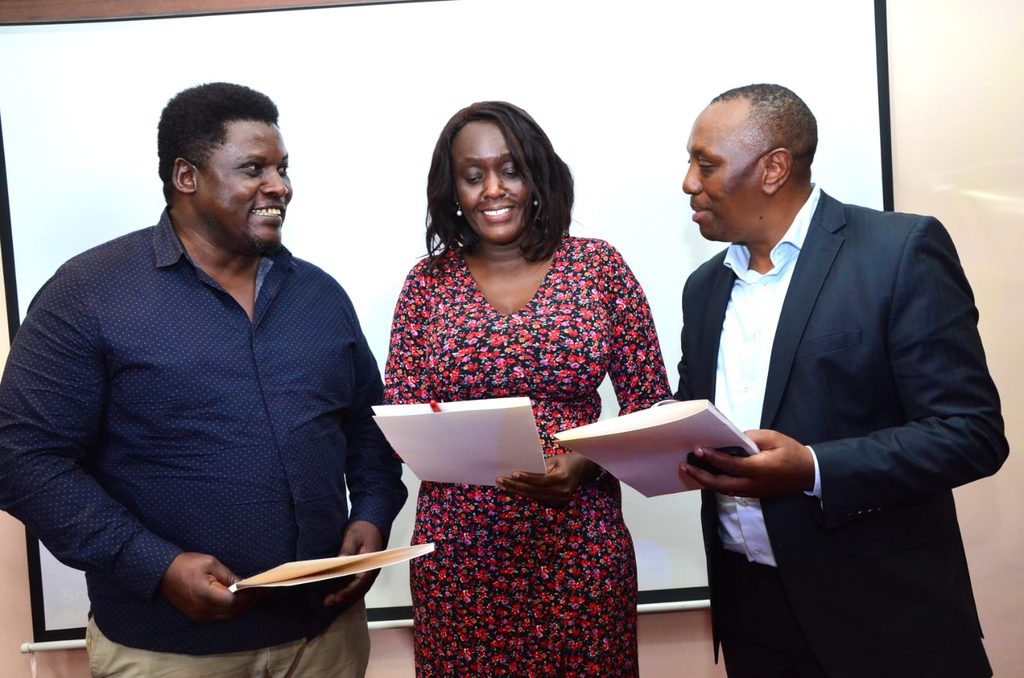
Young political leaders and media practitioners discuss the barriers women and young people face and
what newsrooms and parties can change before the 2027 elections in Kenya.
NAIROBI, KENYA – 22 October 2026 – Women and Youth Democratic Engagement (WYDE) hosted the
We Shall Lead Media Salon at Waridi Paradise Hotel & Suites, Nairobi, bringing together journalists,
editors, and political leaders for a candid conversation on women, young people and political leadership
in Kenya.
The salon was held in connection with the documentary We Shall Lead: Voices Shaping the Future of Africa, filmed across Kenya, Uganda and Ghana.
The documentary follows women and young political leaders who have chosen to pursue change from
within political institutions, and asks why people still choose politics when it can mean confronting
distrust, exclusion and significant personal obstacles.
The first panel discussion, on women, young people, power and political participation, examined the
barriers they face in political leadership, from campaign finance and party nominations to harassment
and intimidation, and the opportunities for change.
Panellists were Isaiah Kaaka, Kajiado West MP
aspirant; Wandiru Gladys, Kibra MP aspirant; and Wanjiku Thiga, National Youth Leader, Democracy for
the Citizens Party.
Isaiah Kaaka, Kajiado West MP aspirant: “People can now choose a leader not by how much money is in
their pocket or the bank.
We should not have the mentality that because you are young, you should only
vie for the MCA position; you can also vie for big positions.”
Wandiru Gladys, Kibra MP aspirant: “Harassment is very real, especially for us young women. It goes
beyond assault and goes up to sexual harassment. Politics is not a matter of life and death. We do not
have to hurt each other to get the seat.”
“If I could change one thing, it would be campaign financing, and I would ask Kenyans to stop tokenism
so that more young people can run for office,” said Wanjiku Thiga, National Youth Leader, Democracy for
the Citizens Party.
The second panel discussion, on changing the narrative, looked at how editors and journalists can
strengthen coverage of young people and women in politics, challenge stereotypes and identify compelling stories.
Panellists were Ela Obota, Sub-editor, Citizen Digital; Mary Wangari, Political
Reporter, Nation Media Group; and Tom Japani, General Manager, Transworld Radio.
Ela Obota, Sub-editor, Citizen Digital: “We can have more young people and more women vying for these
elective positions. When covering a story about a candidate, just apply the same editorial test you would
use to gauge a male aspirant versus a female aspirant or a young aspirant.
Fair coverage is not necessarily favourable coverage. If a woman or young person is doing something wrong, it will be
highlighted.”
Mary Wangari, Political Reporter, Nation Media Group: “Young politicians and women should use the
obstacles in their favour, do not try to fight culture…..Women and young people struggle to get a
platform to address the people so when you are given the platform do not use it to malign your competitors but tell people what you will do for them.”
“There is a lot of involvement of women in leadership at the county level and even on the National level.
At Transworld, other than just broadcasting programs, we do outreach programs where we engage
community leaders in behavioural change communication, where we push culture change, but it has to
be very subtle.
We cover this in our programs and encourage a lot of young and female leaders who are aspiring to engage, because all this starts with engagement,” said Tom Japani, General Manager,
Transworld Radio.
The discussions echoed the question at the heart of We Shall Lead: why women and young people still
choose politics when it can mean confronting distrust, exclusion and personal obstacles.
Aspirants spoke of the cost of campaigning, tokenism and harassment, while media practitioners said the media is doing
its part and encouraged women and young leaders to be strategic, bring substance to their campaigns
and take the initiative.
Speakers agreed that fair coverage is not the same as favourable coverage, and
that political parties, newsrooms and aspirants all have a part to play ahead of the 2027 elections.