Daily Kenya

Categories
Uncategorized

NOW LSK CALLS FOR POLITICAL CLASS TO EMBRACE DIALOGUE

CAPTION: The Council of the Law Society of Kenya (LSK), led by the President Mr Eric Theuri speak to the media at its Council offices in Nairobi to call for dialogue in the on going protests.

By Tum David Senior Reporter DAILY Kenyan

The Law Society of Kenya, LSK, has said it’s ready to offer expert mediators to bring together the different political factions in the country on order to find a lasting solution to the challenges the nation now faces.

” The LSK is willing and ready to offer expert mediators to bring together the warring political factions in the country” said the council President of the LSK Mr Eric Theuri.

The LSK President was speaking in a press conference called by the National council of the Law Society of Kenya in Nairobi to appeal for calm and possible dialogue in the country.

The LSK as urged all the citizens of Kenya both political leadership, civil society groups, professionals and the ordinary Kenyans to come together and embrace peace. The council, at the same time acknowledged that promoting change and to move forward as a nation is not an easy task.
The LSK now warns against the government’s accesses in containing the street protests and demonstrations in the country saying they are ready as a council to institute legal proceedings against the police of they are going to be found culpable in the wanton killings of innocent Kenyans.

And answering whether or not the situation in the country has reached the levels as to warrant the involvement of the ICC, Mr Theuri ruled it out.

Instead the LSK has appealed on all Kenyans of all works of life to seize the moment of the social awakening and unite as one nation committed to equal trustees, fairness and become a preservative of human dignity.

Categories
Uncategorized

COMESA Federation of women in Business launches ksh 3.2 billion program

By irene mwende

Common Market for East and Southern Africa has launched a ksh 3.2 billion women textile project in Kenya that will benefit women hence will open creation of jobs

Speaking during the launch of ksh 3.2 billion program principal secretary Juma Mukhwana stated that reduced tarrifs will help women businesses overcome challenges and increase their opportunities in Intra Africa trade

Members of the Common Market for Eastern and Southern Africa (COMESA) secretariat are calling for the bloc member states to consider revising their tariffs on women goods and services.

“Lowering the tariffs is taunted to offset the financial constraints women startups face due to limited collateral to aid women businesses compete effectively in the regional market, the block’s women business arm, business incubator for women entrepreneurs is seeking to incubate 100 women startups at the Kenya industries research and development institute facilitates the 2.3 billion shillings Spanish funded incubation programme will prioritize women business in the digital and agro processing sectors innovators and will be trained on book keeping, and financial literary in a bid to formalize their startups”said Juma Mukhwana

Mukhwana added that Supporting women business is part of the government initiative to increase manufacturing from the current 15 to the GDP to 20 by the year 2030 .

COMESA Sec general Chileshe Mpundu Kapwepwe,reiterated on the need for supporting women economically through sustainable investment such the BIAWE project.

“There is compelling evidence that entrepreneurship is a powerful driver of economic growth and that women make a significant contribution to the economy through their entrepreneurial activities and involvement in the labour market,”said Kapwepwe

He further added that most of those women-run SMEs lack the requisite adequate business planning, marketing and management skills to enable them become champions of their areas of business ventures
es.

COMESA has amplified the industrialization drive on increased investment, industrialization and promotion of gender equality and creation of an enabling business environment in the Member States through legal and institutional reforms

Categories
Uncategorized

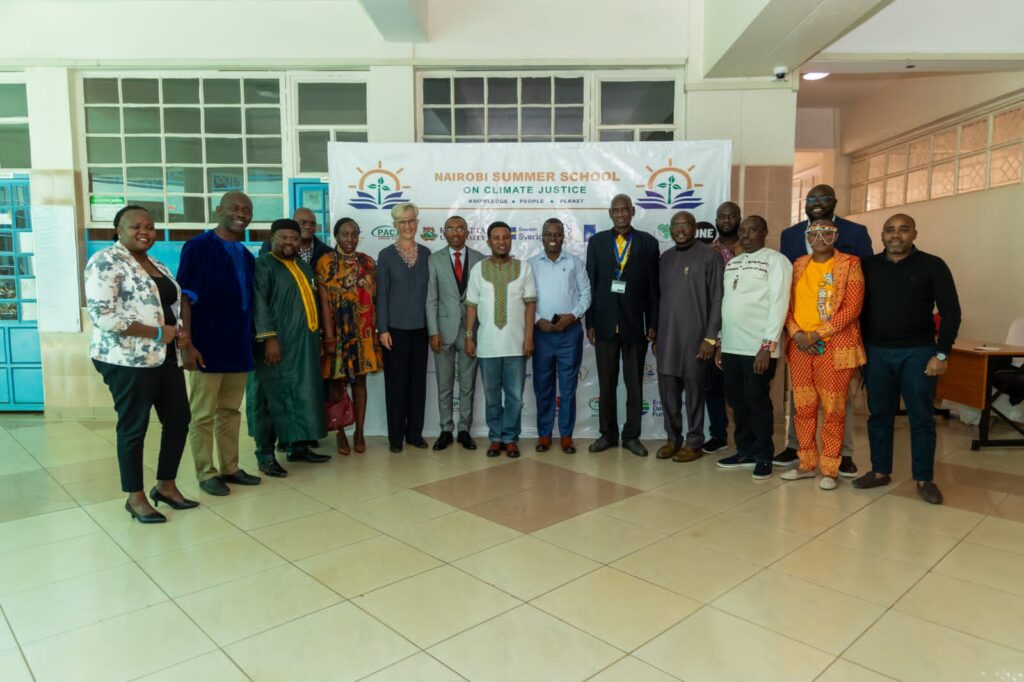
500 youths plus Graduate from Nairobi Summer School on Climate Justice

By Irene Mwende

500 youth plus from and outside Africa have
completed the intensive 14-day intensive training on Climate Justice in Nairobi, Kenya. The
Pan African Climate Justice Alliance (PACJA) in partnership with Kenyatta university had organised at
Kenyatta University, which opened the third Nairobi Summer School of Climate Justice
(NSSCJ) cohort 3 in Nairobi Kenya.

Speaking during the closing ceremony Dr. Mithika Mwenda, the Executive Director of PACJA commended
the youth for active participation in the two-week-long learning and called them for the next
challenge of advocating for Climate Justice.

“With the knowledge and skills, you’ve gained from this program, you can become the driving
force behind Africa’s climate justice agenda. You now understand that climate change is not
simply an environmental issue but also a social, economic, and political one, ” said Dr. Mithika

Dr. Mithika stated that the youth are active and a strength of the continent hence their role is key in
advancing Climate Justice Advocacy

“As Africa’s youth, you are the future and the present. You are today’s leaders, shaping the
destiny of your continent and the planet. You are the champions of climate justice, inspiring
hope and change in your generation and beyond. So don’t stop now. This is only the beginning,”
Dr. Mithika adding that the
Nairobi Summer School has been happening in partnership with Kenyatta University.

Dr. James Koske, Executive Dean, of the School of Agriculture and Environmental Science at
Kenyatta University, assured commitment of the University to continually support the
process and called youth to sharpen their skills in climate change and the environment.

He further emphasized that none can deny that the effects of climate change are real and called for joint
efforts for climate action.

“I myself speaking, I am a witness to climate Change issues. We have had policies on Climate
Change. When we went to school many years ago there was rain, and rivers were flooding and
it was hard to cross. Today they are no more. Therefore, we don’t need to persuade you that Climate Change is occurring, you are naturally persuaded and you need to know that this is not
an individual task; everybody is involved and that is why you are here”, said James Koske.

The Director of Programmes at the All Africa Conference of Churches, Dr. Ezekiel Lesmore
stated that the adverse impacts of climate change requires solidarity and no one
should work in isolation.

“We will remain accountable here or there. The question is what you shall respond about your
contribution to climate action because Climate Change is a matter of life and death,” said
Dr. Lesmore.

In her remarks, the Ambassador of Sweden to Kenya, HE Caroline Vicini, acknowledged the
role of PACJA in equipping youth with skills on climate justice and climate change and said
that information is power. She said that the skill gained by youth indicated that the future is
in their hands

“The school is important to base activism on science. I know it’s not easy but nothing works in
isolation. It’s important to be informed and I am hopeful that this generation will be better than
their leaders today”, said HE Ambassador Caroline

The third Nairobi Summer School on Climate Justice school was established with goals
to awaken, equip, and inspire a new generation of actors in Africa and globally to address the
question of climate justice, including intra and intergenerational equity hence the overall
objective of NSSCJ is to enhance the capacity of Africans and allies to advance climate
justice perspectives through local, national, regional, and global interventions.

Since 2020, Nairobi summer school has trained over 900 youths from across
and outside Africa .

Categories
Uncategorized

IS AFRICA READY FOR INTERNATIONAL ARBITRATION? TRIZON LAW ARBITRATOR DECRIES

By Meresia Aloo

In a recent statement, Mrs. Foluke Akinmoladun, the Manager Solicitor of Trizon Law in Nigeria, emphasized the importance of African countries handling their disputes through local legal measures rather than relying on foreign entities. Akinmoladun highlighted the existence of well-trained arbitration councils and qualified professionals within Africa who possess the skills necessary to handle African cases and conflict resolution. She argued that it is crucial for Africa to train and provide opportunities to African arbitrators, regardless of whether the continent is ready for international arbitration.

The solicitor manager insisted that African nations should share legal jurisdiction to support African arbitrators in representing them internationally. However, the diverse legal processes across African states, including Islamic law, civil law, and commercial law, pose a significant challenge that requires harmonization. Akinmoladun emphasized the need to develop local international capacity for African arbitrators to be recognized globally, using the example of Singapore, which has successfully built the capacity to handle both international and local cases, including government disputes.

“Lack of confidence in the justice sector has a profound impact on governance in a society,” Akinmoladun added. As an arbitrator, she identified the greatest challenge faced by African states’ professionals as the lack of proper funding from governments and donors to enhance the capacity to handle African disputes.

The call for Africa to resolve its disputes locally comes in response to the loss of faith that many African citizens have experienced regarding their nations’ courts. These citizens seek alternative dispute resolution mechanisms due to concerns about the ability of courts to provide timely and fair closure to their grievances. While courts may address the legal question at hand, they often lack a focus on conflict resolution or mitigation, potentially leading to an escalation of disputes. Formal litigation, based on an adversarial process, may not ensure fairness and satisfaction for the disputants.

Akinmoladun’s remarks highlight the importance of empowering African arbitrators and building local capacity to address the unique challenges faced by African states. By strengthening their local dispute resolution mechanisms, African nations can foster confidence in the justice sector and improve governance within their societies. However, adequate funding and support from governments and donors are crucial for achieving this goal and enabling African arbitrators to effectively handle African disputes both nationally and internationally.

Categories
Uncategorized

56 % of Kenyans say Country is moving in wrong direction,says research poll by TIFA

by Ronald Njoroge

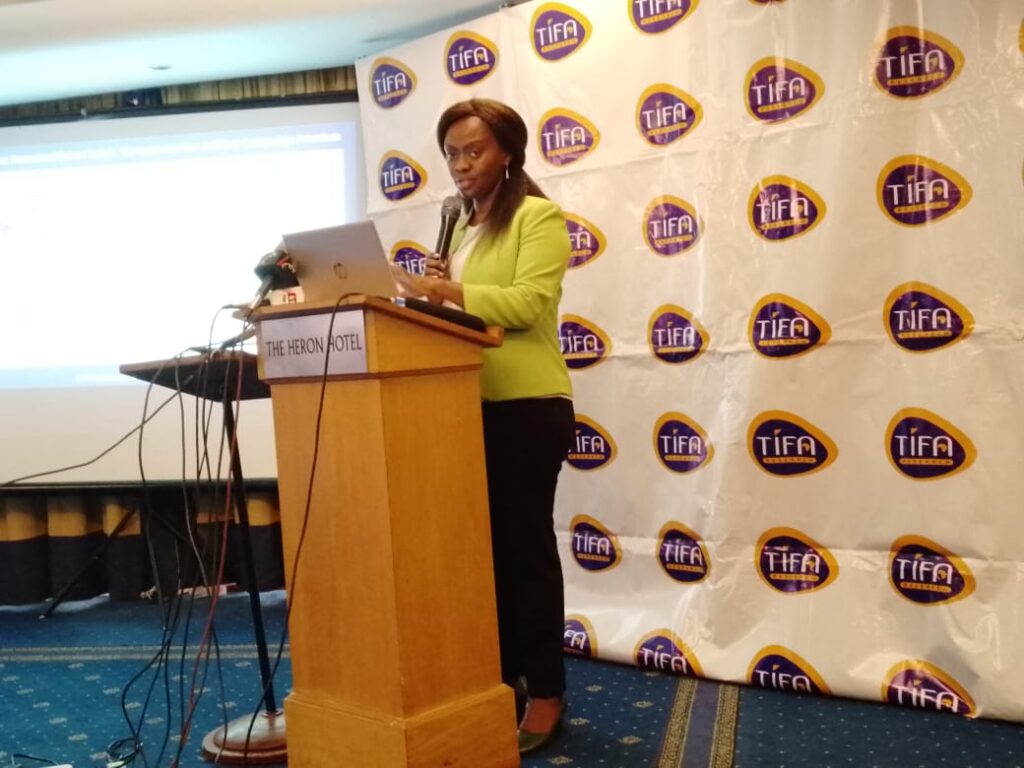
56 % of Kenyans said that the country is moving in the wrong direction says a new poll conducted by research firm Maggie Ireri CEO of TIFA told journalists in Nairobi that the figure has risen from the 48 percent recorded on March this year.
“79 percent said that’s reason the country is moving on the wrong direction is due to rising cost of living,” Ireri said.
She observed that the contrast between Kenya Kwanza and Azimio supporters is substantial, with more than twice as many of Azimio supporters compared to Kenya Kwanza (78% vs. 38%) saying that the country is moving in the wrong direction.
The release reports the second set of results obtained from the national survey TIFA Research conducted between the 24th and 30th of June, 2023 using CATI (Computer-Assisted-Telephonic Interviews) of 1,530 respondents.
The results are from a nationally representative sample spread across 9 Zones namely Central Rift, Coast, Lower Eastern, Mt Kenya, Nairobi, Northern, Nyanza, South Rift, Western.
Release covers views about the country’s direction and the performance of the Kenya Kwanza
government since it took over the reigns of power ten months ago.

According to Ireri, Kenyans belief that, the achievements by the
Kenya Kwanza Government has reduced between March and
June, withover half of Kenyans saying the GoK has achieved nothing.
He noted that in terms of its perceived
failures, there is widespread agreement that continuing if not increasing economic hardship is at the top of most
Kenyans’ minds across the political divide, though the failure to fulfill “campaign promises” as well as various
economic issues aside from such promises also receive considerable mentions.
Ireri said that fewer than half of all Kenyans are prepared to identify any senior national government official as the “best performing” so far.
Ireri noted that another four-in-ten (40%) feel that no such senior official is “the best performing.

According to Ireri, the most frequently
mentioned best performing government official is Interior CS Prof.
Kithure Kindiki (34%), with only
two others receiving more than
minimal such positive
recognition: (6%): Susan Wafula
(Health) and Ezekiel Machogu
(Education – 7% each).

“Asked to rate the degree to which the Ruto government has implemented their campaign promises, Kenyans as whole give them a rather weak score of just 30.8%,” she noted.

She noted that among all Kenyans, the launch of the Hustler Fund receives the
most mentions (10%), but no
other achievement-rating
reaches double digits.

Categories
Uncategorized

2023 ECOSOCC ANNUAL CITIZENS FORUM:ON DEMOCRACY AND DIGITAL GOVERNANCE

By Jeff Kizillah

The ECOSOCC Annual Citizens Forum 2023 held in Nairobi,Kenya highlightedj principles, such as citizen participation, accountability, transparency, and the protection of human rights.
The Role of Digital Governance:The forum highlighted the concept of digital governance and its relationship with democracy. Discussions held around digital technologies and the internet transforming citizen-government interactions and created new opportunities for democratic participation.
Empowering Citizens through Digital Technologies

The meeting highlighted Access to Information,the importance of access to information as a fundamental aspect of democratic governance and how digital technologies enable citizens to access public information, promote government transparency, and make informed decisions.In Participation and Engagement Ecosocc
examined the role of digital technologies in enhancing citizen participation and engagement. Discussions around examples of digital platforms that facilitate public consultations, citizen feedback, and collaborative decision-making processes.

Accountability and Transparency:Serious debate around the impact of digital technologies on promoting government accountability and transparency. Explore mechanisms such as open data initiatives, e-procurement systems, and online reporting platforms that enable citizens to monitor government activities.The

Challenges in Digital Governance included
Inequality in Digital Access:
Address the issue of the digital divide, emphasizing how unequal access to digital technologies can exacerbate existing social and economic disparities. Discuss strategies for bridging the digital divide and ensuring inclusive digital governance.About
Privacy and Data Protection:The forum
examined the challenges related to privacy and data protection in the digital age and the importance of safeguarding citizens’ personal information and explore regulatory frameworks and best practices in this domain.

Around Misinformation and Disinformation:The forum
analyzed the spread of misinformation and disinformation online and its impact on democratic processes and the role of digital platforms, social media, and algorithms in amplifying falsehoods and propose strategies for combating misinformation.

The forum also highlighted the best Practices in Democratic Digital Governance and
Open Government Initiatives,such as successful open government initiatives that promote transparency, citizen engagement, and collaboration between government and civil society including the benefits of open data, open policy-making, and citizen-centric service delivery.The E-Participation Platforms discussed ways to explore digital platforms that facilitate citizen participation and engagement in decision-making processes for successful e-participation platforms that enable citizens to voice their opinions, contribute to policy development, and hold governments accountable.On Digital Citizen Education:ECOSOCC
emphasized the importance of digital citizenship education in promoting informed, responsible, and ethical use of digital technologies and initiatives that empower citizens to navigate the digital landscape and critically evaluate information.

ECOSOCC’s Efforts in Promoting Democracy and Digital Governance include:
Awareness Campaigns and Advocacy:ECOSOCC’s efforts in raising awareness about the importance of democracy and digital governance and campaigns and advocacy initiatives undertaken by ECOSOCC to promote citizen empowerment and digital inclusion.

Categories
Uncategorized

Mitumba sector employs over 3.4million kenyans,Mitumba Association explains

By Jeff Kizzilah

The world is awakening to the environmental imperative of extending the life of clothing through reuse and reducing textile waste.

Speaking during the launch of East Africa report on Mitumba, Association Chairperson Mrs. Terresiah Wairimu said that Mitumba is not a waste but a big contributor to the East Africa’s economy,she said that more than 3.4million hard working individuals and families in EA depends on this Mitumba Sector for their daily living.

She also said that,every ton of Second hand clothing imported into EAC states generates an impressive 7.5% jobs a significant source of income for many people.

“Come together and work together to create a unified sector,lets not succom to those or be swayed by those who wants to impose barries and restrictions but lets create a prosperous mitimba economy and consumer welfare,”she adds

Mitumba Association has come out to respond to the ministry of trade that said the Mitumba trade be stopped.

“Mitumba can help supply enough shoes for every kenyans because at the moment kenya doesn’t have enough machinery of Labour ,” she said

The sector alone contributed to around US?$419million across EA in 2021,she also said the revenue without a doubt used to fuel public sector development,improve infrastructure and also provides essential services for citizens.

Categories
Uncategorized

The launch of the first private security training institution in Eldoret ,Uasin Gishu county

By irene mwende

The first private security training institution Miale has been launched today in Eldoret, Uasin Gishu county

Speaking during the launch principal secretary internal security and national administration Dr.Raymond Amollo who graced the launch stated that private security industry aligns to the government’s national security agenda that is focused on addressing some of the most pressing challenges in the sector

“The launch of the first private security training institution is a ground breaking initiative that not only signifies a paradigm shift in the private security sector but also spells a whole new aspect for our national security” said PS Amollo

He highlighted that digitization and automation of process to enhance government service delivery also form a big part of the ministry’s key priorities and an area that needs more cooperation between private security service providers and national security organs

The principal secretary further stated that private security firms play a very crucial role in complementing security services

“Private Guards are part of the first line of emergency response hence their actions make a significant difference in the outcome of critical situations , highlighting their crucial role in ensuring public safety and security” said Amollo

In conclusion he further noted that the launch recognizes the contribution of unsung heroes,and their is need to equip them with the necessary skills and knowledge to continue serving as a dependable and effective presence in times of need.

Categories
Uncategorized

KCDF LAUNCHES THE YOUNG ENVIRONMENTALIST INNOVATION CHALLENGE

BY NJOKI KARANJA

The Kenya Community Development Foundation (KCDF) has
today launched the Young Environmentalist Innovative Challenge (YEIC), an environmental
innovation fund that aims at developing action-oriented young individuals committed to the
conservation of the environment.

The finalists of this challenge will be awarded in two categories; the first category will see three
young environment champions awarded a grant of between Ksh. 800,000 to Ksh. 1,500,000, while
the second category will have six organizations awarded a grant of between 3,000,000 to Ksh.
5,000,000 each implementing their unique environment conservation-based ideas.

YEIC is an environmental innovation fund established by KCDF through the generous gift of
Mackenzie Scott to support innovative ideas and solutions that promote environmental conservation,
sustainable resource management, and community resilience. KCDF has partnered with the National
Environment Trust Fund (NetFund) and Green Generation Initiative.

In a ceremony that brought together, youth representatives, the private sector, environment
champions, advocates and enthusiasts, the event highlighted the importance of conserving the
environment as part of the efforts to mitigate the current global challenges like drought and climate
change.

Speaking during the event, the Chief Guest Mr. Samson Toniok, CEO – National Environment Trust
Fund (NetFund) applauded the initiative as timely when the world today is faced by unprecedented
environmental crisis including the global phenomena of climate change, pollution and biodiversity
loss.

“The effects of these global challenges remain stark realities in our day-to-day lives such as frequent
droughts, rising waters, extreme weather and flash floods that continue to take the toll on Kenyans
and their livelihoods. For this reason, I would like to applaud KCDF for this noble initiative and
encourage you continue fostering partnerships for future and continued success of this challenge.”
He said.

On her part, the KCDF Executive Director highlighted the need to embrace and promote innovation
in the development sector.

“When you give organizations unrestricted funding, innovation comes about. People are able to take
the money where it is most needed. One of the key innovations we came up with is YEIC, that
challenges the youth and youth organizations to come up with environmental solutions that would
advance livelihoods and education. The narrative in the community has been that if we are
conserving the environment, livelihoods suffer, and our intention is to burst this myth.” Said Ms.
Grace Maingi.

Gordon Odundo, a Board Director at KCDF challenged the youth to take lead in conserving the
environment. “The youth, this environment is your future, you need to protect it, look after it and
participate in the good work of preserving it.” He said.

Elizabeth Wathuti the Founder of Green Generation Initiative (GGI) said that the YEIC challenge was very timely as an empowering platform for the Kenyan youth who continue to face a stiff competition
for resources against bigger organizations.

Michael Waiyaki, C.EO and Founder Miti Alliance said
that as a community we need to know the difference between tree planting and tree growing and
embrace the latter which is more effective.

Josephine Wawira, the Communications Lead,
Sustainable Inclusive Business Kenya insisted on the need to avoid using complex jargon on issues
of environment and climate change and come down to the community’s level and communicate
effective contextual strategies towards climate change mitigation.

Ebenezer Amadi a Program
Manager at the Kenya Private Sector Alliance (KEPSA) said that the private sector continues to play
a pivotal role in advocating for proper pro-environment policies and regulations in the country.

This Young Environmentalist Innovative Challenge is built on KCDF’s environment work that began
in 2016 under the Wangari Maathai Scholarship Fund.


Categories
Uncategorized

Most kenyans expects nothing from Ruto government,TiFa Survey indicates

By Jeff Kizzilah

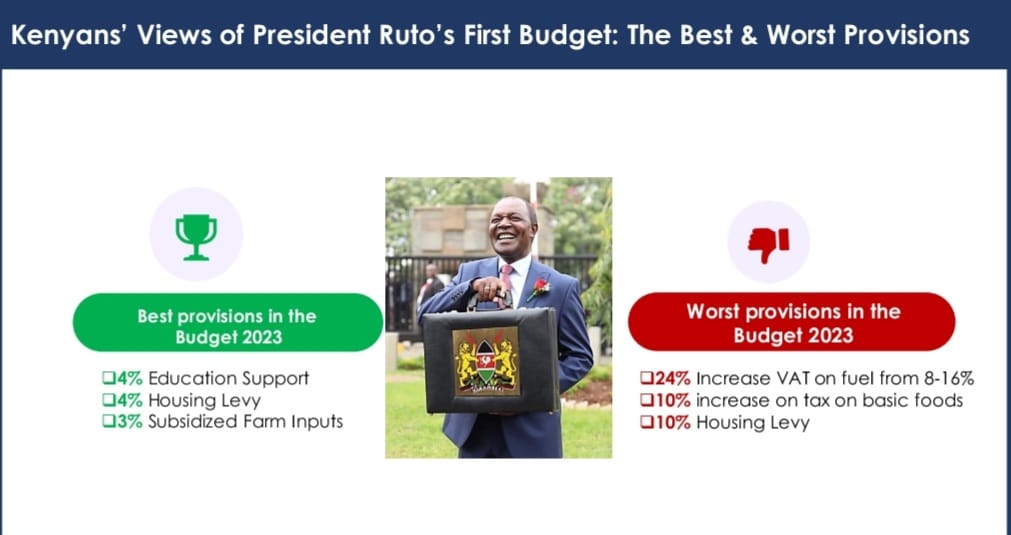
Almost 69% of kenyans do not support the housing levy while 54% of kenyans feel that those housing will not get to own house,according to TiFa research.

The TiFa data was collected before the first budget and shows that 24% of kenya terms the budget as the worst ever while only 4% supports education and 4% is for housing levy,with a modest minority of kenyans supports government’s programmes at 21%, 56% terms them worst with the rise taxation by Ruto government.

Speaking during the release of the survey, Tom Wolf, TiFa Director said the government should come clean and explain more to kenyans in its first budget.

“We spoke to many kenyans and a big number dont trust this government at all but the trust opposition more and ready to join in demonstrations if necessary,” Tom said

However, their is a minimal contrast between these two groups of supporters would be voters in the next election this is because the opposition supporters are more negative than the ones who are pro-government.

In his next survey, Tifa Research said they will carefully consider which of these issues are worth tracking again and which should be replaced.