The Technopolis Development Authority has made a national call inviting Kenya’s creative youth to design the logo of the country’s newest authority.
The Technopolis Development Authority, formerly Konza Technopolis Development Authority (KoTDA), was established following the enactment of the Technopolis Act, 2026, which repositions the Authority as a state agency giving it an expanded, national mandate. Where the Authority was previously anchored to a single technopolis – Konza Technopolis, Kenya’s flagship smart city- it is now charged with planning, developing, managing and promoting technopolises across the country, placing it at the centre of Kenya’s digital economy and innovation agenda.
This shift has created the need for a distinct identity, separate from Konza Technopolis, the flagship smart city under Kenya’s economic blueprint Vision 2030 that the Authority continues to oversee as its anchor project. The new logo must have a national appeal, while retaining the credibility built through Konza Technopolis over more than a decade.
For the development of its new brand identity, the Authority has taken a participatory approach by inviting Kenyan youth to contribute to the process rather than engaging a design house. The initiative specifically seeks to harness the creativity and innovation of Kenya’s youth through the Jitume Digital Enablement Programme, an Authority-led initiative that has already empowered over one million young Kenyans with digital skills, access to digital work opportunities, and pathways into the digital economy. This approach reflects the Authority’s commitment to inclusivity, innovation, and the cultivation of local talent in shaping Kenya’s digital future.
“We are inviting Kenyan youth in the creative community to help shape the identity of the Technopolis Development Authority, an institution that represents where our country is going,” said John Paul Okwiri, Chief Executive Officer of the Technopolis Development Authority. “This is more than a logo competition; it is an opportunity for young designers to shape a national identity for the environments where innovation, enterprise, research and investment can thrive.”
Open for entries now
The competition dubbed, “Designing the Symbol of Kenya’s Innovation Future,” is open to creatives and designers aged 18–35 in all 47 counties. Entries are open with the closing date set to be announced in the month of September 2026 on the official competition portal.
Each entry must include a primary logo mark, a black-and-white version, light- and dark-background applications, a concept explanation of no more than 150 words, and three sample applications such as a letterhead, social media profile and building signage. A full brand manual is not required at this stage. The Authority is looking for a strong visual idea with room to grow into a broader institutional identity.
The National Assembly Committee on Trade, Industry and Cooperatives has stepped up consultations with stakeholders on two key Bills seeking to strengthen consumer protection, promote fair trade and modernise Kenya’s regulatory framework.The Committee engaged stakeholders in Kiambu County on the **Trade Descriptions (Amendment) Bill, 2026** and the **Legal Metrology Bill, 2026**, two pieces of legislation expected to have a significant impact on how goods are marketed, sold, weighed and measured in Kenya.Dr Henry Rotich, Director of Metrology and Testing at the Kenya Bureau of Standards (KEBS), brings extensive technical expertise to the discussions, having spent more than 26 years working in quality regulatory environments, metrology, testing and research and development.Dr Rotich’s work underscores the strategic importance of metrology in Kenya’s Quality Infrastructure. **Metrology is a key pillar of Quality Infrastructure and a critical driver of a competitive business environment that promotes investment, strengthens confidence in trade and supports the implementation of the African Continental Free Trade Area (AfCFTA) initiatives.**A robust metrology system ensures that measurements used in commercial transactions are accurate, reliable and traceable. This is essential in building trust between consumers and businesses while creating a level playing field for enterprises competing in domestic, regional and international markets.The Trade Descriptions (Amendment) Bill seeks to strengthen the legal framework against false, misleading and deceptive descriptions and representations concerning goods and trade.Importantly, the proposed amendments seek to bring the law into the modern digital era by extending regulatory oversight to electronic and digital representations, including contemporary forms of marketing and price indications.The Bill also proposes clearer responsibilities for persons involved in the supply and distribution of goods, alongside stronger enforcement mechanisms covering inspection, seizure and forfeiture, offences and penalties for non-compliance.The second proposal, the Legal Metrology Bill, 2026, seeks to establish a comprehensive legal framework governing the manufacture, importation, sale, repair, installation, verification, inspection and use of weighing and measuring instruments and systems.For consumers and businesses alike, accurate measurement is fundamental to fair trade. The proposed legislation seeks to ensure that measurements used in commercial transactions are accurate, reliable and traceable, helping to protect both buyers and legitimate traders.The Bill further seeks to tackle fraudulent and deceptive practices arising from inaccurate weighing and measuring equipment, while strengthening safeguards for public health, safety and the environment.Accurate measurement is particularly critical in sectors such as healthcare, energy, transport, agriculture and environmental protection, where errors can have significant economic and public consequences.The proposed legislation also seeks to align Kenya’s legal metrology framework with internationally recognised standards and obligations, including those of the International Organization of Legal Metrology (OIML).Such harmonisation could enhance confidence in Kenya’s measurement systems while supporting regional and international trade.For Kenya to fully benefit from the opportunities presented by AfCFTA, strong Quality Infrastructure will be essential. Reliable measurement systems, standards, testing and conformity assessment help ensure that Kenyan products can compete on quality and meet requirements in regional and global markets.The stakeholder engagement therefore provides an important opportunity for technical experts, legislators and industry players to examine the proposed laws and ensure that the final framework responds effectively to the realities of modern commerce.With his extensive experience in metrology, testing and quality regulation, Dr Rotich remains an important technical voice in efforts to strengthen Kenya’s measurement infrastructure and ensure that standards governing commercial transactions are credible and enforceable.The two Bills ultimately point to a common objective — creating a trading environment where consumers are protected, businesses compete fairly and commercial transactions are supported by accurate information and reliable measurement systems.As Kenya continues to expand its digital economy and deepen its participation in regional and international markets, modernising these regulatory frameworks will be critical to safeguarding consumer confidence, attracting investment and strengthening the integrity and competitiveness of the country’s trading environment.
Stronger partnerships within Kenya’s manufacturing and business community could unlock the Coast Region’s industrial potential while creating new demand for reliable domestic air connectivity, fly748.com has said.
fly748.com Head of Scheduled Services, George Oduor, said closer collaboration among manufacturers, investors, suppliers, tourism operators and other businesses would help position the Coast as more than a leisure destination, building a broader economic ecosystem capable of sustaining both business and leisure travel.
He spoke during the 3rd Edition of the Kenya Association of Manufacturers (KAM) Coast Golf Tournament, held on Saturday, August 29, 2026, at Nyali Golf Club in Mombasa under the theme “Industry Partnerships Forged on the Fairways.”
“The Coast has enormous potential to become a stronger manufacturing, trade and investment hub. Unlocking that potential, however, requires partnerships that connect businesses to markets, investors, suppliers, talent and customers. As these linkages grow, so does the need for reliable and convenient domestic connectivity,” said Oduor.
The tournament attracted 220 registered players from the manufacturing and wider business community, providing a platform for industry leaders to network, strengthen relationships and explore partnerships that can support the growth and sustainability of manufacturing in Mombasa and the wider Coast Region.
Oduor said such engagements are important because the impact of a growing manufacturing sector extends beyond industry, creating opportunities across aviation, hospitality, tourism and other service sectors.
“Manufacturing and tourism should not be viewed as separate economic engines. When a company brings investors, suppliers or business partners to Mombasa, that visit creates demand for flights, accommodation, restaurants, conference facilities and local experiences. Stronger business activity therefore has a multiplier effect across the Coast economy,” he said.
He noted that improved connectivity between Nairobi and the Coast is particularly important as businesses expand operations, seek new markets and build stronger supply chains.
For the aviation sector, he added, the opportunity is to ensure that businesses can move their people efficiently and reliably between key economic centres.
“Air connectivity is ultimately an enabler of economic opportunity. Every manufacturer expanding operations at the Coast, every investor visiting a project and every new business partnership represents movement of people, ideas and investment. Our role is to provide the reliable connectivity that enables that movement,” Oduor said.
He added that strengthening business travel could also contribute to a more balanced travel market for the Coast by complementing traditional leisure demand throughout the year.
“Mombasa will always be one of Kenya’s most important tourism destinations, but there is significant opportunity to grow the business travel segment alongside tourism. A stronger and more diversified Coast economy ultimately benefits manufacturing, aviation, hospitality and tourism alike,” he said.
Petroleum cabinet Secretary Hon.Opiyo Wandayi reaffirmed Wednesday the government’s commitment to enforcing strict regulatory and safety standards in the Liquefied Petroleum Gas (LPG) sector, warning that a nationwide crackdown on illegal operations will be intensified until full compliance is achieved.
According to the Wandayi, the government is executing the LPG National Growth Strategy, approved by Cabinet in October 2023, aimed at accelerating the clean energy transition from biomass to LPG while reinforcing legal frameworks to eliminate illicit refilling and illegal trade that jeopardize public safety.
The country’s LPG sub-sector is regulated by the Energy and Petroleum Regulatory Authority (EPRA) under the framework of the Energy Act and the Petroleum Act. Under the Petroleum (Liquefied Petroleum Gas) (No. 2) Regulations, 2025, all operators must obtain valid licenses and adhere strictly to operational conditions, including clear cylinder branding and mandatory refilling authorization by legitimate brand owners.
Wandayi highlighted that EPRA is collaborating closely with the National Police Service and the Directorate of Criminal Investigations to dismantle illegal syndicates. Law enforcement operations follow strict statutory protocols, including joint inventory verification witnessed by operators prior to judicial or administrative proceedings.
To boost supply chain transparency, the government is moving forward with plans to establish a centralized digital LPG cylinder tracking system. Under current regulations, cylinders will be serialized to guarantee end-to-end traceability across the market. Procurement for the tracking system is undergoing standard processing in accordance with national public procurement laws.
The government has also integrated LPG into the regulated common petroleum import system following Cabinet authorization and the subsequent gazettement of the Petroleum (Importation) (Amendment) Regulations, 2025.
The ministry called on political leaders to cease attacks on law enforcement officers and regulatory inspectors executing their constitutional mandate, maintaining that official enforcement actions will proceed without interference.
“The government will not succumb to pressure from politicians and cartels intent on benefiting from the illicit LPG trade,” Wandayi added.
Reiterating that consumer protection remains a top priority, energy authorities confirmed that law enforcement measures against non-compliant LPG traders will continue unabated across the country.
NAIROBI — Kenya’s dairy industry is recording impressive growth, and behind the sector’s continued push towards greater formalisation, quality and competitiveness is the steady and strategic leadership of Kenya Dairy Board National Chairman Genesio Mugo.
The latest performance report presented to the Agriculture and Livestock Committee during its oversight visit to the Kenya Dairy Board (KDB) paints a picture of a sector with enormous potential. National milk production rose by about *19 per cent between 2021 and 2025, reaching *5.52 billion litres in 2025, while formal milk intake surpassed one billion litres.
The value of formally marketed raw milk stood at *Ksh50.3 billion, while processed dairy output grew by *22.9 per cent, reaching 967.05 million kilogrammes in 2025.
These gains reflect a sector increasingly embracing formalisation, improved regulation and market development—areas where strong institutional leadership remains critical.
At the helm of KDB, Genesio Mugo has provided the kind of calm, forward-looking leadership required to guide the industry through both opportunities and challenges.
His leadership comes at a particularly important moment when the dairy industry is expanding rapidly while facing pressures ranging from climate variability and high production costs to informal milk marketing, limited value addition and evolving regulatory demands.
Under KDB’s oversight, the Board trained *5,246 stakeholders during the 2025/26 financial year, exceeding its annual target by 17 per cent. Market development interventions also supported dairy exports valued at more than *Ksh11 billion, demonstrating the growing importance of Kenya’s dairy products beyond the domestic market.
The Board’s regulatory work has equally been extensive. During the year, KDB conducted 16,333 regulatory inspections, achieving 119 per cent of its target, alongside thousands of quality and safety tests.
Such achievements underscore the importance of leadership that understands that the growth of the dairy sector must go hand in hand with food safety, quality assurance and consumer protection.
Mugo’s stewardship is particularly commendable because he leads an institution operating at the intersection of farmers, processors, traders, consumers and government. Each stakeholder has different expectations, yet all depend on a properly regulated and competitive dairy industry.
The Board has nevertheless raised concern over budgetary constraints, with its approved 2026/27 budget reduced by Ksh175.15 million, a 23 per cent cut from the proposed allocation.
Rather than viewing the challenge simply as a financial setback, the situation highlights the importance of continued strategic leadership in protecting the regulatory gains already made. Adequate resources remain essential for inspections, laboratory testing, market surveillance and nationwide enforcement.
Under Mugo’s leadership, KDB has demonstrated that the dairy sector can continue growing while pursuing stronger systems, better standards and greater market opportunities.
Genesio Mugo’s leadership deserves recognition for providing stability, strategic direction and a strong sense of purpose at a time when Kenya’s dairy industry is entering an important new phase.
His stewardship is helping ensure that the impressive growth being witnessed in milk production, processing and marketing translates into greater opportunities for farmers, stronger businesses, safer products and a more competitive dairy industry.
With visionary leadership at the top, Kenya’s dairy sector has every reason to remain confident about the opportunities ahead.
Arch. Nyamai Wambua, HSC, the Chief Executive Officer of the Kenya National Federation of Jua Kali Associations (KNFJKA), has welcomed the recently launched Vision 2060, saying the country’s long-term development blueprint presents a historic opportunity to place Kenya’s informal sector at the heart of national economic transformation.
As one of the country’s prominent voices advocating for the Jua Kali sector and the development of Micro, Small, and Medium Enterprises (MSMEs), Arch. Wambua believes that Kenya cannot achieve the aspirations of Vision 2060 without fully recognising the millions of entrepreneurs, artisans, traders and small businesses that form the backbone of the country’s economy.
He says the conversation around Kenya’s future must deliberately include the people who operate in the informal economy because they are not merely beneficiaries of development. They are active participants in creating employment, generating household incomes, producing goods and services and driving economic activity across the country.
For Arch. Wambua, the recently launched Vision 2060 provides an opportunity to change the way the country views the Jua Kali sector.
The sector, he argues, should no longer be seen simply as an informal space where people engage in small-scale economic activities. Instead, it should be recognised as a major economic ecosystem with enormous potential to drive industrialisation, innovation, entrepreneurship and inclusive prosperity.
Putting the Jua Kali sector at the centre
Arch. Wambua says Kenya’s long-term development agenda must reflect the realities of ordinary citizens.
Across the country, millions of Kenyans earn their livelihoods through activities ranging from metal fabrication, carpentry and tailoring to motor vehicle repair, construction, food processing, retail trade and countless other enterprises.
These businesses may start small, but collectively they represent a powerful economic force.
According to Wambua, Vision 2060 must create an environment where such enterprises can move from survival to growth.
A young artisan should be able to start with a small workshop and, through access to skills, finance, technology and markets, eventually build a competitive enterprise employing dozens or even hundreds of people.
That transition, he argues, is critical to Kenya’s future.
The Jua Kali sector should therefore be integrated into national industrialisation and economic transformation strategies rather than being treated as a separate or secondary part of the economy.
From informality to competitiveness
One of the key priorities Wambua identifies is improving the competitiveness of informal businesses.
Kenya’s future economy will operate in an increasingly competitive regional and global environment. Local businesses will have to compete not only with one another but also with enterprises from across Africa and the wider world.
This means Kenyan MSMEs must improve productivity, product quality, technology adoption, skills and access to markets.
Arch. Wambua says Vision 2060 should therefore help informal enterprises acquire the tools required to become competitive.
Access to modern machinery, shared production facilities, quality standards, digital technologies, business development services and professional skills will be essential.
The objective should be to enable Kenyan enterprises to produce goods and services that can compete in local, regional and international markets.
Finance must reach the entrepreneur
Access to affordable and appropriate finance will also be critical.
Many informal businesses have viable ideas and established customer bases but struggle to obtain financing for expansion because they lack conventional collateral or formal financial records.
Arch. Wambua believes the financial system must become more responsive to the realities of MSMEs.
Financial institutions, government programmes and private investors should develop products that recognise the unique circumstances of small enterprises while promoting responsible borrowing and business growth.
He says financing should not simply be about giving entrepreneurs money. It should be accompanied by financial literacy, business management skills, mentorship and market access.
The ultimate objective should be to transform capital into productive assets, stronger enterprises and sustainable employment.
Skills will shape Kenya’s future
Arch. Wambua also places strong emphasis on skills development.
The Jua Kali sector contains enormous practical knowledge acquired through apprenticeship and years of hands-on experience.
However, many artisans and workers require opportunities to upgrade their skills and obtain formal recognition of competencies.
Vision 2060 should create stronger pathways through which practical skills can be certified, upgraded and connected to emerging industries.
Kenya’s technical and vocational training institutions can play a major role in this transformation by working more closely with Jua Kali associations and enterprises.
A modern artisan, Wambua says, must be equipped not only with technical skills but also with knowledge of digital tools, business management, occupational safety, quality standards and emerging technologies.
Technology and digital transformation
The CEO of KNFJKA further argues that Kenya’s digital transformation must reach the grassroots.
Technology should not be reserved for large corporations and technology start-ups.
A small trader can use digital payments. A carpenter can advertise furniture online. A mechanic can use digital platforms to reach customers. A small manufacturer can adopt modern machinery to improve productivity.
Digital technology can therefore help informal enterprises reach wider markets, reduce transaction costs and improve their efficiency.
Arch. Wambua says Vision 2060 must ensure that MSMEs have access to affordable digital infrastructure, relevant skills and technologies that can improve their competitiveness.
Linking Jua Kali to larger markets
Another critical area is market access.
Arch. Wambua believes that Kenyan MSMEs must be connected to larger domestic, regional and international markets.
Government procurement can provide important opportunities, but established private-sector companies also have a major role to play.
Large corporations can integrate MSMEs into their supply chains as suppliers, distributors, service providers and manufacturing partners.
This can create powerful local value chains in which small businesses grow alongside larger enterprises.
Nairobi, 20 August 2026 — The Vision 2030 Secretariat is convening a Multi-Stakeholder Consultative Meeting on the National Conversation on Kenya’s Future Beyond Vision 2030 today at the Central Bank School of Monetary Studies, Rupee Room, on Thika Road, Nairobi.
The meeting brings together stakeholders from different sectors to participate in consultations on Kenya’s development priorities and the country’s future beyond the Vision 2030 framework.
The engagement provides an opportunity for stakeholders to share perspectives, experiences and recommendations on the opportunities and challenges that will shape Kenya’s development in the period beyond Vision 2030.
The consultations are intended to contribute to a broad and inclusive national conversation that takes into account the views and aspirations of different stakeholders and communities.
The Secretariat recognises that Kenya’s future development requires continued dialogue and collaboration among government, the private sector, civil society, academia, professional bodies, development partners and other stakeholders.
The Multi-Stakeholder Consultative Meeting is therefore part of efforts to facilitate meaningful engagement and gather diverse perspectives to inform the national conversation on Kenya’s future. Participants will deliberate on key issues affecting Kenya’s development and provide views that will contribute to the broader consultation process.
The Secretariat appreciates the participation and continued support of stakeholders in this important national process and encourages all participants to engage openly and constructively. The consultations reaffirm the importance of collective action in shaping Kenya’s future beyond Vision 2030.
It was a moment of immense joy and inspiration for *Dr. Ekrah Ndung’u, Chairperson of the Kenya National Association of Private Colleges, as she returned to her alma mater, *Kenya Methodist University (KeMU), where she was recognised as a Distinguished Alumni during the university’s Founders’ Day celebrations.
For Dr. Ekrah, the recognition was a deeply meaningful homecoming and a powerful reminder of the role education plays in shaping leaders who go beyond personal achievement to make a lasting difference in society.
Kenya Methodist University, she noted, played a significant role in shaping her journey as a transformational leader. The institution’s vision of nurturing globally competitive transformational leaders who are servants first continues to inspire her commitment to positively impact society.
Dr. Ekrah fondly recalled the wisdom imparted by her professors, including the enduring lesson: “Always leave people feeling better than you met them.” She described the influence of great professors and dons as a gradual but powerful process, likening the shaping of thoughts and character to drip irrigation, where every encounter and lesson contributes to growth over time.
She expressed her intention to document the stories and lessons of the great professors who have influenced her over the past 20 years across different universities and nations, recognising that our thoughts, values and leadership are shaped bit by bit by those who teach us and those we encounter along the journey.
The Distinguished Alumni recognition was further crowned by the presentation of a Distinguished Alumni Badge to Dr. Ekrah by *Prof. David Menser of the United States, who served as the Chief Guest, alongside *Prof. Kobia, the current Vice Chancellor of Kenya Methodist University.
The honour is a testament to Dr. Ekrah’s remarkable journey, leadership and continued contribution to education and society. Her story reflects the enduring impact of quality education and the power of institutions such as KeMU to nurture leaders whose influence extends far beyond the classroom.
For Dr. Ekrah, the journey continues with a firm belief in the power of transformational leadership and service.
*SasaPay, under the leadership of **Managing Director Stephen Kaguchia, reaffirmed its commitment to empowering Kenya’s next generation of digital talent by participating in the *Moringa School Graduation Ceremony, where hundreds of graduates celebrated the successful completion of industry-focused technology programmes.
The event brought together graduates, technology leaders, development partners and industry stakeholders to celebrate young innovators equipped with future-ready digital skills that are increasingly driving Kenya’s digital economy.
SasaPay maintained a strong presence at the graduation through an interactive exhibition booth, where graduates and attendees engaged with the company’s team to learn about its innovative digital payment solutions. Participants received demonstrations of the platform’s seamless money transfer services, utility payments, merchant solutions and business payment products designed to simplify financial transactions for individuals and enterprises.
Speaking on the importance of nurturing digital talent, SasaPay Managing Director Stephen Kaguchia said the future of financial technology depends on investing in young innovators and providing them with platforms that enable them to thrive.
“Kenya’s young tech professionals are shaping the future of our digital economy. At SasaPay, we are proud to support initiatives that equip them with practical skills while providing secure, innovative and accessible payment solutions that power entrepreneurship and digital commerce,” he said.
The graduation also highlighted the growing collaboration between technology training institutions and fintech companies in bridging the gap between education and employment, ensuring graduates are equipped with market-relevant skills.
SasaPay’s participation underscored its broader mission of driving financial inclusion and digital transformation by connecting young professionals, startups and businesses to secure, efficient and affordable digital payment solutions.
Widely admired for his visionary leadership and unwavering commitment to innovation, Stephen Kaguchia has become one of the respected voices in Kenya’s rapidly evolving fintech sector. His leadership at SasaPay reflects a forward-looking approach that prioritizes technological advancement, customer-centric solutions and meaningful partnerships that expand financial inclusion. Colleagues and industry stakeholders have praised his ability to inspire innovation while cultivating a culture of excellence, integrity and continuous improvement.
Under Kaguchia’s stewardship, SasaPay has continued to strengthen its position as a trusted digital payments platform, championing solutions that empower businesses, entrepreneurs and individuals to transact with greater speed, convenience and security. His emphasis on nurturing young talent and supporting technology-driven enterprises has resonated with Kenya’s vibrant innovation ecosystem, earning him recognition as a leader committed to unlocking opportunities for the next generation.
His participation in initiatives such as the Moringa School Graduation reflects a leadership philosophy that extends beyond business success to investing in people. By supporting institutions that equip young Kenyans with practical digital skills, Kaguchia continues to demonstrate his belief that the country’s greatest asset is its youthful talent. His dedication to mentorship, innovation and digital transformation continues to inspire confidence among partners and stakeholders who view him as a catalyst for sustainable growth within Kenya’s digital economy.
As Kenya’s fintech ecosystem continues to expand, Stephen Kaguchia said SasaPay remains committed to supporting innovation, empowering youth and accelerating the country’s transition towards a fully digital economy through strategic partnerships with institutions such as Moringa School. Under his guidance, SasaPay continues to position itself not only as a provider of cutting-edge payment solutions but also as a committed partner in shaping a more inclusive, innovative and digitally empowered Kenya.
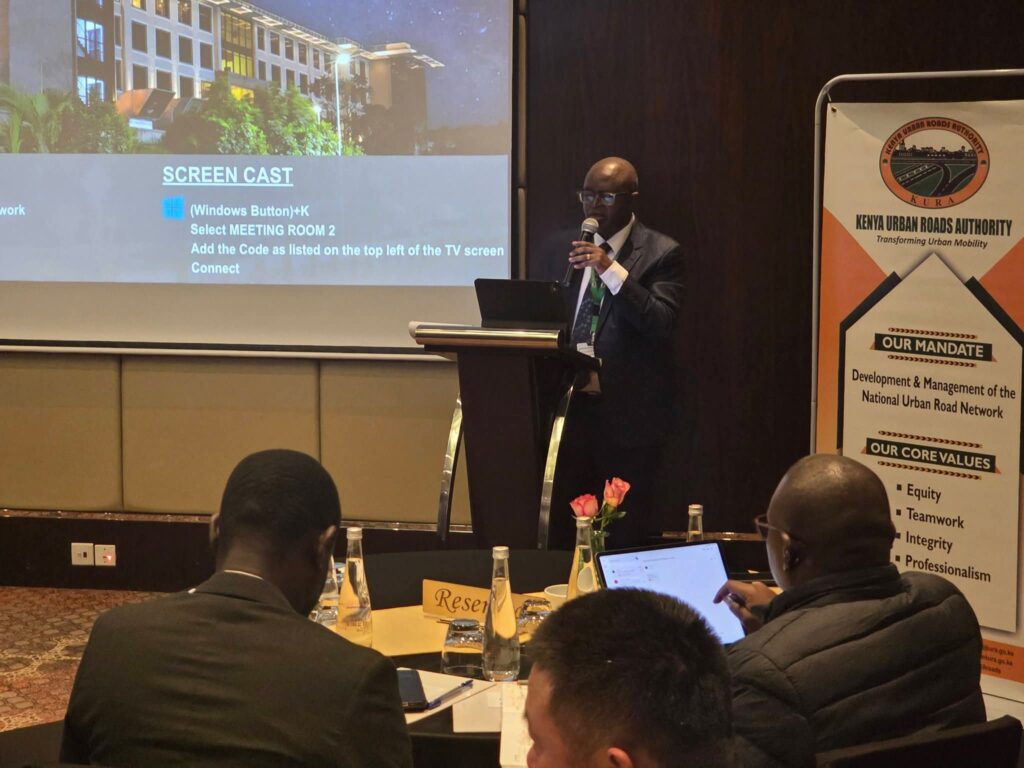
The Kenya Urban Roads Authority (KURA) Director General, Eng. Silas Kinoti, has reaffirmed the Authority’s commitment to transforming urban transport after officially opening the inaugural Project Implementation Unit (PIU) Meeting for the multi-agency teams overseeing the implementation of the Intelligent Transport Systems (ITS) Phases I, II & III and Bus Rapid Transit (BRT) projects.
The high-level meeting, currently underway at the Crowne Plaza Nairobi Airport, has brought together representatives from key implementing agencies to assess project progress, review implementation milestones, share status updates and strengthen inter-agency collaboration aimed at ensuring the successful and timely delivery of some of Kenya’s most ambitious urban mobility projects.
Speaking during the opening session, Eng. Kinoti underscored the importance of seamless coordination among all stakeholders, noting that the ITS and BRT programmes are central to the Government’s vision of creating safer, smarter and more efficient transport systems capable of meeting the demands of Kenya’s rapidly growing urban population.
The Director General observed that integrating modern technology into road transport infrastructure will significantly improve traffic management, reduce congestion, enhance road safety and provide commuters with more reliable, efficient and sustainable public transport services. He emphasised that the success of these flagship initiatives will depend on strong institutional collaboration, effective project management and the shared commitment of all implementing agencies.
The PIU meeting serves as a critical platform for aligning implementation strategies, addressing emerging challenges and ensuring that all agencies remain focused on delivering projects that will redefine urban mobility and support Kenya’s broader economic development agenda. Through initiatives such as ITS and BRT, KURA continues to position itself at the forefront of modern infrastructure development, embracing innovation to improve connectivity and enhance the quality of life for millions of urban residents.
Under the leadership of Eng. Silas Kinoti, KURA has continued to demonstrate its commitment to delivering world-class transport infrastructure that supports economic growth, environmental sustainability and efficient service delivery. His visionary stewardship has accelerated the adoption of smart transport solutions, reinforcing the Authority’s role as a key driver of Kenya’s urban transformation.
As deliberations continue, the meeting is expected to generate actionable resolutions that will strengthen project implementation, improve coordination among stakeholders and accelerate the delivery of intelligent transport systems and Bus Rapid Transit infrastructure that will shape the future of mobility in Kenya’s cities.