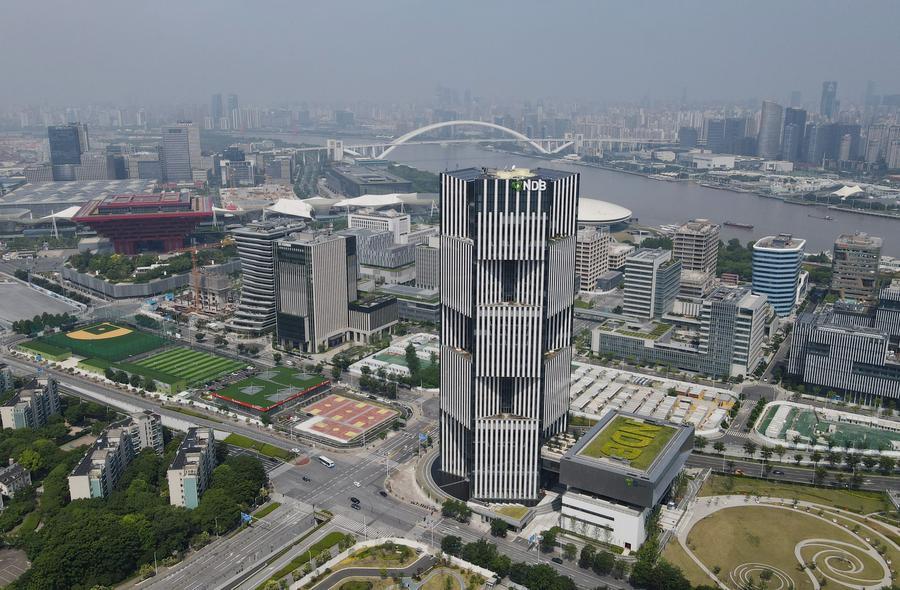
An aerial drone photo taken on June 17, 2022 shows the headquarters building of the New Development Bank (NDB) in east China’s Shanghai. (Xinhua/Fang Zhe)
by Xinhua writer Liu Bowei
BEIJING, Sept. 12 (Xinhua) — When the BRICS cooperation mechanism was formally launched in 2006, it opened a new chapter for cooperation among major emerging economies. Two decades on, BRICS has, through the ebbs and flows of the global economy, expanded through multiple rounds of enlargement and broadened the scope of its cooperation.
This evolution has ushered in a new era of greater BRICS cooperation, better reflecting the growing weight and aspirations of the Global South.
When BRICS leaders prepare to gather for this year’s summit in New Delhi, India, the mechanism is playing a greater role in amplifying the collective voice of emerging economies, and expanding practical cooperation amid a changing international landscape beset by raging protectionism and economic fragmentation.
Its growing weight is reflected in its economic and demographic scale. BRICS countries now account for approximately 40 percent of global GDP at purchasing power parity and nearly half of the world’s population. Data released by the UN Trade and Development in March showed that the intra-BRICS merchandise trade has expanded more than 13-fold since 2003, and exports reached 1.17 trillion U.S. dollars in 2024.
BRICS, however, is more than an economic force. Its growing significance lies in how countries with different development paths are pooling their strengths in resources, industry and technology to advance shared development.
A prominent area is financing. For many developing economies, access to affordable, long-term funding remains critical to turning development ambitions into reality. The New Development Bank (NDB), headquartered in Shanghai, has helped provide such an option by mobilizing resources for infrastructure and sustainable development projects. Figures released by the bank showed that by the end of the first quarter of 2026, the NDB had approved 42.9 billion dollars in financing for 140 projects.
Covering such areas as infrastructure, clean energy and digital transformation, these projects address the pressing development needs of Global South countries while echoing the priorities highlighted by the theme of the forthcoming BRICS Summit, “Building for Resilience, Innovation, Cooperation and Sustainability.”
The ever-evolving BRICS cooperation is also helping developing countries gain new growth momentum. In recent years, BRICS cooperation has been expanding into areas like renewable energy, digital infrastructure, scientific and technological innovation.
Photo taken on Aug. 24, 2017 shows a flowerbed at the Xiamen International Conference and Exhibition Center in Xiamen, southeast China’s Fujian Province. (Xinhua/Jiang Kehong)
A case in point is the BRICS Partnership on New Industrial Revolution Innovation Center in Xiamen, which was established in 2020 to provide a platform for cooperation in digitalization, advanced manufacturing and technological innovation.
These efforts point to the broader value of BRICS: it is not simply giving the Global South a stronger voice, but creating practical opportunities for countries to access financing, technology and cooperation suited to their development needs.
Such collaboration helps explain BRICS’ growing appeal to countries seeking greater opportunities to participate and cooperate. As a founding member, China has contributed not only by building platforms for practical cooperation, but also by supporting greater openness and broader participation to promote high-quality cooperation within an expanded BRICS.
Some in the West portray BRICS as a rival bloc seeking to build a parallel order. Yet this claim bears little resemblance to reality. BRICS stands for openness, inclusiveness and mutual benefit, not confrontation or exclusion. That is fundamentally different from the exclusive blocs championed by some Western countries, and a key reason behind the growing vitality of BRICS.
Looking ahead, BRICS is poised to embark on its third “golden decade” after 20 years of growth and transformation. By rising up to the challenges of the times, BRICS countries can help shape a more equal and orderly multipolar world and a more universally beneficial and inclusive economic globalization, and, in doing so, write a new chapter of solidarity and cooperation across the Global South. ■
This photo taken on Aug. 10, 2023 shows the view of Johannesburg, South Africa. (Xinhua)
JOHANNESBURG, Sept. 11 (Xinhua) — The BRICS is playing an increasingly important role in promoting global economic growth, advancing South-South cooperation and strengthening the voice of developing countries amid a world of uncertainty, a South African academic has said.
With its growing economic weight, expanding markets and deepening cooperation in trade, investment, infrastructure and technology, the BRICS is well positioned to contribute more to the development of the Global South and a more diversified global economy, Zamokuhle Mbandlwa, a professor at the Durban University of Technology, said in a recent interview with Xinhua ahead of the upcoming 18th BRICS Summit in New Delhi, India.
“The contribution of the BRICS to global growth is significant, structural and increasingly strategic,” said Mbandlwa, also a member of the BRICS Research Institute, a South African research organization based at the university.
Mbandlwa said the group’s large and growing populations are creating substantial demand for goods, services, infrastructure and technology, generating wider benefits through trade and investment.
Against a sluggish global growth, geopolitical tensions, rising protectionism and supply-chain disruptions, the BRICS is also providing an important platform for developing economies to diversify economic ties and strengthen resilience, Mbandlwa said.
“BRICS can become one of the principal engines of a more diversified and multipolar global economy, but this potential will depend on the depth of economic integration rather than simply the size of the grouping,” he said.
Greater intra-BRICS trade and investment, infrastructure connectivity, technological cooperation, local-currency financing and interoperable payment systems could help translate the grouping’s economic weight into practical development outcomes, the professor added.
According to Mbandlwa, the expansion of the BRICS has strengthened its collective economic weight and opened up more opportunities for trade, investment, financial cooperation and South-South economic partnerships.
He said the diverse strengths of BRICS economies in energy, agriculture, manufacturing and technology provide considerable scope for greater complementarity and more robust supply chains.
“In an uncertain global environment, diversified BRICS supply chains could provide members with greater economic stability and strategic autonomy while creating a larger, more integrated market for sustainable growth,” Mbandlwa added.
Mbandlwa also highlighted China’s “significant and increasingly practical role” in advancing BRICS economic cooperation.
Cooperation with China in investment, digital infrastructure, renewable energy, e-commerce and artificial intelligence has helped BRICS members strengthen technological capabilities and narrow development gaps, he said.
“China’s emphasis on openness and shared development also supports more inclusive innovation partnerships, particularly for emerging economies,” said Mbandlwa.
Looking ahead, Mbandlwa said the significance of the BRICS extends beyond economic growth, with the grouping providing a platform for collective economic influence, South-South cooperation and a more representative global order.
The BRICS demonstrates how developing countries can work together to expand trade, mobilize investment, build infrastructure and strengthen technological capabilities without relying exclusively on traditional centers of economic power, he said.
“Stronger BRICS cooperation is therefore not about creating an alternative closed economic bloc” but about fostering a more “representative global economy,” he said.
Mbandlwa said that the strategic opportunity lies in moving from “BRICS as a group of large economies” toward “BRICS as an integrated platform for Global South growth, investment, innovation and economic resilience.” ■
This photo taken on Sept. 18, 2025 shows the exterior view of the United Nations headquarters in New York. (Xinhua/Li Rui)
The “Correct the Map” resolution, proposed by Togo and endorsed by the African Union, was recently adopted by the United Nations General Assembly.
Analysts say the resolution’s significance reaches well beyond cartography. It is both a rare display of the continent speaking with one voice and a measure of Africa’s growing ability to place its own concerns on the international agenda.
NAIROBI, Sept. 11 (Xinhua) — How big is Africa? The answer can differ strikingly from one world map to another.
The question has taken on new weight since Sept. 4, when the United Nations (UN) General Assembly adopted a “Correct the Map” resolution by 164 votes to 1, with 6 abstentions. The measure encourages governments, schools, international organizations and technology companies, among others, to make greater use, where appropriate, of map projections that more accurately reflect the relative sizes of the world’s regions.
Analysts say the resolution’s significance reaches well beyond cartography. The initiative, proposed by Togo and endorsed by the African Union (AU) before winning overwhelming support at the UN, is in their view both a rare display of the continent speaking with one voice and a measure of Africa’s growing ability to place its own concerns on the international agenda.
BEYOND THE MAP
On the Mercator projection, Africa — a continent roughly 14 times the size of Greenland — can appear barely larger than the island. Devised in 1569 by cartographer Gerardus Mercator primarily for navigation, the projection preserves angles and directions, making it useful for sailing along a constant bearing. But it inflates regions at high latitudes and visually shrinks Africa and other lands near the equator.
“Maps are never just decorations. They influence education, shape how people perceive the world and the global balance of power,” Togo’s Minister of Foreign Affairs, Cooperation, African Integration and Togolese Abroad Robert Dussey told local media. “Correcting the map means correcting the way we see the world.”
Benjamin Mgana, chief editor of foreign news at The Guardian newspaper in Tanzania, told Xinhua that if generations grow up seeing Africa drawn far smaller than it really is, that long-standing visual impression can quietly shape perceptions of the continent’s weight and its place in the world.
The UN resolution cited the Equal Earth projection, which depicts the continents’ relative sizes more faithfully while keeping the map readable. The AU had earlier endorsed its use.
A more accurate representation of Africa’s size would better convey the continent’s real significance in demography, economics and geopolitics, Lemmy Nyongesa Mulaku, a scholar of international affairs at the University of Nairobi, said in a recent interview.
“Africa must be represented as it truly is: in its true dimensions and in its rightful place in the world,” Mahmoud Ali Youssouf, chairperson of the AU Commission, said in a statement issued on the day of the vote.
This photo taken on Feb. 11, 2026 shows the African Union (AU) headquarters in Addis Ababa, Ethiopia. (Xinhua/Xie Jianfei)
The resolution, however, does not brand the Mercator projection as scientifically “wrong.” Dussey stressed that it still has practical uses, including in maritime navigation, and that “no one wants to ban it.”
The initiative, he said, is about whether a projection that skews perceptions of relative size should remain the default in settings such as education, public information and comparisons between continents.
Dussey said Togo would call on governments, schools, international organizations and companies using mapping technology to switch to maps based on the Equal Earth projection. Over the next six months, Togo plans to consult AU member states and supporters in other regions to promote wider adoption.
Education is a key arena for the change, Leon-Marie Nkolo Ndjodo, an associate professor at the University of Yaounde I in Cameroon, told Xinhua. African countries, he said, need to review teaching content in history, geography, philosophy and economics, as well as in strategic, geopolitical and security studies, so that young people grow up with an accurate picture of the continent’s geography.
AFRICA IN ONE VOICE
For the analysts interviewed, the resolution’s adoption means more than international support for a single initiative. It also reflects African countries’ growing effort to voice common concerns collectively and play a more active part in shaping the global agenda.
“For many years, African countries were often seen mainly as responding to agendas set elsewhere. What we are seeing more and more now is Africa trying to put its own concerns on the international agenda and speak with a stronger collective voice,” Mgana said.
“Africa spoke with one voice. That is rare. It is precious. This is pan-Africanism that delivers results,” Dussey said. When a continent of 1.4 billion people comes together to correct the image the world holds of it, “the world listens,” he added.
In a statement issued on last week, Togo’s Ministry of Foreign Affairs, Cooperation, African Integration and Togolese Abroad said the UN vote demonstrated that “when Africa speaks with one voice and advances an advocacy based on rigor and equity, it is able to rally the international community.”
“African countries want greater representation in international institutions, a stronger voice in global decision-making and more space to tell their own stories instead of always being described by others,” Mgana said.
This, he believes, points to a broader reassessment across parts of the Global South of systems, institutions and narratives inherited from the past, and a demand for an international order that better matches today’s realities.
Starting with a map, Africa is out to change both how the world sees it and how it speaks for itself on the world stage. As Gideon Keter, a former member of Kenya’s Parliament, put it: “Our size must finally match our voice, our potential must match our ambition, and our ambition must be matched by action.” ■
This photo taken on July 17, 2026 shows the Win-Win BRICS Forum of the 2026 World AI Conference (WAIC) and High-Level Meeting on Global AI Governance in Shanghai, east China. (Xinhua/Liu Ying)
by Dr. Diaa Helmy
The world today faces growing economic, political and trade challenges amid rising unilateralism and protectionism. In this context, I believe BRICS, especially following its expansion into “BRICS Plus,” has become an important platform for building a more equitable and multipolar world.
The past decades have shown that hegemony and unilateralism often fuel conflicts and tensions rather than promote stability and development. It is against this backdrop that the concept of “a shared future for humanity” takes on particular significance, emphasizing cooperation and mutual benefit as a basis for building a more equitable global order.
BRICS was initially formed by Brazil, Russia, India and China, later expanding with the addition of South Africa and, subsequently, new members including Egypt in early 2024. This expansion has strengthened Global South representation and increased the grouping’s economic and political weight.
BRICS EXPANSION BOOSTS GLOBAL SOUTH VOICE
BRICS expansion gives Global South countries greater space to express their interests and opens new avenues for economic, technological, industrial and cultural cooperation. Today, BRICS countries account for around half of the world’s population, representing nearly half of global consumers and consumer markets, giving the grouping considerable economic weight.
The geographical and demographic diversity of BRICS countries, along with their natural resources, is a source of strength and an opportunity for greater integration.
At the same time, BRICS is not directed against any particular country, currency or party; it aims to support member states’ legitimate rights to development, progress and prosperity within a more equitable and balanced framework for international cooperation.
This approach is particularly relevant as global trade faces growing challenges from unilateral tariffs and excessive protectionism. In my view, high tariffs can harm not only the targeted country but also the country imposing them, by pushing markets toward alternatives and restricting free trade.
China’s opening-up policy offers certainty to the world economy. China not only exports its products but also opens its market to products from other countries. For instance, the China International Import Expo in Shanghai provides developing countries and those of the Global South with access to the Chinese market and new trade opportunities.
BRICS can build on this approach by expanding trade among its members, increasing exchanges of technology, information and expertise.
This photo taken on Feb. 20, 2026 shows a view in Aswan, Egypt. Egypt is home to an ancient civilization that flourished along the Nile River. (Xinhua/Xin Mengchen)
EGYPT, CHINA AND BRICS: A PARTNERSHIP IN ACTION
For Egypt, joining BRICS represents an important opportunity to expand cooperation in the economic, trade, industrial, cultural and political spheres, creating greater opportunities for trade, technology transfer and investment with other member states.
China is a leading example of this cooperation. Egypt-China trade reached about 20.79 billion U.S. dollars in 2025, while cumulative Chinese investment in Egypt has exceeded 10 billion dollars, alongside thousands of jobs created for Egyptian youth by Chinese projects.
These figures reflect not only growth in economic relations but also a qualitative shift in cooperation, particularly in technology transfer and industrial localization. Supported by the political will of the two countries’ leaderships, the Egypt-China comprehensive strategic partnership has helped transfer technology and expertise and support Egypt’s efforts to localize industry.
The Belt and Road Initiative proposed by China is, in my view, one of the most important initiatives of the 21st century. Its scope extends beyond economics to trade, culture, tourism and civilizational exchanges. Similarly, the Shanghai-based New Development Bank supports BRICS countries through a financial framework based on mutual respect and national sovereignty.
Egypt has further opportunities to benefit from cooperation with China and other BRICS countries, particularly in manufacturing and exports. Its strategic location and access to African and Arab markets could enable it to become a base for joint production and exports.
BRICS will undoubtedly face challenges and pressures, especially from parties that view the grouping’s growing strength as a threat to their interests. I believe greater cooperation among member states is the best way to strengthen the grouping’s ability to withstand such pressures and challenges.
What is needed is to expand trade and investment among BRICS countries, organize regular joint economic exhibitions and conferences, encourage exchanges of experts and information, and turn ideas into projects with tangible benefits for people.
The strength of BRICS lies in its ability to offer a model of integration instead of conflict, and cooperation instead of hegemony. In a world of growing uncertainty, I believe greater cooperation is the most realistic path. Egypt and China, with their shared will and vision, can play an important role in advancing this course.
Editor’s note: Diaa Helmy is the founder and secretary-general of the Egyptian-Chinese Chamber of Commerce in Cairo, a member of the Asia Committee at the Egyptian Council for Foreign Affairs, and a member of the Egyptian-Chinese Friendship Association in Cairo.
The views expressed in this article are those of the author and do not necessarily reflect those of Xinhua News Agency.■
People participate in the BRICS Dialogue on Civilizations at Rio de Janeiro State University in Rio de Janeiro, Brazil, June 27, 2025. The expansion of BRICS marks a qualitative leap in its representativeness and influence. (Xinhua/Wang Tiancong)
BEIJING, Sept. 11 (Xinhua) — China is ready to work with all BRICS partners to help greater BRICS cooperation advance steadily and progress further, Chinese Foreign Ministry spokesperson Mao Ning said on Friday.
Mao made the remarks at a regular media briefing when asked about China’s expectations for the 18th BRICS Summit.
BRICS is the most important platform for solidarity and cooperation among emerging markets and developing countries in today’s world, Mao said.
Since its establishment, BRICS countries have upheld the BRICS spirit of openness, inclusiveness and win-win cooperation, remained committed to safeguarding multilateralism, upholding fairness and justice, and pursuing common development, and have become a leading force of the Global South in both name and reality, she said.
China attaches great importance to and actively participates in BRICS cooperation, Mao noted.
Chinese President Xi Jinping will attend the upcoming summit and deliver an important speech, have in-depth exchanges with leaders of other countries on major issues including the current international situation, the development of the BRICS mechanism and the deepening of practical cooperation, and put forward China’s important initiatives and proposals to chart the course for the high-quality development of greater BRICS cooperation, she said.
“China is willing to work with all BRICS partners to help greater BRICS cooperation advance steadily and go further, and make BRICS contributions to building a community with a shared future for humanity,” Mao said. ■
BEIJING, Sept. 11 (Xinhua) — China and India are making arrangements for a meeting between President Xi Jinping and Indian Prime Minister Narendra Modi during the upcoming 18th BRICS Summit in New Delhi, a Chinese foreign ministry spokesperson said on Friday.
This will mark the third consecutive year in which Xi and Modi meet, following their meetings in Kazan and Tianjin, said Mao Ning, the spokesperson, at a regular news briefing.
She said China stands ready to work with India to follow the strategic guidance of the two leaders, view bilateral relations from a strategic and long-term perspective, strengthen communication, expand cooperation, and properly handle differences, so as to be good-neighborly friends and partners helping each other succeed.
* “It is for our shared pursuit and for the overarching trend of peace and development that we BRICS countries have come together,” Chinese President Xi Jinping has said.
* Today, the BRICS has expanded to 11 member countries and 10 partner countries, becoming a force for advancing a multipolar world and greater democracy in international relations.
BEIJING, Sept. 10 (Xinhua) — Chinese President Xi Jinping will attend the 18th BRICS Summit in New Delhi from Sept. 12 to 13, a Chinese foreign ministry spokesperson announced on Thursday.
Over the past two decades, BRICS has grown into a major platform for cooperation among emerging markets and developing countries, with an ever-expanding role in global affairs.
China, as a staunch supporter and active participant in BRICS, has consistently upheld the BRICS Spirit of openness, inclusiveness and win-win cooperation, working with its partners to turn shared aspirations into practical cooperation and advance common development.
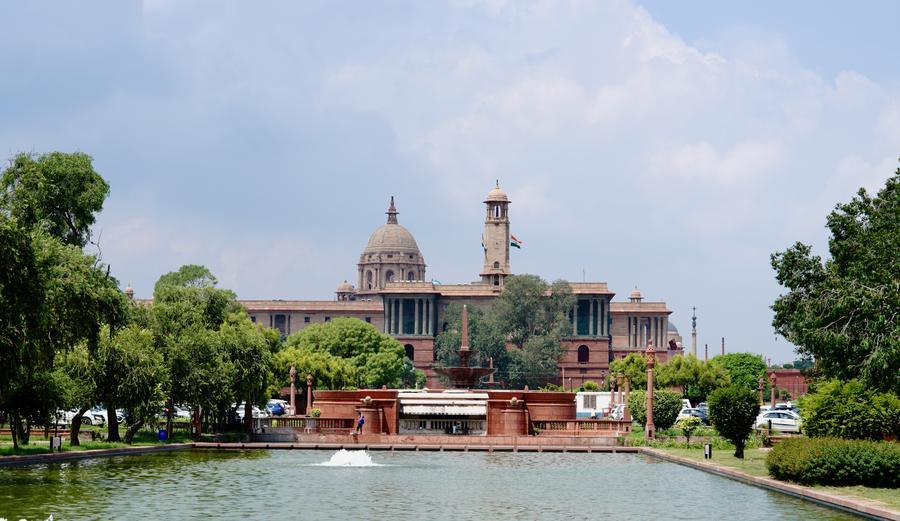
This photo taken on Aug. 20, 2025 shows a view of the Rashtrapati Bhavan in New Delhi, India. (Xinhua/Wu Yue)
At the upcoming summit, Xi will join other leaders in charting a new course for the high-quality development of greater BRICS cooperation, pooling the collective strength of the Global South and contributing stability and positive momentum to a world undergoing profound changes.
BUILDING STRONGER BRICS
In March 2013, Xi attended the fifth BRICS Summit in Durban, South Africa. It was his first international summit as Chinese president.
“We, the five BRICS countries, come from four different continents. The grand goal of fostering partnership for common development and the noble cause of promoting democracy in international relations and advancing peace and development of mankind have brought us together,” he said in a keynote speech at the summit.
Xi called on BRICS countries to move toward the goal of integrated markets, multi-tiered financial network, connectivity by land, air and sea, and greater cultural exchanges.
Two years later, at the seventh BRICS Summit held in Ufa, Russia, Xi called for building a partnership for world peace, common development, inter-civilization dialogue and more effective global economic governance.
When China was the BRICS chair back in 2017, Xi proposed the “BRICS Plus” cooperation model at the ninth BRICS Summit in Xiamen, calling for getting more emerging markets and developing countries involved in the group’s concerted endeavors for cooperation and mutual benefits.
In October 2024, the 16th BRICS Summit in Kazan, Russia, marked the first BRICS leaders’ offline summit since the group’s expansion. “It is for our shared pursuit and for the overarching trend of peace and development that we BRICS countries have come together,” Xi said in a speech at the summit.
Building on this vision, Xi proposed building a BRICS committed to peace, innovation, green development, justice and closer people-to-people exchanges.
Xi has advanced BRICS cooperation through “highly constructive proposals,” bringing more Global South countries that share a vision of a multipolar world into dialogue and practical cooperation, thereby strengthening the appeal and influence of BRICS, said Alexander Gusev, director of Russia’s Institute for Strategic Planning and Forecasting.
Today, the BRICS has expanded to 11 member countries and 10 partner countries, becoming a force for advancing a multipolar world and greater democracy in international relations.
BRICS countries account for nearly half of the world’s population, around 30 percent of the global economy and one-fifth of global trade.
“China seeks the greatest common ground for cooperation through equal dialogue, builds consensus around shared interests, and continuously strengthens the cohesion and capacity for action of BRICS cooperation,” said Mohamed Hussein, first deputy head of Egypt’s State Information Service.
BRICS is a platform with great potential while strengths and differences among its members are an asset, said Marcos Cordeiro Pires, a professor of political and economic sciences at the Sao Paulo State University.
In a world undergoing profound changes, the BRICS is amplifying the voices of Global South countries in demands for better governance, more security and the right to development, said Pires.
BRICS IN ACTION
At Xiamen Port in southeast China’s Fujian Province, a major hub for international shipping, the BRICS Go-Global Express officially kicked off in late July, providing a new bridge for Chinese companies to expand into BRICS markets abroad.
The inaugural event focused on Nigeria, which officially became a BRICS partner country last year. Hassan Mohammed, commissioner of the Trade Division at the Consulate General of Nigeria in Shanghai, said the BRICS Plus framework had created more platforms for exchanges and brought the two countries closer together.
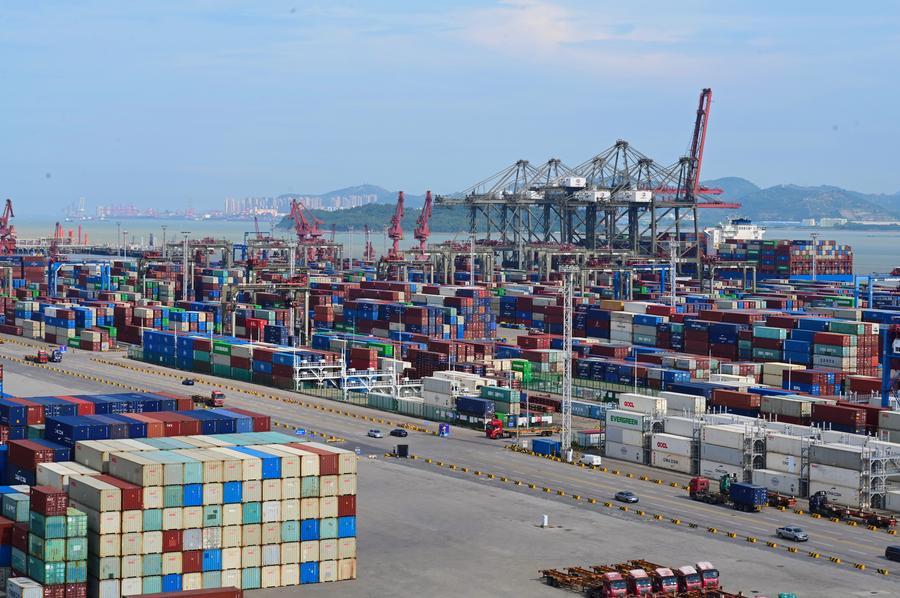
This photo taken on July 29, 2026 shows a view of a quay in Xiamen, southeast China’s Fujian Province. (Xinhua/Lin Shanchuan)
At the 12th BRICS Summit in November 2020, Xi announced China’s plan to set up a BRICS Partnership on New Industrial Revolution innovation center in Xiamen.
Since its establishment, the center has facilitated more than 100 cooperation projects, with a total investment of over 62 billion yuan (9.24 billion U.S. dollars). It has also launched a scholarship for emerging industries, helping BRICS countries cultivate talent across a range of fields, including industry and communications.
Delivering results has been central to the BRICS agenda. As Xi once put it, “BRICS is not a talking shop, but a task force that gets things done.”
By the end of 2025, the New Development Bank, whose establishment Xi personally championed, had approved 139 projects with total financing of about 43 billion dollars, bringing tangible benefits to people in Global South countries through green energy, transport infrastructure and access to clean drinking water.
In 2021, Xi proposed the Global Development Initiative at the general debate of the 76th session of the United Nations General Assembly. Five years on, the initiative is complementing and reinforcing the BRICS cooperation mechanism, bringing development further to the forefront of the international agenda.
China has since launched initiatives to expand BRICS cooperation in areas including deep-sea resources, the digital economy, green industries and clean energy. It has also proposed new programs in artificial intelligence and digital education.
BRICS and the Global Development Initiative have increasingly complemented and reinforced each other, said Siti Mutiah Setiawati, a lecturer at Gadjah Mada University in Indonesia.
Together, they have brought greater attention to development on the international agenda, and helped translate shared aspirations into practical outcomes for emerging markets and developing countries, she said.
ADVANCING GOVERNANCE REFORM
In September last year, Xi proposed the Global Governance Initiative (GGI) at the “Shanghai Cooperation Organization Plus” Meeting in the northern Chinese port city of Tianjin.
Seven days later, when addressing a virtual BRICS Summit, Xi said the GGI “is aimed at galvanizing joint global action for a more just and equitable global governance system.”
BRICS countries are increasingly finding common ground on issues ranging from development and a more multipolar world to global governance reform. At the 2024 BRICS Summit, Xi called for building the group into “a vanguard for advancing global governance reform.”
The GGI provides an important framework for BRICS to advance global governance reform, helping strengthen the UN-centered international system and make global governance more just, equitable and representative, said B. R. Deepak, professor of Chinese and China Studies at the Centre of Chinese and Southeast Asian Studies, Jawaharlal Nehru University.
Aerial photo taken on June 17, 2022 shows the headquarters building of the New Development Bank (NDB), also known as the BRICS bank, in east China’s Shanghai. (Xinhua/Fang Zhe)
This vision has also been reflected in Xi’s calls for greater cooperation among BRICS countries. At the “BRICS Plus” leaders’ dialogue in Kazan, Russia, Xi called on BRICS countries to become the main driving force for common development, play an active and leading role in the global economic governance reform, and make development the core of international economic and trade agenda.
At the BRICS Business Forum in Johannesburg, South Africa, in 2018, Xi also called on BRICS countries to firmly support the multilateral trading regime, advance global economic governance reform and increase the representation and voice of emerging markets and developing countries.
Concrete actions have accompanied these calls on reforming major international financial institutions. BRICS countries have put forward clear positions on reforms of the International Monetary Fund (IMF) quota system and the World Bank’s shareholding structure.
The Rio de Janeiro Declaration, adopted at the 17th BRICS Summit held last year in Rio de Janeiro, Brazil, stressed that further quota realignment in the IMF should increase the shares of emerging markets and developing economies.
As for the World Bank, the declaration called for “increased voice and representation of developing countries, underpinned by a shareholding realignment that corrects their historic underrepresentation.”
“The greatest contribution of BRICS over the last two decades has been its role in changing the conversation about global political governance,” said Ronney Ncwadi, professor and director of the School of Economics, Development and Tourism at Nelson Mandela University.
“BRICS has demonstrated that emerging and developing economies are no longer just recipients of global rules, but are increasingly participating in shaping those rules,” said Ncwadi. (Video editors: Yu Jiaming, Zhang Yuhong, Wang Han)■
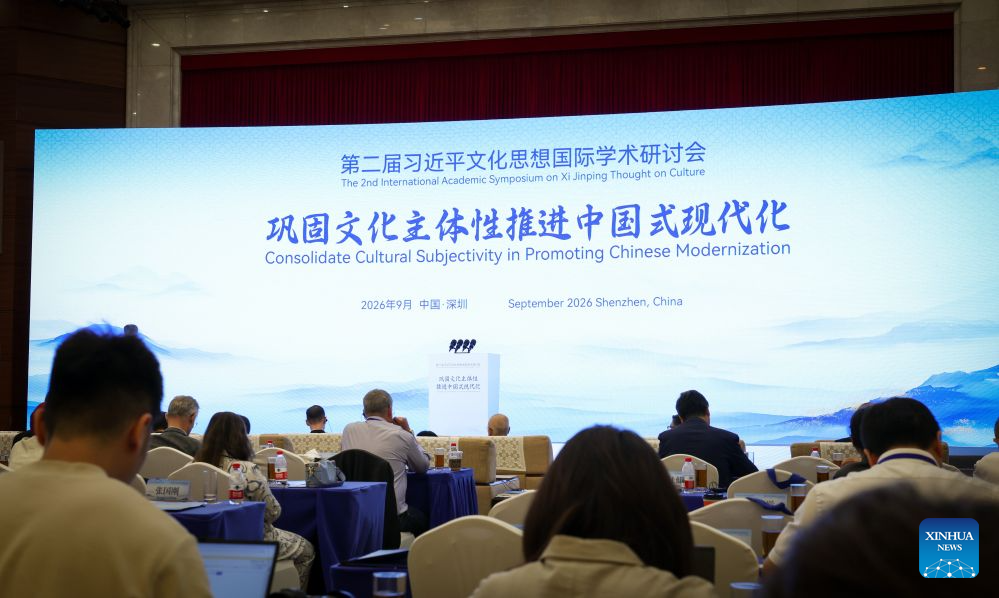
An international symposium themed “Consolidate Cultural Subjectivity in Promoting Chinese Modernization” is held in Shenzhen, south China’s Guangdong Province, Sept. 6, 2026. The symposium brought together about 130 experts, scholars and guests from home and abroad. (Xinhua/Mao Siqian)
SHENZHEN, Sept. 6 (Xinhua) — New popular literature and art, characterized by broad public participation in the era of the internet and AI, are helping China better express itself and contribute to a fairer global cultural order, according to a think tank report released on Sunday.
Titled “The Flourishing Development and Global Influence of New Popular Literature and Art,” the report was issued by the National High-Level Think Tank of Xinhua News Agency at an international symposium held in Shenzhen, a tech hub in south China’s Guangdong Province.
The report said new popular literature and art refer to “a brand-new, composite literary and artistic ecosystem that has emerged in the realm of literature and art, driven by the scientific and technological revolution encompassing the internet, big data and AI.”
This ecosystem features broad public participation in creation, dissemination and sharing, and reflects the voice of the people and the themes of the times, according to the report.
“Rooted in everyday life, it responds to the aesthetic needs of the people…and is increasingly showcasing Chinese characteristics, style and manner in global cultural exchanges,” the report noted.
At a time when globalization and digitalization converge, the report emphasized that new popular literature and art are employing a multiplicity of narratives to shift China’s image from one “defined by others” to one “expressed by itself.”
They draw on Eastern wisdom to offer a value reference for the shared dilemmas confronting humanity, the report stated. Through openness and collaboration, they help break up the concentrated structure of the global cultural industry. By harnessing technology, they contribute to building a fairer global cultural order.
Themed “Consolidate Cultural Subjectivity in Promoting Chinese Modernization,” the symposium brought together about 130 experts, scholars and guests from home and abroad.
Hong Dayong, deputy head of the Publicity Department of the CPC Central Committee, said in his opening speech that China’s efforts to strengthen its cultural subjectivity have offered insights for countries around the world to preserve their cultural characteristics and identities and explore development paths suited to their own civilizations.
Lyu Yansong, editor-in-chief of Xinhua News Agency, said in his address that Xinhua will further explore new ways of communication and expression, thus enabling countries around the world to gain a deeper understanding of the historical richness, intellectual depth and vitality of Chinese civilization through the vivid practice of Chinese modernization.
Four parallel sessions were held during the symposium, respectively themed “the humanomics in the new era,” “promote new forms of literature and art for the general public in the internet age,” “deepen exchanges and mutual learning among civilizations,” and “build Chinese intellectual system in philosophy and social sciences.” ■
An international symposium themed “Consolidate Cultural Subjectivity in Promoting Chinese Modernization” is held in Shenzhen, south China’s Guangdong Province, Sept. 6, 2026. The symposium brought together about 130 experts, scholars and guests from home and abroad. (Xinhua/Deng Hua)
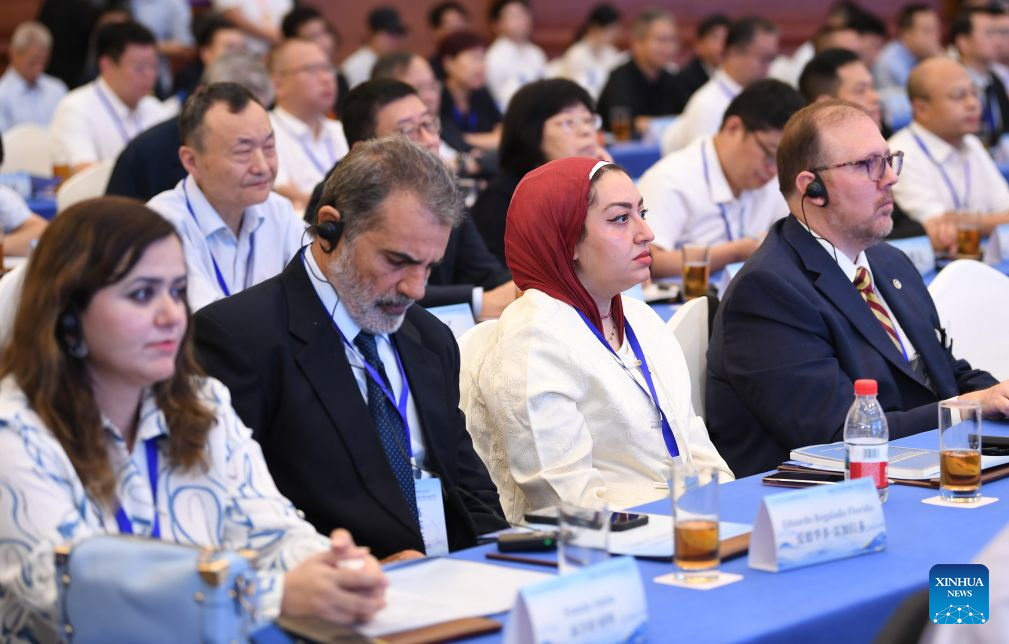
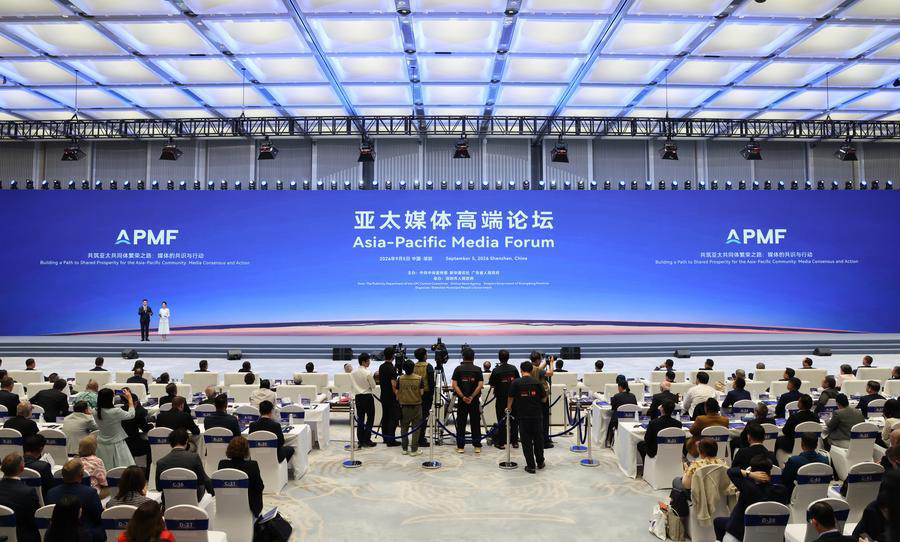
This photo taken on Sept. 5, 2026 shows the opening ceremony of the Asia-Pacific Media Forum in Shenzhen, south China’s Guangdong Province. (Xinhua/Liang Xu)
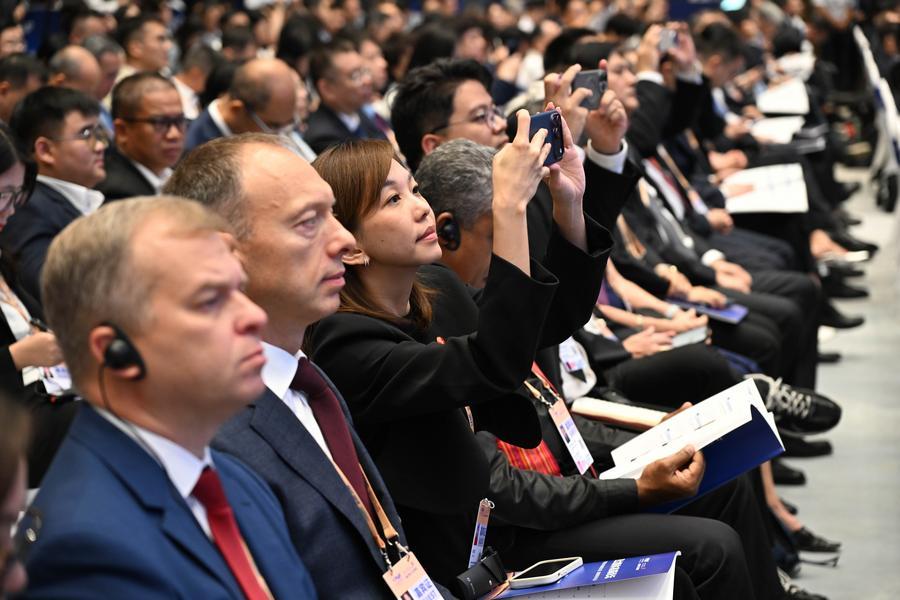
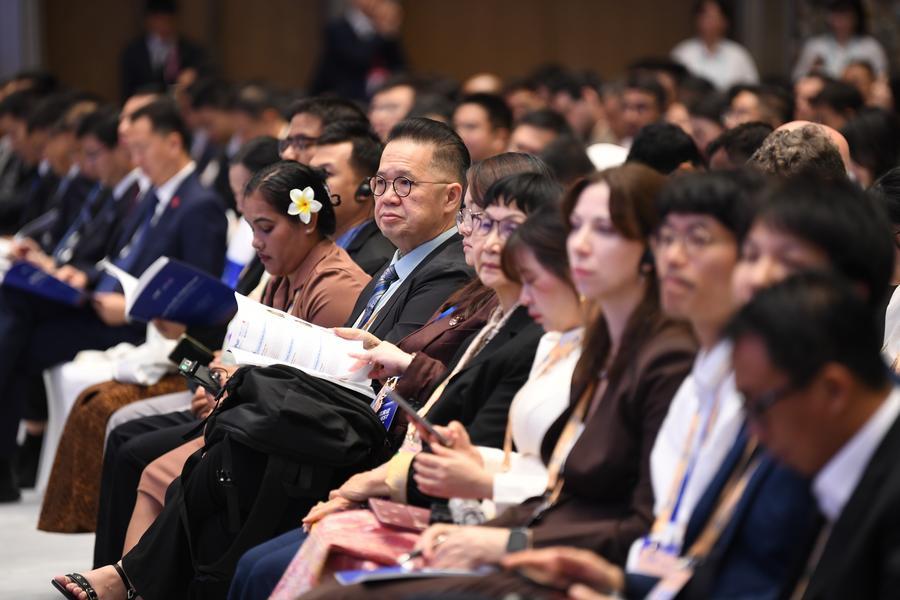
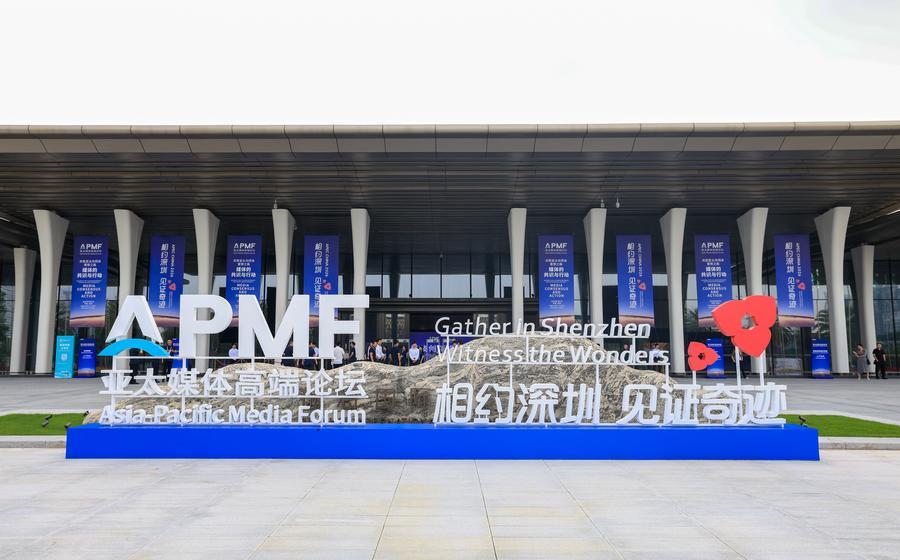
SHENZHEN, Sept. 5 (Xinhua) — The Asia-Pacific Media Forum opened on Saturday in Shenzhen, with the theme of “Building a Path to Shared Prosperity for the Asia-Pacific Community: Media Consensus and Action.”
More than 400 representatives from over 40 countries and regions, as well as UN agencies and international organizations, attended the event.
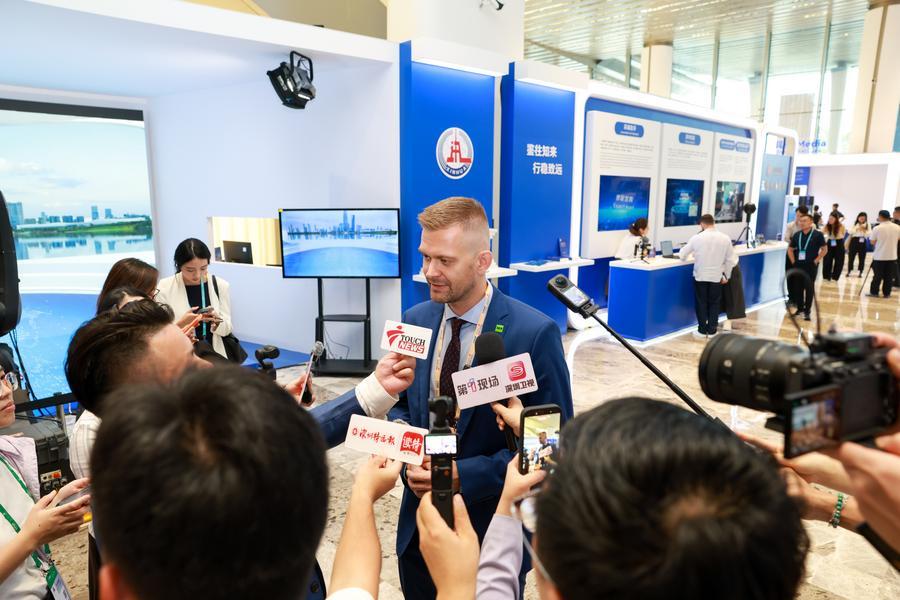
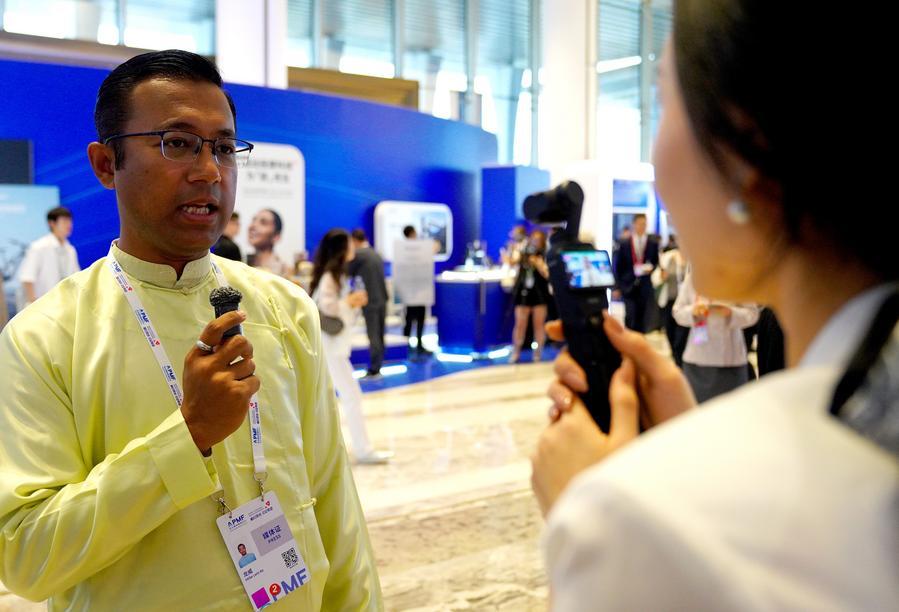
Guests attend the opening ceremony of the Asia-Pacific Media Forum in Shenzhen, south China’s Guangdong Province, Sept. 5, 2026. (Xinhua/Deng Hua)Guests attend the opening ceremony of the Asia-Pacific Media Forum in Shenzhen, south China’s Guangdong Province, Sept. 5, 2026. (Xinhua/Deng Hua)A guest is interviewed during the Asia-Pacific Media Forum in Shenzhen, south China’s Guangdong Province, Sept. 5, 2026. (Xinhua/Mao Siqian)Media professionals work during the Asia-Pacific Media Forum in Shenzhen, south China’s Guangdong Province, Sept. 5, 2026. (Xinhua/Li An)This photo taken on Sept. 5, 2026 shows the logo of the Asia-Pacific Media Forum outside the venue of the forum in Shenzhen, south China’s Guangdong Province. (Xinhua/Mao Siqian)
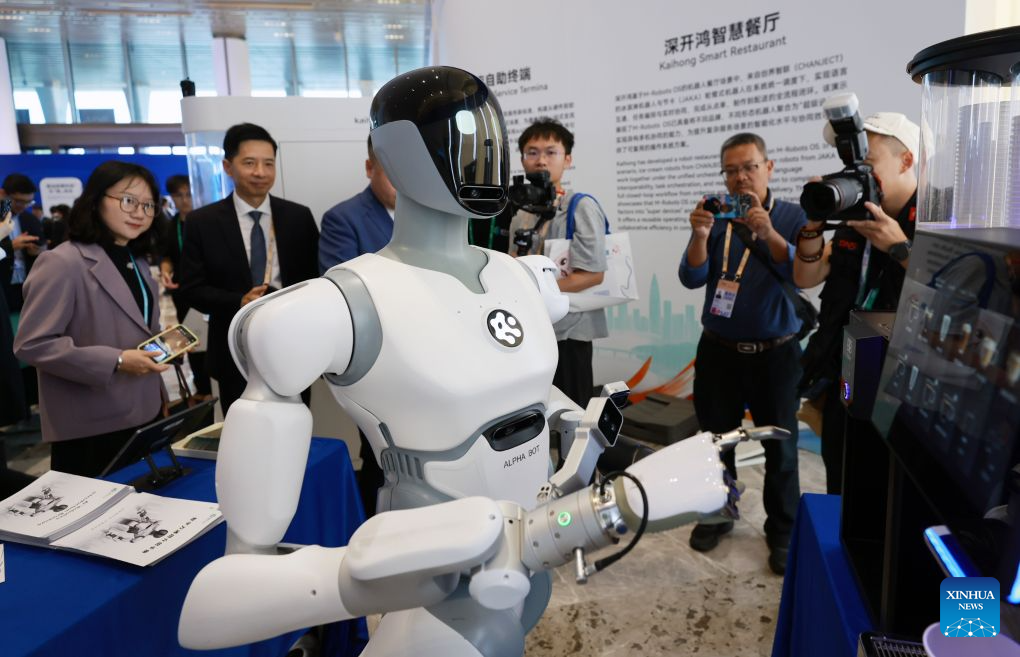
Visitors watch a robot making coffee during the Asia-Pacific Media Forum in Shenzhen, south China’s Guangdong Province, Sept. 5, 2026.
The Asia-Pacific Media Forum opened on Saturday in Shenzhen, with the theme of “Building a Path to Shared Prosperity for the Asia-Pacific Community: Media Consensus and Action.”
The forum held an exhibition of scientific and technological innovation achievements, mainly showcasing cutting-edge innovation achievements in Guangdong Province, especially in Shenzhen. (Xinhua/Gao Jing)
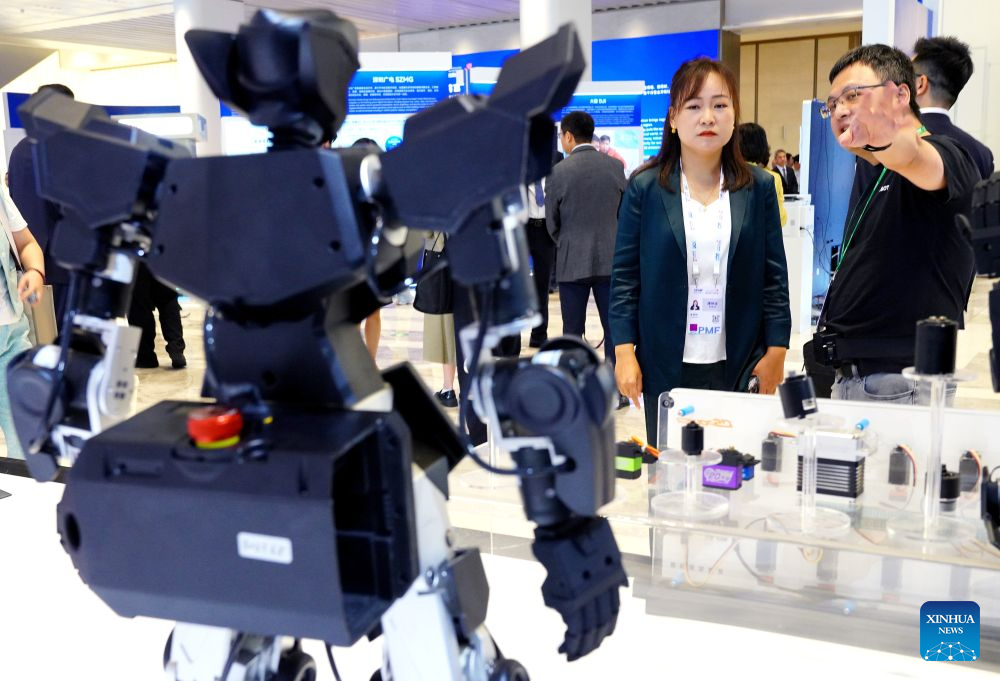
A staff member introduces a robot to a visitor during the Asia-Pacific Media Forum in Shenzhen, south China’s Guangdong Province, Sept. 5, 2026.
The Asia-Pacific Media Forum opened on Saturday in Shenzhen, with the theme of “Building a Path to Shared Prosperity for the Asia-Pacific Community: Media Consensus and Action.”
The forum held an exhibition of scientific and technological innovation achievements, mainly showcasing cutting-edge innovation achievements in Guangdong Province, especially in Shenzhen. (Xinhua/Li An)
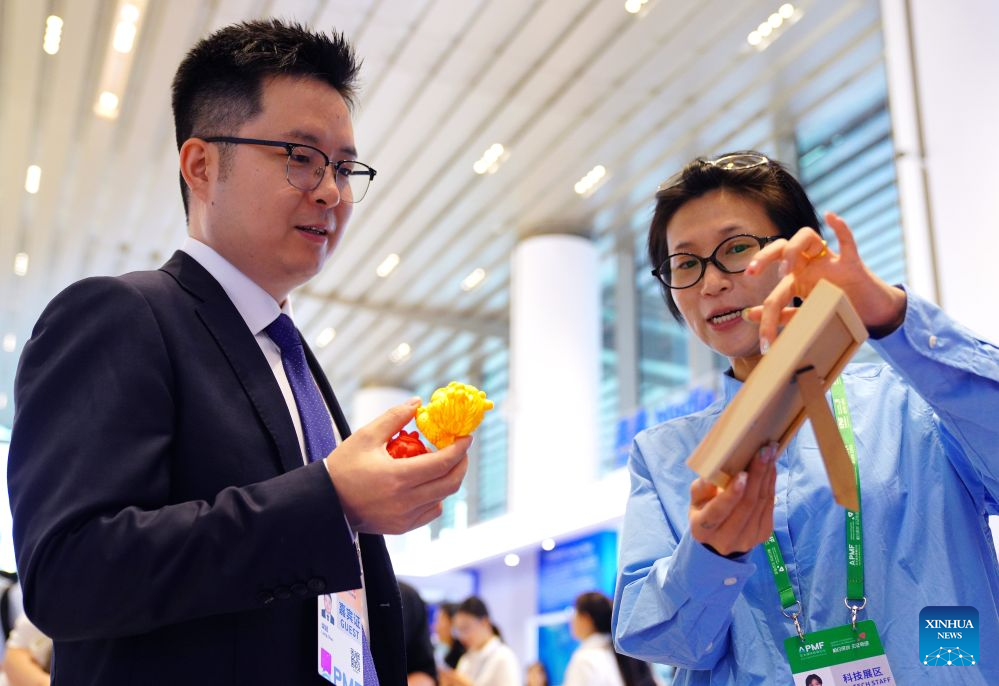
A staff member (R) introduces 3D-printed products to a visitor during the Asia-Pacific Media Forum in Shenzhen, south China’s Guangdong Province, Sept. 5, 2026.
The Asia-Pacific Media Forum opened on Saturday in Shenzhen, with the theme of “Building a Path to Shared Prosperity for the Asia-Pacific Community: Media Consensus and Action.”
The forum held an exhibition of scientific and technological innovation achievements, mainly showcasing cutting-edge innovation achievements in Guangdong Province, especially in Shenzhen. (Xinhua/Li An)