Daily Kenya

Categories
Regional

Asia-Pacific Media Forum held in China’s Guangdong

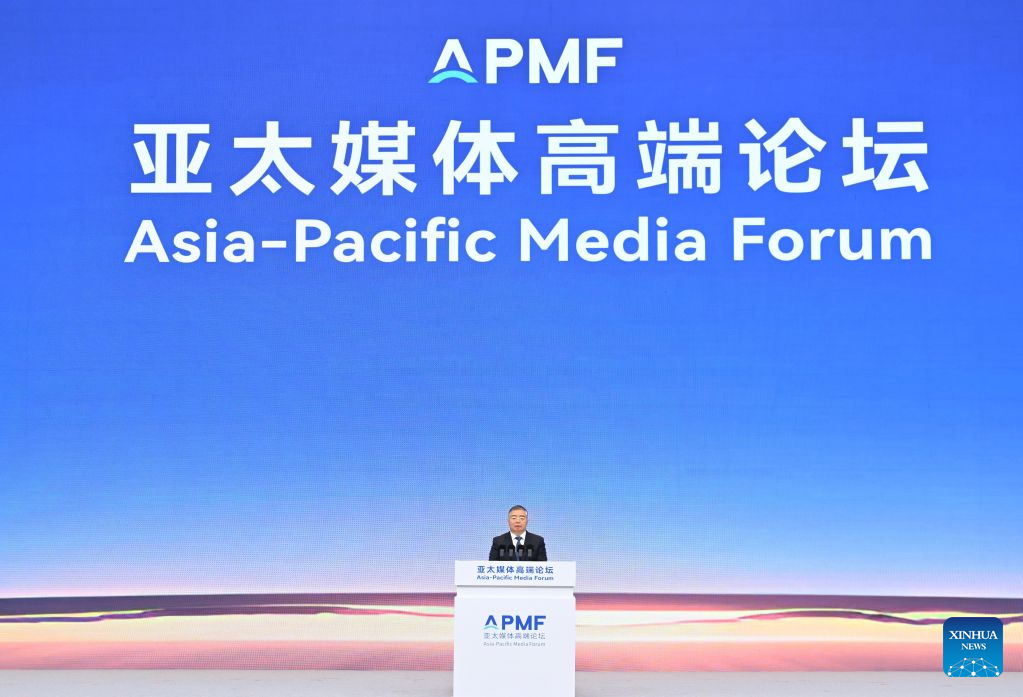
Shulei, a member of the Political Bureau of the Communist Party of China (CPC) Central Committee and head of the Publicity Department of the CPC Central Committee, attends the Asia-Pacific Media Forum and delivers a keynote speech in Shenzhen, south China’s Guangdong Province, Sept. 5, 2026. The Asia-Pacific Media Forum opened on Saturday in Shenzhen. (Xinhua/Gao Jie)

SHENZHEN, Sept. 5 (Xinhua) — The Asia-Pacific Media Forum opened on Saturday in Shenzhen, south China’s Guangdong Province, with the theme of “Building a Path to Shared Prosperity for the Asia-Pacific Community: Media Consensus and Action.”

Li Shulei, a member of the Political Bureau of the Communist Party of China (CPC) Central Committee and head of the Publicity Department of the CPC Central Committee, attended the forum and delivered a keynote speech. Huang Kunming, a member of the Political Bureau of the CPC Central Committee and secretary of the CPC Guangdong Provincial Committee, attended the forum and delivered a speech.

Participating guests noted that this year marks 2026 APEC “China Year,” during which China will host the 33rd APEC Economic Leaders’ Meeting. They expressed their belief that with support from all sides, the summit will yield fruitful outcomes and elevate Asia-Pacific cooperation to new heights.

Participating guests emphasized that development and cooperation in the Asia-Pacific region depend on the active participation of media. The media are expected to share stories of openness and integration, provide comprehensive coverage of the region’s progress and achievements across various fields, and help foster a favorable public opinion environment for the region’s open development.

Participating guests noted that the media should actively promote outcomes of the series of APEC activities, interpret policies and measures of various economies to support scientific and technological innovation, and build regional consensus for innovative development.

They also called for deepening results-oriented cooperation in joint reporting, technological innovation and personnel training, and leveraging media exchanges to carry forward civilizations, spread culture and convey goodwill, so as to enhance mutual understanding and closer bonds among the peoples of the Asia-Pacific.

The forum was co-hosted by the Publicity Department of the CPC Central Committee, Xinhua News Agency and the Guangdong provincial government, and organized by the Shenzhen municipal government.

More than 400 representatives from over 40 countries and regions, as well as UN agencies and international organizations, attended the event. At the opening ceremony, 16 founding organizations from China and abroad jointly formed the Organizing Committee of the Asia-Pacific Media Partnership Program. ■
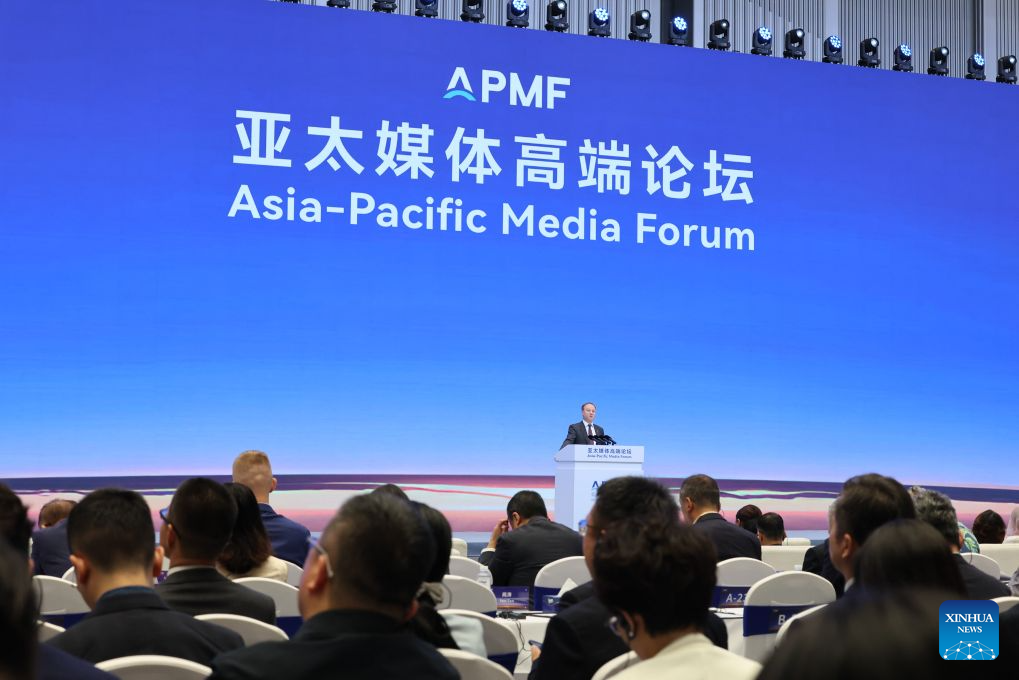
Dmitrii Gornostaev, deputy director general of Rossiya Segodnya Media Group of Russia, speaks at the opening ceremony of the Asia-Pacific Media Forum in Shenzhen, south China’s Guangdong Province, Sept. 5, 2026.

The Asia-Pacific Media Forum opened on Saturday in Shenzhen, with the theme of “Building a Path to Shared Prosperity for the Asia-Pacific Community: Media Consensus and Action.”

More than 400 representatives from over 40 countries and regions, as well as UN agencies and international organizations, attended the event. (Xinhua/Liang Xu)
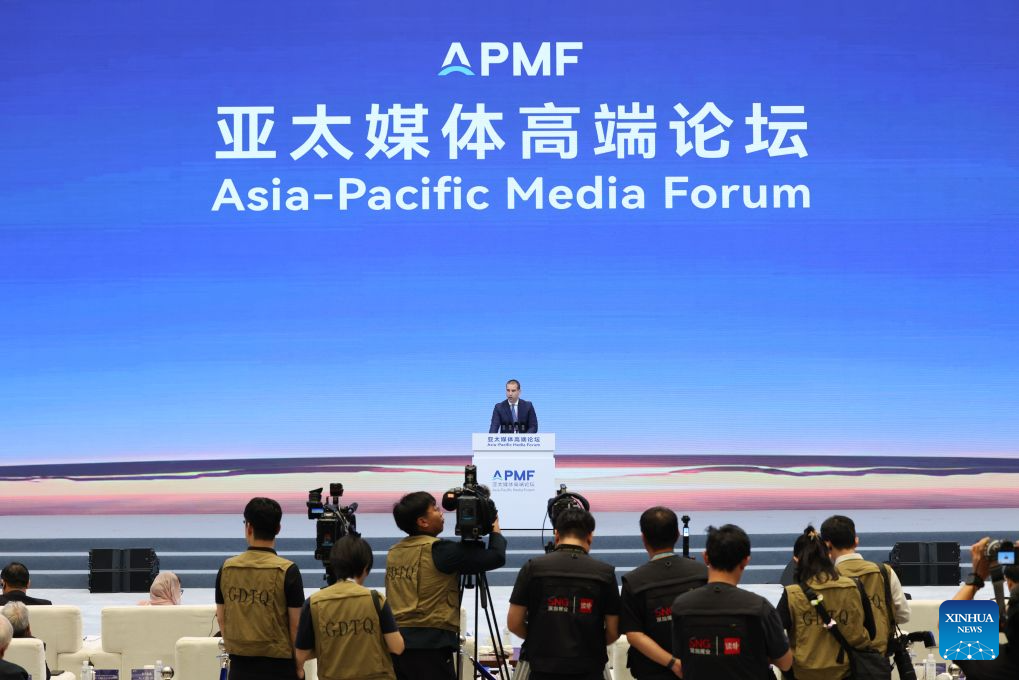
Konstantinos Oikonomou, senior vice president of CNN, speaks at the opening ceremony of the Asia-Pacific Media Forum in Shenzhen, south China’s Guangdong Province, Sept. 5, 2026.

The Asia-Pacific Media Forum opened on Saturday in Shenzhen, with the theme of “Building a Path to Shared Prosperity for the Asia-Pacific Community: Media Consensus and Action.”

More than 400 representatives from over 40 countries and regions, as well as UN agencies and international organizations, attended the event. (Xinhua/Liang Xu)
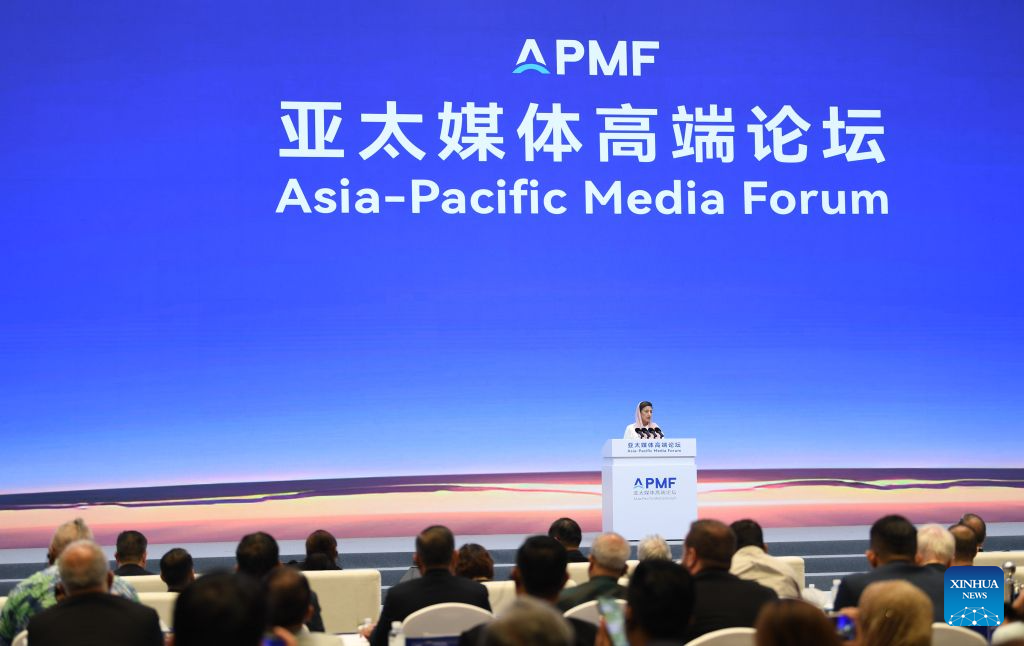
Shezra Mansab Ali Khan Kharal, minister of state of Ministry of Climate Change and Environmental Coordination of Pakistan, speaks at the opening ceremony of the Asia-Pacific Media Forum in Shenzhen, south China’s Guangdong Province, Sept. 5, 2026.

The Asia-Pacific Media Forum opened on Saturday in Shenzhen, with the theme of “Building a Path to Shared Prosperity for the Asia-Pacific Community: Media Consensus and Action.”

More than 400 representatives from over 40 countries and regions, as well as UN agencies and international organizations, attended the event. (Xinhua/Deng Hua)
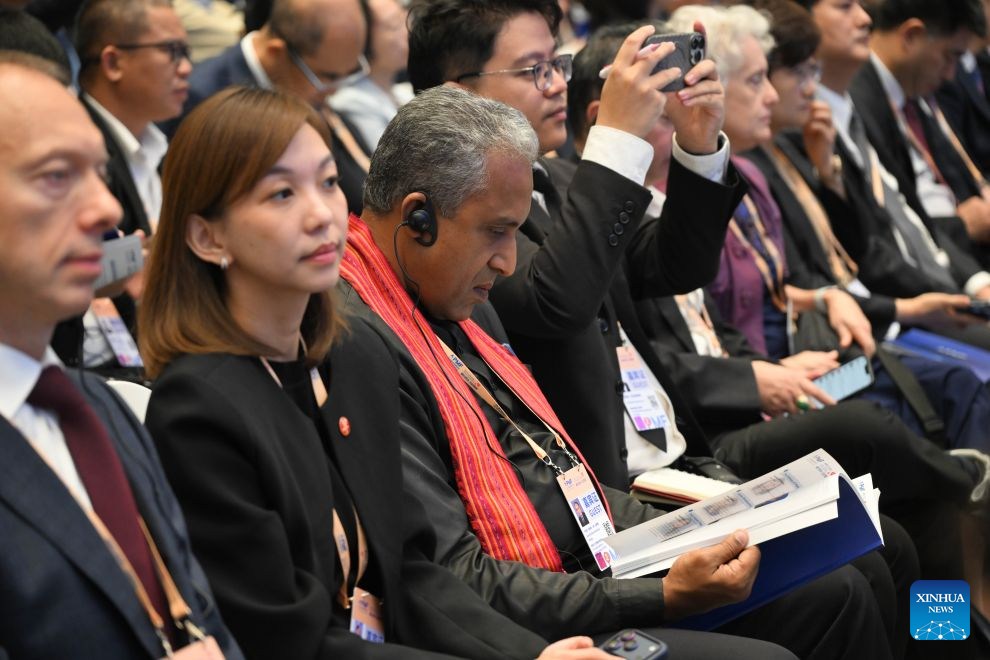
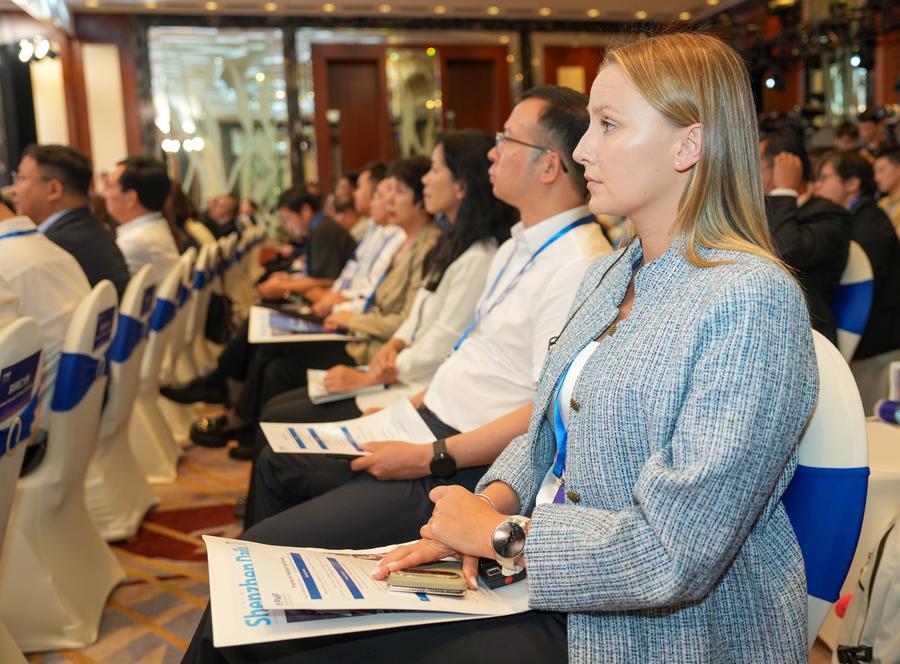
Guests attend the opening ceremony of the Asia-Pacific Media Forum in Shenzhen, south China’s Guangdong Province, Sept. 5, 2026.

The Asia-Pacific Media Forum opened on Saturday in Shenzhen, with the theme of “Building a Path to Shared Prosperity for the Asia-Pacific Community: Media Consensus and Action.”

More than 400 representatives from over 40 countries and regions, as well as UN agencies and international organizations, attended the event. (Xinhua/Deng Hua)
Categories
Regional

Xinhua Communication Effectiveness Evaluation Index System releases report on APEC narratives

SHENZHEN, Sept. 5 (Xinhua) — Xinhua Communication Effectiveness Evaluation Index System on Saturday released Chinese and English versions of a report providing insights into APEC narratives at the Asia-Pacific Media Forum held in Shenzhen, south China’s Guangdong Province.

Titled Sharing Inspiring Asia-Pacific Stories, Contributing China’s Constructive Solutions — Insights into APEC Narratives Based on the Asia-Pacific Communication Index, the report was compiled based on multilingual data resources and intelligent research and analysis technologies of the Xinhua Communication Effectiveness Evaluation Index System.

The report takes the period from 2023 to the first half of 2026 as the research cycle and selects over 200,000 pieces of information samples disseminated by more than 200 mainstream media outlets in the Asia-Pacific region.

In the report, a quantitative assessment system based on four dimensions, namely communication heat, communication breadth, communication depth, and communication attitude, is established to assess the communication effect of the APEC concept across the region, identify narrative characteristics and communication patterns among Asia-Pacific media outlets, and objectively present public opinion trends and the evolution of Asia-Pacific cooperation under the new situation.

The report notes that the communication model of APEC topics is undergoing profound changes, gradually shifting from the “annual meeting event-based communication” to “regular value-based discussion.” The shift responds to the common aspirations of all economies to seek development, effectively consolidating long-term regional cooperation consensus and promoting widespread dissemination of the Asia-Pacific community vision.

According to the report, openness, innovation and cooperation have emerged as the main themes of APEC communication. Among them, in-depth interpretations of “openness” account for the largest share; “innovation”-related topics lead in growth rate; and “cooperation” has the broadest reach and the strongest foundation of regional consensus.

The three themes reinforce one another, continuously building consensus on regional development and creating a favorable international public opinion environment for building the Asia-Pacific community.

Given the complex regional environment, the report stresses that deepening synergies and consolidating communication efforts of media outlets across the region are of great practical significance.

China will continue to deepen dialogue and cooperation with Asia-Pacific economies, build bridges for mutual trust and communication, and work with Asia-Pacific media outlets to tell the Asia-Pacific stories of openness and inclusiveness, innovation-driven development, and win-win cooperation, contributing to the sustainable prosperity of the Asia-Pacific region. 

Categories
Regional

Interview: Closer media cooperation can help build consensus across region: journalists association chief

BANGKOK, Sept. 5 (Xinhua) — Closer cooperation among Asia-Pacific media organizations in areas such as fact-checking, news resources sharing, and joint reporting can help build consensus and foster greater understanding across the region amid challenges brought by artificial intelligence (AI), Kamphol Mahanukul, president of the Thai-Chinese Journalists Association, has said.

He made the remarks in an interview here with Xinhua ahead of his trip to the southern Chinese city of Shenzhen to attend the Asia-Pacific Media Forum, which opened Saturday.

Kamphol said media cooperation is closely linked to regional cooperation under the Asia-Pacific Economic Cooperation (APEC) framework. Media organizations, as the force of news reporting and information dissemination, should strengthen direct exchanges and expand practical cooperation, according to him.

He pointed to the challenges posed by AI and misinformation, such as the rise of independent online content creators, and lower barriers to news production and distribution. “Today, anyone with a mobile phone can become a so-called ‘journalist’. But we still hope the public will trust mainstream media.”

Mainstream media outlets operate under established institutional frameworks and can be held accountable for the information they publish, Kamphol noted.

A news report typically goes through several stages, from news gathering and writing to editorial review, verification and final approval, he said, adding that by contrast, online content creation might prioritize attracting traffic and publishing quickly for direct conversion into revenue, and as a result, unverified information can be produced and disseminated more readily.

“In the past, radio was the fastest medium; then it was television; over the past decade, it has been the Internet,” Kamphol said. “Everyone is trying to be the first to publish, and that increases the risk of mistakes.”

AI can help newsrooms monitor breaking events and assist with writing, copy editing and fact-checking, he noted. However, he stressed that verifying facts, exercising professional judgment and taking responsibility for published reports remain fundamental duties of media organizations.

Over more than 10 years since its establishment, the Thai-Chinese Journalists Association has promoted news exchanges, mutual visits by journalists and professional training between the two sides.

Thai media professionals had traveled to China for training in the use of AI and new-media content production, while media organizations on both sides were expanding the sharing of news resources, Kamphol said.

After media organizations establish stable partnerships, they can share such visual materials as photos and videos more efficiently with proper authorization, he noted.

A journalist with more than 20 years of career experience, Kamphol pointed to differences among media organizations across the region in cultural context, reporting practices and forms of expression. He views the Asia-Pacific Media Forum in Shenzhen as a platform for participants to share experience in news gathering and editing, and discuss the use of AI in news production.

Looking ahead, Kamphol expressed hope that media organizations in the region will expand exchanges and cooperation in professional training and the use of AI, while deepening collaboration in sharing text, photo and video resources and jointly covering major developments.

“I hope credible media organizations and journalist associations in Thailand, China and across the Asia-Pacific can build a more stable and lasting platform for cooperation,” he said. ■

Categories
Regional

Sub-forums of Asia-Pacific Media Forum held in S China’s Guangdong

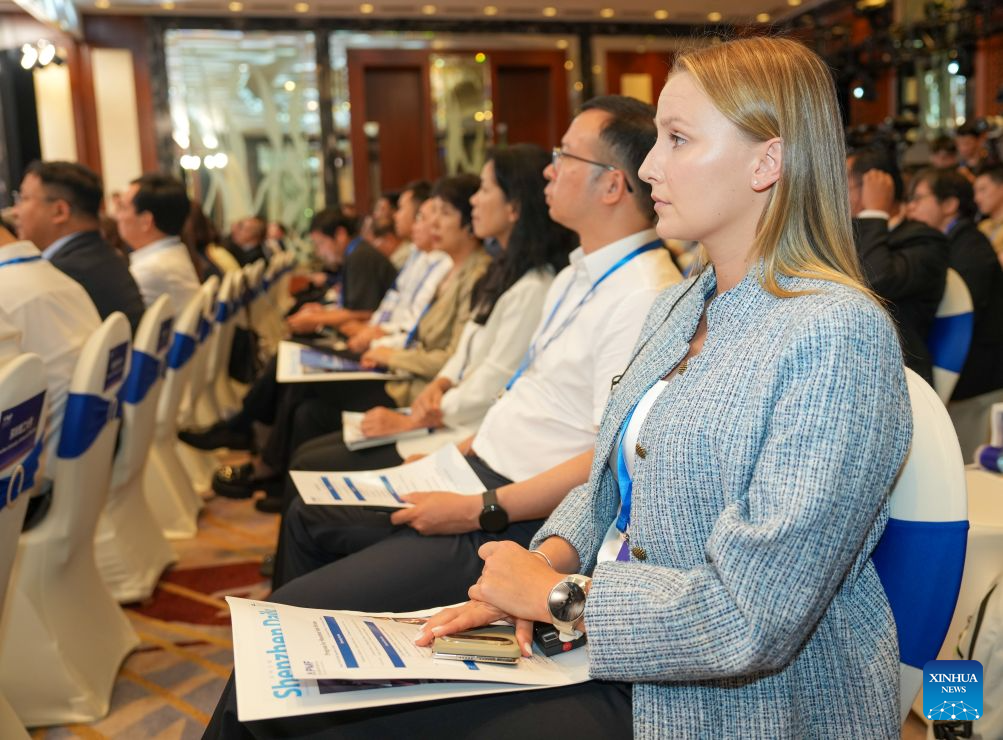
Guests attend the Asia-Pacific Media Forum Shenzhen Sub-forum in Shenzhen, south China’s Guangdong Province, Sept. 4, 2026.

The Asia-Pacific Media Forum will open on Saturday in Shenzhen, south China’s Guangdong Province, as the country hosts a series of events under the 2026 APEC “China Year.”

Multiple outcomes are expected to be unveiled at the forum, under the theme of “Building a Path to Shared Prosperity for the Asia-Pacific Community: Media Consensus and Action.”

From Sept. 3 to 4, the forum held four sub-forums in Guangzhou, Dongguan, Zhuhai, and Shenzhen in Guangdong Province. (Xinhua/Dai Mingxuan)

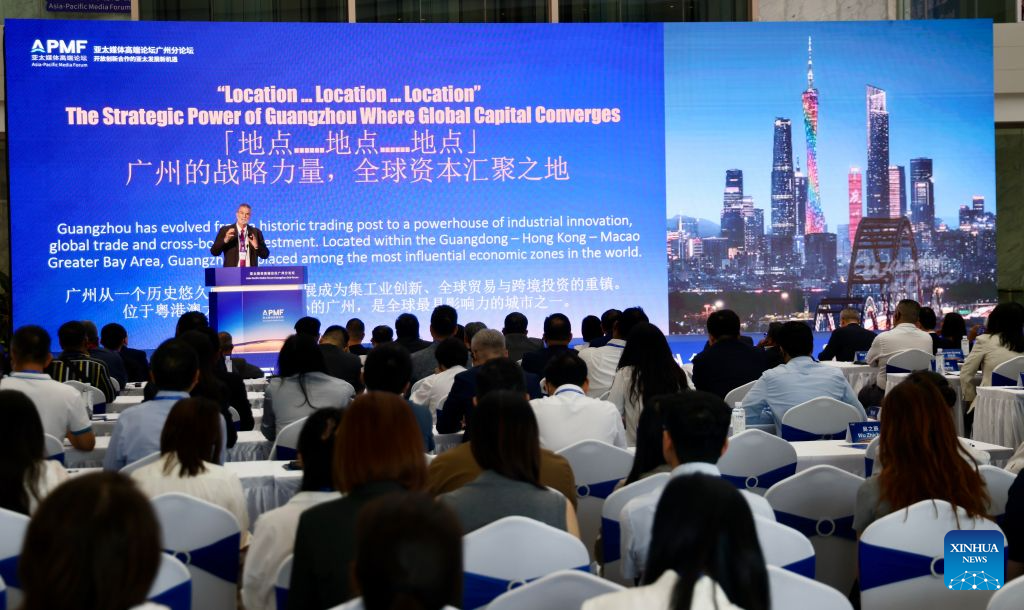
A guest speaks at the Asia-Pacific Media Forum Guangzhou Sub-forum in Guangzhou, south China’s Guangdong Province, Sept. 3, 2026.

The Asia-Pacific Media Forum will open on Saturday in Shenzhen, south China’s Guangdong Province, as the country hosts a series of events under the 2026 APEC “China Year.”

Multiple outcomes are expected to be unveiled at the forum, under the theme of “Building a Path to Shared Prosperity for the Asia-Pacific Community: Media Consensus and Action.”

From Sept. 3 to 4, the forum held four sub-forums in Guangzhou, Dongguan, Zhuhai, and Shenzhen in Guangdong Province. (Xinhua/Lu Hanxin)

Guests attend the Asia-Pacific Media Forum Dongguan Sub-forum in Dongguan, south China’s Guangdong Province, Sept. 3, 2026.

The Asia-Pacific Media Forum will open on Saturday in Shenzhen, south China’s Guangdong Province, as the country hosts a series of events under the 2026 APEC “China Year.”

Multiple outcomes are expected to be unveiled at the forum, under the theme of “Building a Path to Shared Prosperity for the Asia-Pacific Community: Media Consensus and Action.”

From Sept. 3 to 4, the forum held four sub-forums in Guangzhou, Dongguan, Zhuhai, and Shenzhen in Guangdong Province. (Xinhua/Mao Siqian)

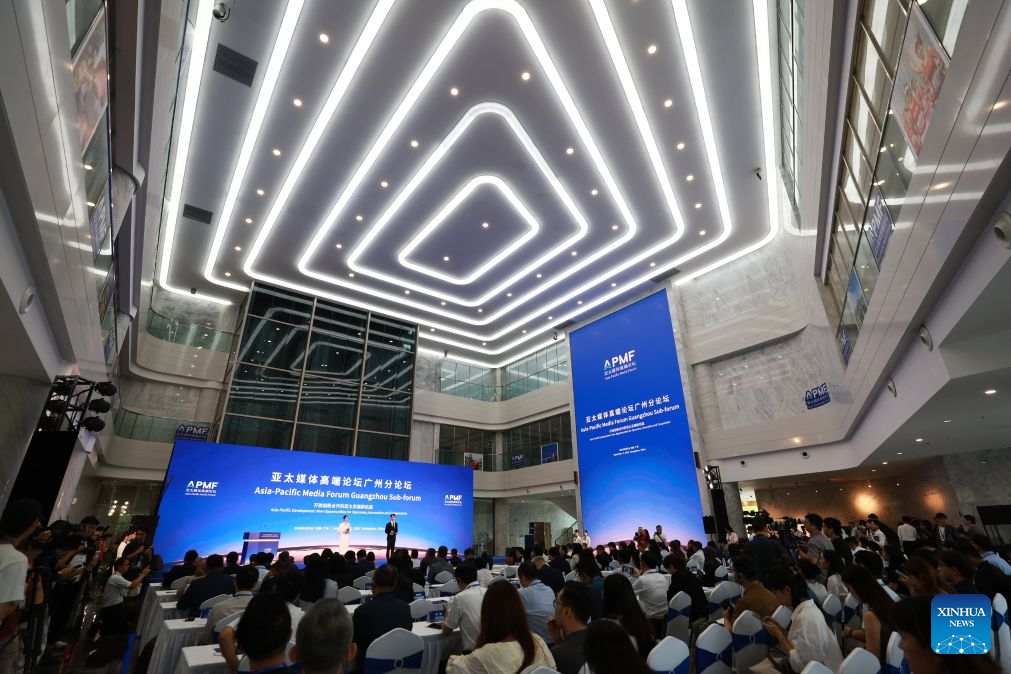
This photo taken on Sept. 3, 2026 shows the Asia-Pacific Media Forum Guangzhou Sub-forum in Guangzhou, south China’s Guangdong Province.

The Asia-Pacific Media Forum will open on Saturday in Shenzhen, south China’s Guangdong Province, as the country hosts a series of events under the 2026 APEC “China Year.”

Multiple outcomes are expected to be unveiled at the forum, under the theme of “Building a Path to Shared Prosperity for the Asia-Pacific Community: Media Consensus and Action.”

From Sept. 3 to 4, the forum held four sub-forums in Guangzhou, Dongguan, Zhuhai, and Shenzhen in Guangdong Province. (Xinhua/Gao Jing)

Categories
Regional

InPics | Asia-Pacific Media Forum guests visit Zhongshan, Shenzhen and Foshan in S China’s Guangdong

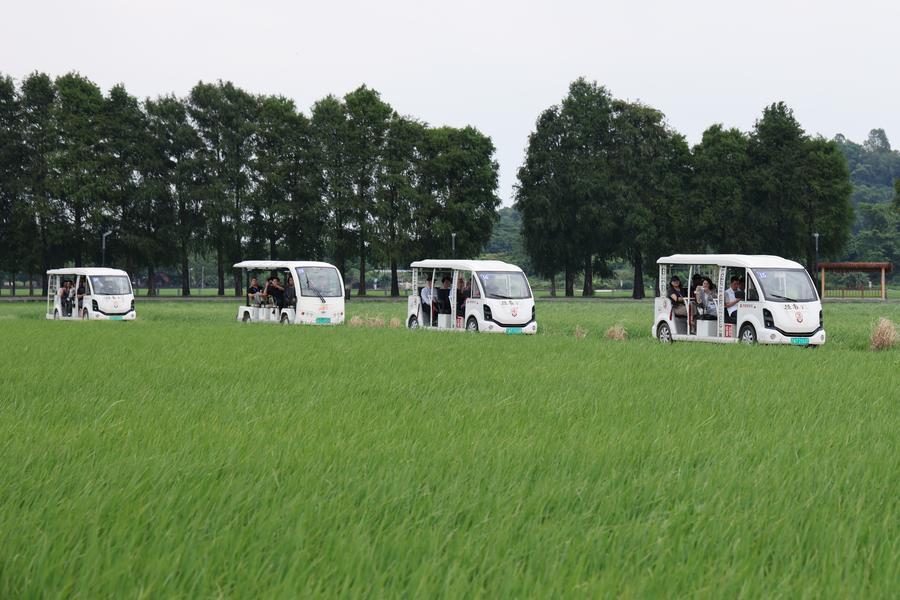
Guests visit the Yakou Village in Zhongshan, south China’s Guangdong Province, Sept. 4, 2026. (Xinhua/Liang Xu)

GUANGZHOU, Sept. 5 (Xinhua) — The Asia-Pacific Media Forum kicked off on Saturday in Shenzhen, south China’s Guangdong Province. Ahead of the event, participating guests visited cities in Guangdong, including Zhongshan, Shenzhen and Foshan.

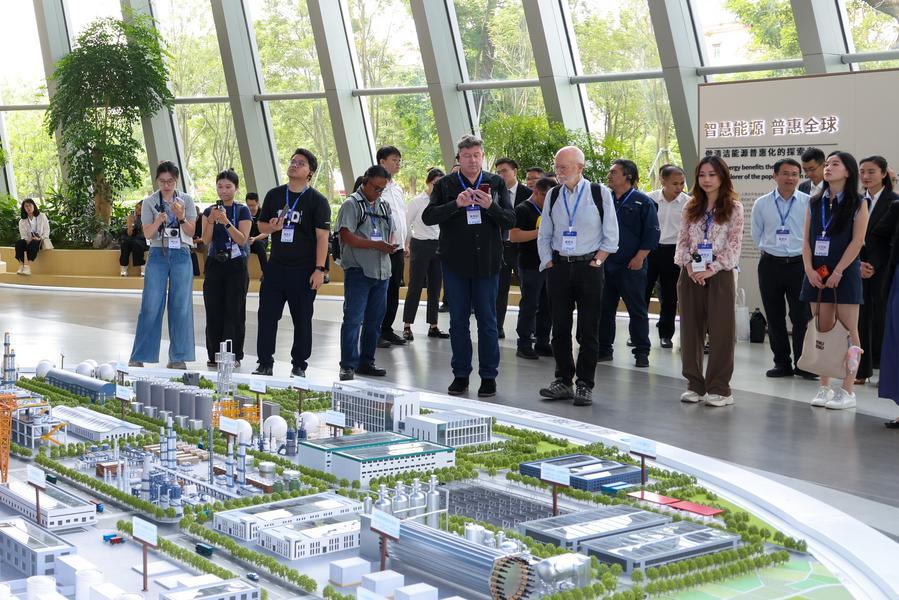
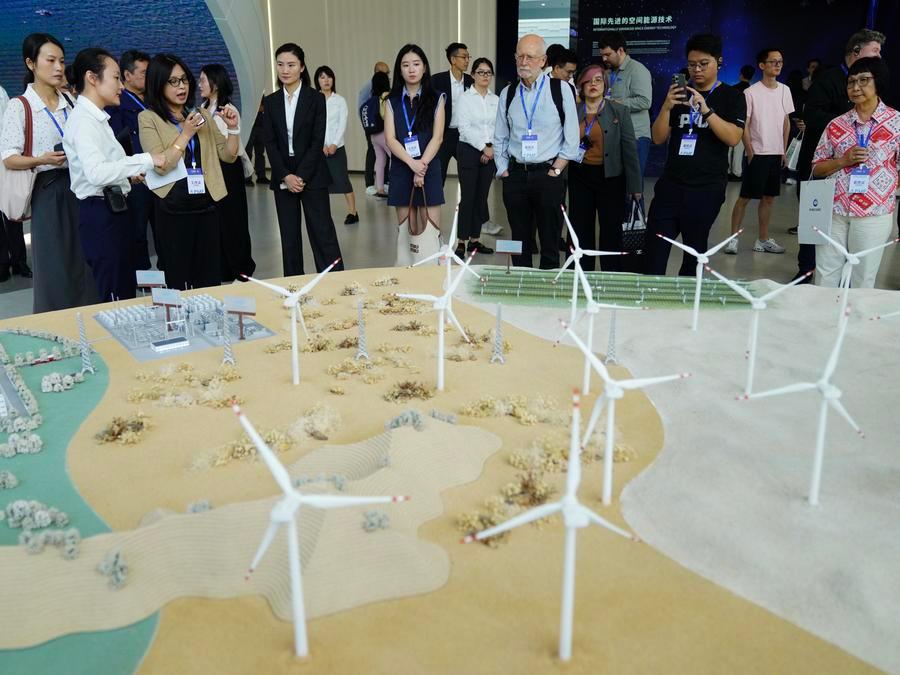
Guests visit Chinese wind turbine maker Mingyang Smart Energy Group in Zhongshan City, south China’s Guangdong Province, Sept. 4, 2026. (Xinhua/Liang Xu)
Guests visit Chinese wind turbine maker Mingyang Smart Energy Group in Zhongshan City, south China’s Guangdong Province, Sept. 4, 2026. (Xinhua/Li An)
A guest takes photos of a BYD car in the exhibition hall at BYD’s headquarters in Shenzhen, south China’s Guangdong Province, Sept. 4, 2026. (Xinhua/Dai Mingxuan)
A guest learns about a BYD car in the exhibition hall at BYD’s headquarters in Shenzhen, south China’s Guangdong Province, Sept. 4, 2026. (Xinhua/Dai Mingxuan)
Guests visit a Midea’s industrial park in Shunde, Foshan City, south China’s Guangdong Province, Sept. 4, 2026. (Xinhua/Lu Hanxin)

Categories
Regional

Asia-Pacific SMEs seek new growth through AI, deeper connectivity

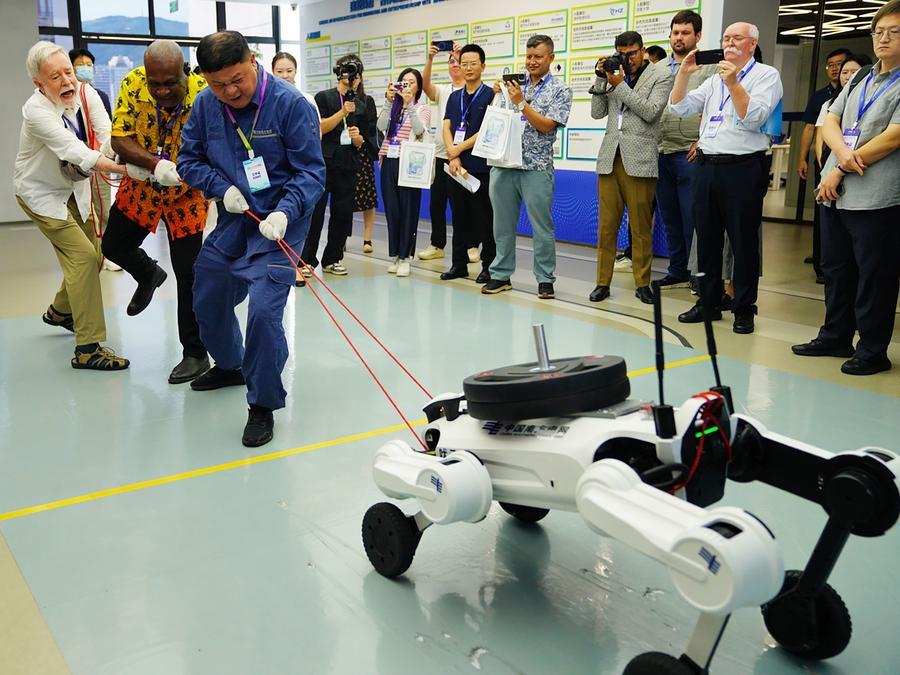
Guests have a tug-of-war competition with an intelligent inspection robot dog at Hengqin Digital Zero-Carbon Island Shared Laboratory of China Southern Power Grid (CSG) in Zhuhai, south China’s Guangdong Province, Sept. 3, 2026. (Xinhua/Li An)

GUANGZHOU, Sept. 5 (Xinhua) — On a production line at Seng Fong Holdings Berhad in Malaysia, a robotic arm grips a 35-kilogram block of rubber, with 3D cameras, laser scanners and AI algorithms serving as its “eyes” and “brain.”

The setup is designed to tackle a longstanding challenge in the traditionally labor-intensive rubber processing industry. Rubber blocks coming out of drying ovens vary in shape, making them difficult for conventional robotic systems to handle.

Developed by an AI company in China’s southern Guangdong Province, the solution has enabled the Malaysian rubber processor to automate more of the handling process, cutting labor costs by 20 to 30 percent while improving management efficiency, according to the company’s chairman.

The case points to a broader shift taking place across the Asia-Pacific. AI is creating new opportunities for SMEs to innovate, while deeper regional connectivity is helping them turn technological advances into new sources of growth.

That trend was reflected at the 32nd Asia-Pacific Economic Cooperation (APEC) Small and Medium Enterprises Ministerial Meeting, held on Friday in Guangzhou, capital of Guangdong, as officials from APEC economies gathered to explore how technological innovation can empower SMEs and drive their further development.

SMEs are a major pillar of the regional economy. As technological and industrial transformation accelerates and global supply chains undergo profound changes, AI and other emerging technologies are creating both new opportunities and new challenges for SMEs across the Asia-Pacific.

AI-powered robotics are opening up new pathways for the digital transformation of SMEs, while open-source technologies are further lowering the barriers to technology access and application, enabling more businesses to participate in technological innovation, said Yang Qian, co-founder and chief operating officer of the Shenzhen-based embodied AI startup X Square Robot, at a parallel forum held alongside the ministerial meeting.

“What once required six months, costly computing power and a professional team can now be done in three days with a workstation and an idea,” she said. “This gives SMEs, for the first time, a more level playing field with industry giants in innovation.”

Yet SMEs across the region still face challenges, such as high digital transformation costs and talent shortages, highlighting the need for greater regional cooperation.

Kwon Jong-hyun, vice chairman of the Beijing Chapter of the World-OKTA, cited embodied intelligence as an example, saying China’s strengths lie in scale and speed, while those of the Republic of Korea lie in precision and reliability.

Such cooperation, he said, is not simply about adding strengths together, but about multiplying their impact by combining complementary capabilities.

China’s experience in supporting SMEs’ digital transformation offers one example. The latest move came on Friday, when the Ministry of Industry and Information Technology released an action plan to support AI entrepreneurship among SMEs for 2026-2028. The plan aims to foster more than 10,000 technology-based and innovative SMEs, more than 2,000 “little giant” firms, as well as a number of gazelle companies and unicorns.

Beyond domestic efforts, China is also seeking to extend AI cooperation through technology sharing and practical collaboration. It has announced that it will provide 5,000 opportunities for AI training and seminars for developing countries over the next five years.

It is also advancing the establishment of AI application cooperation centers with ASEAN countries, with overseas branches in Laos, Malaysia and Vietnam already operational. These centers promote cross-border cooperation in large models, the data industry, and smart agriculture, bringing Chinese solutions together with local partners.

China stands ready to work with all parties to help more SMEs thrive and grow, Vice Premier Zhang Guoqing said in a speech delivered at the opening ceremony of the meeting.

The country is enhancing its policy support for SMEs and strengthening practical cooperation with APEC economies to jointly boost the high-quality development of SMEs, Zhang added.  ■

Categories
Regional

InPics | Asia-Pacific Media Forum guests visit Guangzhou, Dongguan and Zhuhai in S China’s Guangdong

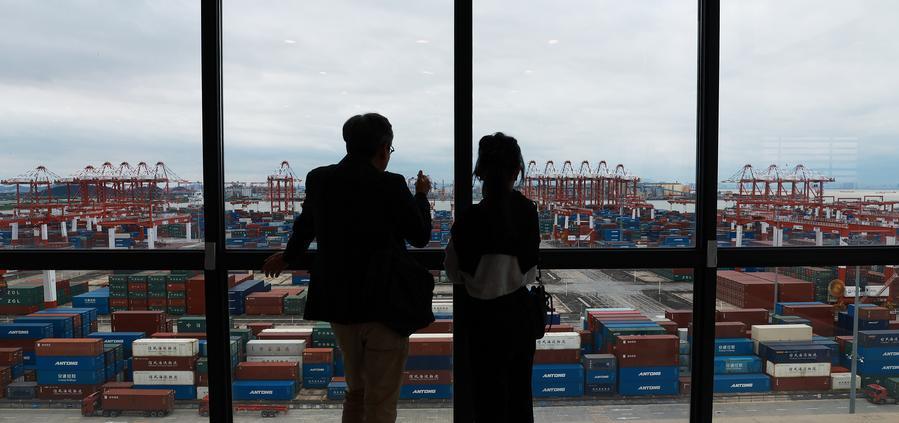
Guests visit Nansha Phase IV Fully Automatic Terminal of Guangzhou Port in Guangzhou, south China’s Guangdong Province, Sept. 3, 2026. (Xinhua/Gao Jing)

GUANGZHOU, Sept. 5 (Xinhua) — The Asia-Pacific Media Forum kicked off on Saturday in Shenzhen, south China’s Guangdong Province. Ahead of the event, participating guests visited cities in Guangdong, including Guangzhou, Dongguan and Zhuhai.

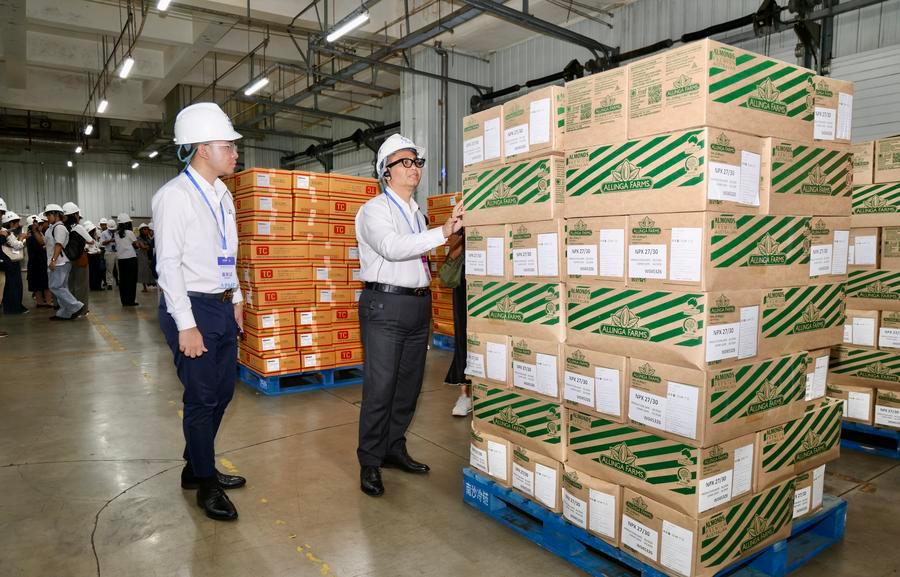
Guests visit Guangzhou Nansha International Logistics Center in Guangzhou, south China’s Guangdong Province, Sept. 3, 2026. (Xinhua/Lu Hanxin)
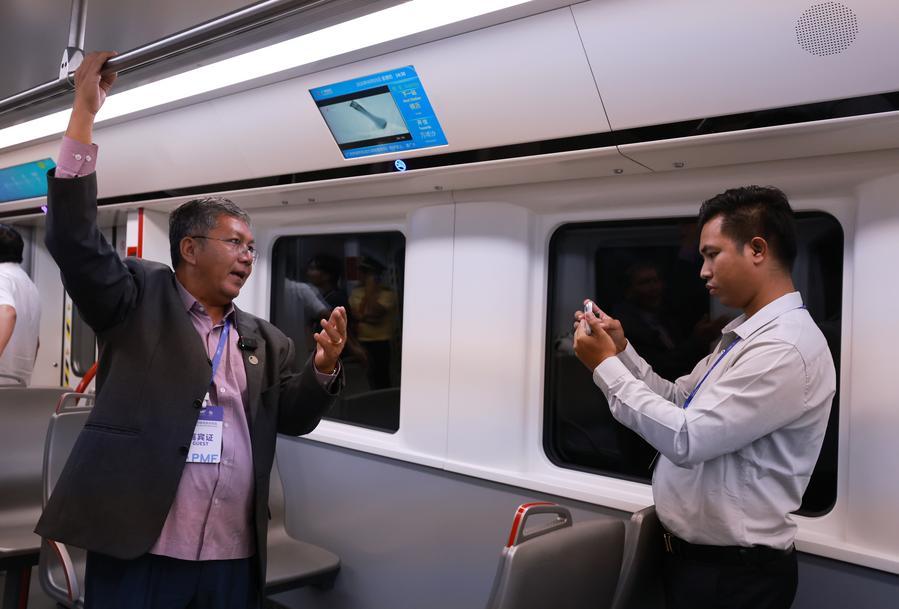
A guest films his passenger experience on Guangzhou Metro Line 18 in Guangzhou, south China’s Guangdong Province, Sept. 3, 2026. (Xinhua/Gao Jing)
Guests visit Nansha Phase IV Fully Automatic Terminal of Guangzhou Port in Guangzhou, south China’s Guangdong Province, Sept. 3, 2026. (Xinhua/Lu Hanxin)
A guest experiences an AI mattress at DeRUCCI 5G Smart Gigafactory in Dongguan, south China’s Guangdong Province, Sept. 3, 2026. (Xinhua/Mao Siqian)
Guests visit DeRUCCI 5G Smart Gigafactory in Dongguan, south China’s Guangdong Province, Sept. 3, 2026. (Xinhua/Dai Mingxuan)
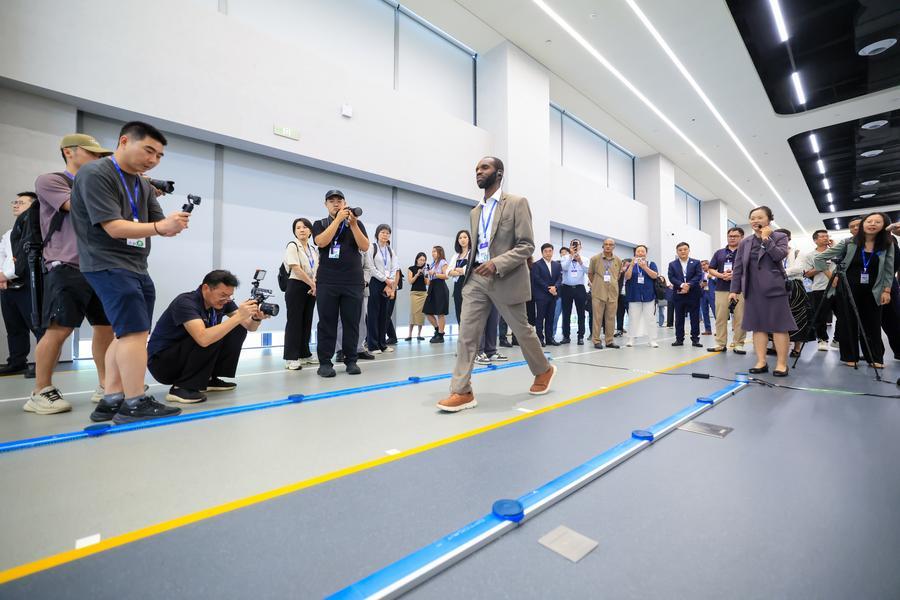
Guests visit OPPO Health Lab in Dongguan, south China’s Guangdong Province, Sept. 3, 2026. (Xinhua/Dai Mingxuan)
A guest has his motion data collected at OPPO Health Lab in Dongguan, south China’s Guangdong Province, Sept. 3, 2026. (Xinhua/Mao Siqian)

Categories
Regional Uncategorized

InPics | Asia-Pacific Media Forum holds sub-forums in S China’s Guangdong

Guests attend the Asia-Pacific Media Forum Dongguan sub-forum in Dongguan, south China’s Guangdong Province, Sept. 3, 2026. (Xinhua/Mao Siqian)

GUANGZHOU, Sept. 5 (Xinhua) — The Asia-Pacific Media Forum kicked off on Saturday in Shenzhen, south China’s Guangdong Province. From Sept. 3 to 4, the forum held four sub-forums in Guangzhou, Dongguan, Zhuhai, and Shenzhen in the province.

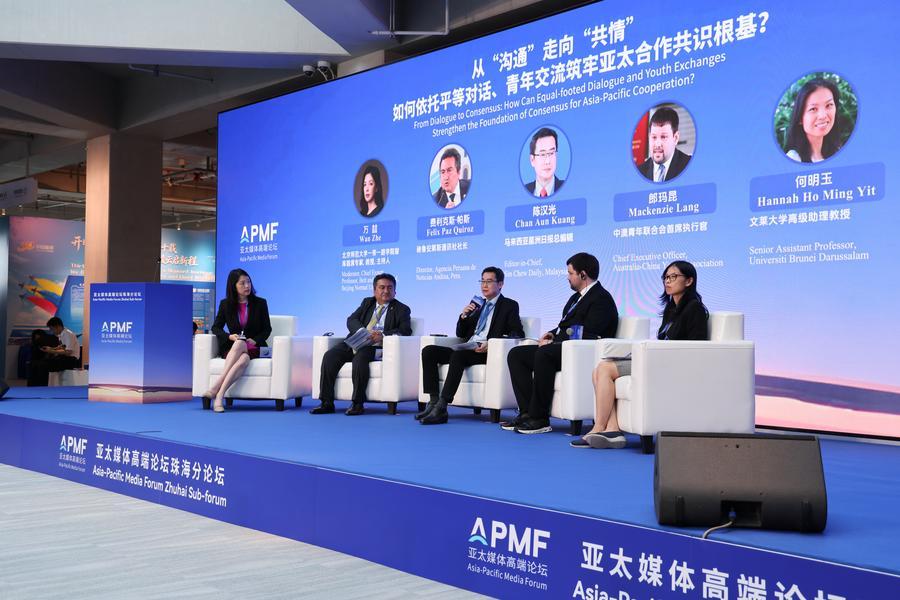
Guests attend the Asia-Pacific Media Forum Zhuhai sub-forum in Zhuhai, south China’s Guangdong Province, Sept. 3, 2026. (Xinhua/Liang Xu)
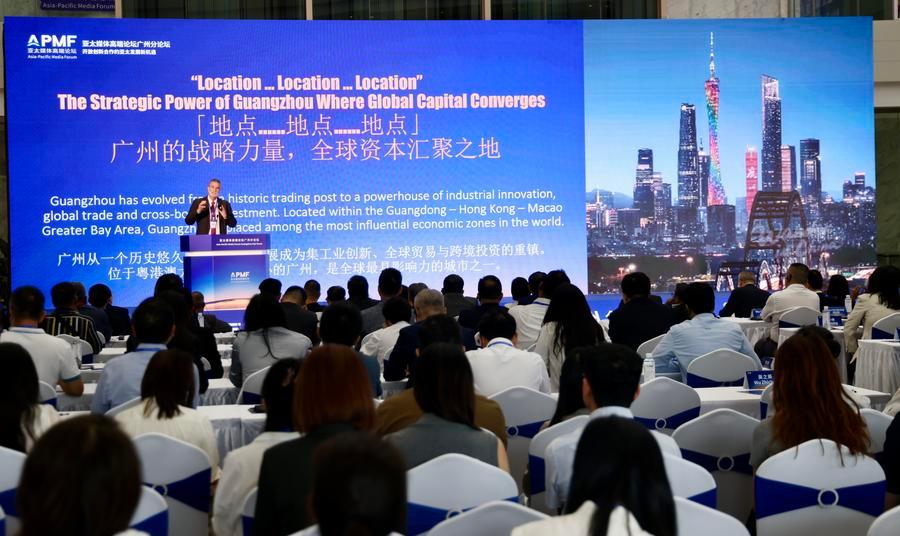
A guest speaks at the Asia-Pacific Media Forum Guangzhou sub-forum in Guangzhou, south China’s Guangdong Province, Sept. 3, 2026. (Xinhua/Lu Hanxin)
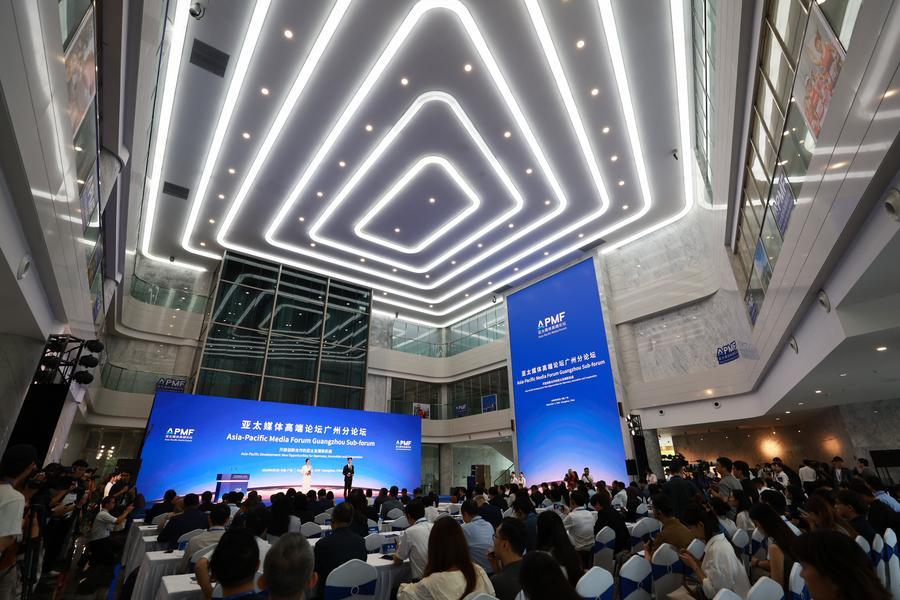
This photo taken on Sept. 3, 2026 shows the Asia-Pacific Media Forum Guangzhou sub-forum in Guangzhou, south China’s Guangdong Province. (Xinhua/Gao Jing)
Guests attend the Asia-Pacific Media Forum Shenzhen sub-forum in Shenzhen, south China’s Guangdong Province, Sept. 4, 2026. (Xinhua/Dai Mingxuan)■

Categories
Regional

A CONTINENTAL CROWN FOR KENYA’S TOURISM QUEEN! CS REBECCA MIANO CONQUERS AFRICA

History has been written in Polokwane!

Tourism and Wildlife Cabinet Secretary Hon. Rebecca Miano has done Kenya proud once again after bagging the prestigious DESTINATION AFRICA – LIFETIME AWARD at the 2026 Africa Tourism Leadership Awards in Polokwane City, South Africa.

This is not just an award. It is a coronation. A validation of a visionary leader whose brilliance, elegance and transformational leadership has completely rebranded Kenya as the jewel of Africa.

Under CS Miano’s stewardship, Kenya’s tourism is no longer just about safari — it is about strategy, sustainability, and global competitiveness. From Magical Kenya campaigns that are shaking the world, to conservation wins, to putting our communities at the heart of tourism, Waziri Miano is a class apart!

A lawyer, a leader, a legend. She came, she saw, she conquered!

Kenya is now firmly on the world map as THE destination, because we have a CS who understands that tourism is not a ministry, it is an economy.

Today, Africa has spoken. The Lifetime Award goes to no other than our very own super CS!

Congratulations Hon. Rebecca Miano, EGH! You make Kenya proud! The pride of Africa!

#MianoHonoured #DestinationKenya #MagicalKenya #KBCniYetu

Categories
Regional

Chinese vice premier calls for joint efforts from APEC members to bolster food security

HANGZHOU, Aug. 25 (Xinhua) — China stands ready to work with all Asia-Pacific Economic Cooperation (APEC) economies to build a more stable food security system, Chinese Vice Premier Liu Guozhong said on Tuesday.

Liu, also a member of the Political Bureau of the Communist Party of China Central Committee, made the remarks in a keynote speech at the opening ceremony of the 11th APEC Food Security Ministerial Meeting in Hangzhou, capital of east China’s Zhejiang Province.

Stressing the vital role APEC plays in safeguarding global food security, Liu called on APEC economies to jointly strengthen the foundation for food security by leveraging their own resource endowments.

Liu proposed strengthening innovation-driven development and deepening cooperation in agricultural science and technology, while keeping trade flows smooth to safeguard the security and stability of food supply chains. He also called for stronger policy synergy to ensure food security.

As a flagship event of the APEC “China Year,” the meeting brought together around 200 delegates from the 21 APEC economies, the APEC Secretariat and other international organizations. It featured policy dialogues on agricultural and rural development, technological innovation and digital agriculture for food security. ■