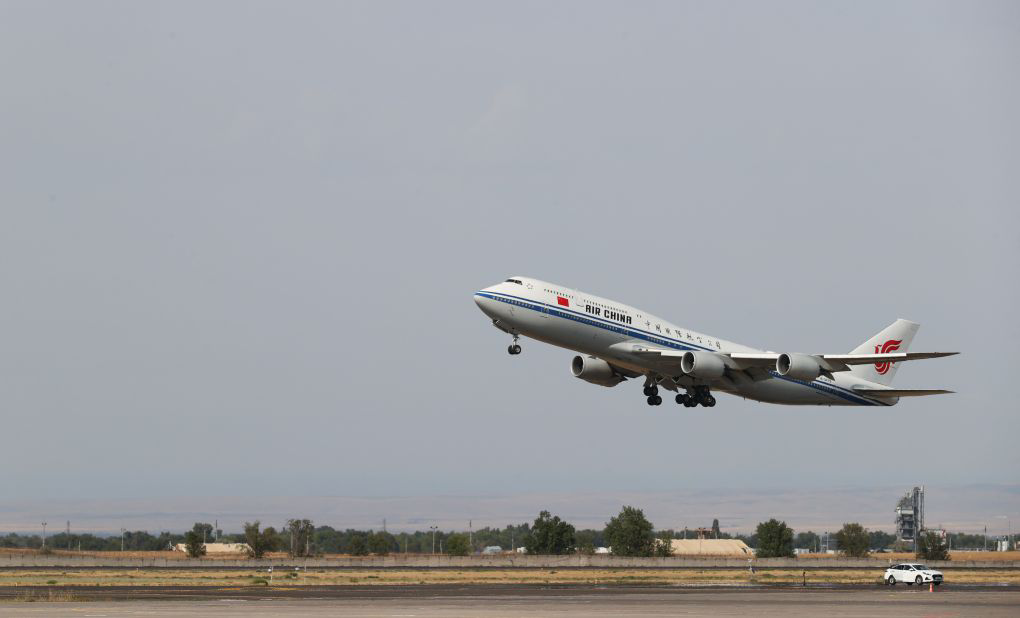
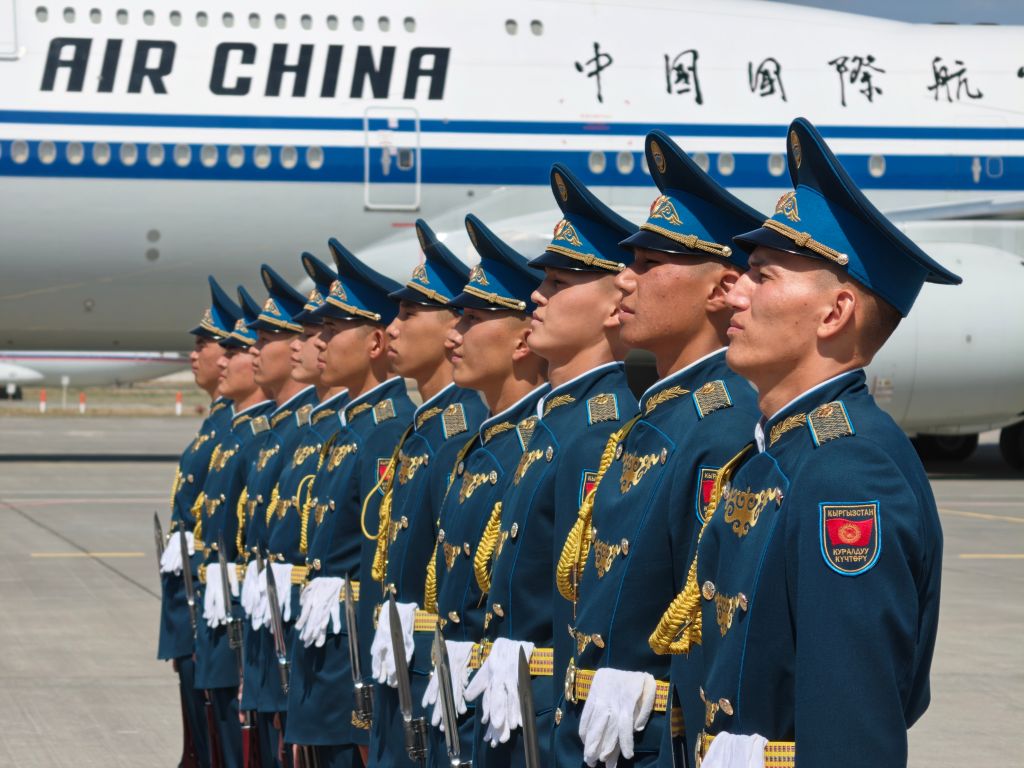
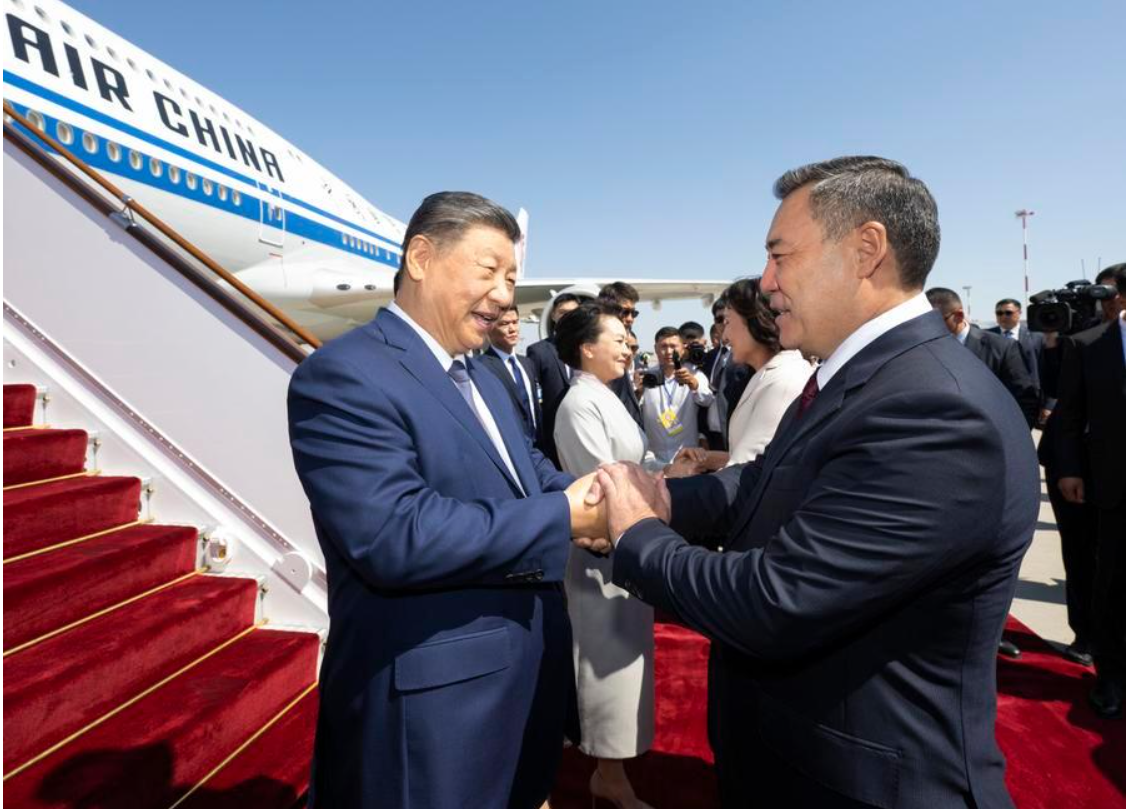
Chinese President Xi Jinping leaves after attending the Shanghai Cooperation Organization summit and a state visit to Kyrgyzstan in Bishkek, Kyrgyzstan, Sept. 1, 2026. (Xinhua/Bai Xueqi)
BISHKEK, Sept. 1 (Xinhua) — Chinese President Xi Jinping left on Tuesday the Kyrgyz capital of Bishkek after attending the Shanghai Cooperation Organization summit and a state visit to the Central Asian country. ■
Chinese President Xi Jinping leaves after attending the Shanghai Cooperation Organization summit and a state visit to Kyrgyzstan in Bishkek, Kyrgyzstan, Sept. 1, 2026. (Xinhua/Li Yaguang)
When the Shanghai Cooperation Organization (SCO) was founded in 2001, the international system was still largely dominated by a single center of power. For many developing countries, global governance appeared heavily shaped by Western institutions and priorities, leaving limited space for alternative voices and perspectives.
Today, the picture looks very different. The SCO has grown far beyond its original regional purpose. Its expansion reflects the rising confidence, influence, and strategic weight of the Global South in international affairs.
With member states and partners spanning much of Asia, the Middle East and Eurasia, the organization has become an important platform for developing countries to coordinate policies, deepen economic cooperation, and amplify their collective voice on the global stage.
What makes the SCO particularly significant is that it emerged at a time when many developing nations were seeking greater representation in global governance. For years, countries across the Global South have argued that international institutions often fail to reflect contemporary economic and geopolitical realities. The SCO offers an alternative space for dialogue and cooperation: one based on mutual respect, sovereign equality and consensus-building rather than bloc politics or ideological confrontation.
Beyond security cooperation, the SCO has steadily expanded its focus to sectors that include trade, connectivity, energy, digital development, cultural exchange and people-to-people ties. Through initiatives linking transport corridors, energy networks and regional markets, SCO members are working to enhance economic connectivity and create new opportunities for growth across some of the world’s most dynamic regions.
Equally important, the SCO provides a platform for developing countries to collectively address shared challenges, from terrorism and regional security to food security, energy transition and sustainable development. As global power becomes more widely distributed, the organization is helping its members navigate an increasingly complex international environment while preserving strategic autonomy.
In many ways, the evolution of the SCO mirrors the broader rise of the Global South itself. It reflects a world in which emerging economies are no longer content to simply adapt to decisions made elsewhere. Instead, they are increasingly participating in shaping regional and global agendas, contributing new ideas, institutions and approaches to international cooperation.
The SCO’s expansion is not about creating a new military bloc or replicating Cold War-style alliances. Rather, it reflects something the Global South has long sought: cooperation without coercion, dialogue without domination, and partnership without political conditionality.
Over the past 25 years, the SCO has expanded to a 27-nation family, bringing together countries with diverse cultures, political systems, economic models and historical experiences. That diversity is precisely what makes the SCO distinctive. Unlike Western-style alliances built around ideological conformity, the SCO demonstrates that cooperation can emerge despite differences rather than because of uniformity.
At the heart of this approach lies the Shanghai Spirit — a philosophy grounded in mutual trust, mutual benefit, equality, consultation, respect for diversity of civilizations and pursuit of common development.
For many nations across Asia, Africa, the Middle East, Latin America and beyond, this approach is especially appealing. For decades, developing countries often found themselves navigating partnerships that came with political conditions, governance prescriptions, or expectations of strategic alignment. The SCO offers a different model, one that emphasizes consultation rather than instruction and cooperation rather than pressure.
The SCO members do not agree on every issue, nor do they share identical strategic interests. Yet the SCO’s ability to bring together countries with differing perspectives is one of its greatest strengths. It demonstrates that multilateralism does not require uniformity; it requires a willingness to engage, consult, and find common ground.
Meanwhile, the SCO’s most important contribution is its approach to global governance. For many countries across the Global South, international institutions have too often been perceived as reflecting the interests of a limited number of powerful states. The SCO offers an alternative vision that emphasizes consultation, inclusiveness, and shared participation in international affairs.
By advocating extensive consultation, joint contribution and shared benefits, the organization seeks to create greater space for developing nations in global decision-making. Its support for sovereign equality, multilateralism, and opposition to unilateral measures resonates with countries that have long sought a stronger voice in shaping international rules and priorities.
The SCO has therefore evolved beyond its original regional role. It has become a platform through which countries of the Global South can express their priorities and aspirations with greater confidence. Its vision resonates because it emphasizes respect for diversity, common development and sovereign choice. For many nations, the goal is not to replace one center of power with another, but to build an international system where countries can pursue their own development paths without being forced into geopolitical rivalries.
After 25 years, the Shanghai Spirit is not a fading slogan. Its continued relevance lies in the fact that it answers a deep need shared across the Global South: the desire for partnerships based on equality, mutual respect, and common development rather than hierarchy and dependency.
At a time when the world appears increasingly divided by rivalry and competing blocs, the SCO demonstrates that cooperation remains possible. Its emphasis on consultation, mutual benefit and respect for diversity offers a different path — one that expands opportunities rather than imposes choices.
For billions of people across the Global South, that vision is more than a diplomatic concept. It is a source of optimism about a more equitable, balanced and multipolar future.
Editor’s note: Maya Majueran serves as the director of the Belt and Road Initiative Sri Lanka, an independent and pioneering organization with strong expertise in Belt and Road Initiative advice and support.
The views expressed in this article are those of the author and do not necessarily reflect the positions of Xinhua News Agency.
CAIRO, Sept. 1 (Xinhua) — As China and Egypt mark the 70th anniversary of diplomatic ties, Chinese President Xi Jinping’s state visit to Egypt is set to inject fresh impetus into bilateral relations and further advance the building of a China-Egypt community with a shared future in the new era.
The seven-decade journey of China-Egypt relations is a powerful testament to what solidarity and cooperation can achieve. Over the years, the two countries have steadily strengthened their ties despite shifts in the regional and global landscape, maintained close coordination on international affairs, supported each other on issues of mutual interest, and expanded practical cooperation, making their partnership a model of amity, solidarity and cooperation among developing countries.
That spirit of solidarity was evident from the very beginning of their diplomatic ties. In the early years of the People’s Republic of China, Beijing supported Egypt’s efforts to reclaim sovereignty over the Suez Canal. In 1971, Cairo voted in favor of restoring the People’s Republic of China’s lawful seat at the United Nations. The two peoples also stood together in the struggle against colonialism and hegemonism, laying a solid foundation for a friendship that has endured for seven decades.
In recent years, China-Egypt relations have been deepening under the guidance of the two heads of state and are now at their best in history. For over a decade, Xi and Egyptian President Abdel Fattah al-Sisi have met more than 10 times, providing strategic guidance for the continued expansion of bilateral cooperation.
In 2014, the two countries elevated their relationship to a comprehensive strategic partnership. During Xi’s 2016 state visit to Egypt, the two sides agreed to align the Belt and Road Initiative with Egypt’s development strategies. In 2024, Egypt became the first Arab country to include the goal of building a community with a shared future in a bilateral joint statement.
Anchored in the leaders’ shared vision, China-Egypt cooperation has flourished across a range of fields including trade, investment, industry, energy, science and technology, and cultural exchange, delivering tangible benefits to people in both countries.
China has been Egypt’s largest trading partner for over a decade, while landmark projects such as the China-Egypt TEDA Suez Economic and Trade Cooperation Zone, the Benban Solar Park, the remote sensing MisrSat-2 satellite and the Government Data and Cloud Computing Center illustrate how bilateral cooperation has expanded into areas ranging from renewable energy and space technology to digital governance.
Cooperation has also extended beyond economics. Joint archaeological excavations in Luxor and exhibitions of Egyptian civilization in China have brought the histories and cultures of the two ancient civilizations closer to their peoples. Such exchanges have given the bilateral relationship a deeper human foundation.
The significance of China-Egypt ties also extends beyond the two countries. Egypt was the first Arab country to establish diplomatic relations with Beijing, making the China-Egypt relationship a starting point for China’s ties with the Arab world. Over the years, the momentum of China-Arab cooperation has continued to grow, with Belt and Road projects creating new opportunities for development and improving livelihoods across the region.
China and Egypt have also worked closely in multilateral institutions, including the United Nations, the Group of 20, BRICS and the Shanghai Cooperation Organization. By coordinating their positions and speaking up on issues of common concern, the two countries have contributed to a stronger voice for the Global South.
At a time of profound global change — with economic recovery still fragile, unilateralism and hegemonism on the rise, and regional conflicts continuing to escalate — it is more urgent than ever for Global South countries to stand together and pursue common progress.
For the Global South, China-Egypt cooperation carries a broader message. By pooling their strengths, expanding practical cooperation and supporting each other’s development paths, Global South countries can create more opportunities for themselves and make a greater contribution to the world’s shared development.
The upcoming visit by Xi will provide a new opportunity to carry this spirit forward. China will continue to work with Egypt and other partners across the Arab world to deepen mutually beneficial cooperation, uphold multilateralism, amplify the voice of developing countries and promote a more just and equitable international order. ■
BISHKEK, Aug. 31 (Xinhua) — Chinese President Xi Jinping on Monday called on China and Kyrgyzstan to ensure the high-quality construction of the China-Kyrgyzstan-Uzbekistan railway.
In his talks with Kyrgyz President Sadyr Japarov, Xi described the railway as a major transportation artery that carries the development aspirations of the people across the region.
Japarov said Kyrgyzstan stands ready to actively advance the construction of the railway project, so as to turn it into a “steel Silk Road” for the new era and a new bond of friendship between the two countries.
The railway, which is currently under construction, was launched at the end of 2024. It is a flagship project of the Belt and Road Initiative, serving as a strategic link between China and Central Asia.
The route will begin in Kashgar, located in northwest China’s Xinjiang Uygur Autonomous Region, and pass through the mountainous terrain of Kyrgyzstan to reach Uzbekistan.
Chinese President Xi Jinping (left) arrives in Bishkek for the Shanghai Cooperation Organization (SCO) Summit 2026 and a state visit to Kyrgyzstan upon the invitation of President Sadyr Japarov of Kyrgyzstan, Aug 30, 2026. (PHOTO/XINHUA)
BISHKEK — Chinese President Xi Jinping said Monday that China stands ready to work with Kyrgyzstan to better align development strategies, deepen exchanges of experience in governance, deliver more tangible and accessible outcomes of practical cooperation, and make substantive progress in building a China-Kyrgyzstan community with a shared future.
Xi said in his opening remarks when meeting with Kyrgyz President Sadyr Japarov that under their guidance, bilateral relations have made a leap forward, with cooperation flourishing across all areas in recent years.
Major cooperation projects with Kyrgyzstan, including the China-Kyrgyzstan-Uzbekistan railway, have progressed steadily in recent years, providing effective support for the development of both countries, benefiting their people and promoting peace, stability and prosperity in the region, Xi said.
Also on Monday, Xi and Japarov signed a bilateral treaty on permanent good-neighborliness, friendship and cooperation.
The signing of the treaty will provide an important legal foundation for the two countries to maintain their longstanding friendship and firm support for each other, Xi said.
For his part, Japarov said the treaty will open up broader prospects for bilateral relations.
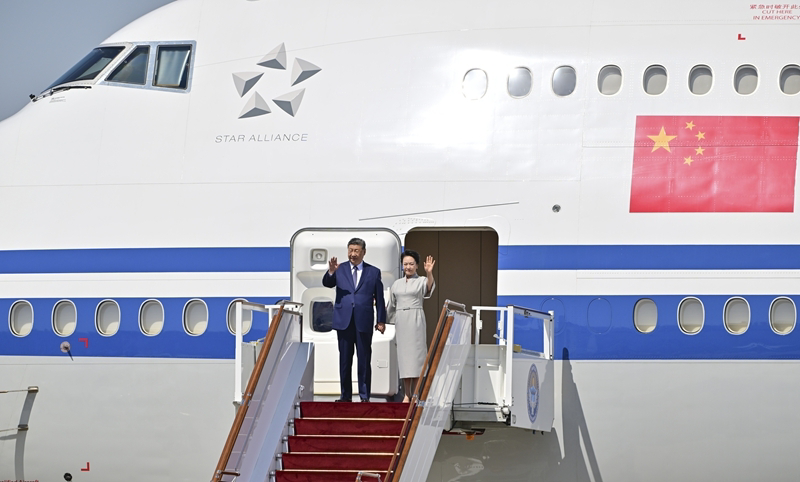
Chinese President Xi Jinping and his wife Peng Liyuan step out of the airplane cabin upon arrival in Bishkek, Kyrgyzstan, Aug. 30, 2026. Xi landed in Bishkek on Sunday for the Shanghai Cooperation Organization (SCO) Summit 2026 and a state visit to Kyrgyzstan upon the invitation of President Sadyr Japarov of Kyrgyzstan. [Photo/Xinhua]
BISHKEK — Chinese President Xi Jinping landed in Bishkek on Sunday for a state visit to Kyrgyzstan and the Shanghai Cooperation Organization (SCO) Summit 2026.
The China-Kyrgyzstan cooperation has ushered in a “golden period” of rapid development, Xi said in a written speech delivered upon his arrival.
TIME-HONORED FRIENDSHIP
Noting that China and Kyrgyzstan share a time-honored traditional friendship, Xi said that the majestic Tianshan Mountains stand as witnesses to the millennia of friendly exchanges between their peoples.
Over the 34 years since the establishment of diplomatic relations, the China-Kyrgyzstan relationship has withstood the test of a changing international landscape, maintained sound and stable development throughout, and reached the high level of a comprehensive strategic partnership for a new era, Xi said.
In recent years, bilateral trade volume and people-to-people exchanges have reached new highs, Xi said, noting that major projects including the China-Kyrgyzstan-Uzbekistan railway have been successfully implemented, and the tangible results of mutually beneficial cooperation have broadly benefited the two peoples.
Xi said that during the visit he will have in-depth exchanges of views with Kyrgyz President Sadyr Japarov on China-Kyrgyzstan relations, cooperation in various fields between the two countries, and international and regional issues of common concern, and draw a new blueprint for building a China-Kyrgyzstan community with a shared future.
“I look forward to attending the SCO Bishkek Summit, working with all parties to revisit the 25-year development experience of the SCO, jointly discuss cooperation plans, create the future of the organization, and promote the continuous new development of the SCO,” Xi said.
HIGH-QUALITY DEVELOPMENT OF TIES
Ahead of his state visit to Kyrgyzstan and attendance at the SCO summit, Xi on Friday published a signed article titled “Jointly Opening up New Prospects for the High-Quality Development of China-Kyrgyzstan Relations” in the Slovo Kyrgyzstana and the Kabar National News Agency.
Noting that it will be his third visit to this beautiful land, Xi said he looks forward to working with President Japarov to map out a new blueprint for China-Kyrgyzstan relations and make new progress in building an SCO community with a shared future.
Describing the two countries’ relations as a “golden model” of good-neighborly friendship and mutually beneficial cooperation, Sheradil Baktygulov, director of the Kyrgyz Institute of World Politics in Bishkek, said high-level exchanges have provided clear strategic guidance for the deepening of bilateral relations and closer coordination between the two countries in international affairs.
In the signed article, Xi said that China and Kyrgyzstan are good neighbors sharing weal and woe, good partners with a shared future, and good friends who help each other succeed.
“When a neighboring country is genuinely happy about your success, that sincerity is truly precious. It reflects President Xi’s respect for Kyrgyzstan, its people and the development path they have chosen,” said former Kyrgyz Foreign Minister Alikbek Jekshenkulov. Noting the improved understanding between the two peoples, Jekshenkulov said such mutual understanding has kept bilateral friendship enduring and vibrant, allowing it to be passed down from generation to generation.
In February 2025, Xi and Japarov reached important common understandings on further deepening the comprehensive strategic partnership for the new era and building a China-Kyrgyzstan community with a shared future defined by good-neighborliness, friendship and shared prosperity. The decision opened a new chapter of bilateral relations.
In the signed article, Xi said China and Kyrgyzstan have complementary economies and immense cooperation potential. Despite sluggish global growth, the two countries’ business cooperation has continued to make steady progress.
Ashirbaev, governor of Kyrgyzstan’s Chui region, voiced his hope that Xi’s visit will help bring the two countries’ development strategies into closer alignment.
For Kyrgyz economist Abdyrov, China’s experience in infrastructure, industrial modernization and the clean energy industry is particularly relevant to his country’s development needs.
Abdyrov also sees useful lessons in China’s approach to long-term development. Strategic planning and consistent industrial policies can offer insights into Kyrgyzstan’s pursuit of sustainable growth, he said, adding that the visit could encourage further exchanges on governance.
In recent years, people-to-people and cultural exchanges between China and Kyrgyzstan have continued to deepen and yield tangible results. Zhyldyz Bakashova, director of the State Book Chamber, said she expects Xi’s visit to promote further cooperation in book publishing and translation, helping readers in both countries better understand each other’s cultures.
The two countries are also working together to study and protect cultural heritage through the China-Kyrgyzstan Belt and Road Joint Laboratory on Cultural Heritage Conservation.
“By studying and protecting cultural heritage together, we have gained a deeper understanding of the histories of both countries,” said Aisin Duishanalieva, the laboratory’s Kyrgyz director, expecting the leaders’ meeting to offer further support to that collaboration.
At a time of heightened global uncertainty, Kyrgyz-China collaboration in the United Nations, the SCO and other multilateral forums has become increasingly valuable, said Baktygulov, highlighting China’s support for Kyrgyzstan’s successful election in June as a non-permanent member of the UN Security Council.
Baktygulov said he expects the visit to strengthen bilateral communication and coordination on regional and global affairs, and promote joint efforts to maintain regional stability, enhance dialogue and seek solutions to hotspot issues.
Recently, a dramatic escalation in military activity around the Middle Eastern region has created one of the most disruptive episodes for global aviation since the COVID‑19 pandemic. Starting late February, the underpinning logic of international flight networks has been abruptly challenged, with aviation authorities closing or restricting large swathes of the region’s airspace.
These closures are proving deeply consequential for airlines and passengers alike, particularly for international services linking Europe with Africa and Asia. Key transit routes that historically cut over the Gulf region have been rendered unavailable or highly constrained, forcing carriers to suspend or reroute flights away from Tel Aviv, Beirut, Dubai and Riyadh.
This disruption highlights just how pivotal the Middle East has become in global air travel. The geography of international aviation positions the region as a vital transit bridge connecting Europe with Africa, South Asia and beyond. Hubs in the UAE, Qatar and Saudi Arabia have built their business models around this strategic advantage, and the closure of sovereign airspaces across that corridor has inspired a cascading effect far beyond regional borders. Many routes in the region, which just recently carried thousands of passengers a day, are now being redesigned, forcing aircraft detours via pathways that add hours of flying time and operational complexity.
This change is especially noticeable by passengers flying into or out of Africa, who have grown accustomed to flights that once took direct or near‑direct paths to European and Asian destinations, but have to now incur extended block times, as carriers explore alternative routes. Airlines are assessing and reassessing these corridors in light of shifting regulatory advisories and on‑the‑ground developments, causing delays and reschedules on a scale rarely seen outside major natural disasters or unprecedented market shocks.
As this happens, customers may not have immediate visibility of the unfolding behind their flights’ operational adjustments, but it is worth noting that a series of hard choices are involved. Airlines operate under strict regulatory frameworks that govern crew duty limits, aircraft maintenance cycles and safety standards. Lengthened routes have knock‑on effects on these metrics as crews reach their duty limits sooner and aircraft remain in the air longer, declining their effective utilisation. Decisions to cancel flights entirely, rather than maintain deeply disrupted services, are indications of a calculation that preserves the integrity of an airline’s broader schedule by temporarily sacrificing specific rotations that cannot be safely or economically sustained.
For us at Air France-KLM, the unequivocal priority is that regardless of the cost, passengers and crew are never placed in harm’s way. This approach has meant real‑time monitoring of geopolitical developments, and, in many cases, difficult decisions to pause service until a clearer operational picture emerges. In the short term, such realities can be frustrating for travellers, because disrupted itineraries challenge the patience of even the most seasoned frequent flyers. However, we hope that clients will understand that intensive sector-wide planning is ongoing to restore as much connectivity as conditions safely allow.
SBM Bank Kenya and Safer Power Group have unveiled a partnership that will see the bank extend USD 17 million financing to support green energy manufacturing workshop and construction of a factory.
Through the partnership, Safer Power – a licensed panel builder for global energy technology leader, Schneider Electric – will significantly boost local production of essential power infrastructure, including specialized switchboards, control panels, synchronization panels, distribution boards, meter boards, changeover systems, and battery racks.
The strategic partnership comes at a transformative time for East Africa’s clean energy landscape whose renewable energy market has reached USD 4.3 billion in 2025, according to a recent industry data from market research firm IMARC Group and is projected to expand significantly as regional industrialization drives demand.
Additionally, the International Renewable Energy Agency (IRENA) indicates that transitioning to clean energy and localized green technology manufacturing could boost regional GDP by up to 6.4% while generating thousands of specialized technical jobs.
Speaking at the partnership announcement event, Edgar Mwandawiro, Chief Risk Officer at SBM Bank Kenya emphasized the role of targeted financial solutions in scaling sustainable technology across the region.
“Commercial enterprises face rising operational costs and escalating climate risks, access to targeted capital is no longer just an ESG obligation. It is a necessary catalyst to unlock industrial resilience and energy sovereignty for our economy,” he said.
Safer Power Ltd Chief Executive Officer Dalmus Mbai said:
“Local green energy manufacturers across East Africa face significant financial hurdles, from high upfront capital investments for specialized equipment to severe credit gaps and heavy reliance on expensive foreign supply chains. By localizing engineering, assembly, and green hydrogen technology, we can drastically reduce import dependency, create high-value technical jobs, and lower energy transition costs for industries across the region.”
SBM Bank Kenya’s net loan book surpassed KSh 50 billion for the first time in 2026, expanding 18.3% year-on-year to hit KSh 54.09 billion by the end of June. This growth stems from a deliberate, multi-year strategic transformation to move away from low-yielding government securities and actively pivot toward financing micro, small, and medium enterprises (MSMEs) and local businesses.
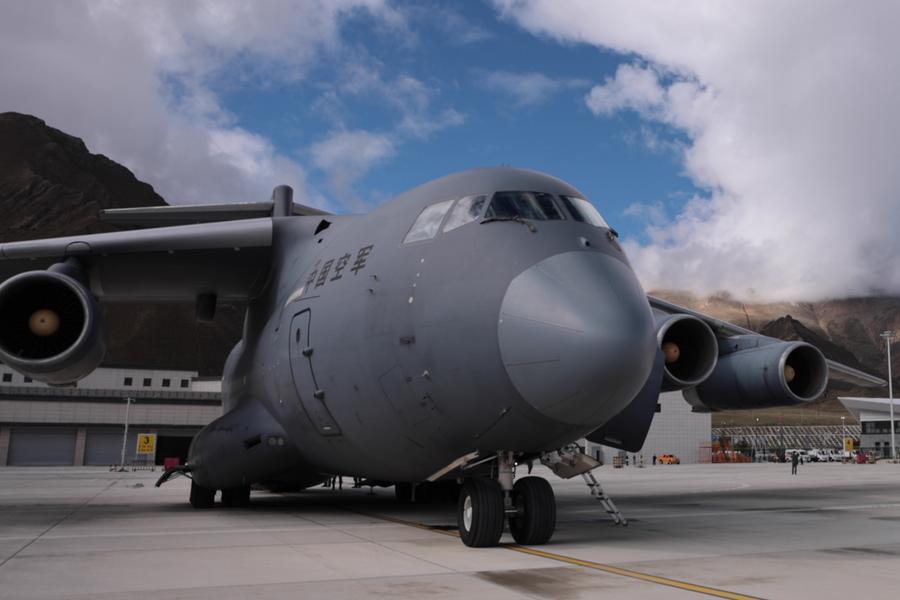
This screenshot from a video clip taken on Aug. 27, 2026 shows a Y-20 transport aircraft of the western theater command after arrival at an airport in southwest China’s Xizang Autonomous Region. (Photo by Gu Kuoye/Xinhua)
BEIJING, Aug. 28 (Xinhua) — Xi Jinping, general secretary of the Communist Party of China (CPC) Central Committee, on Friday chaired a Party leadership meeting to deliberate and make arrangements on rescue and relief efforts after a devastating mudslide hit Gyirong County in southwest China’s Xizang Autonomous Region.
At the beginning of the meeting of the Political Bureau of the CPC Central Committee, Xi, who is also Chinese president and chairman of the Central Military Commission, and other leaders, including Li Qiang, Zhao Leji, Wang Huning, Cai Qi, Ding Xuexiang and Li Xi, observed a moment of silence to mourn the victims of the disaster.
A mudslide in Nepal on Wednesday struck the border port of Gyirong, causing heavy casualties and leaving many people missing.
Following the disaster, the CPC Central Committee attached great importance to the situation, and Xi immediately issued important instructions on rescue and emergency response efforts.
Entrusted by Xi, Premier Li Qiang, a member of the Standing Committee of the Political Bureau of the CPC Central Committee, traveled to the disaster-hit area to visit the affected people and rescue and relief personnel, and to supervise rescue and emergency response efforts.
Vice Premier Zhang Guoqing, a member of the Political Bureau of the CPC Central Committee, also went to the site to guide the response.
According to the meeting, emergency rescue operations have been carried out swiftly and in an orderly and well-coordinated manner under the strong leadership of the Party Central Committee, with comprehensive efforts underway for the resettlement of affected people and handling of the aftermath.
The disaster occurred in a severely cold plateau region with steep valleys, variable weather, many surrounding glaciers and glacial lakes, as well as potential geological hazards, which poses significant challenges to emergency rescue operations.
The meeting emphasized that all relevant authorities and departments must take resolute and effective measures for the rescue-related work. Search and rescue plans should be formulated in a scientific manner, and every effort should be made to search for and rescue all missing Chinese and foreign nationals, it stressed.
Multi-department joint consultation must be strengthened, monitoring and early warning enhanced, barrier lake and surrounding mountain stability closely tracked, and effective measures taken to strictly prevent secondary disasters, according to the meeting. It also urged enhancing on-site personnel management to ensure safety throughout the rescue process.
China will provide emergency aid to the disaster-hit area in Nepal and carry out international rescue cooperation, the meeting said.
The meeting called for conducting comprehensive inspections to identify potential risks and hazards, boosting real-time monitoring and early warning, and enhancing the capacity to identify risks arising from disaster chains.
It also urged that emergency response mechanisms should be improved, and key rescue forces be strengthened.
More rescue and emergency response forces should be deployed to remote and disaster-prone areas, according to the meeting.
International cooperation on disaster management in border areas should also be strengthened to jointly enhance emergency management as well as disaster prevention, mitigation and relief, it added.
On better coordinating development and security, the meeting emphasized the need to prepare for worst-case and extreme scenarios, bear a strong sense of political responsibility and constant vigilance, and make solid efforts to ensure safety and stability. ■
BEIJING, Aug. 28 (Xinhua) — Chinese President Xi Jinping on Friday hailed the historic leap in China-Kyrgyzstan ties from a good-neighborly friendship to a strategic partnership and then to a comprehensive strategic partnership for a new era.
Xi made the remarks in a signed article published in Kyrgyz media outlets ahead of his state visit to the Central Asian country.
In the article, Xi urged China and Kyrgyzstan to consolidate good-neighborly friendship, stay committed to mutual benefit and win-win cooperation, carry forward their traditional friendship and uphold multilateralism.
Calling on China and Kyrgyzstan to elevate practical cooperation in both quality and scope with high-quality Belt and Road cooperation as the main focus, he urged the two countries to work together to create a new chapter of high-quality development in bilateral relations.
Xi also called on China and Kyrgyzstan to firmly oppose hegemonism, unilateralism and bloc confrontation. ■