The Nairobi Rivers Commission has officially launched its strategic Action Plan for regeneration of Nairobi river.
The launch comes a result of pressure coming from the head of state President William Ruto in line to restoring the lost glory of the Kenyan capital Nairobi.
The head of state had said that the Capital city of Nairobi is really loosing its status of the yore.
Addressing the event launch ,Principal Secretary of Devolution Affairs Teresia Mbaiku said this will plan will ultimately improve urban health and wellbeing, create decent jobs and eco-tourism opportunities and it will also enhance biodiversity, and support the provision of clean water, sanitation and waste management. The initiative will also be a catalyst for infrastructure development including affordable housing, non-motorized transport and green public spaces, particularly within the vulnerable areas,” she said.
PS has reiterated that the stakeholders to take the plan with a genuine candidness and internalizing that the restoring of Nairobi river basin and it will be a big significance achievements to food security.
She said that the plan of cleaning the river will improve communities living standards in the areas.
“Restoration of Nairobi river is a priority for the government. It is a legacy assignment for President Ruto and as devolution we have identified it as a priority and we are open to partnership for better and lasting results,” she said.
She added that the state of affairs must come to an end, and the unsafe and unhealthy environmental situation must be corrected to restore Nairobi to its true identity. We have resolved that the city must not only reclaim its glorious reputation as Africa’s green city in the sun but must also live up to its ancestral identity as the river of cool
This happens as Kenya awaits to host the first Africa Climate Summit.
The Ajira Digital Program has today held a graduation for the first Cohort of 16 young women under ( AjiraForShe) Apprenticeship initiative in Nairobi.
The AjiraForShe Apprenticeship is an internship initiative driven by eMobilis Technology Training Institute, under the Ajira Digital program whose aim is to advance opportunities for young women in Kenya in the digital economy through building their confidence in taking up digital job opportunities, enhancing their already gained digital skills and expanding women’s access to quality career pathways through increased participation in apprenticeships.
This has been made possible by the strategic collaborations with AjiraForShe partners that are Women Empowerment Organizations including Refushe, Nice Place Foundation, Madrasa Tulfalaha and Hope World Wide Kenya, who were involved in incubating the first cohort of digital interns, graduating today.
The Ajira Digital Program is an initiative of the Government of Kenya under the Ministry of Information, Communications, and the Digital Economy.
The program’s mission is to enable over one million young people, 70% of whom are young women, to access digital and digitally enabled jobs annually through accelerating digital outsourcing and the digitization of processes and services within the private and public sectors in order to position Kenya as a choice labor destination for multinational companies and a global freelancing hub. The Program is a public-private partnership that is strategically supported by the Mastercard Foundation and is being implemented by eMobilis Technology Training Institute (eMobilis) and the Kenya Private Sector Alliance (KEPSA).
Apprenticeship is a proven on-the-job training model that helps individuals develop the skills for a career.
However, it has not been fully accessed by a key segment of our nation’s workforce – women, despite the fact that women constitute 40 percent of the country’s workforce according to 2019 National census by KEBS. The AjiraForShe is a pivotal step towards gender equality in areas that have historically been imbalanced. The initiative helps in horning young women’s technical and soft skills, to complement the skills and knowledge acquired in Ajira Digital Program curriculum training and mentorship. Additionally, it offers work experience by providing practical on-the-job experience to first-time jobseekers and help young women display their ability to potential employers.
Adressing the graduands, Mrs Priscilla Maina, Assistant Director State Department of ICT and Digital Economy said part of the focus of the government ICT masterplan is to establish the 1450 digital hubs across the country.
“Through the support of the Mastercard Foundation, we hope to enable more young people to access free digital tools across the country as we close the digital and gender divide. With the government target of digitizing over 5,000 services, the young people with digital skills will access digital and digitally-enabled work opportunities to earn a decent wage.” she added
Mr Anthony Karanja, Partner, Planning, Strategy and Digital Economy at Mastercard Foundation said there is need to focus on young women since they are less privileged compared to the other gender.
“As Mastercard Foundation we are committed to empowering over 30 million young people in Africa with 7 million of those being Kenyans, 70% of these being young women. The foundation is working to accelerate access to financial capital for young people particularly women to pursue diverse opportunities to live a meaningful and dignified livelihood. Digital economy has innumerable opportunities for young people especially young women as they are able to work from anywhere and make a dignified income.
For Instance, a young lady from Mombasa by the name Celine Wawuda, who had dropped out of college due to lack of school fees signed up on the Ajira Program and trained on transcription which later saw her participate in the judiciary pilot digitization project which coupled with other online freelance opportunities enabled her to make a decent income to support herself and her family. Currently she has advanced her skills to a software developer which is a reality made possible through the Ajira Digital Program.”
Ken Mwenda, Managing Director eMobilis Technology Institute and co-founder said the AjiraForShe Apprenticeship has been officially launched as the first cohort of 16 young women graduated under the theme; Making Digital Work a Reality for young Women.
“Just Like Faith Kipyegon, Kenyan athlete who won the Gold medal title at the World Olympics happing in Budapest, the world is a platform for the women to conquer and the young women here today are exposed to limitless digital opportunities to conquer the world. To date, the Ajira digital program has seen over 350,000 young people trained and mentored with digital skills with 53% of these being young women.
Out of the total trained, about 150,000 have been directly linked to digital work opportunities both in the Private Sector and the government. In fact, through the Ajira Pilot project with the judiciary, over 1500 young people trained under the program were deployed to courts across the country to deliver digital tasks including transcription, scanning and data entry aimed towards court digitization which has resulted in increased efficiency of service delivery in Kenyan the judicial system while creating digital work opportunities for young Kenyans.”
Dr. Ehud Gachugu, Project Director, Ajira Digital Program at KEPSA also said, “we are currently working within a complex environment where there are no sufficient jobs and on the other hand employers are struggling to get young people with the relevant skills set.”
He added, “The first thing we all need to acknowledge is that the skills of yesterday cannot help solve the problems our businesses and economy are facing today. Young people need to put away the perception that there are not enough work opportunities and instead start thinking through the needs in society and businesses so that they can use their skills and talents to provide solutions. Having gone through Ajira Digital program, you have the tools necessary to maneuver in the labour market.
This Apprenticeship Program gives young women an opportunity to learn from other businesses on how to be successful entrepreneurs. We can use this learning to make a difference in our society.”
The AjiraForShe Apprenticeship initiative has already registered tremendous impact within all the four organizations who were involved in the first Cohort of the initiative with most of the young women having been able to apply their skills to support the organizations where they’re interning.
For instance, at Madrassa Tufallahah, a lady by the name Khadija Khamisi led the team of other interns to develop and manage the website for Madrassa Tufallahah which is now live and operating seamlessly. “I have been able to develop and manage the website for Jamia Masjid Kibera website.
Currently, I am doing website and digital media management for other businesses. This has really opened up my perception of the numerous work opportunities in the digital space. I am encouraging young people to spread the word and save those young girls getting into early marriages due to lack of hope and instead, they can take advantage of the digital opportunities.”
Ajira Digital is a free program open to all young Kenyans who are looking to make a meaningful and fulfilling livelihood from digital and digitally enabled work opportunities. Just by a single click on www.ajiradigital.go.ke. one is able to access free training, mentorship, and online work linkages to enable them to work and earn a decent income.
Hummel, an International Sport and Leisure brand opened its first Kenyan flagship store in Nairobi on the ground floor of the Westgate Mall.
Hummel has been brought to Kenya by WAMA International Group, which has more than 30+ stores in different regions with a massive expansion plan in East Africa. So far Hummel is present in three East African countries; Rwanda, Uganda and now Kenya.
According to WAMA International Group, Kenya has a friendly business environment that is ideal for this venture. Secondly, Nairobi is the hub of East Africa therefore an attractive location for global brands.
As one of the oldest sportswear brands in the world, Hummel is an internationally renowned manufacturer of sports & lifestyle apparel & footwear, luxury lounging apparel in its fashion sub-brand Hummel HIVE.
Hummel’s brand story is built behind character which is reflected in all Hummel’s products with each product expressing its own story with the same going for every team and individual player sponsored by the brand. The store plans to work with several local sports clubs in Kenya.
In conclusion, Hummel has honoured the camaraderie, celebrated the wins, and applauded the ability to play, share and enjoy sports and lifestyle throughout life and this is the brand heritage they look forward to sharing in Kenya.
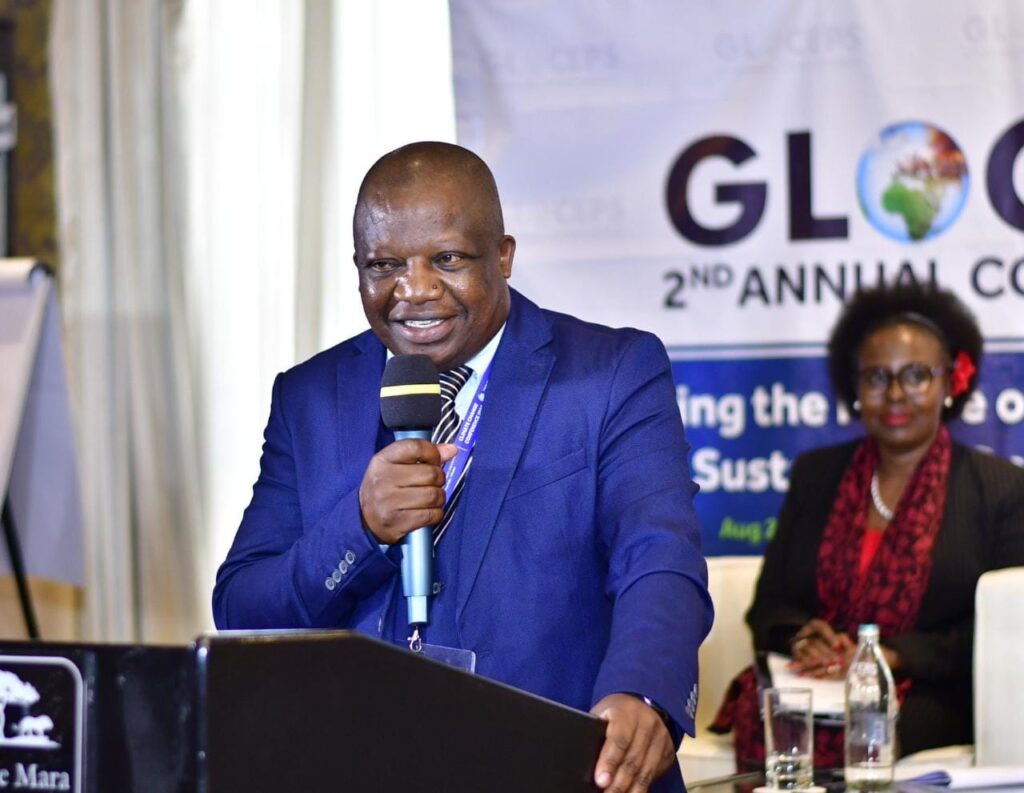
The Global centre for policy and strategy (GLOCEPS) a think tank established based in Nairobi that deals with policy influence, advance research on climate change and regional security has called called on all African countries to unite and speak in one voice during the Africa Climate Summit to be held in Nairobi early next month and the cop 28 to be held in Dubai in November this year,
Speaking during the opening of the second annual two day conference held at a Nairobi hotel, Retired Brigadier Dr.Robert Kabage the executive director of (GLOCEPS) has reiterated the need for peace, security and development in tackling climate change and the importance of scientific research in mitigation of climate change effects and countering organised transnational crimes.
Brig. DR. Kabage noted that the second annual conference comes at the right time when the country is awaiting for the climate summit that will be held September
In conclusion he further urged the African countries not to import more than 33% of its good from one country to avoid been held hostage in timesof climate change crisis that arebeen experienced across the world.
He has said that there is a need to advance adaptation and water security and resilience adaptation in the environmental sector as away of urban planning.
According to Dr.RG Kabage the private sector should lead from the front and find away of engaging and sensitizing the in order to combat climate change.
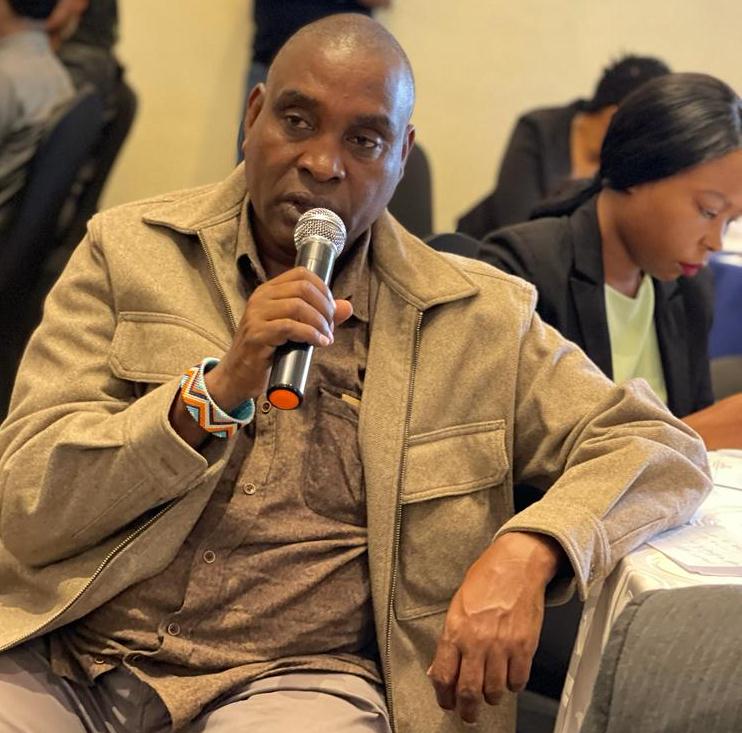
Mr. Joseph Ole Simei from Kenya representing indigenous people, giving his views at a Panafrican Climate Justice Action summit in Nairobi today
By Benard Mulwa
The Africa Climate Summit – Non State Actors Steering Committee, a Platform that strives for advancement of a pro-African agenda in all key climate spaces have expressed their worries that the Africa Climate Summit, scheduled for September 2023 in Nairobi, Kenya may fall short of the aspirations and thus have formulated a set of demands that they expect the African leaders to uphold and champion at the summit.
Over 250 members from 5 African regions, East and the Horn of Africa, South, Central, North and West Africa regions took part both in person and virtual in issuing a joint statement and their perspectives on the upcoming Africa Climate Summitte (ACS23).
Speaking to journalists in Nairobi today, Dr. Mithika Mwenda, the Executive Director, Panafrican Climate Justice Action, said African agenda have been set aside and Carbon markets taken the center stage, “Carbon markets should not be taken as an alternative to Carbon financing” adding that they expect the African leaders to reject false solutions and narratives that undermine African communities’ rights, interests and sovereignty, such as carbon markets, geoengineering, nuclear energy, and the principle of share responsibilities. “We remind African leaders that some proposals or actions claim to address the climate crisis. In reality, they either have no significant impact on reducing greenhouse gas emissions or, worse, have negative social and environmental consequences. These proposals are promoted by powerful interests that benefit from maintaining the status quo of fossil fuel dependence, and they divert attention and resources from the real solutions that are urgently needed” he said, they therefore, demand that African leaders and stakeholders must: a. Critically examine the claims and evidence behind any proposed solution. They must make it a duty to the African people to ask questions such as: Who is promoting it and why? What are the assumptions and uncertainties involved? How does it affect the root causes and drivers of greenhouse gas emissions? What are the potential trade-offs and co-benefits for other environmental and social issues? How does it align with the principles of climate justice and human rights?
Among other leaders, Africa Trade Union in Togo empheresised the African leaders to show courage in confronting the systemic changes needed to address climate change effectively, recognizing that false climate solutions often serve to maintain the status quo and protect the interests of powerful actors who benefit from the current system.
Challenge the dominant narratives and paradigms that enable and justify false solutions, such as those denying historical responsibilities for the climate crisis, turning regional and global dialogues into investment forums, claiming equal or shared responsibility for climate action and dismissing African demands for justice as victim-playing.
Commit to a just and equitable transition to renewable energy, ensuring that energy access is prioritized for the poor and marginalized and that community ownership and participation are guaranteed.
Recognizing the diversity and heterogeneity of African countries and regions and respecting their sovereignty and self-determination in defining their energy pathways
Ensuring that the energy transition is aligned with the African Union Agenda 2063, the Sustainable Development Goals and the Paris Agreement and contributes to poverty eradication, social justice, human development and sustainable industrialization.
Promoting a participatory and inclusive approach that engages all relevant actors, especially women, youth, indigenous peoples and marginalized groups, in designing, implementing and monitoring the energy transition policies and projects.
Supporting the development of local capacities, skills and innovations and fostering regional cooperation and integration to enhance the competitiveness and resilience of African economies in the global energy market.
Balancing the trade-offs and synergies between environmental, social and economic objectives and ensuring that the costs and benefits of the energy transition are equitably distributed among and within countries.
Addressing the historical injustices and inequalities that have resulted from exploiting fossil fuels in Africa and drumming adequate compensation, rehabilitation and restitution for the affected communities and ecosystems.
Demand that developed countries fulfill their historical responsibility and provide adequate and predictable finance, technology transfer, and capacity building to support adaptation, mitigation, and loss and damage in Africa.
Put the African people above all personal and collective political and economic interests. We call on our leaders to listen to the voices of their people, especially the youth, women, indigenous peoples, farmers, workers, and other vulnerable groups, who are bearing the brunt of the climate impacts. We remind them they have a moral and legal obligation to protect our shared future and home. They must muster the courage to:
Reject anti-African proposals that increase climate risks for Africa and transfer undue burdens of addressing the climate crisis to African countries and people already suffering the adverse impacts of the debts, global inequality in the distribution of wealth and other problems.
Resist attempts by the developing nations, through their corporate and non-profit agents, to hijack the African narrative and continue to define priorities and courses of action for the continent.
Muranga Deputy Governor Hon Stephen Munania has critiqued the manner in which the 8th devolution conference was organised.
The DG said the event left out the youthful Kenyans whose feedback would have been the most accurate evaluation of devolution.
The conference organised by the Council of Governors with a them of the “Present and for the Future ” was held at the Eldoret Sports Club to take stock of the performance of the devolved system of governance a decade after its launch.
“I feel having achieved much in devolution in 10 years, the person who should be actively involved in this conference is not me the top leadership, but it’s actually the people who are the beneficiaries of the services,” he said.
Those are the people who are supposed to be giving us marks and telling us whether devolution has worked for them or not.” He added
The Deputy governor also reiterated that for Kenya to realize the benefits of the devolution, youths must be engaged fully towards the future of this country.
Kenya County Government Workers Union led by Calvin Okello Assistant Secretary, Festus Ngari City Branch Secretary (C) , Steve Ogesa (L) Vice Chair, Grace Muturi Women Leader ( R ) all seated infront join by John Baraza Vice Staff, Collins Nkoitoi Youth Leader and Beatrice Cheruto at Press Conference in Nairobi.
BY WILSON MANDELA
The leadership of joint branches of Kenya County government representing workers in the county government of Nairobi are disturbed by the on-going and current state of events clearly meant to destabilise the existing smooth operations of Nairobi governor Hon Johnson Sakaja’s government.
The faceless cartels in conjunction with some rogue county officials behind these actions are the same people who destabilise the previous regime in their instatiable appetite for squandering public finance for their own self interest and we ask governor Sakaja to resist their evil maneuvers in whatever it takes for we together mist register progress in the services we provide to Nairobi citizens.
Therefore,we offer our full support to the the governor in his efforts to reform and streamline operations at the county finance department. The finance sector headed by CEC Charles Kerich and Asha Abdi should be given necessary support to bring back the neck financial disciplines as envisaged under the law.
We fear that if these cartels have their way,we are lightly to sink back to the days where staff’s salaries are divided to pay suppliers and contractors and endless salary delays which we have experienced for the last one year of this administration.
In conclusion, we wish to advice the SRC that they cannot continue discriminating the employees of defunct local authorities everytime they want to give advisories. They are Kenyans like every other public officer and deserve the right to be cushioned against adverse effects of high costs of living. They have thwarted all the efforts to review collective bargaining agreement for defence local authority now for 12 years against the recommended four years circle.
The Kenya government has committed towards launching the National digital identity in partnership with UNDP .
The PS Julius Bitok speaking during the patnership launch, he said that Kenya will borrow heavily from countries that have also introduced the (Unique Identity Card) and the integration of the existing databases on registration records.
Furthermore, the Citizens Services PS said that in the new system, Kenya will sought an advanced registration system that will be totally different with the Huduma Namba which will make it difficult to forge identity documents while also cleaning up and consolidating existing databases into a master register.
The memorandum has been put into three principles and will ensure the public are sensitised about the project.
The president had directed that the much awaited ” Maisha Namba ” when launched will offer citizens easier ways to access all 5,000 digitalize government services, and in amove to streamline all processes as well as improve delivery, and facilitating information sharing.
The project has five components which will help inter government agencies to motivate the citizens and non state actors to create capacity building across the country.
However,has urged that through the patnership with UNDP is an added advantage because they have launched the same number to over 25 years and UNDP will help in resource mobilisation with other development patners.
“One of the challenges by the previous regime faced was lack of consoltations and public engagements as well as the non state actors in the familiarisation of the project”,Dr. Julius Bitok Said
He said this help to minimise crime driven by identity theft and fraudulent access and use of private data, Bitok disclosed that government will partner with public and private institutions that are reliant on data for business operations.
Mr. Antony Ngororano ,UNDP Kenya Rep has also said that under this deal the organisation will work with government to provide technical assistance when it comes to mobilisation of funding in the implementation of the ID.
The government through the President’s order ‘Maisha Namba ” be launched in September next month, the Unique Personal Identifier (UPI), the national digital identity will be assigned to everyone who qualifies for Kenyan citizenship at birth.
The 36-seat electric bus is designed to meet the demands of urban bus operations in Nairobi.
The E9 Kubwa will be entirely assembled in Kenya starting this year. BasiGo is accepting reservations from Nairobi bus owners for the first year of production. Nairobi PSV operators are already placing reservations with BasiGo for the first production units.
BasiGo is offering the E9 Kubwa through a new leasing model to further reduce the upfront cost for bus operators.
The E-mobility company, BasiGo has today announced the introduction of the “E9 Kubwa”, a 36-seater electric bus custom designed for the Kenyan market’. The first 2 Kubwa buses have begun pilot testing with existing BasiGo customers: Super Metro, OMA Services, Embassava, Citti Hoppa, Metro Trans and East Shuttle plying the Dandora route.
The E9 Kubwa seats 36 passengers with the option of 18 standing passengers. BasiGo has designed the E9 for urban bus operations where buses typically hold 33 to 41 passengers. The bus can be recharged in 2 hours at BasiGo’s DC Fast charging depots and can drive up to 400 km per day with a mid-day charge. Like the K6 Electric Bus introduced by BasiGo last year, the E9 Kubwa features an upgraded passenger experience with leather seats, WiFi, CCTV cameras, and USB phone charging at every seat.
Jit Bhattacharya, BasiGo CEO said, “We are proud to deliver the E9 Kubwa, an electric bus designed specifically for Nairobi’s PSV sector. This is a state-of-the-art electric bus that is cleaner for Nairobi, safer and more comfortable for passengers, and better value for PSV Operators. Through our Pay-As-You-Drive financing models, we have made this bus accessible to all bus operators in the city. And most importantly, every E9 Kubwa delivered by BasiGo will be manufactured here in Kenya starting later this year.”
Through its Pay-As-You-Drive financing model, BasiGo is offering the E9 Kubwa for a purchase price of Ksh 7.5 Million and a mileage-based subscription of Ksh 40 per km for charging and maintenance provided by BasiGo. BasiGo has also announced a new lease option, enabling owners to adopt the electric bus for a much lower upfront cost.
Each E9 Kubwa electric bus is expected to help Kenya reduce diesel consumption by 20,000 liters per year while also reducing CO2 emissions by 50 tonnes per year.
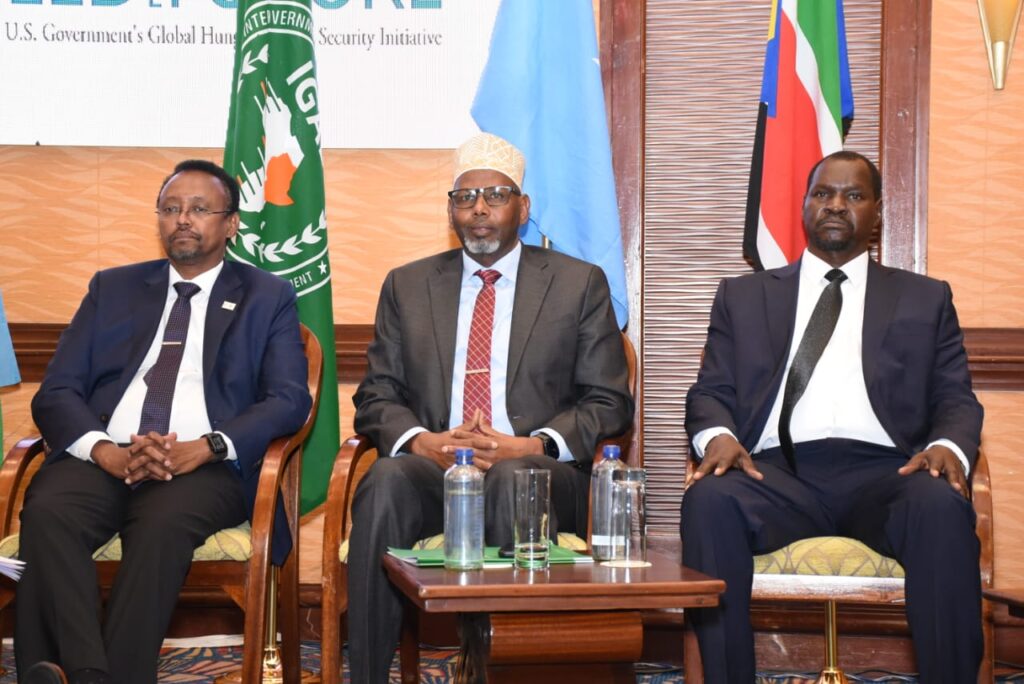
IGAD agricultural council upon member states to act collectively through to join forces with neighbors and relevant agencies including the Desert Locust Control Organization of Eastern Africa (DLCO-EA) towards the total eradication of this pest and address the broader aspects of climate change in the region.
Intergovernmental Authority on Development (IGAD) member states, comprised of Djibouti, Ethiopia, Kenya, Somalia, South Sudan, Sudan and Uganda, convened in Nairobi.
The ministers to chart a path towards sustainable development, having deliberated on issues pertaining to the foregoing theme; We appreciate the warm welcome and hospitality extended by the Government and the people of the Republic of Kenya, as well as the efforts being made by IGAD member states and partners to enhance risk transfer mechanisms and transboundary pest management in the region.
” we appreciate the initiative by IGAD through its Climate Prediction and Applications Centre (ICPAC) and the support provided by the Government of the United States of America and the World Bank to bring together delegates from the IGAD member states and partners to discuss and share our collective understanding of the region’s state of risk transfer mechanisms and transboundary pest management and affirm our shared commitment to promote proactive risk management”, Dr.John Ogoto ,Southern Sudan UnderSecretary for Food Security
The member states have express concern over the region’s increased vulnerability to climate change, and the observed intensification of extreme climate events including droughts and floods, and the impacts on food security and livelihoods.
The Ministry of Agriculture Kenya has recognize the high levels of acute food insecurity in the region, driven by multifaceted drivers including climate-related shocks, conflict and insecurity, and economic shocks;
“We recall the IGAD Regional Ministerial Meeting on Strengthening, Adapting and Accelerating National and Regional Efforts to Address Food Crises in the Region held on 7th October 2022 in Nairobi, Kenya, and the strategies agreed upon and outlines in the subsequent Communiqué to enhance, modify and expedite both national and regional initiatives aimed at addressing food crises”,said Mr Josphat Muhunyu,Agriculture Secretary Kenya
He said the kenya government has acknowledge the role of risk transfer and microinsurance mechanisms in building the resilience of societies against various risks, including natural disasters and economic shocks;
However he said the government also recall the outcomes and recommendations of the first and second Regional Conferences on Risk Transfer and Micro Insurance for Resilience Building in the IGAD region, held in Kampala and Khartoum, respectively and emphasize the importance of member states in creating conducive regulatory environments for the growth of risk transfer and microinsurance, including simplified licensing procedures and clear guidelines;
The IGAD has recognize the crucial role of technology and data to enhance the efficiency of risk transfer and microinsurance operations and further recognize the need for awareness campaigns and educational programs to promote the benefits of risk transfer and microinsurance mechanisms.