Githunguri MP Gathoni Wamuchomba has protested the failure by police to take over and deploy officers to a newly constructed police post in Ngeteti, saying residents are being denied security services despite completion of the facility.
Wamuchomba said the police post was initiated after residents of Ngochi and Ngeteti requested improved security through public participation conducted by the National Government Constituencies Development Fund (NG-CDF) in 2023.
According to Wamuchomba, NG-CDF subsequently funded and constructed a modern police post in Ngeteti in response to the residents’ request.
However, Wamuchomba said police declined to take over the facility after its completion, citing lack of accommodation for officers and a public toilet.
Wamuchomba said NG-CDF responded by constructing accommodation for the officers, addressing the concerns raised by the police.
Wamuchomba said she expected the police to formally take over the facility after adequate communication had been made ahead of the planned handover.
“Yesterday, we expected the police to take over the running of the police post after adequate communication was done. They refused to appear for handing over citing lack of orders from above,” Wamuchomba said.
She questioned who was behind the alleged directive.
“Which above?” she asked.
Wamuchomba further alleged that the Githunguri OCPD failed to appear during the planned handover and warned junior officers against attending the event.
She also claimed that the area Deputy County Commissioner was unable to provide an explanation, while junior police officers allegedly stayed away from the handover.
Wamuchomba linked the development to her recent criticism of some Cabinet Secretaries, alleging that officers had been instructed to frustrate her as political punishment.
She specifically referred to her calls for the removal of Transport Cabinet Secretary Kipchumba Murkomen and Defence Cabinet Secretary Aden Duale.
The allegations could not, however, be independently verified from police authorities.
The dispute has raised questions over coordination between NG-CDF-funded security infrastructure and the National Police Service, particularly where facilities are constructed in response to requests from local communities.
Wamuchomba maintained that her responsibility as an MP was to facilitate infrastructure development, while deployment and management of police officers remained the responsibility of the national government.
She said residents should not be forced to lobby individual government officials before benefiting from a facility constructed specifically to address their security concerns.
“So the people of Ngochi and Ngeteti village who desperately need a police post with services must beg Murkomen to deploy policemen?” she posed.
Wamuchomba warned that she would continue pressing the matter until officers are deployed to the facility.
She also invoked her electoral mandate, saying she would not be intimidated from demanding services for her constituents.
“The boss is my voter,” she said, in reference to the people of Githunguri.
The standoff comes as residents of Ngochi and Ngeteti await the operationalisation of the new facility, which is expected to improve access to policing services and enhance security in the area.
Wamuchomba said the facility should not remain unused after public funds have been spent on its construction and the additional requirements raised by police have been addressed.
She vowed to continue demanding answers on why the completed police post has not become operational.
Her remarks have brought renewed attention to the need for closer coordination between elected leaders, administrators and security agencies to ensure completed public facilities are promptly put into use for the benefit of citizens
BEIJING, Sept. 11 (Xinhua) — Over the past two decades, BRICS has grown into a major platform for cooperation among emerging markets and developing countries, with an ever-expanding role in global affairs.
Today, BRICS has expanded to 11 member countries and 10 partner countries, becoming a force for advancing a multipolar world and greater democracy in international relations.
The BRICS countries are home to nearly half of the world’s population, where diverse civilizations embrace coexistence and mutual learning.
In 2025, Malaysia, Thailand, Vietnam, Belarus, Bolivia, Cuba, Kazakhstan, Uzbekistan, Uganda and Nigeria became BRICS partner countries.
A drone photo taken on June 17, 2022 shows the headquarters building of the New Development Bank in east China’s Shanghai. The expansion of BRICS marks a qualitative leap in its representativeness and influence. Today, BRICS countries account for nearly half of the world’s population, around 30 percent of global economic output, and one-fifth of global trade.
The greater BRICS cooperation has entered a stage of high-quality development. (Xinhua/Fang Zhe)
This photo taken on June 7, 2026 shows a China-made self-driving taxi near the Burj Al Arab hotel in Dubai, the United Arab Emirates. The expansion of BRICS marks a qualitative leap in its representativeness and influence. Today, BRICS countries account for nearly half of the world’s population, around 30 percent of global economic output, and one-fifth of global trade.
The greater BRICS cooperation has entered a stage of high-quality development. (Xinhua/Wen Xinnian)
An aerial drone photo taken on Aug. 20, 2024 shows a view of the Redstone Concentrated Solar Thermal Power Project near Postmasburg in Northern Cape Province of South Africa. The expansion of BRICS marks a qualitative leap in its representativeness and influence. Today, BRICS countries account for nearly half of the world’s population, around 30 percent of global economic output, and one-fifth of global trade.
The greater BRICS cooperation has entered a stage of high-quality development. (Xinhua/Zhang Yudong)
People participate in the BRICS Dialogue on Civilizations at Rio de Janeiro State University in Rio de Janeiro, Brazil, June 27, 2025. The expansion of BRICS marks a qualitative leap in its representativeness and influence. Today, BRICS countries account for nearly half of the world’s population, around 30 percent of global economic output, and one-fifth of global trade.
The greater BRICS cooperation has entered a stage of high-quality development. (Xinhua/Wang Tiancong)
People visit the exhibition “On Top of the Pyramid: The Civilization of Ancient Egypt” at the Shanghai Museum in east China’s Shanghai, Aug. 11, 2025. The expansion of BRICS marks a qualitative leap in its representativeness and influence. Today, BRICS countries account for nearly half of the world’s population, around 30 percent of global economic output, and one-fifth of global trade.
The greater BRICS cooperation has entered a stage of high-quality development. (Xinhua/Liu Ying)
The China National Center for the Performing Arts (NCPA) Chorus, rehearses with Choralla, a local Saudi choir, for the World Famous Songs Concert at the King Abdulaziz Center for World Culture, in Dhahran, Saudi Arabia, Dec. 11, 2025. The expansion of BRICS marks a qualitative leap in its representativeness and influence. Today, BRICS countries account for nearly half of the world’s population, around 30 percent of global economic output, and one-fifth of global trade.
The greater BRICS cooperation has entered a stage of high-quality development. (Xinhua/Wang Haizhou)
Media professionals work at the media center of the 16th BRICS Summit in Kazan, Russia, Oct. 22, 2024. The expansion of BRICS marks a qualitative leap in its representativeness and influence. Today, BRICS countries account for nearly half of the world’s population, around 30 percent of global economic output, and one-fifth of global trade.
The greater BRICS cooperation has entered a stage of high-quality development. (Xinhua/Cao Yang)
A staff member introduces products via livestreaming at the booth of Iran during the 10th Silk Road International Exposition in Xi’an, northwest China’s Shaanxi Province, May 21, 2026. The expansion of BRICS marks a qualitative leap in its representativeness and influence. Today, BRICS countries account for nearly half of the world’s population, around 30 percent of global economic output, and one-fifth of global trade.
The greater BRICS cooperation has entered a stage of high-quality development. (Xinhua/Zhang Sijie)
Workers sort coffee beans to be exported to China at a coffee processing plant in Addis Ababa, Ethiopia, Feb. 13, 2026. The expansion of BRICS marks a qualitative leap in its representativeness and influence. Today, BRICS countries account for nearly half of the world’s population, around 30 percent of global economic output, and one-fifth of global trade.
The greater BRICS cooperation has entered a stage of high-quality development. (Xinhua/Geng Xinning)
A businessman (R) from India selects toys at the Yiwu International Trade Market in Yiwu City, east China’s Zhejiang Province, Feb. 2, 2023. The expansion of BRICS marks a qualitative leap in its representativeness and influence. Today, BRICS countries account for nearly half of the world’s population, around 30 percent of global economic output, and one-fifth of global trade.
The greater BRICS cooperation has entered a stage of high-quality development. (Xinhua/Huang Zongzhi)
Passengers pose for photos with a model of a high-speed electrical multiple unit (EMU) train of the Jakarta-Bandung high-speed railway at the waiting hall of Halim Station in Jakarta, Indonesia, April 28, 2025. The expansion of BRICS marks a qualitative leap in its representativeness and influence. Today, BRICS countries account for nearly half of the world’s population, around 30 percent of global economic output, and one-fifth of global trade.
The greater BRICS cooperation has entered a stage of high-quality development. (Xinhua/Xu Qin)
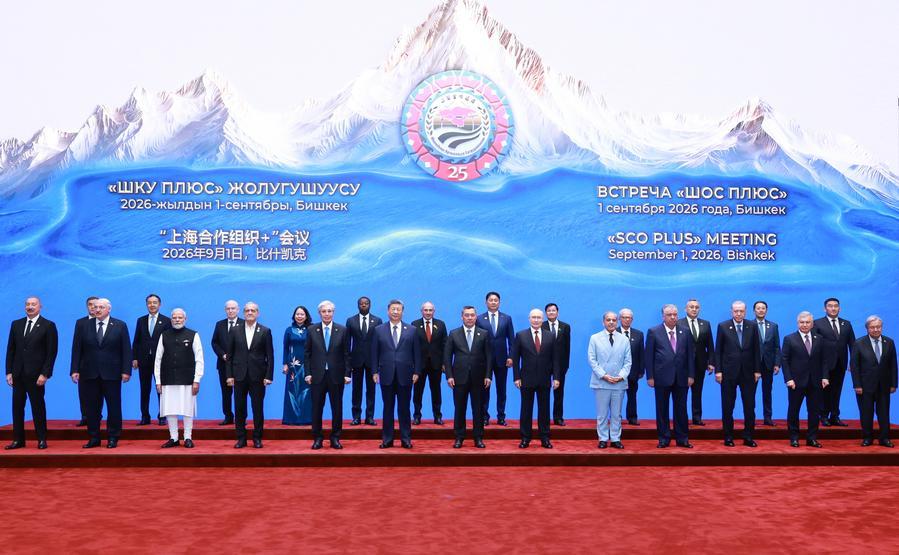
Chinese President Xi Jinping attends a group photo session ahead of the “Shanghai Cooperation Organization (SCO) Plus” meeting in Bishkek, Kyrgyzstan, Sept. 1, 2026. (Xinhua/Wang Ye)
BEIJING, Sept. 11 (Xinhua) — Chinese President Xi Jinping is heading to New Delhi for this year’s BRICS gathering just over a week after he took part in the Shanghai Cooperation Organization (SCO) summit in the Kyrgyz capital of Bishkek.
The two back-to-back multilateral engagements converge on a single, defining theme: galvanizing solidarity and cooperation across the Global South.
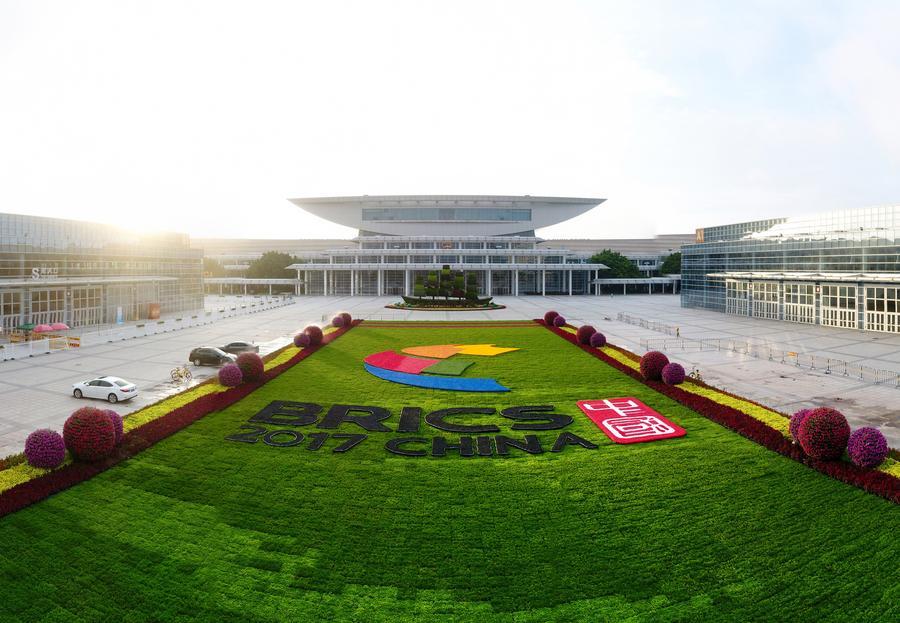
Photo taken on Aug. 24, 2017 shows a flowerbed at the Xiamen International Conference and Exhibition Center in Xiamen, southeast China’s Fujian Province. (Xinhua/Jiang Kehong)
EXPANDING FAMILY
The SCO “takes root in the Global South, its heart beats with the Global South, and it is an important pillar of South-South cooperation,” Xi said at the Bishkek summit concluded on Tuesday last week, calling on the SCO to “promote the development and rise of the Global South through the SCO Wisdom.”
The Chinese leader is expected to put forward further proposals on Global South cooperation at the upcoming BRICS summit, as he has noted that the BRICS is “standing at the forefront of the Global South.”
This year marks the 25th founding anniversary of the SCO and the 20th anniversary of the BRICS cooperation mechanism, both milestone occasions.
Riding the wave of the collective rise of the Global South, BRICS and the SCO have over the years expanded their membership and broadened their networks of developing partners. Their members jointly account for more than half of the world’s population and about 30 percent of the global economy. This illustrates the fact that the two groupings have evolved into major platforms for Global South cooperation.
Xi has not only joined other leaders of member countries in pushing for their respective expansions, but also put forward new ideas and initiatives like the “BRICS Plus” cooperation approach and the building of an SCO community with a shared future, opening up new vistas for win-win cooperation among Global South countries.
“China has consistently provided a clear vision and momentum for BRICS and the SCO, both conceptually and practically,” said Humprey Arnaldo Russel, head of the ASEAN-China Research Center at the University of Indonesia.
“It transformed BRICS from a relatively exclusive grouping into a broader platform for cooperation among developing countries and the wider Global South,” he added.
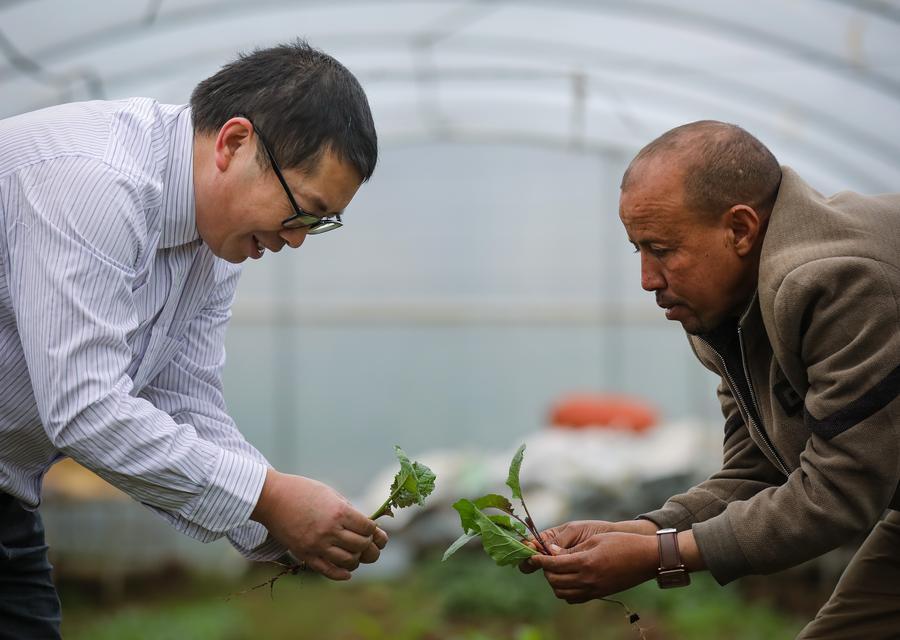
Chinese expert Li Guiqiang (L) gives instructions on vegetable cultivation at the China-Ethiopia Addis Ababa Agricultural Technology Demonstration and Training Center in Addis Ababa, Ethiopia, on Aug. 20, 2025. (Xinhua/Han Xu)
DEVELOPMENT FIRST
At the SCO summit last week, Xi called on countries to “stay committed to putting development first, and open up the prospects for shared prosperity.”
Amid a turbulent and rapidly changing international landscape, development still faces severe challenges, and the road to prosperity for the Global South will not be straight.
“The Global South emerges for development and prospers through development. We should make ourselves the main driving force for common development,” Xi said during the 2024 BRICS summit in Kazan, Russia.
For Xi, development has always been a priority. He sees it as “the master key to solving all problems,” and has consistently called for countries worldwide to jointly pursue development and prosperity.
Xi has stressed repeatedly that no one should be left behind in the fight against poverty in China, and has led a formidable campaign that ended extreme poverty nationwide, which was hailed as “the greatest anti-poverty achievement in history.”
His “leaving-no-one-behind” conviction also extends to his efforts to support poverty reduction and spur development across the Global South. “On the path to modernization, no one, and no country, should be left behind,” Xi said.
Last week in Bishkek, Xi called for consolidating cooperation in both traditional and emerging fields, from trade, investment, connectivity and energy to artificial intelligence (AI), the digital economy and green industries.
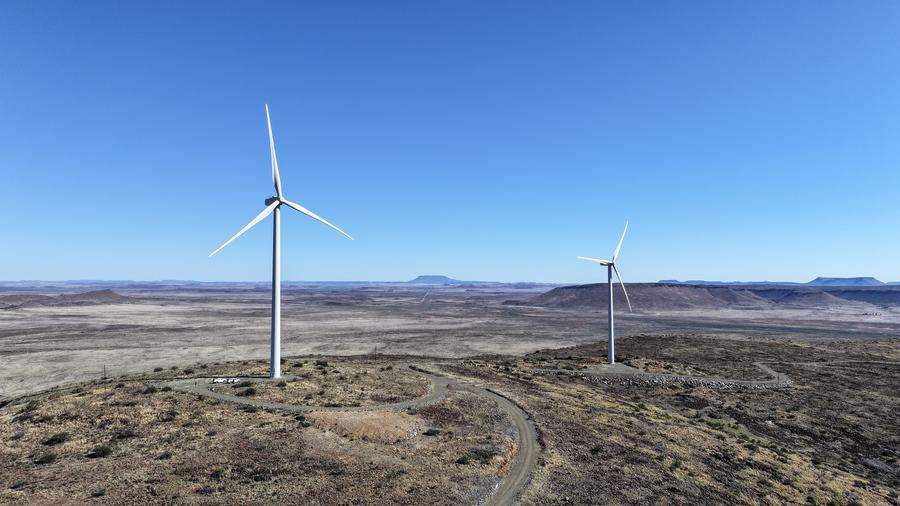
An aerial photo taken on Oct. 22, 2025 shows wind turbines of De Aar Wind Power Project in De Aar, Northern Cape, South Africa. (Xinhua/Han Xu)
Responding to the Global South’s aspirations for common development and modernization, Xi has proposed the Global Development Initiative (GDI), which marks its fifth anniversary this year.
In the last five years, the GDI has mobilized more than 23 billion U.S. dollars, provided support for over 1,800 “small and beautiful” livelihood projects, and sponsored training programs for more than 200,000 people in different professions.
Serik Korzhumbayev, editor-in-chief of the Delovoy Kazakhstan newspaper, said: “Under Xi’s leadership, the concept of development has acquired a new international dimension and become part of a broader vision for humanity’s shared future.”
Chinese President Xi Jinping chairs the “Shanghai Cooperation Organization (SCO) Plus” Meeting in Tianjin, north China, Sept. 1, 2025. (Xinhua/Huang Jingwen)
GREATER VOICE
As the Global South rises, it deserves a bigger say in global affairs.
Last year’s SCO Tianjin summit witnessed Xi’s proposal of the Global Governance Initiative, a major proposition of China to advance a more just and equitable global governance system.
At the heart of this vision is the conviction that every country has a place and an equal role to play in global governance.
Xi has long argued that international affairs should not be dictated by those with more muscles. “World affairs should be discussed by all, and international norms should be set by all,” he said in Bishkek last week. “The domination of international affairs by a few is an injustice left over from history, and global governance dictated by one, a few or a bloc of countries is not true multilateralism.”
“As an important part of a multipolar world and a key driving force behind it, the Global South countries ought to have greater representation and voice in international affairs,” Xi said.
Over the years, the SCO and BRICS have grown into vital venues for Global South countries to articulate their interests, coordinate their positions and strengthen their collective influence.
Their growing role can be seen in political coordination. The two groupings have issued statements on international and regional hotspot issues. In March this year, for example, SCO member states issued a statement expressing grave concern over developments in the Middle East and the strikes on Iran.
Xi has also pushed for improving global economic and financial governance. In 2014, Xi and other BRICS leaders formally signed an agreement establishing the New Development Bank, creating a new channel for financing infrastructure and sustainable development in emerging markets and developing countries.
At the SCO Bishkek summit, the members reaffirmed the importance of establishing the SCO Development Bank.
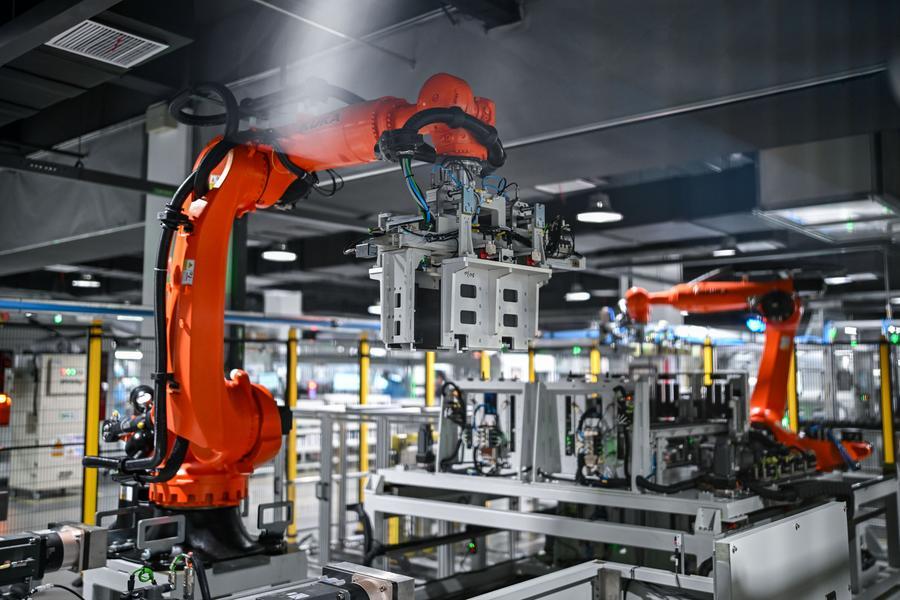
Robotic arms work in an energy storage production workshop at the Sigenergy Nantong Smart Energy Center in Nantong, east China’s Jiangsu Province, July 24, 2026. (Xinhua/Chen Yehua)
Now the push for a greater say is extending into emerging areas that will shape the future. In July this year, Xi announced the creation of the World Artificial Intelligence Cooperation Organization, and called for joint efforts to build a just and equitable system of global AI governance.
“We must carry out extensive international cooperation and help Global South countries with capacity building to bridge the AI and digital divides, promote sustainable development, and prevent creating new historical injustice in AI,” Xi said.
Beyond the SCO and BRICS, China has also promoted cooperation and greater representation for the Global South through frameworks such as the Forum on China-Africa Cooperation and the China-ASEAN summit.
Xi has said on many occasions that China has always been a member of the Global South and will always belong to the developing world.
“No matter how the international landscape evolves, we in China will always keep the Global South in our heart, and maintain our roots in the Global South,” he once said.■
Mrs. Georgina Chama, Principal of Lusaka Vocational Technical College (LVTC) in Zambia
As African nations seek to bridge the gap between classroom instruction and industrial demand, the institutionalization of workplace-based learning has emerged as a cornerstone for sustainable youth employment.
At the International TVET Conference held in the Kenyan capital of Nairobi from Sept. 9 to 11, educators, policymakers, and industry experts converged to chart a actionable roadmap for technical and vocational education and training across the continent.
Speaking on a high-level panel focused on real-world experiences, challenges, and solutions for workplace-based learning, Mrs. Georgina Chama, Principal of Lusaka Vocational Technical College (LVTC) in Zambia, shared practical insights into how institutional leadership can build resilient bridgeheads between training institutes and active industrial zones.
Chama emphasized that while dual training and workplace placement models offer tremendous value to students, moving from pilot programs to full institutionalization requires clear policy backing, structured incentives for private firms, and flexible academic calendars.
”Workplace-based learning cannot remain an ad-hoc arrangement or a secondary add-on to technical education,” Chama noted during the panel discussion. “It must be embedded into the core structure of our institutional curricula. For TVET institutions to produce truly work-ready graduates, training must alternate seamlessly between the lecture hall and the production line.”
Reflecting on operational realities in Zambia, Chama addressed key bottlenecks that vocational institutions face, including securing consistent industrial attachments for large cohorts, aligning semester schedules with private sector production cycles, and ensuring standardized mentorship on shop floors.
She highlighted that strengthening workplace training requires shifting industry perception from seeing interns as casual labor to recognizing them as an essential talent pipeline.
”What works is establishing formal, long-term partnerships with local industries where training objectives are co-designed,” Chama stated. “When private companies have a direct stake in defining competency requirements, they are far more willing to open their doors, share modern machinery, and invest in workplace mentors.”
Chama also advocated for standardized monitoring mechanisms, noting that institutional tutors must work alongside company supervisors to continuously assess practical progress. She urged African governments and TVET regulatory bodies to offer policy frameworks—such as tax rebates or training subsidies—to encourage small and medium enterprises (SMEs) to host TVET trainees.
The panel discussion formed part of the three-day international conference brought together over 500 regional and international delegates under the banner of advancing industry-TVET collaboration for global competitiveness.
Delegates praised Zambia’s practical approach to technical education reform, agreeing that institutional leaders like Chama play a pivotal role in transforming vocational centers into dynamic hubs for regional industrialization and economic growth.
Africa’s aviation industry must urgently address soaring insurance premiums, acute skills shortages, and fragmented airspace if it hopes to expand beyond its tiny share of global air traffic, delegates heard on Wednesday at an international summit in Nairobi.
Speaking during the 10th Aviation Africa Summit and Exhibition a Faude adanhounsounou of Mach aero partners Innovation and digital valuesaid that structural bottlenecks continue to stall the sector’s growth despite vast commercial opportunities across the continent.
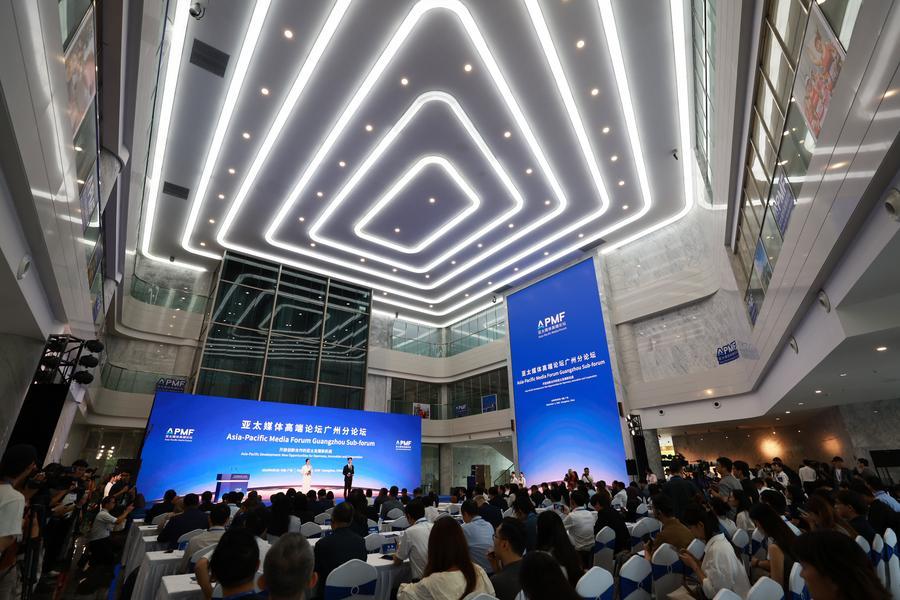
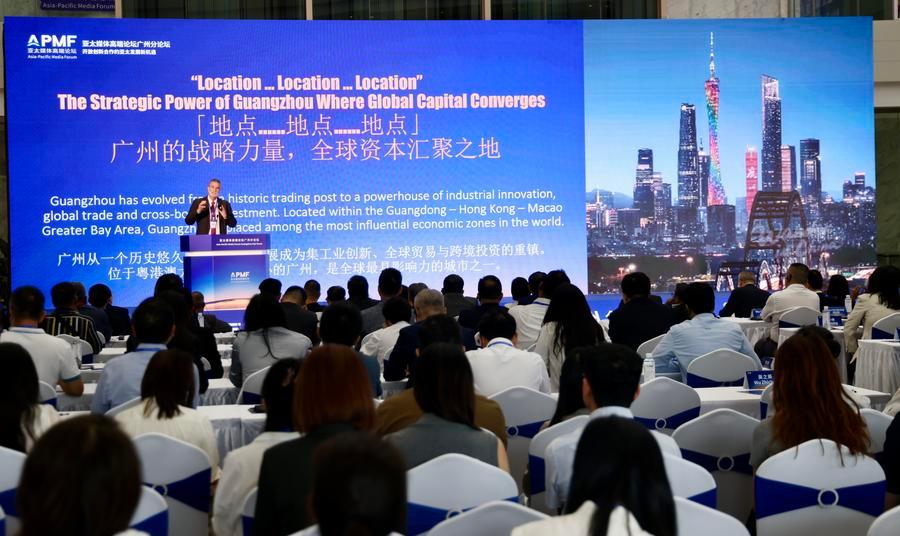
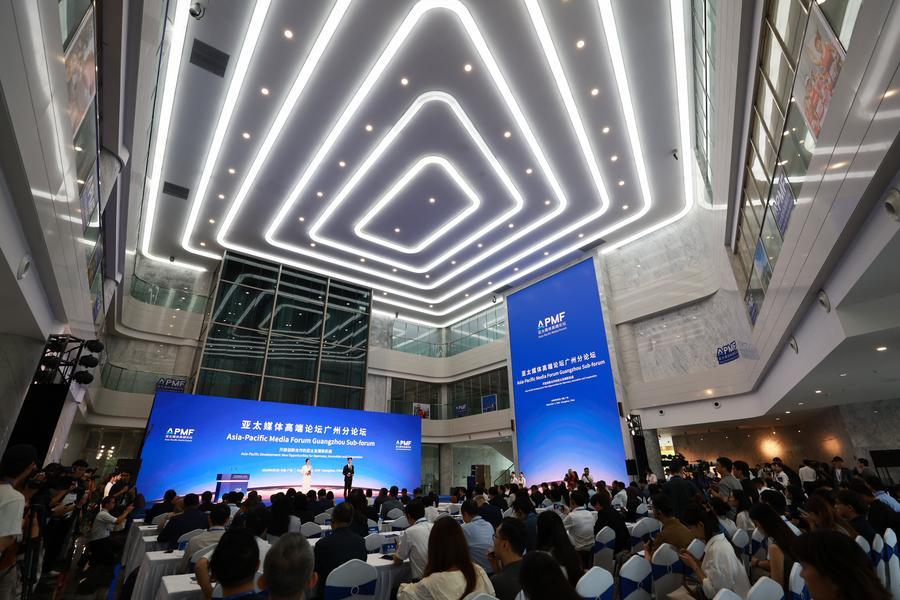
This photo taken on Sept. 3, 2026 shows the Asia-Pacific Media Forum Guangzhou Sub-forum in Guangzhou, south China’s Guangdong Province. (Xinhua/Gao Jing)
BEIJING, Sept. 5 (Xinhua) — As China hosts the Asia-Pacific Economic Cooperation (APEC) summit this year, three words stand out in its agenda: openness, innovation and cooperation. They are also three important ways in which Chinese modernization is creating new opportunities for the Asia-Pacific.
This is particularly relevant as the Asia-Pacific Media Forum 2026 brings together media representatives to discuss the region’s development and future. While the discussion goes beyond the media community, it highlights a pressing question: how development opportunities can translate into broader prosperity across the region.
Openness means more opportunities to connect with China’s growth.
The Chinese modernization is taking place in an economy deeply integrated with the Asia-Pacific. China accounts for more than a quarter of APEC’s combined GDP, while its trade and investment ties with regional economies continue to strengthen.
Journalists and social media influencers from ASEAN countries learn about local agricultural products in Qingyuan, south China’s Guangdong Province, July 27, 2026. (Xinhua/Deng Hua)
The scale of China-ASEAN economic ties offers a telling example. In 2025, trade between China and ASEAN reached 7.55 trillion yuan, or more than 1 trillion U.S. dollars, up 8 percent year-on-year. ASEAN remained China’s largest trading partner.
As Chinese consumers demand more diverse goods and services and Chinese industries continue to upgrade, this large and growing market creates space for businesses across the region. Openness therefore does more than keep trade flowing. It allows China’s development to generate demand and opportunities beyond its borders.
Innovation means more possibilities for new growth.
Chinese modernization is also being driven by technological progress and the green and digital transformation of the economy. In 2025, China’s expenditure on research and development reached 3.93 trillion yuan, or about 551 billion dollars, up 8.1 percent from the previous year and equivalent to 2.8 percent of GDP.
For the Asia-Pacific, the significance of such innovation goes beyond the technologies themselves. A vast market and strong industrial capacity can help turn new technologies into products and applications on a large scale. As green and digital technologies become more widely applied, they can create new demand, new industries and new opportunities for businesses across the region.
This is closely aligned with APEC’s own innovation agenda, as APEC economies are discussing open innovation, cross-border knowledge flows and cooperation in areas including artificial intelligence, digital transformation and green development.
The robot of Tiangong competes during the 400m Obstacles of the 2nd World Humanoid Robot Games in Beijing, capital of China, Aug. 24, 2026. (Xinhua/Ju Huanzong)
Cooperation means turning opportunities into shared gains.
No economy can address today’s development challenges alone. For the Asia-Pacific, where economies differ widely in their levels of development, industrial structures and capabilities, cooperation can help turn differences into complementarity and make development more inclusive.
Chinese modernization places strong emphasis on coordinated development and common prosperity. In practice, China’s manufacturing capacity, technological advances and large market can complement the resources, industries and markets of other Asia-Pacific economies, creating more room for trade, investment and industrial cooperation.
This is particularly important for the Asia-Pacific, where APEC’s 21 economies differ widely in their levels of development and economic structures. The region’s diversity need not be a divide. With cooperation, it can become a source of strength.
As APEC economies look ahead, openness can widen access to markets, innovation can open up new sources of growth, and cooperation can turn differences into shared strengths. Together, they can help translate development opportunities into tangible benefits for people across the region.
This is how Chinese modernization can make a meaningful contribution to the Asia-Pacific: by opening up more space for shared development and helping turn the vision of an Asia-Pacific community into reality. ■
Guests attend the Asia-Pacific Media Forum Dongguan sub-forum in Dongguan, south China’s Guangdong Province, Sept. 3, 2026. (Xinhua/Mao Siqian)
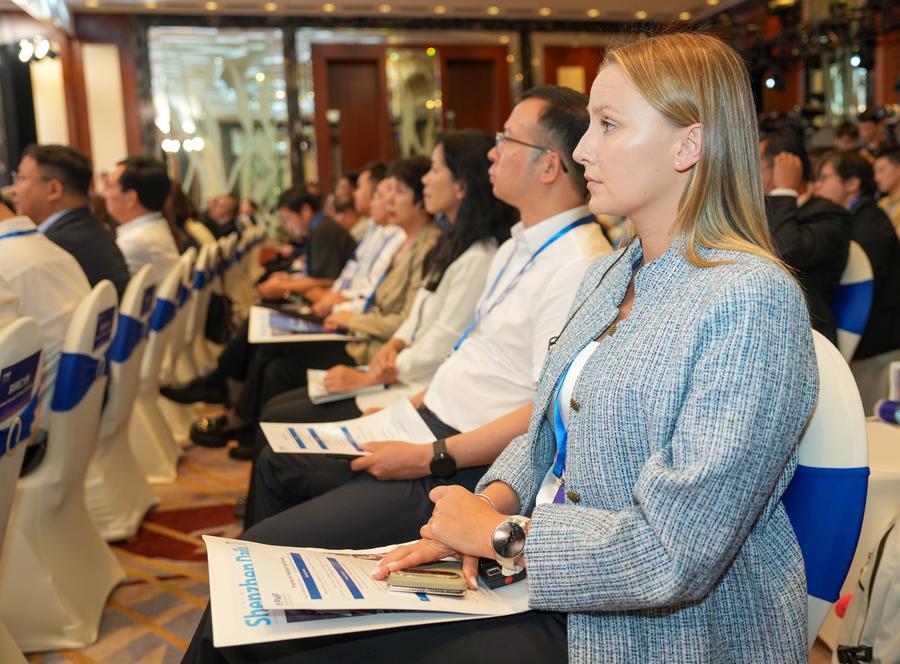
GUANGZHOU, Sept. 5 (Xinhua) — The Asia-Pacific Media Forum kicked off on Saturday in Shenzhen, south China’s Guangdong Province. From Sept. 3 to 4, the forum held four sub-forums in Guangzhou, Dongguan, Zhuhai, and Shenzhen in the province.
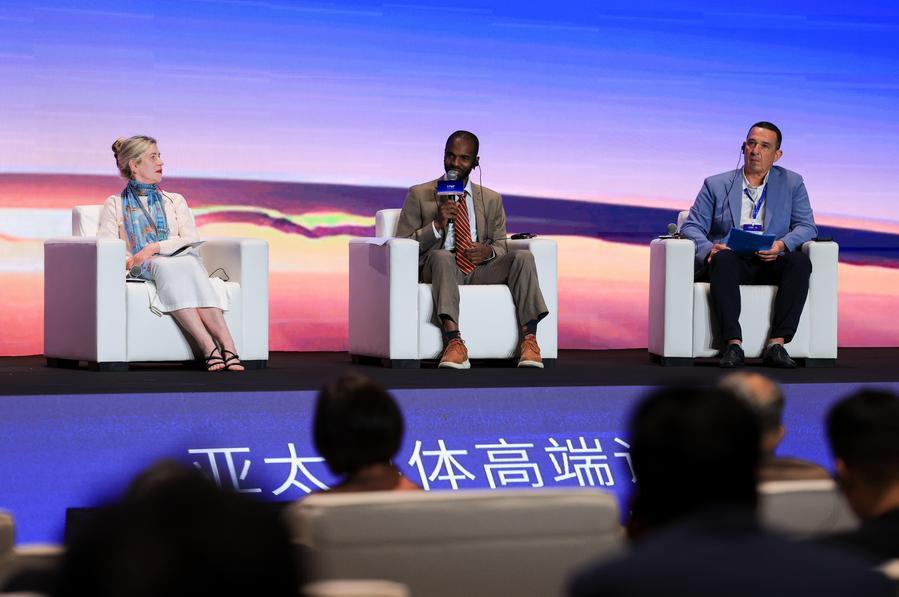
Guests attend the Asia-Pacific Media Forum Zhuhai sub-forum in Zhuhai, south China’s Guangdong Province, Sept. 3, 2026. (Xinhua/Liang Xu)A guest speaks at the Asia-Pacific Media Forum Guangzhou sub-forum in Guangzhou, south China’s Guangdong Province, Sept. 3, 2026. (Xinhua/Lu Hanxin)This photo taken on Sept. 3, 2026 shows the Asia-Pacific Media Forum Guangzhou sub-forum in Guangzhou, south China’s Guangdong Province. (Xinhua/Gao Jing)Guests attend the Asia-Pacific Media Forum Shenzhen sub-forum in Shenzhen, south China’s Guangdong Province, Sept. 4, 2026. (Xinhua/Dai Mingxuan)■
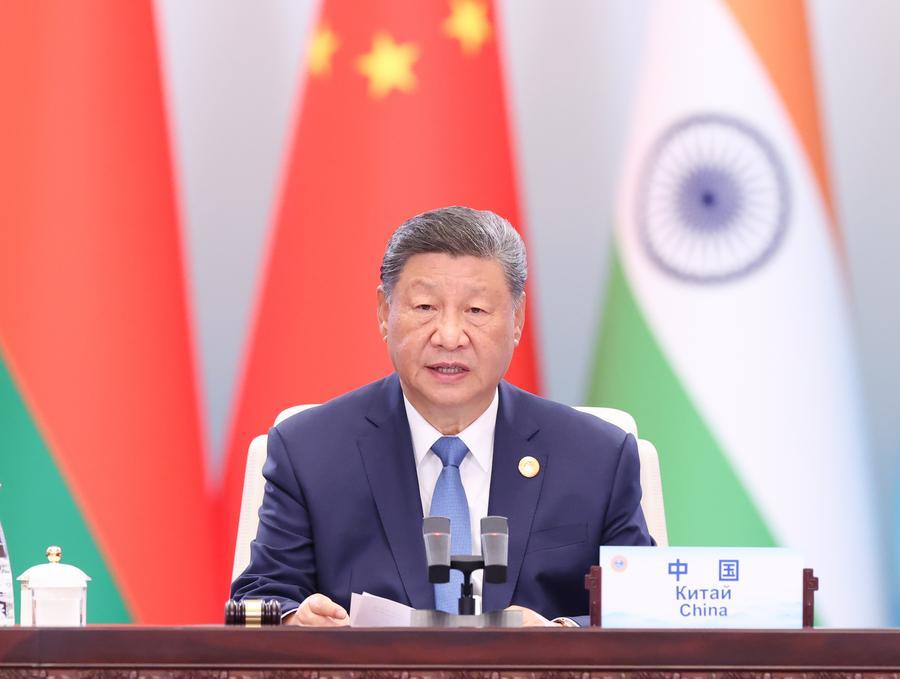
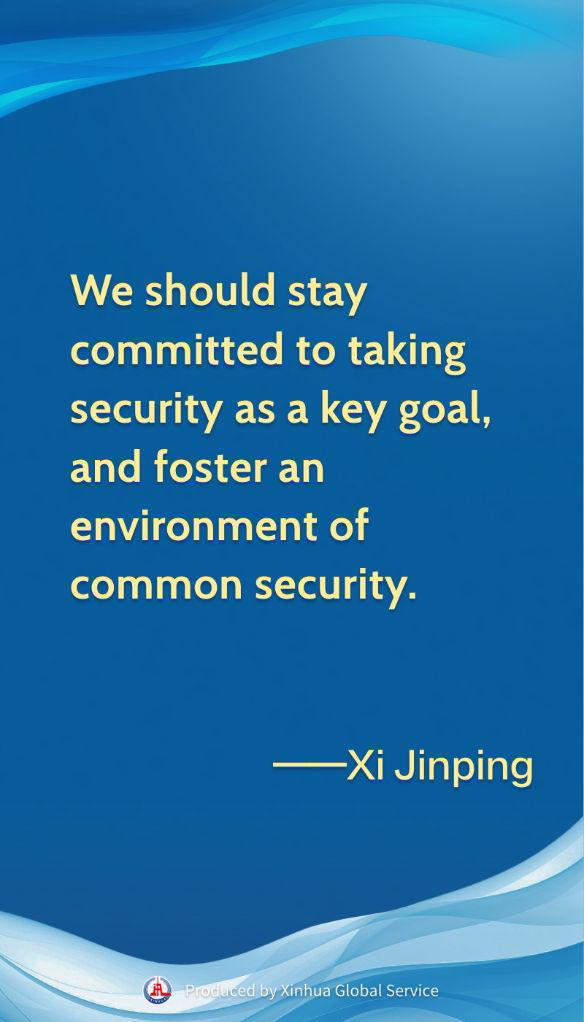
Chinese President Xi Jinping made the remarks in his speech at the 26th Meeting of the Council of Heads of State of the Shanghai Cooperation Organization (SCO) held in Bishkek on Tuesday.Produced by Xinhua Global Service
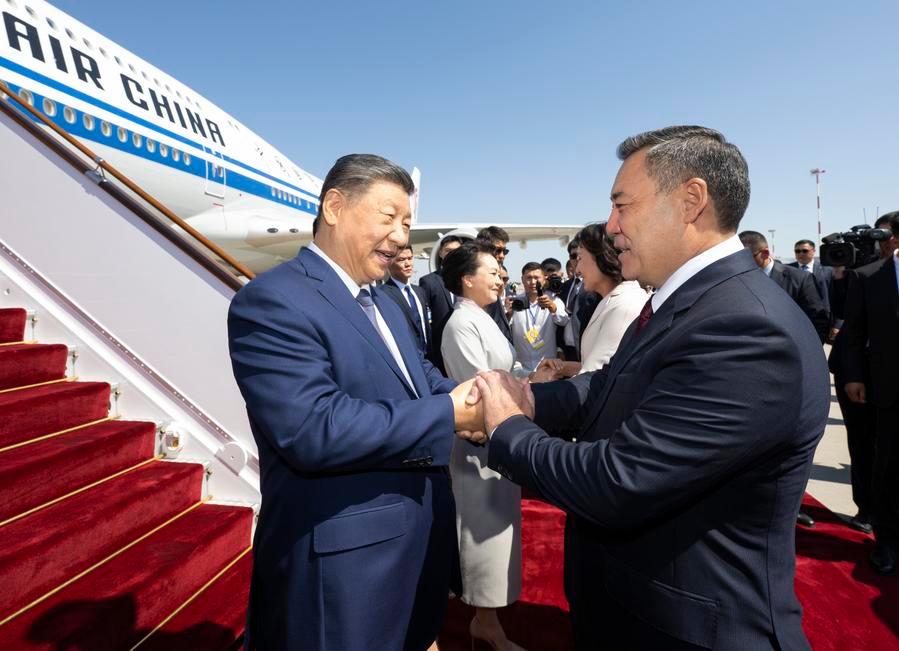
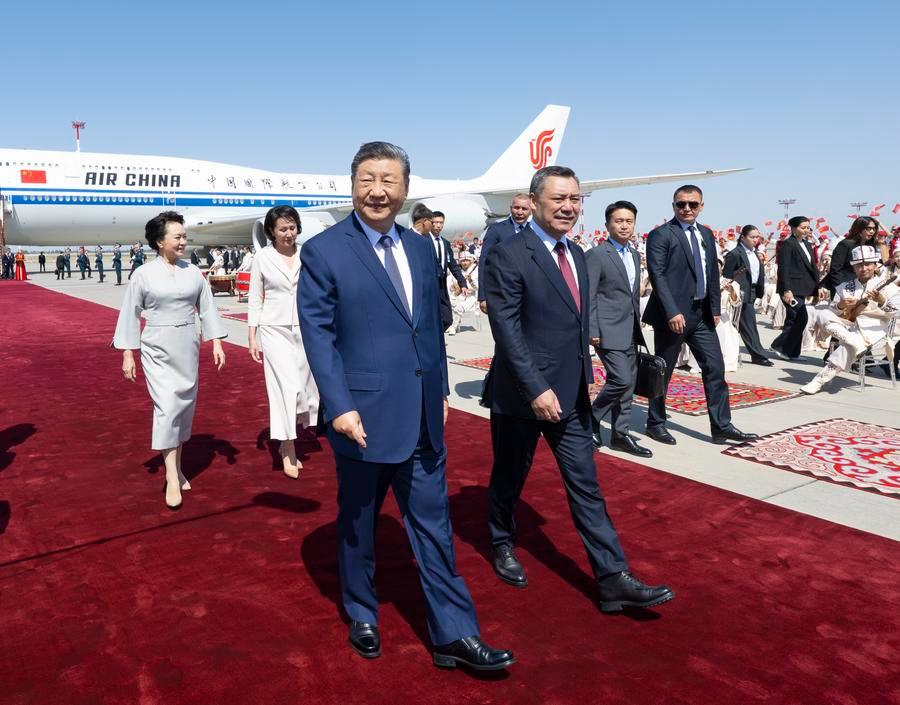
Chinese President Xi Jinping arrives in Bishkek for the Shanghai Cooperation Organization (SCO) Summit 2026 and a state visit to Kyrgyzstan upon the invitation of President Sadyr Japarov of Kyrgyzstan, Aug. 30, 2026. (Xinhua/Xie Huanchi)
BISHKEK, Aug. 30 (Xinhua) — A long red carpet stretched across the tarmac at the Manas International Airport on Sunday, with flags fluttering in the breeze. Kyrgyz President Sadyr Japarov and his wife had arrived early, waiting to welcome Chinese President Xi Jinping and his wife, Peng Liyuan.
As Xi and Peng stepped down the aircraft stairs, the two heads of state greeted each other with a firm handshake.
“You are family,” Japarov told Xi. “When you come to Kyrgyzstan, you are coming home.”
Xi landed in Bishkek on Sunday for the Shanghai Cooperation Organization Summit 2026 and a state visit to Kyrgyzstan.
The welcome was steeped in local tradition. Young Kyrgyz women presented Xi and Peng with traditional pastries and honey, greeting the distinguished guests with a time-honored Kyrgyz custom.
In a written speech delivered upon his arrival, Xi said that China and Kyrgyzstan share a time-honored traditional friendship, and the majestic Tianshan Mountains stand as witnesses to the millennia of friendly exchanges between their peoples.
Xi said that during the visit he will have in-depth exchanges of views with Japarov on China-Kyrgyzstan relations, cooperation in various fields between the two countries, and international and regional issues of common concern, and draw a new blueprint for building a China-Kyrgyzstan community with a shared future.
Chinese President Xi Jinping arrives in Bishkek for the Shanghai Cooperation Organization (SCO) Summit 2026 and a state visit to Kyrgyzstan upon the invitation of President Sadyr Japarov of Kyrgyzstan, Aug. 30, 2026. (Xinhua/Xie Huanchi)
Connected by mountains and rivers, and closely bound by shared interests, China and Kyrgyzstan have stood together through the years, supporting each other and achieving success together.
This is Xi’s third visit to Kyrgyzstan. In September 2013, Xi made his first state visit to Kyrgyzstan, when the two countries announced the establishment of a strategic partnership.
Over the past decade and more, China-Kyrgyzstan relations have made a historic journey, advancing from a strategic partnership to a comprehensive strategic partnership, and then to a comprehensive strategic partnership for a new era.