
Category: Uncategorized
A recent report by The Wall Street Journal, targeting several China-built global mega-projects, was filled with distorted facts, one-sided stories, and unfounded accusations — an attempt to discredit the China-proposed Belt and Road Initiative.
What’s the real picture of these projects? Are they really “falling apart” as sensationally claimed by the WSJ? Xinhua reporters traveled there, studied the cases and talked to authorities, experts and engineers.
Here is what we found.
by Xinhua writers Zhao Bochao, Li Li
QUITO/ISLAMABAD/KAMPALA/LUANDA, Feb. 22 (Xinhua) — Adriana Carranza, a resident in the San Luis village in northern Ecuador, has fond memories of her days working with a Chinese company at the Coca Codo Sinclair (CCS) hydroelectric project from 2012 to 2015.
“Thanks to the work I had done for (a subcontractor of) the Sinohydro Corporation, I was able to save money,” the former cook at the company told Xinhua. The job was well paid with good working conditions.
Carranza is among the thousands of Ecuadorians who have worked at the Chinese-constructed project, some 150 km east of the capital Quito. As the country’s biggest hydropower project, the 1,500-megawatt CCS has been running smoothly for over six years, generating around 42 billion kWh of clean and renewable hydroelectricity, becoming the largest power source for Ecuador.
However, a recent report by The Wall Street Journal (WSJ), which also spoke to Carranza, painted a gloomy picture of the CCS project with distorted facts and unfounded accusations.

This undated aerial photo shows the intake dam of the Coca Codo Sinclair hydroelectric plant between Ecuador’s provinces of Napo and Sucumbios. (Sinohydro/Handout via Xinhua)
This year marks the 10th anniversary of the Belt and Road Initiative (BRI). With infrastructure construction a key priority, 81 Chinese central state-owned enterprises have been involved in over 3,400 projects in countries along the Belt and Road by January 2021. The cumulative amount of China’s direct investment in these nations reached 161.3 billion U.S. dollars from 2013 to 2021. A World Bank report estimated that when fully implemented, the BRI could help nearly 40 million people in relevant countries leave poverty behind.
Turning a blind eye to such achievements, the WSJ article dated Jan. 20 criticized several Chinese-built mega-projects in Latin America, Asia and Africa in an attempt to smear the China-proposed initiative.
FALSEHOODS & MISREPRESENTATION
“The 14-hour days were long, and her Chinese boss didn’t speak Spanish,” wrote the WSJ about Carranza’s experience working for Sinohydro’s sub-contractor.
Contrary to what was described in the report, Carranza told Xinhua she was well paid for working extra hours. During her pregnancy, her boss and colleagues treated her “as if I was their daughter.”
“We usually want to work (extra hours)” and “I’m satisfied with my salary,” said Graciela Quirina, who also worked in a Sinohydro kitchen.
The WSJ’s misrepresentation went further. Citing unnamed government engineers, the U.S. daily alleged that the CCS plant has thousands of cracks in its “eight turbines” due to “faulty steel imported from China” and boldly speculated that it could soon “break down.”

Miguel Calahorrano, Ecuador’s former Minister of Electricity and Renewable Energy, receives an interview with Xinhua in Quito, Ecuador, on Feb. 7, 2023. (Xinhua/Li Guorong)
In an interview with Xinhua, Miguel Calahorrano, Ecuador’s former Minister of Electricity and Renewable Energy, said the WSJ article lacks veracity and “has a political intention.”
“How can a plant that is of no use to us have come to produce almost 42,000 gigawatt hours of energy? I’m sure these people don’t even understand what 42,000 gigawatt hours of energy means,” the former minister said.
“It clearly has the political intention of trying to devalue the relationship” between China and Latin American countries, he said.
Regarding the cracks, Sinohydro and the Ecuadorian State Electricity Company hired the German testing agency TUV SUD in 2018 as an international independent third party, which concluded in its risk assessment report that these cracks will not affect the operation and safety of the plant for its design life of 50 years.

This undated photo shows the hydroelectric power generators of the Coca Codo Sinclair hydroelectric plant between Ecuador’s provinces of Napo and Sucumbios. (Sinohydro/Handout via Xinhua)
As to the suitability of the steel, the TUV SUD report indicated that the base materials are within the values required by the specifications.
Furthermore, the WSJ associated erosion along a section of the Coca River and the disappearance of a waterfall with the Chinese-built project to hype up its environmental consequences.
Ecuadorian government-commissioned research conducted by Swiss consulting company Lombardi concluded that the disappearance of the waterfall was a natural phenomenon and had nothing to do with the construction of the CCS — a view shared by many geologists, local media reports said.
Ecuador has never lodged the issue with Sinohydro, which was tasked with the construction, according to the Chinese company.
Calahorrano said that the CCS plant has managed for the first time in the country’s history, together with other hydropower plants, to raise hydroelectricity in the electrical matrix to more than 93 percent, reducing the use of fossil fuels, saving the country about 1.3 billion U.S. dollars a year from fossil fuel imports and cutting carbon dioxide by about 18 million tons a year.
ONE-SIDED STORY
Under the sensational headline “China’s Global Mega-Projects are Falling Apart,” the WSJ article went on to bring in Pakistan’s Neelum Jhelum hydroelectric project, and again blamed “flaws” in Chinese construction for its shutdown in July 2022.
The accusation is far from the truth. The quality of the Chinese construction, as evaluated by local authorities during its handover in 2018, was impeccable and up to standard.
Sajjad Ghani, chairman of the Pakistan Water & Power Development Authority, told Xinhua that the WSJ report is unjustifiable.
“The quality of construction of the Neelum-Jhelum hydropower project has been fair,” said Ghani.

The engineers of CGGC work at Pakistan’s Neelum Jhelum hydropower project on Jan. 3, 2023, under a new contract between NJHPC and CGGC to repair the tunnel. (CGGC/Handout via Xinhua)
There is no doubt that the China Gezhouba Group Co, the main contractor for the project’s civil work, “has done all these things successfully,” said Muhammad Irfan, CEO of the Neelum Jhelum Hydropower Company, which now operates the plant.
The root cause for the shutdown, Irfan told a parliament meeting in November, was pressure from a mountain on the underground tunnel, resulting in partial collapse and a blockage.

This photo taken on Jan. 3, 2023 shows a construction site at Pakistan’s Neelum Jhelum hydropower project, under a new contract between NJHPC and CGGC to repair the tunnel. (CGGC/Handout via Xinhua)
The problem emerged when Pakistan was ravaged by floods seen as the “worst in history,” while earthquakes were recorded in the surrounding areas of the plant. Irfan said Neelum Jhelum has signed a new contract with the Chinese constructor to repair the tunnel, with the civil work contract already completed.
In Uganda, another Chinese-constructed project — the Karuma hydropower plant — also came under harsh criticism from the WSJ, which blamed “cracked walls” for delays.

This photo taken on Feb. 4, 2023 shows the Karuma dam at Karuma Hydroelectric Power Station in Kiryandongo, Uganda. (Photo by Hajarah Nalwadda/Xinhua)
The Chinese constructor Sinohydro told Xinhua that the problem was discovered in 2016 but not substantial enough to compromise the stability of the structure, and has been dealt with properly to the satisfaction of all parties.
“In order to provide a standard power plant, we are always liaising with experts in all fields of the power plant construction to achieve high quality standard plant,” said Bless Ayebazibwe, head of the Ugandan technical team at Sinohydro, adding that they have worked with an architectural expert from Canada, manufacturers from all over the world who always visit the site when called upon, as well as local experts.

People work inside the main switchyard at Karuma Hydroelectric Power Station in Kiryandongo, Uganda, on Feb. 4, 2023. (Photo by Hajarah Nalwadda/Xinhua)
Local and international engineers who supervise the construction of the 600-megawatt plant along the River Nile said the project is being built to international standards, despite insurmountable challenges such as the COVID-19 pandemic and “rampant vandalism” which have impacted the project’s timeline, according to Sinohydro.
Vandalism has been a threat to Uganda’s electricity infrastructure. More than 300 tons of parts have been stolen from the Karuma plant and more than 50 km of conductors cut off and stolen, according to Sinohydro. Delays in compensating landowners affected land acquisitions, impacting the project’s timeline.

This photo taken on Feb. 4, 2023 shows the Karuma dam at Karuma Hydroelectric Power Station in Kiryandongo, Uganda. (Photo by Hajarah Nalwadda/Xinhua)
The Chinese company said it would overcome all these challenges and hand over a high-quality plant to Uganda.
The Isimba Hydro Power Plant in Uganda, built by China International Water & Electric Corporation, was also targeted. The company said the WSJ report was “misleading.”
There is “a lack of inquiring first-hand information” in the report, said Muhammad Idrees, a Pakistani civil engineer working at the project site.

Niu Hongtao (L), assistant project manager of Isimba Hydro Power Plant, and Muhammad Idrees, a Pakistani civil engineer working at the project site, interact during a tour at Isimba Hydro Power Plant in Kayunga, Uganda, on Feb. 9, 2023. (Photo by Hajarah Nalwadda/Xinhua)
“We can see that this is just to exaggerate the scenario whereas the project is running well, generating power, heading to the national grid,” he said, calling the project “a successful commission.”
Meanwhile, the WSJ reported that the Chinese side “failed to build a floating boom to protect the dam from water weeds and other debris, which has led to clogged turbines and power outages.” The company dismissed the accusation, given that the problem never occurred at Isimba.
“The WSJ report is pure slander,” it added.

This photo taken on Feb. 9, 2023 shows Isimba Hydro Power Plant switchyard in Kayunga, Uganda. (Photo by Hajarah Nalwadda/Xinhua)
Also in Africa, the vast Social Housing Project Kilamba Kiaxi, built by China’s CITIC Construction outside the capital of Luanda, Angola, was criticized by the WSJ for alleged poor construction quality.
However, Fan Juntao, general manager of the Chinese company’s Angolan division, told Xinhua that there is no construction problem, as the issues of cracked walls and humidity mentioned in the WSJ report are quite rare and result from some tenants’ improper renovations.
The substandard renovations have destroyed the original water and electricity pipelines, leading to water leakage in some houses, Fan said.
“The Kilamba Kiaxi (project) has been completed with good quality,” said Carlos Augusto, an Angolan engineer who is working on Phase II of the project, adding that the apartments are at full occupation and no major complaints have been lodged by the residents.

Niu Hongtao (L), assistant project manager of Isimba Hydro Power Plant, and Muhammad Idrees, a Pakistani civil engineer working at the project site, tour the switchyard at Isimba Hydro Power Plant in Kayunga, Uganda, on Feb. 9, 2023. (Photo by Hajarah Nalwadda/Xinhua)
ENORMOUS BENEFITS
Overcoming power shortages is critical if Uganda is to grow its economy and industrialize. The 183-megawatt Isimba plant now accounts for roughly 14 percent of the East African country’s total installed capacity. The Karuma plant is expected to increase capacity by 40 percent upon completion.

Solomon Acaye (R) employed by the Karuma project works with his colleagues at Karuma Hydroelectric Power Station in Kiryandongo, Uganda, on Feb. 5, 2023.
Solomon Acaye is one of around 15,000 Ugandans employed by the Karuma project. He joined it as a mason but now leads a construction team.
“I came with only the skill of house construction, but as soon as I joined here, I’ve learned a lot — carpentry, steel fixing,” he told Xinhua, noting that his newly acquired skills would prove helpful once the project ends.
As part of the projects, roads were paved and widened, and schools and health service buildings were constructed. Hamis Muzinga, who lives near the Isimba project, noted that workshops are mushrooming in nearby towns, “basically set up by former workers of Isimba.”
Neighboring communities near the Karuma plant are happy to have the large project in their area, said Ismail Bongomin, chairman of the Karuma Town Council. “Because this one is going to (benefit) generation after generation. It’s not just like a thing for today only,” he said.
With a total of 20,002 housing units and the support of municipal works, the Angolan Kilamba Kiaxi project has become home to around 120,000 residents in Luanda.
Costa Sebastiao, a Kilamba Kiaxi resident for seven years, said the condominium has changed his life in many ways.
The Chinese company has brought positive changes to the city, especially for young people, he said, adding “a good number of young people did not have homes, and with the construction of the project, they managed to get a house.”
From the China-Laos Railway that transformed the landlocked Laos into a land-linked hub to Kenya’s Mombasa-Nairobi Railway contributing more than 0.5 percent to the African nation’s economic growth, the Belt and Road Initiative has helped many developing nations embrace fast development.

Kenyans sing and dance beside one of the first batch of locomotives for the Mombasa-Nairobi Standard Gauge Railway (SGR) in Mombasa, Kenya, Jan. 11, 2017.(Xinhua/Sun Ruibo)
But the initiative has fallen prey to a Western-led smear campaign. Denis Mwaba, lecturer in Civil Engineering at the University of Zambia, noted that U.S. media have been publishing “damaging” reports to “blacken the efforts of China.” The WSJ article is heavily biased and “not a proper articulation of the facts,” he said.
Mwaba said the ubiquitous success of the global infrastructure program has gained Africa’s favor.
Projects under the Initiative are meeting the continent’s needs, revolutionizing infrastructure and shifting the African development landscape, said Gideon Chitanga, associate researcher at the University of the Witwatersrand in South Africa.

This photo taken on May 8, 2022 shows a section of the Nairobi Expressway built by China Road and Bridge Corporation in Nairobi, Kenya. (Xinhua/Dong Jianghui)
Belt and Road cooperation is also in full swing in Latin America. “China currently offers an alternative to traditional financing schemes, which has led to more prosperous and realistic development aid,” said Argentine economist Pablo Levinton, who believes there is a vast difference in how the Chinese invest compared to the West.
“Any Western investment is based on a simple calculation of expected profit that results from subtracting planned expenses from expected revenues,” he explained. “In China’s case, while that is the basis for any type of investment, it is not summed up as a mere profit margin, but rather as a ‘win-win’ concept.”

Photo taken on Aug. 24, 2018 shows the Punta Sierra wind farm in Coquimbo region of Chile. (Xinhua/Wang Pei)
The best proof that the CCS plant works is the production of clean energy and its economic, social and environmental benefits for Ecuador, which have yet to be evaluated by those who criticize the project and try to disqualify it, said Calahorrano, the former Ecuadorian minister.
The hydroelectric plant has also bolstered the country’s energy sovereignty and sustainability, with Ecuador no longer depending on imported energy. On the contrary, it has become an energy exporter in significant quantities to Colombia and Peru.
Speaking with Xinhua, Nancy Chicaiza, a shopkeeper in San Luis who was also quoted in the WSJ report, said she missed the days when the Chinese company was present.
“I am grateful because Sinohydro has helped us a lot,” she said. Enditem
(Li Guorong in Quito, Jiang Chao, Tariq Hameed and Ali Jaswal in Islamabad, Ji Li, Ronald Ssekandi and Patrick Onen in Kampala, Lv Chengcheng in Luanda, Jin Zheng in Nairobi, Yan Liang in Mexico City, and Chen Weihua and Xie Zhao in Rio de Janeiro contributed to the report.)■
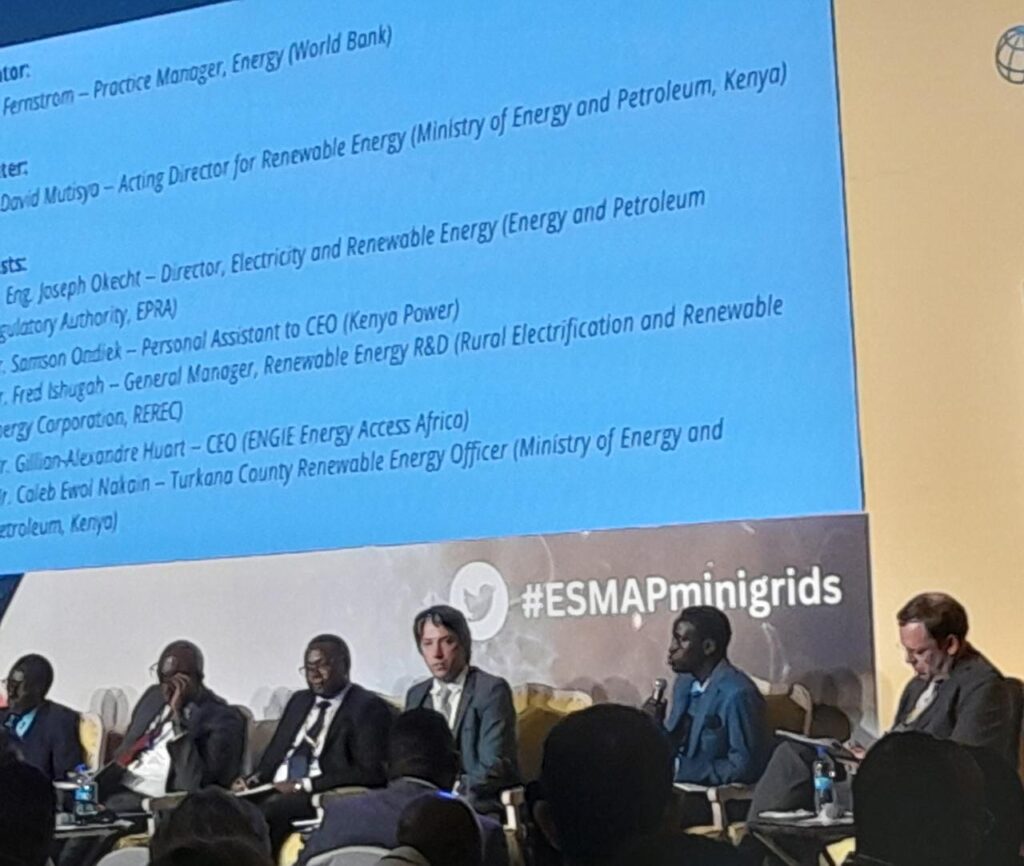
By Jeff Kizzilah
For the first time in two years, this event brings together, in–person, the key mini grid sector stakeholders, including governments, developers, international and local financial institutions and financiers, productive use equipment suppliers, and associations, with the goal of accelerating the deployment of mini grids to help achieve universal access to electricity.
Over 600 million people in Sub-Saharan Africa alone lack access to electricity.
Moreover, 40 percent of the poor live in remote areas that are unlikely to be served by a grid connection in the foreseeable future. In this context, mini grids have a key role to play in extending access to electricity. Achieving the United Nation’s goal of universal access to electricity by 2030 requires mobilizing.
For the first time in nearly three years, this event brings together in-person the key mini grid sector stakeholders, including governments, developers, international and local financial institutions, productive use equipment suppliers, and associations, with the goal of accelerating the deployment of mini grids as a means to achieving universal access to electricity.
Speaking during the event Cabinet Secretary Hon David Chirchir has said Kenya has connected over 5 million houses in the rural areas and still planning for more investment.
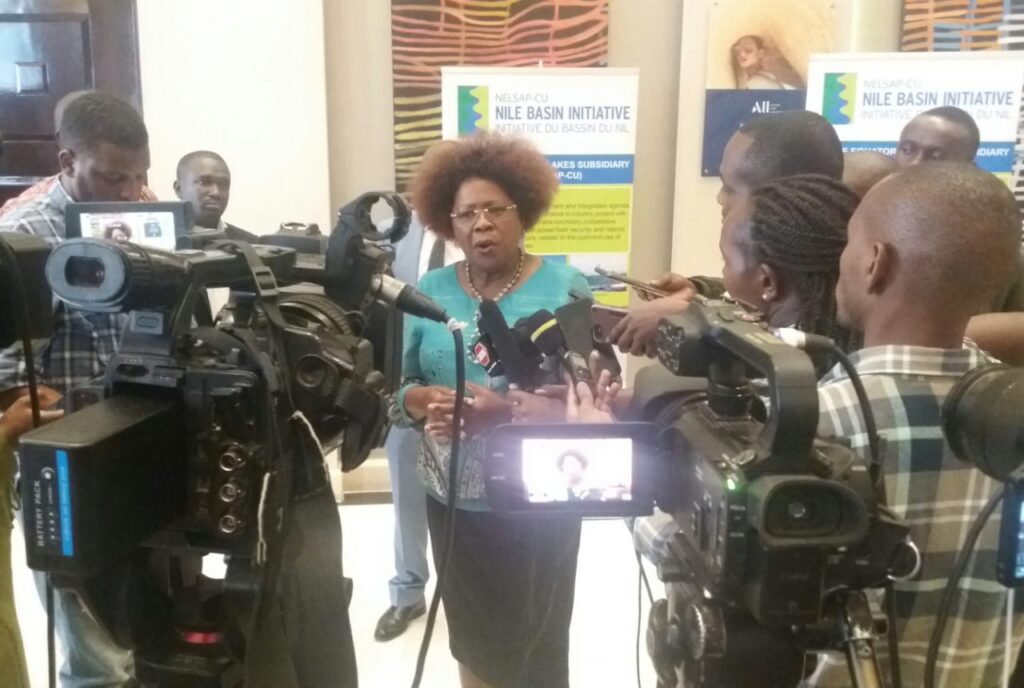
Pic By Tum David.
by Tum David
The Nile Basin Initiative forum on the Angololo Water Resource Development Project (AWDP) aimed at benefiting the People of the two countries of Kenya and Uganda concluded in Nairobi.
The project is located on the transboubdary of Malaba River that’s between Kenya and Uganda and it falls within the Sio-Malaba Makakisi (SMM) River Basin within the L. Victoria Sub-basin.
The Kenyan CS for Water and Sanitation led a team of Kenyan delegation to the forum comprising three crucial ministries of Energy, Environment and Water, to the co-hosted forum by Kenya and Uganda.
The CS for Water ministry in Kenya assured her Ugandan counterpart of Kenya’s commitment towards the success of the project.
The Nile Basin Project is a transboundary multi- purpose project which has three major components; water for domestic use, it will also reach out to at least 270,000 households between the two countries and it’s also a shared project between Kenya and Uganda.
The project is a donor-partner-roundtable that enables the two minister of the two countries to pitch for support for funding and investment for the project.
” It’s a co-hosted forum by Kenya and Uganda because we’ve completed the preliminary investigations, research and documentation studies are all ready the environmental impact to be able to go to the next stage of the Angololo Water supply project”
CS Wahome said when she addressed the media.
She said the project will deal with the water, power and irrigation whereby it will help irrigate about 4000 hectares meaning 2500 hactres in Kenya and 2500 hectares in Uganda.
The final MOU agreement is being worked out which will see the project is being shared fairly and equally between the two countries.
” So there is a lot of cooperation discussion and therefore, we particularly commend this project because of the capacity of the rich area of the Nile Basin region in terms of coverage” She added.
The total cost of the project is estimated to be USD 132 million which is equivalent to Ksh16 bilion money that will be shared equally.
While briefing the press at a Nairobi hotel after the consultative forum, the CS said the project consists of a proposed 40 metre high dam with a reservoir capacity of 31.6 metre cubic that will supply potable water to 270,000 people of Kenya and Uganda and irrigate 4000 hactres and also generate 1.3 MegawAtts of hydro power.
The project is proved to be viable and partners are called upon to join in to push for its speedy implementation.

By James Mutua
A religious organization under the umbrella of House Clergy Association has condemned the recent Supreme Court’s ruling in favor of LGBTQ community which allows the organization to register and operate Non Governmental Organizations.
Speaking in Nairobi on Saturday led by the organizations Chairperson Bishop Elizabeth Thuiya, they said that the ruling is not only an affront to Kenya’s deeply held religious beliefs, but also creates a dangerous precedence that could lead to further erosion of the moral fabric in society.
They added that by allowing the registration of such organizations, the court has given green light to the LGBTQ community to continue with its insidious agenda of corrupting the youth and undermine the traditional values of the country.
“We call on His Excellency President William Ruto, to take a strong stance against this ruling and publicly denounce it for what it is. As a leader of our great nation, it is your duty to protect our values and uphold the laws that govern us.” Bishop Thuiya said.
Moreover , they demanded the parliament to take Immediate action and reverse the ruling and prevent further attempts to promote the LGBTQ agenda in the society.
The group said that they will keep being committed in defending the moral values of the society.
Yesterday, the Supreme Court ruled that
the country’s NGO board was wrong to stop the National Gay and Lesbian Human Rights Commission (NGLHRC) from registering their organization.

By Nicholas Manduku
The new office will serve as the company’s headquarters for Sub-Saharan Africa region and is poised to expand the company’s global presence in the region.
Boehringer Ingelheim, one of the world’s leading pharmaceutical companies expansion is set to increase Boehringer Ingelheim’s global footprint in the region while strengthening the company’s commitment to improving human and animal health in Africa.
The company is a leading research-driven biopharmaceutical company.
Speaking during the event in Nairobi Mr. Mohammed Tawil Regional Managing Director and Head of Himan Pharma for IMETA region said,” Our thoughts is to expand the health care in this region by providing families with good healthier as well as those with loved ones across the impacted regions who are just starting a long journey.
Boehringer Ingelheim leads by value through innovation, and caring for patients, and customers.
Marianne Abouelkheir General Manager and Head of Himan Pharma for LINEA,says the company explore emerging science and technology for but also beyond the Discovery Research Therapeutic Areas in order to prepare a timely and efficient entry into emerging new medical and scientific fields and technologies.
Dr.Joseph Lenai the acting Director of the Intergovernmental and International health relations said Kenya will work with Boehringer Ingelheim to strengthen the Research & Development by focusing on core diseases for which we have built expertise over time and are actively investing from countries like Germany.
In attendance including Embassy of Federal Republic of Germany the Deputy Ambassador Thomas Wimmer among other dignitaries.
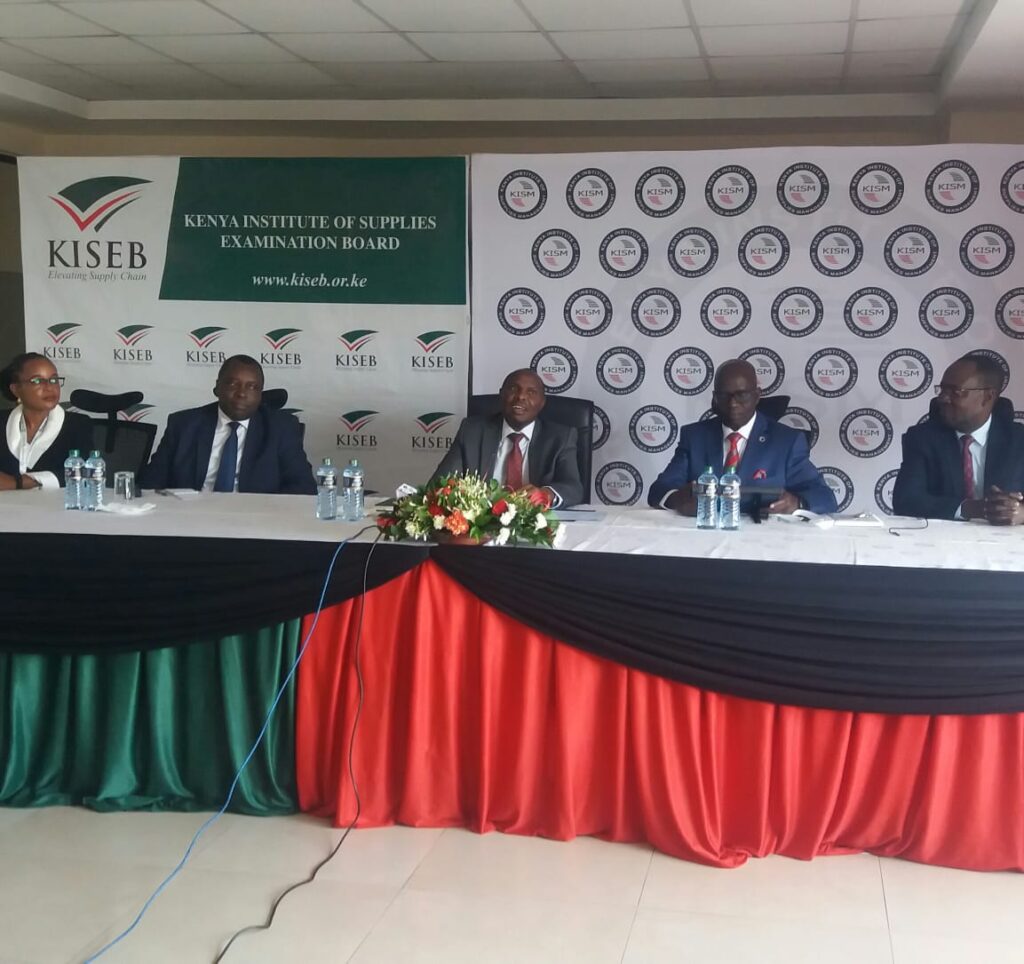
Pic By Tum David.
By Tum David
The Chief of Staff and Head of the Public Service Hon Felix Kosgei has lauded the operational efforts of the staff of the Kenya Institute of Supply Management (KISM) saying that the government is going to work with them very closely. He said that in order to expand the space of business and the supply territory for all practioners to have a level playing ground, KISM has to go the professional way.
While addressing the press at the KISM Head Office in Nairobi after touring and meeting management and staff of the Supply Chain agency, the Chief of Staff, who is also the head of the public service Mr Felix Kosgei affirmed the government’s commitment to work closely with KISM. He went on to say that the supply chain agency need to revert to professionalism by seeing to it that their operations were run by professionals.
Mr Kosgei further said that KISM should put more emphasis on capacity building and hire professionals in their operations of work which he said is key for all respective sectors in the supply chain be kept in the know if what’s happening within KISM.
” For the profession to be upheld in the highest esteem that it deserves, we humbly ask KISM has to see that its operations were run by professionals” The Chief of Staff said. He also advised the supply chain body to collaborate with other institutions and or agencies like EACC, etc, to promote integrity and dicipline in the profession. He advised the need for the agency to emphasize vetting even for the professionals which they hire for integrity.
” Vetting is advised because not all professionals hired are of good character” He added.
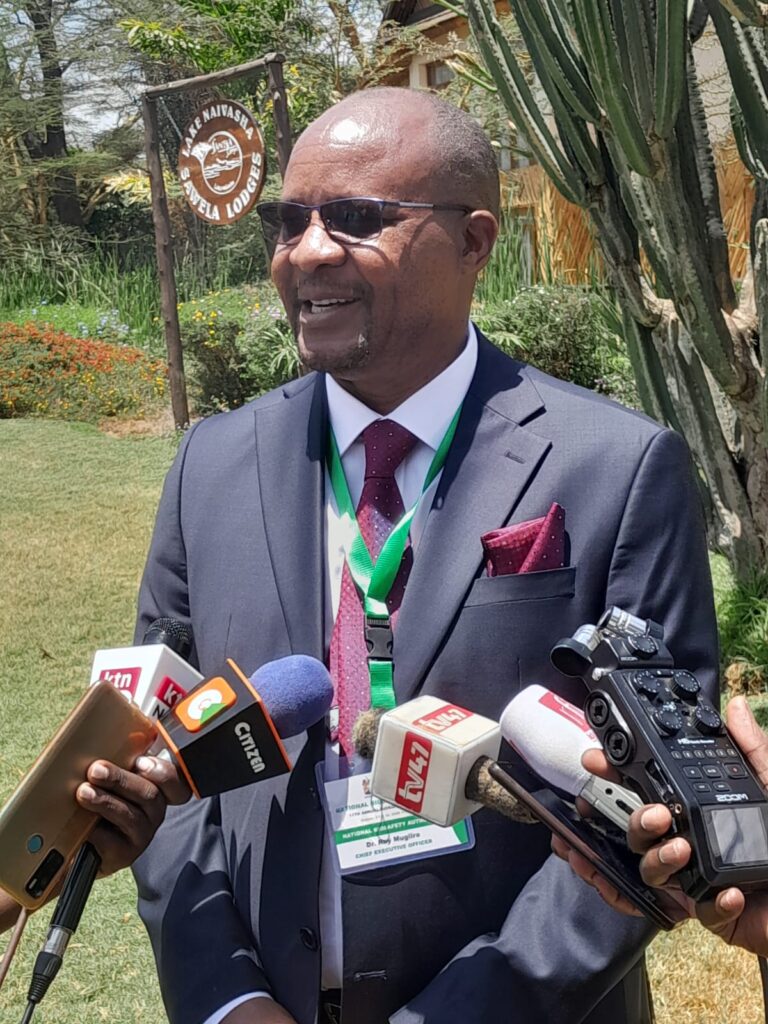
By Jeff Kizzilah
The government is setting aside 2% of the GDP to the Biosafety research.
With the theme:Harnessing Agricultural Biotethrough Effective Biosafety Management Systems “how to advance the Biosafety.
Speaking during the opening conference,Dr. Roy Mugira,Chief Executive Director has said rhe authority wii carry our public awareness to create confidence to the genetically modified organic.
He said lack of accurate information on GMO has led to panic and mistrust to governance actoss the country.
The GMo has been approved by UN convention and the law also approves it.
Last year,President Ruro gave an executive order No.1 of 2022 that the National Biosafety Authority which made it easy for the ministry to push the implementation.
He said all researchers are ready to creat a good platform and therefore as the Authority we will ensure every kenyans understands the meaning and how its helpful to their lives.
“The fear of the unknown is a natural reaction,and we will ensure we have a packaged information to the public,”he added
Remember in 2008 , the then ministrer was Hon Ruto currently the president of Kenya was the one who launched the agenda to kenyans.
“We are going to patner with all leaders including MPs,MCA and County governments for effective dissemination of the GMos.”he said
At the moment he said,they are working with the parliamentary committee on agriculture to take the issue about GMO policy review to the people.