Kenya University Students Organisation has come out to urge government to release HELB fund to the university students.
Speaking during the event which brought all University leaders from across the country said helb should be increased from the current 60,000 to 200,000 to fulfil students needs.
Mr Jesse Saruni said as a union we are ready to work with all students in order to achieve the put down goals and urge the ministry education to also come closer to work with the students.
The union has also ask government to support the vulnerable students who might need the bursary funds.
“We ask government to provide students with enough security in all our universities”,he said
The organisation congratulated president Ruto for appointing the youths in his government.
President was accompanied with top leadership of KUSO.
President William Ruto has asked leaders to be vigilant and serve the people.
He said Kenyans had delivered on their part of the bargain and it is now “our opportunity to discharge our part of the election contract”.
“We must transform the lives of the people; it is our primary responsibility.”
The President explained that it is possible to move Kenya forward if leaders are united and committed to their work.
He was speaking on Sunday at the Bomet Green Stadium in Bomet County during an interdenominational prayer service.
“We will ensure this country steps into the strides that move us forward.”
He said the ongoing collection of data from farmers will inform the Government on the right moves to make to produce more food.
“We want to eliminate the shame of hunger in our country.”
The President was accompanied by Deputy President Rigathi Gachagua, Prime Cabinet Secretary Musalia Mudavadi, National Assembly Speaker Moses Wetang’ula, Governors Hillary Barchok (Bomet), Eric Mutai (Kericho), several MPs and MCAs.
Mr Gachagua said the Government will eliminate cartels which were fleecing farmers.
* Life is returning to normal and mobility is rebounding as China’s COVID-19 prevention and control has entered a new stage — a boon for world economy.* Deliberately distorting the adjustment of China’s anti-COVID-19 policies highlights the double standard and hypocrisy of some in the West.* China has made rural areas a focal point in the country’s current COVID response, boosting medical capacities and providing timely support. Chinese medical institutions at all levels are taking all the necessary measures to increase resources and personnel. The reality is that they are busy but functioning smoothly.
BEIJING, Jan. 7 (Xinhua) — Life is returning to normal and mobility is rebounding as China’s COVID-19 prevention and control has entered a new stage — a boon for world economy.
However, some Western media ignore the facts, choosing instead to apply double standard and even spread misinformation, while making unwarranted accusations against China’s epidemic fight, confusing the public and misleading the world as a consequence. However, in the face of facts and data, these lies are evident and untenable.
FALLACY 1: “NEW COVID POLICY BRINGS CHAOS”
The real situation is: Grand Tang Dynasty Ever Bright City, a commercial pedestrian street in Xi’an of Shaanxi Province, was packed with people; residents in Shijiazhuang of Hebei Province and Wuhan of Hubei Province released balloons; locals in Xiangtan, Hunan Province, enjoyed a fireworks show during the New Year celebrations. “Seeing so many people celebrating the New Year together, I was nearly moved to tears,” one netizen wrote.
More than 50 million people traveled in China during the New Year holiday. On Jan. 1, 10,640 cinemas opened for business nationwide, a new high in nearly 10 months. Many people are planning to return to their hometowns for family reunions or travel in the forthcoming Spring Festival. Bookings of domestic air tickets and hotels have increased significantly.
Traffic is getting heavier, more factories are running at full capacity, while the construction of new projects is underway.
China has put the people first and put life first all along, with prevention and control measures adjusted and optimized in light of evolving situations, and done its utmost to protect people’s lives and health.
So far, the focus of China’s epidemic prevention and control has shifted from preventing infections to beefing up treatment of severe cases. From coordinating drug production to strengthening the treatment of severe cases, and from promoting vaccination to speeding up the resumption of production, China has effectively coordinated epidemic prevention and control and economic and social development needs.
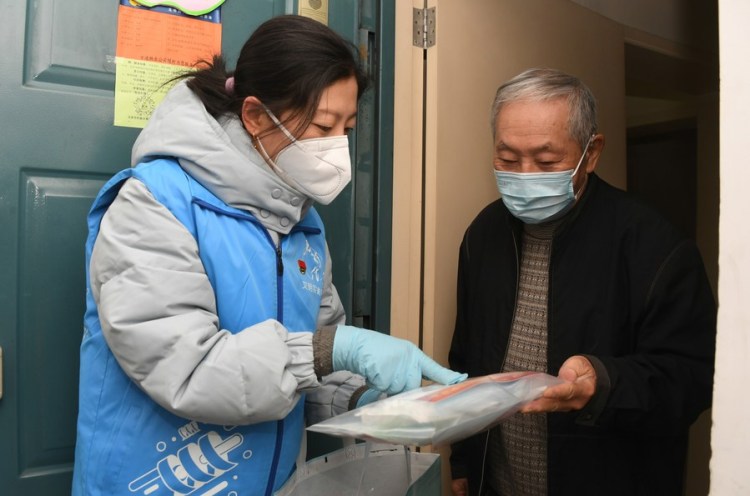
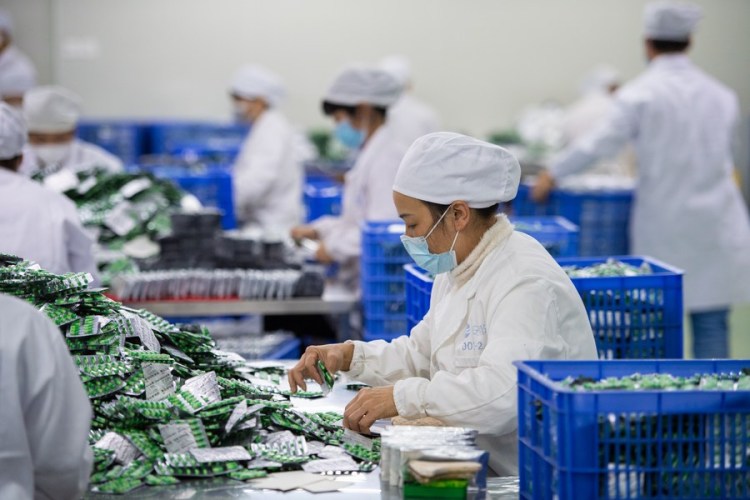
Under the assistance of the government, pharmaceutical enterprises are running at full capacity. China has also optimized the circulation of drugs, testing reagents and protective goods for better epidemic control. Authorities in many regions provided the elderly with free “health kits,” which usually include fever drugs and other anti-epidemic items.
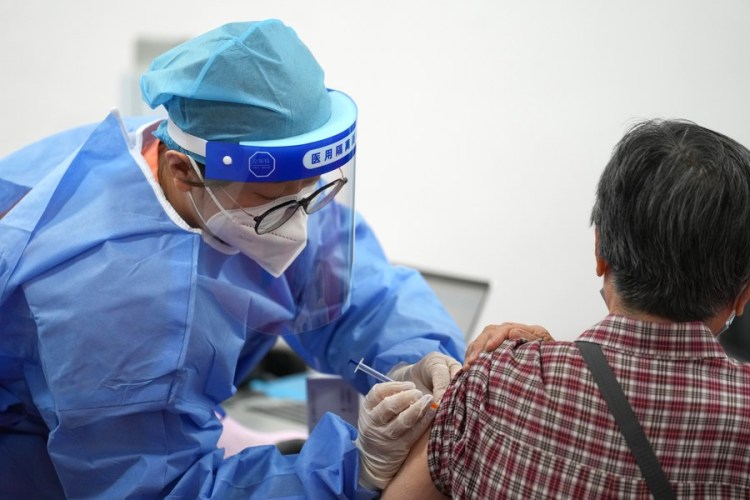
By the middle of December 2022, more than 3.47 billion COVID-19 vaccine doses had been administered on the Chinese mainland, with over 90 percent of the population fully vaccinated. A total of 86.6 percent of people aged 60 or above had been fully vaccinated and the rate among people aged 80 or older was 66.4 percent. China also vowed to further ramp up vaccination efforts aimed at the elderly.
Wang Huaqing, an expert from the Chinese Center for Disease Control and Prevention (China CDC), said the COVID-19 vaccines currently used in China are effective in preventing severe conditions and deaths. Data shows that during the epidemic outbreak period from March to June last year in Shanghai, compared with those who had not been vaccinated, the death risk of those over 60 who had received the booster doses of vaccines decreased by 98.08 percent.
The China CDC has also strengthened the monitoring of virus mutation nationwide. Each provincial-level region carries out genome sequencing and analysis every week and uploads the data in time in order to dynamically monitor virus subtypes.
FALLACY 2: “CHINA’S COVID RESPONSE A FAILURE”
During the past three years, China launched a war against COVID-19, effectively handled more than 100 cluster outbreaks, and protected the lives and health of more than 1.4 billion people to the greatest extent.
Every country would and should adjust its anti-COVID-19 policies according to the changing situation of the epidemic and go through periods of adaptation following such adjustments.
The pathogenicity and virulence of the Omicron strain have weakened significantly, while China’s medical treatment, pathogen detection and vaccination levels have all improved significantly — which means that it is indeed scientific, timely and necessary to proactively optimize anti-epidemic measures.
The elderly are the key population group being targeted by health services. During the battle in Wuhan in early 2020, medical workers cured more than 3,600 COVID-19 patients over the age of 80. In the past three years, a number of infected centenarians have recovered and been discharged from hospitals. Similar stories are still unfolding during this new wave of infections in China.
Tian, a 100-year-old woman from Hefei, Anhui Province, was diagnosed with novel coronavirus infection after she showed symptoms such as fever and coughing for three days, and was sent to the hospital by her family.
Her doctor said that fortunately, Tian had been vaccinated and showed no severe symptoms such as chest tightness and asthma, although she had some underlying health issues. After 11 days of treatment including anti-virus, anti-infection, improved immunity and nutritional support, she was discharged from the hospital.
China has managed to keep its severe cases and death rates of COVID-19 among the lowest in the world. Deliberately distorting the adjustment of China’s anti-COVID-19 policies highlights the double standard and hypocrisy of some in the West. If China’s COVID-19 response failed, what about some countries where the death toll far exceeds that of China? In fact, the label of failure should be attached to those countries whose incompetence, inaction and chaos in epidemic response had caused their people to suffer.
Striving to effectively coordinate the epidemic response with economic and social development, China had won the tough battle against poverty on schedule and finished building a moderately prosperous society in all respects, getting off to a good start in the 14th Five-Year Plan period (2021-2025), and the average life expectancy of Chinese people increased from 77.3 years to 78.2 years.
Some Western media rarely reflect profoundly on the chaotic COVID-19 situations in their own countries. But when it comes to China, they always hold a stereotypical view and focus only on finding fault, which underlines their attempt to distort, exaggerate and fabricate.
“In fact, China has innovated control methods, improved them, and demonstrated their efficacy by saving millions of lives,” said Josef Gregory Mahoney, a professor of politics and international relations at East China Normal University. The professor noted that some countries look at China through a perverse lens: they fail to acknowledge the country’s successes because they politicize everything about China ideologically.
FALLACY 3: “CHINA’S ECONOMIC OUTLOOK IS DIM”
China’s optimized COVID-19 response has triggered a lot of ups and downs in terms of predicting the impact on the Chinese economy. A topsy-turvy time and a drag on global growth were among the typical labels foreign pessimists put on the future of the Chinese economy.
Some foreign naysayers, bothered by the “unfortunate side-effects” of China’s recovery, even warned that China’s reopening may burden the rest of the world, not with higher growth, but with higher levels of inflation or interest rates.
Are the prospects of China’s economic recovery bright or dim?
Over the past three years, China has effectively handled the impact of five rounds of global pandemic outbreaks.
Balancing its epidemic response and economic and social development, China not only emerged as the first major economy to return to growth, but also maintained an average annual growth rate of about 4.5 percent, significantly higher than the world average.
In 2022, China was expected to boost its GDP to over 120 trillion yuan (17.41 trillion U.S. dollars). Its grain output stayed above 650 million tonnes for the eighth consecutive year. In the first 11 months of last year, 1.16 trillion yuan of foreign investment went into the country, exceeding the level of 2021.
At the tone-setting Central Economic Work Conference in December, Chinese leaders aimed to promote overall recovery and improvements in the country’s economic performance this year.
From a global perspective, China’s strengths are also clear. Its economy accounts for 18.5 percent of the world’s total and serves as an important growth driver. Its foreign exchange reserves top the world, helping ensure the stability of its currency the yuan and financial security.
Businesses remain optimistic about the Chinese market. Axel Weber, chairman of the Institute of International Finance, said the Chinese economy remains a massive opportunity for Western companies.
The capacity of Foxconn’s plant in Zhengzhou, Henan Province has returned to its peak season levels with about 200,000 workers, shaking off the impact of the epidemic.
“Now, all the production lines of Foxconn’s plant in Zhengzhou are running normally, and we have taken various measures to motivate our employees,” said Wang Xue, deputy general manager of Foxconn Technology Group.
The optimized response China adopted to deal with COVID-19 is expected to have a “J-curve effect” on the economy, said Han Wenxiu, executive deputy director of the office of the Central Committee for Financial and Economic Affairs. “It may cause disruptions to the economy in the short-term, but from the perspective of a whole year outlook, it is a boon.”
FALLACY 4: “PATIENTS GOING SHORT OF MEDICINE AND TREATMENT”
The truth is: Chinese medical institutions at all levels are taking all the necessary measures to increase resources and personnel. The reality is that they are busy but functioning smoothly.
The First Affiliated Hospital of Harbin Medical University in Harbin, Heilongjiang Province, has received over 140 critically ill COVID-19 patients in recent days.
“Many doctors continued working and caring for patients while they themselves were ill, and we are going all out to save every severe patient,” said Yu Kaijiang, president of the hospital.
The hospital has increased the number of intensive care beds from 132 to 143, and has actively sought ventilators from various channels, with a group of 60 nurses working shifts to cope with the surge in COVID-19 patients.
As of Dec. 25, 2022, the number of fever clinics in second-grade hospitals and above had reached 16,000 in China, and the number of such clinics in grassroots medical institutions totaled 41,000.
China is one of the largest producers of fever medicines, and its total production capacity is sufficient to meet demand.
The daily output of ibuprofen and acetaminophen, two key antipyretic analgesics, had reached 202 million tablets and 190 million tablets, respectively, by the end of 2022, said Wang Jiangping, vice minister of industry and information technology.
“We quickly adjusted the variety of drugs we produce, increased the output, and went all out to ensure the market demand of antipyretic and analgesic drugs such as ibuprofen and aspirin,” said Kou Zuxing, deputy general manager of Shandong Xinhua Pharmaceutical Co., Ltd., based in the city of Zibo, Shandong Province.
As the world’s leading producer of ibuprofen materials, the company’s tablet capacity has been raised threefold, while its ibuprofen production has climbed to more than 10,000 tablets a minute.
The total number of beds in second-grade medical institutions and above in China is 5.616 million, and the utilization rate of beds has fluctuated around 60 percent recently. The total number of intensive care beds in China has reached 150,000, meaning there are 10.6 beds per 100,000 people. The country has a reserve of 70,000 adaptable intensive care units (ICU).
As for the equipment used to treat COVID-19 patients, there were 151,100 hemodialysis units, 19,700 continuous renal replacement therapy units, 2,300 extracorporeal membrane oxygenation machines, and over 192,000 invasive and non-invasive respirators in second-grade hospitals and above as of late December.
“Overall, China has adequate medical resources, including beds and equipment, to meet the demand of patients in critical condition,” said Jiao Yahui, head of the Bureau of Medical Administration under the National Health Commission (NHC).
China will put more effort into tracking the spread of the epidemic, strengthen coordination between cities and regions, and upgrade and expand relevant resources to meet people’s medical demands, Jiao said.
FALLACY 5: “‘DARK COVID WINTER’ FOR VILLAGERS”
The truth is: China has made rural areas a focal point in the country’s current COVID response, boosting medical capacities and providing timely support.
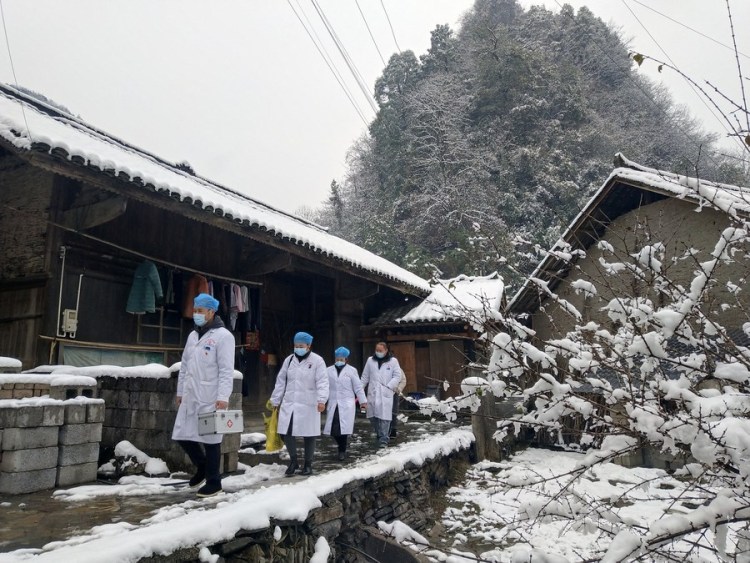
The country’s 23,000 county-level medical institutions, 35,000 township hospitals and 599,000 village clinics have formed a closely collaborative and efficient health protection system so that rural patients can enjoy tiered, timely and convenient medical services.
“At present, medicines for fever and cough relief have been prepared, which can meet the needs of the whole village for two months,” said Fu Xiangpeng, a doctor from the mountainous Liguanying Village in Zhenxiong County, southwest China’s Yunnan Province. “People with mild symptoms can go to village clinics to get drugs, and medicine will be sent to the elderly people with difficulties.”
Jiao Yahui, the NHC official, said that drug supply must be ensured in rural areas and cover the Spring Festival travel rush period or even longer. More importantly, severe cases should be transferred to at least county-level hospitals.
Jiao said that counties and towns had been ordered to prepare standby vehicles to transport severe patients as quickly as possible. Internet hospitals and roving medical teams have also ramped up rural medical capacity.
FALLACY 6: “OFFICIAL COVID DEATH TOLL UNRELIABLE”
The fact is: China has always published information on COVID-19 deaths and severe cases in the spirit of openness and transparency.
The global criteria for judging COVID deaths are divided into two categories. Some countries count only cases of people who tested positive for COVID-19 and died of respiratory failure induced by the virus. Other countries count all the deaths as COVID deaths as long as the deceased had tested positive for the virus in the past 28 days.
Since 2020, China has been adopting the first criterion, counting a death from respiratory failure caused by the novel coronavirus after a positive COVID-19 test as a COVID death.
China has also published cases in which the patients were infected by novel coronavirus but the direct causes of the death were underlying diseases. In such cases, the causes of the death were attributed to underlying diseases.
China canceled mass nucleic acid tests following the adjustments to its COVID response policy, making it very difficult to obtain accurate data on the infection caseload in the first place. This is the normal de facto situation in other countries.
Wu Zunyou, chief epidemiologist of the China CDC, pointed out that there is a calculation method called “excess death” in the field of public health, which can evaluate possible underestimation. Regarding the “excess death” that may be caused by this wave of epidemic, the team is already doing the relevant work and will release the results later.
China’s war against COVID-19 is still underway, and victory shall come for the 1.4 billion Chinese people. The fallacies and their fabricators will prove to be wrong.
By Wang Jinye,Li Zhihui,Li Laifang,Chang Yuan,Li Baojie,Cheng Yunjie,Xu Lingui,Lou Chen,Fang Dong,Che Yunlong,Yue Xitong
Baraza Media Lab is set to host the very fast African media festival happening in Nairobi, Kenya on the 14th and 15th of February in 2023.
The Media lab is a space that serves as a beacon for leading thinkers to experiment, problem-solve, learn, and incubate new models of telling stories.
We provide the space and resources needed to enable media and entrepreneurs to collaborate, innovate and drive the growth and capacity of independent media.
Themed is “Re-imagine media,” Its intention is to create a space for discussions on innovation and forward-thinking initiatives within different facets of media in play.
Africa Media Festival is geared towards creating a community with key media sector players to come together and debate on a collective way forward.
A broader and sustained discussion on media sustainability is needed, especially in the wake of an infodemic that we are all experiencing globally.
The conference targets investors, grant makers, media owners, social media platforms, journalists, creatives and governments.
“We are targeting a total of 1,500 delegates over the two days. With the conference being a Pan- African conference, we aim to have government representatives and speakers from other countries within and outside the continent and outside.
Some of the delegates we expect are cartoonists, writers, journalists, NFT/ Blockchains experts, TV, radio, social media influencers, photographers, government officials.
The 2022 sports Personality ofbthe year Awards (SOYA) has received 5million kenya shillings from different corporate sponsors.
Speaking when he recieved the money during the ceremony SOYA Founder Dr.Paul Tergat ,who is also the President of Athletic Kenya expressed gratitude to the sporting fraternity for great effort in making a comeback to the spot light through various sports activities.
“The 19th edition of SOYA gala celebrates the continued resillience of our sports men and women who have contineud to regain traction and display their power.”, he said.
The event theme:”Our Integrity ,Our Pride ,Our Sports “
Mr.Tergat said our sports icons are our resprentative as Kenya.What they do out there leaves indelible marks and the generations to come will follow suit.As the panel of judges,we continue encourage our sportsmen and women to set a good example to the upcoming generation.
In attendance was Renowned sportman Hon Henry Wanyoike who urged other talented sportsmen to build a credible sports career.
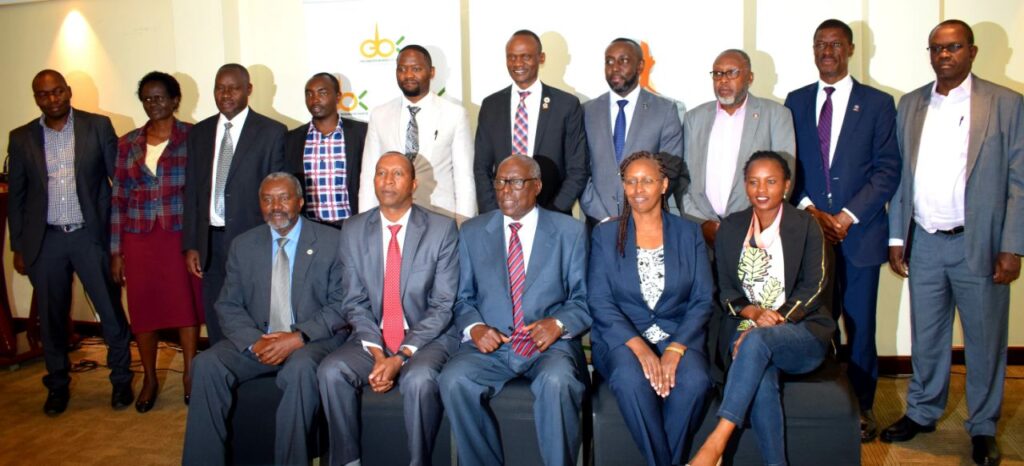
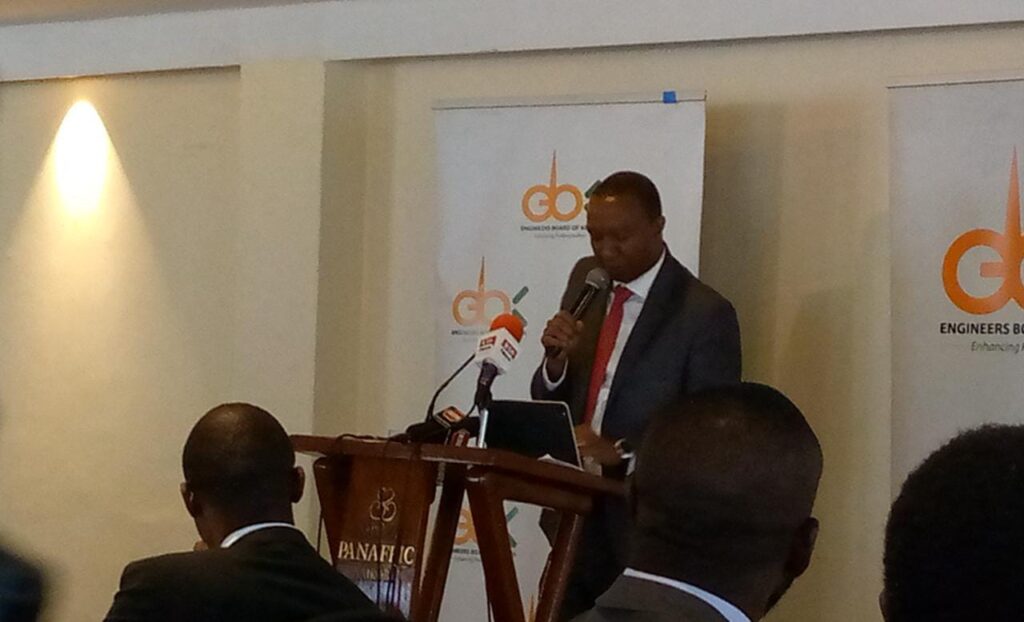
Following recent blames to engineers on collapsing of building nationally due to neglection of Bill of Quantities an emphasis has been made by the Engineers Board of Kenya for government to fastrack on the implementation of engineers scale of fees 2022.
The Engineers (Scale of Fees for Professional Engineering Services) Rules, 2022 was gazetted on 18th May, 2022 and commissioned on 19th July, 2022. Thereafter, on 2nd August, 2022 the circular on implementation from the Ministry was issued to all consumers of professional engineering services that from 15th August, 2022, the Scale of Fees were effected.
According to schedule 6 it state that engineers should be paid on preparation of BQs Bill of Quantities since it’s the work of Quantity surveyors and architects.
Engineer Matalanga who sits on the council of world federation engineers proffesionals has called for the government to help in cubbing challenges that is facing engineers nationally and across the region.
“There is inadequate technical capacity in engineering in the counties to carry out approval of engineering documents and provided oversight to the projects under construction. ” Says Eng Matalanga.
The engineers have proposed a multiagency approach on collaboration that will reduce the collapse of buildings. Currently there are 3000 professional engineers and the Board aims to increase the capacity to 10,000 professional engineers in the next 5 years to be at par with the UNESCO ratio 1:5000 to realise National Development Agenda in KenyaCooperation among government agencies and implementation of the engineers scale of fees for professional engineers will fast track the pace in enhancing professionalism in regulation and implement key policies for transformation and national development.
President to the engineers Kenya Erick Olaga has taken note of the approach by the Government which is consultative for increase on efficiency. The goal of digitizing government services in the next 6 months is commendable. The Board is also developing the Engineers Project Registration Portal and will be commissioning in 2023. In the short-term, County Governments are encouraged to come up with panels of professional engineers to offer the servicesairman.
“Our 10 years journey will help on planning to the county agenda and also for the budgeting purpose .The scale of fees is a plus to the public’s”President Olaga.
The Kenya National Engineering Board of Kenya has urged government argencies to work closely together in order to build a strong collaboration.
During the first stakeholders meeting in Nairobi, the board highlighed and agreed that several developers do not engage professional engineers during the entire projects.
EBK chairman Erustus Mwongera said the board has taken note of the approach by the government which is consultative and terms of increasing efficiency.
However the board has urged the county governments to come up with panels of professional engineers to offer the serviceman.
The EBK also is planning to increase to number of professional engineers from 3000 to 10,000 over the next 5 years to meet the UNESCO recommendations.
Africa ‘s largest sacco in patnership with Kenya Mortgage financing company unveils affordable housing loan for all.
The mortgage facility will assist members acquire ready houses for a long term facility repayable up to 308 months.
Cabinet Secretary for Cooperatives and Micro Medium enterprose speaking during the launch said this is a big milstone to the people of kenya and the sacco members.
He said,as government the sacco is leading by example towards the government plans target of 250,000affordable houses.
According to the Mwalimu Sacco CEO Mr. Kennedy Odhiambo with the expanding membership this product will go a long way in changing the lives of the sacco members at a competative rates.
“The affordable housing mortgage loan facility is at a competitive single digit pricing from an amount of 500,000 to 8 million to own your home across the county,” Mr Odhiamo has added.
Mr. Odhiambo said that they are many opportunities and game changer product.
The Chief Justice Hon. Lady Martha Koome has today urged the new members of the Commission on Revenue Allocation to keep in mind Kenya’s history of marginalisation as they take on the task of ensuring equitable sharing of national resources.
“In your hands now lies the protection and realisation of one of the most transformative features of the 2010 Constitution: devolved governance… You must therefore strive to work towards making ours a socially just state and society,” she said.
The new members who took their oath of office are Benedict Muasya Mutiso, Wilfred Koitamet Olekina Nchoshoi, Hon. Fatuma Gedi Ali, Dr. Jalang’o Midiwo, Ms. Hadija Juma, Dr. Isabel Nyambura Waiyaki, Mr. Jonas Misto Vincent Kuko, and Dr. Chris Kiptoo (PS, The National Treasury). These members were appointed by H.E President William Ruto in the Gazette Notice No. 15376 to serve for a period of six years.
While welcoming the new members of the Commission, the outgoing CRA Chairperson Dr. Jane Kiringai urged the new Commissioners to cultivate good stakeholder relationships, including the National Treasury and the two houses of Parliament to succeed in executing their mandate.
“Sharing of revenue is very technical but also a highly political process. You must strike a very good balance between the two and have a very competent Secretariat to support you. What matters most is how you will interact with the Senate and National Assembly. Ultimately, you will make very technical and solid recommendations but you have to convince them to adopt those recommendations. The Council of Governors also matters a lot because they are the recipients of the funds shared. She further encouraged the Commissioners to strategize and negotiate with the National Executive, Council of Governors, and other key stakeholders while maintaining the Commission’s objectivity and independence,” she said.
While swearing in the eight new Commissioners at the Supreme Court Offices, the CJ further advised them to stick to their oath and never depart from the law in executing their mandate.
The new team is to serve from January 2023 to December 2028 and take over from the second group of commissioners who served from January 2017 – December 2022.
The new members take over from the second group of commissioners – Humphrey Wattanga (Vice-Chairperson), Prof. Peter Kimuyu, Fouzia Abdikadir, Kishanto ole Suuji, Dr. Irene Asienga, Peter Gachuba and Dr. Julius Muia whose term of service ended on December 31, 2022. The term of the current Chairperson, Dr. Jane Kiringai, expires at the end of February 2023.