Soilex Prosolve is one among the top manufactures in Kenya which benefits on buy Kenya and build Kenya movement.
Soilex is a manufacturer of clean products for laundry, kitchen hygiene and house keeping products.
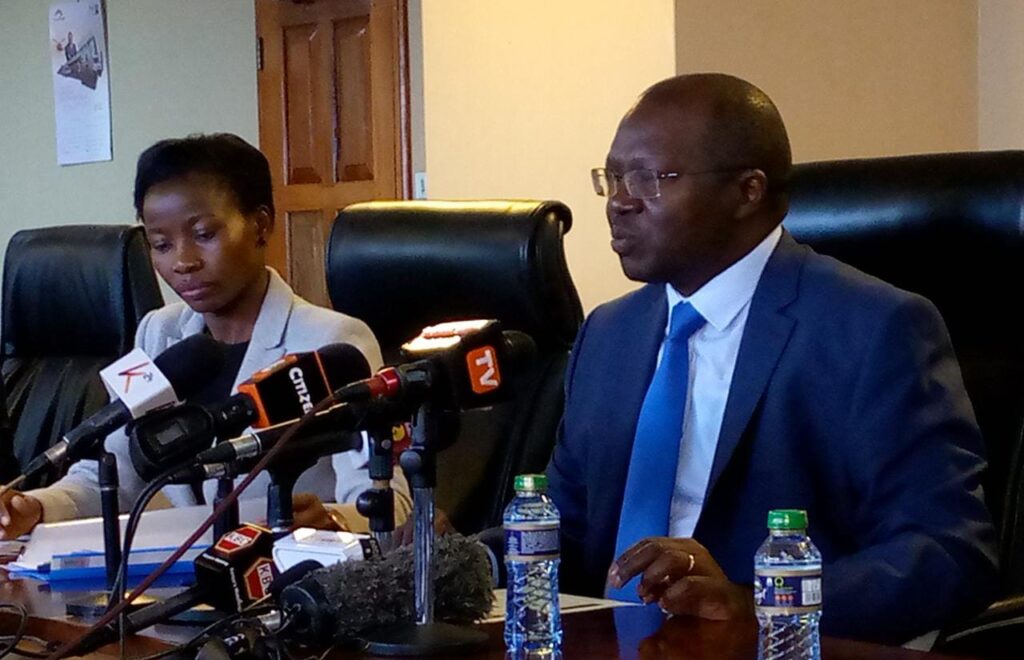
Speaking to journalists during the launch of Top 100 ‘Transformation is uncertain world’ Mr. Jai Nathwani, Operation Manager/Sales Manager Soilex prosolve said the prices of material has been high but the market is still doing well,because we deal with row materials locally made we don’t import at all.
With more 40 years in the cleaning market, the company has expanded it’s footprint across the country and with more than 20 employees.
The cleaning manufacturer has secured a niche and plans to create more opportunities that will emulated by other manufacturers across Kenya and beyond.
“We want to invest and build Kenya and the has been our main drive all along,our customer service has been the priority,” Jai said
Soilex prosolve is one among companies in the Top 100 awards this year.
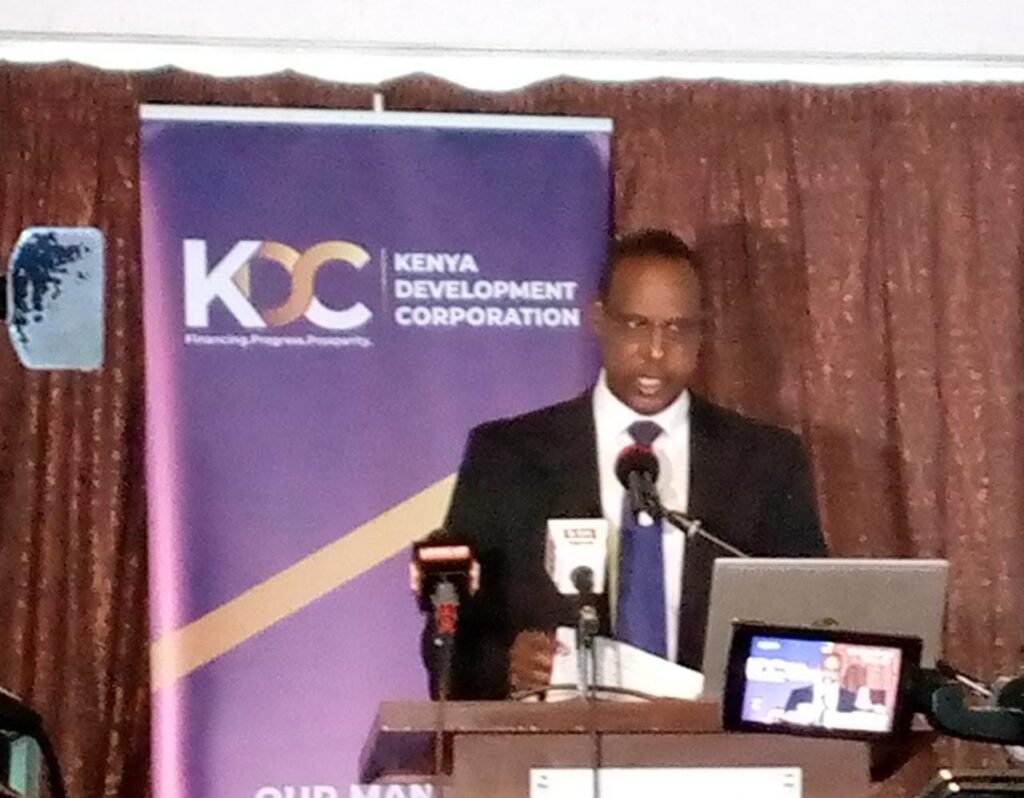
Kenya Development Corporation Director General Mr. Christopher Huka said the corporation has remain an influencial local and global for long term funding since it was incorporation.
“As KDC we have the capacity of service and to deliver,mind set we must come out and invest,” Director General said
KDC owns various apartments within the counties including Finance House,Utalli house, Sunset hotels amongst other properties across the country.
KDC have the capacity to survive in the industry.
“We have the capacity to create new industries in diverse sector including real estate market, hotels industries,” He said
KDC is the only government institutions that is ready to partner with development partners to assist the government to create various opportunities for small medium businesses, Chairman said.
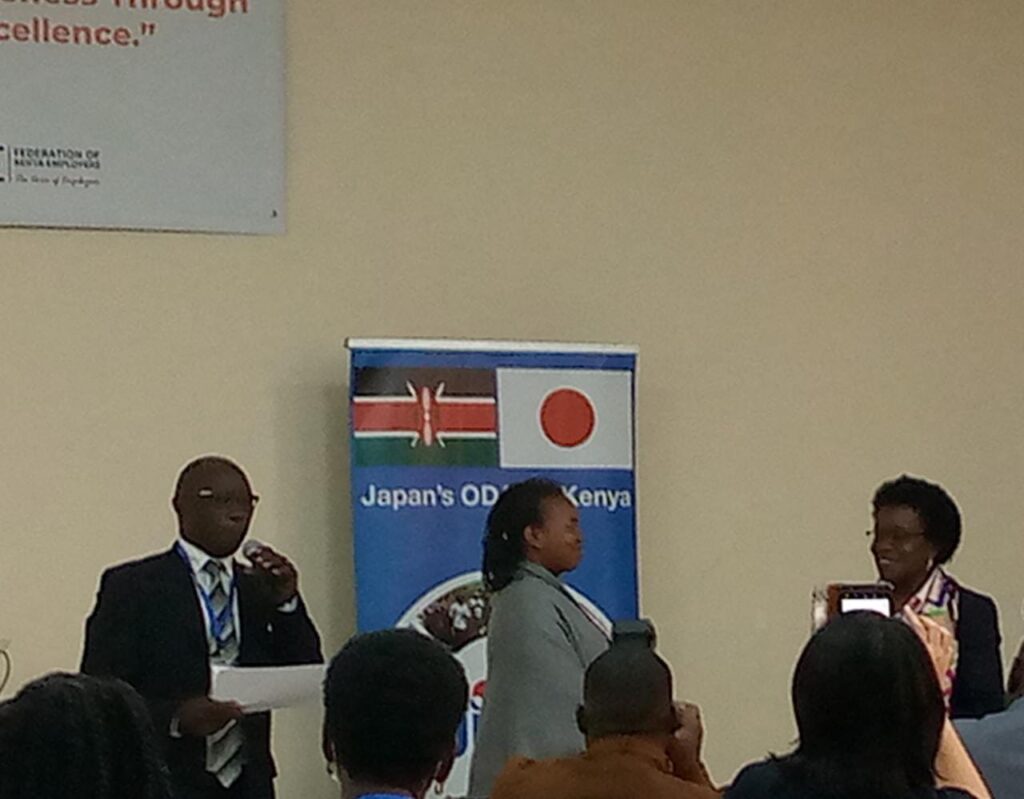
The project which have just concluded their first and current phase was being done through to Kenya Institute of Business Training.
The project was to done with the theme: ” Enhancing Competitiveness Through Application of Japanese Management Excellence”
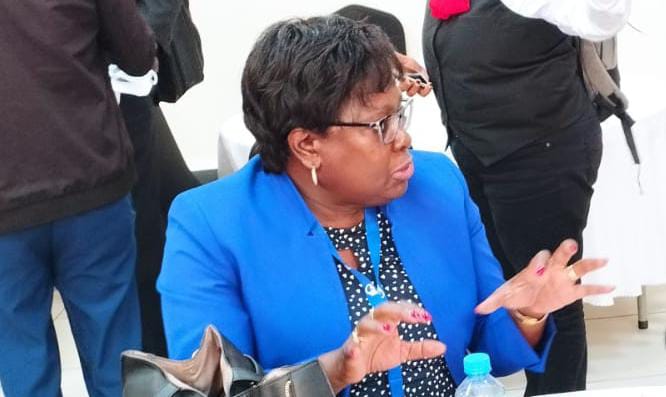
” JICA is pleased to be associated with the implementation of such a project because it will help in enhancing enterprise Competitiveness in Kenya,whose aim is to promote sustainable growth of SMEs and enterpreneurs in Kenya,this model will strengthen the ecosystem, comprising a rich mix of stakeholders,” said Ms Anne Olubendi, Senior Executive Advisor to the Chief Representative JICA Kenya office.
She said this project will create opportunities expand business and jobs for the youths and women.
The support training will include SMEs, Star-tups, Business Development Services providers, financial institutions, academia and public sector.
Anne said the transfer of knowledge from the Japanese experts to the local master trainers is vital and it will build a sustainable mechanism to accomplish a critical mass of capable trainers locally from both the public and private institutions or sector.
The JICA foundation will also collaborate with other government institutions including Kebs,Kenya national chamber of commerce as well as other counties in line with government policies on devolution.
IDEA Hive has distinguished itself from other traditional marketing agency by combining full-service marketing technology.
The company is an innovative performance marketing agency.
The IDEA Hive plans to expand into the region to be one of the leading go to agency for ‘Customer Experience. ‘
Speaking during the launch in a Nairobi, Mr. Yaw Dwomoh , Chief Exercutive Officer said the firm is taking advantage of huge opportunity the Africa market hands to offer.
He said that today marks a big milestone in the regional expansion strategy for the company,with the aim to grow it’s foot-print across the continent.
The company’s East Africa expansion will be led by Mr. Muriuki Murunge, the newly appointed Managing Director East Africa as a whole and he will also bring the social Intelligence and communication expertise to the growth.
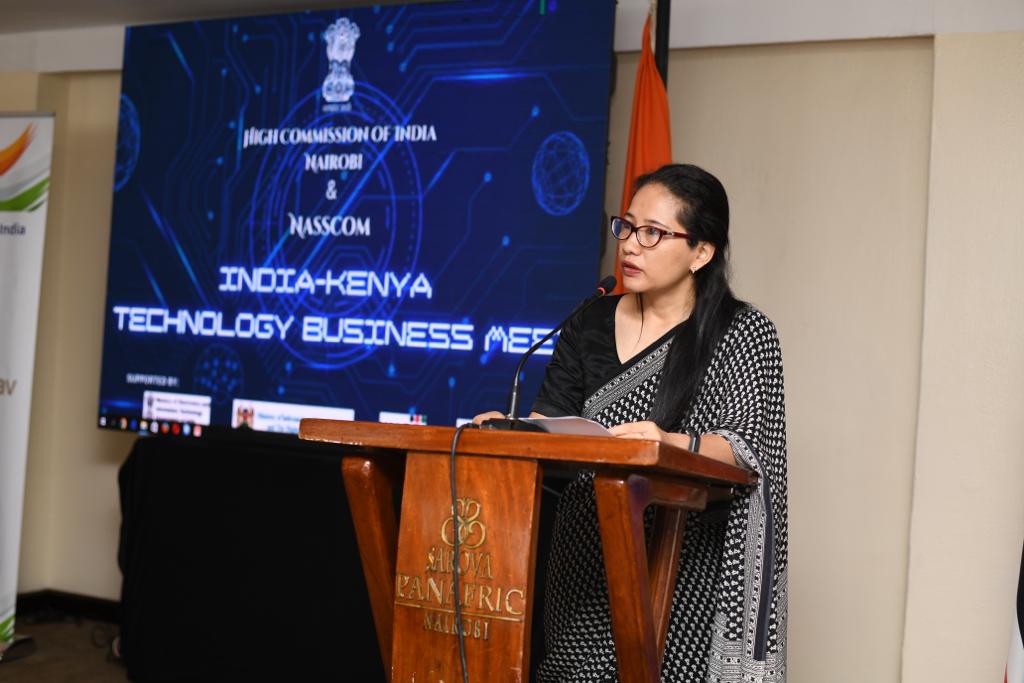
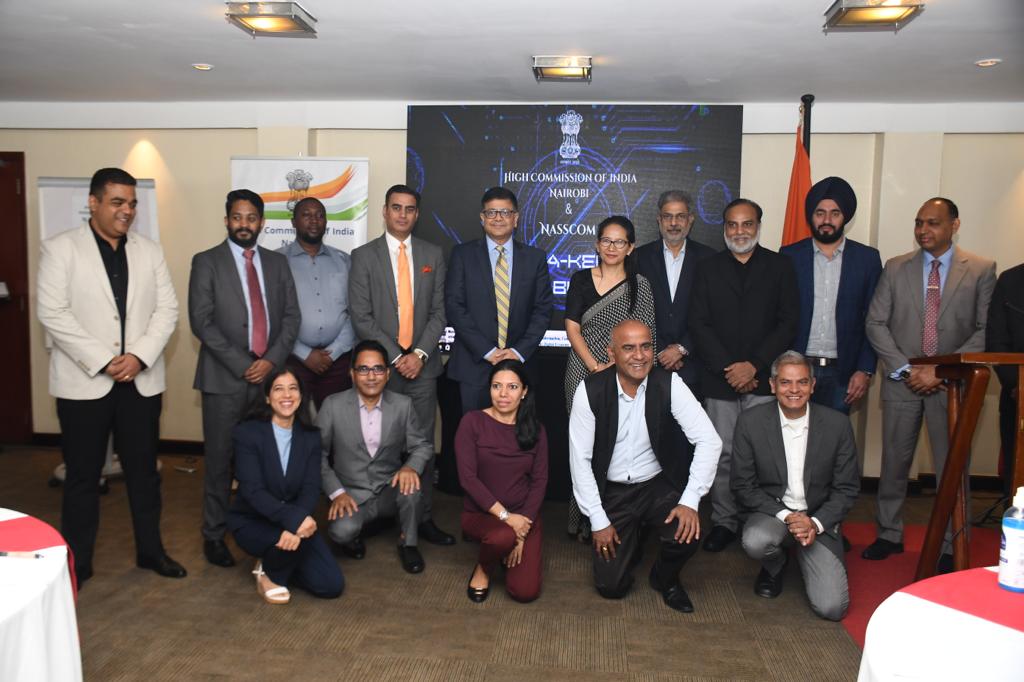
High Commissioner of India Namgya Khampa , accompanied with Mr Shivendra Singh, Vice President and Deputy High Commissioner of India Mr. Rohit Vadhwana & DPR to UNEP & UN – Habitat adrsses the delegation and other officials during the technology business organised in connection with the visit of NASSCOM delegation .
It is particularly important to note that this forum brings together Government and business with specific interest in the ICT and related sub-sectors.This is because ICT and associated technologies and applications can be key multipliers in accelerating economic growth in developing countries. In this regard, I believe there is substantial convergence of interests and opportunity for mutually beneficial partnerships between India and Kenya in the industry. As you are aware, 10 major Indian companies are present here to interact and engage with their Kenyan counterparts represented by more than thirty-five companies – with a view to develop new partnerships and tap into investment opportunities.
It is forums like this that have cemented the cordial India-Kenya bilateral relations, transcending into a robust and multi-faceted partnership. Due to this synergy, India remains one of Kenya’s major trade and investment partners. FY 2021-22 saw India-Kenya bilateral trade increase 38.7% increase from US$ 1.99 billion in 2020-21 to US$ 2.76 billion. Both exports from India to Kenya and imports from Kenya into India registered significant growth.
India is among the top investors in Kenya cutting across manufacturing, real estate, pharmaceuticals, telecom, IT & ITES, banking among others. As per available data, over 60 major Indian companies have presence in Kenya – some of them are present with us today. Dear Friends, ICT and digital economy are the economic drivers for the country. It is contributing over 13% to India’s GDP, employing over 4.5 million people as of FY21 and exporting a total of US$ 149 billion worth of IT enabled Services. India’s IT industry, creates roughly US$ 200 billion in economic value yearly through IT-BPM, e-commerce, domestic electronics manufacturing, digital payments & communication services and other ICT-related activities. Driven by digital technology, cyber security, AI, robotics and healthcare IT, India’s digital economy is predicted to be worth over US$ 800 billion by 2025, contributing 10% of GDP.
India is already considered the IT hub of the world but it has more potential and talent. To tap into it, Government of India has come up with several initiatives to give impetus to the sector. Digital India for instance aims at transforming India into a digitally enabled society and knowledge economy. Make in India campaign on the other hand seeks to facilitate investment, foster innovation, enhance skill development, protect intellectual property & build best in class manufacturing infrastructure.
IT has helped India to provide Aadhar – Unique identity number – to almost everyone in the country – approximately to 1340 million people. Backed by digital banking, Unified Payment Interface (UPI), country has created a robust digital infrastructure, biggest in the world. We will hear more about this in the detailed presentation of NASSCOM. On the other hand, an evaluation of Kenya’s ICT sector pre-pandemic status reveals a relatively robust industry with average annual growth rate of 10.8% from 2016-2019. Also referred to as Africa’s ‘Silicon Savannah’, Kenya is a regional leader in internet connectivity, value-added services (most notably mobile money transfer) and mobile banking services. Post the pandemic, accelerated by increased uptake of online services, the sector contributed 4.8% to Kenya’s GDP and about 21,000 direct jobs last year according to the Economic Survey 2022 report. Total output of the sector was US$ 5.32 billion in 2021. The main growth drivers in the sector are fibre-optic subscriptions, 4G mobile network coverage, mobile commerce transactions, undersea bandwidth capacity and mobile money transfers. On this aspect also, we look forward to hearing more from KenInvest and Institute of Economic Affairs who will make their presentations.
I believe our both economies have already proven potential in the IT sector. With educated talent pool, English speaking population, knowledge and base for digital infrastructure, our two countries are best suited to partner in this sector. Joined together, we will be able to provide technology enabled solutions not only to India and Kenya but to whole of Africa and the world.
High Commission of India facilitates B2B meetings, Government to Government level institutional mechanisms, industry bodies interactions such as FICCI and CII (from India) and KNCCI, KAM and Keninvest (from Kenya). NASSCOM delegation visit adds more opportunities for both the countries to work together. Before I conclude, I take this opportunity to thank the Ministry of Electronics & IT, Government of India, Ministry of ICT and Digital Economy, Government of Kenya, Keninvest, KNCCI, Institute of Economic Affairs for their invaluable support in organising this meeting. Special mention goes to NASSCOM, led by Mr. Shivendra Singh, Vice President, Global Trade Development for making this very important meeting successful.
I hope that everyone present here will take full advantage of today’s discussions to network and form lasting business relationships. I wish you all the very best in this endeavor. Ends
The chairman of the Cricket Kenya selection committee Alfred Njuguna with white shirt leads players and officials in a press conference that saw a team of 14 players being named for the Rwanda mens ICC T20 world Cup
By Fred Maingi Captain Sachin Bhudia of Kanbis Sports club will lead the Kenya Cricket senior men’s National team to Kigali, Rwanda for the ICC mens T20 world cup. Veteran David Obuya will be the teams Head coach while Moses Muturi will be the team manager cum Physiotherapist The team jets out on Nov 15th with a squad of 14 players and two officials. The tournament is scheduled to take place in Kigali, Rwanda on15th – 26th November 2022 in a round robin format. This is the first step towards the 2024 ICC Men’s T20 World Cup. The top two teams from the tournament will join the winner and runner up of the Africa Sub Regional Qualifier B tournament that will start on( 1st- 9th December) in the Regional final alongside Namibia, Uganda and Zimbabwe. The top two teams from the Regional event will proceed to the World Cup which will be hosted by West Indies and the United States. The Selection panel has appointed a new captain and vice-captain to lead an integrated team of experience and upcoming talent. The team has been in camp for the last two weeks at the Nairobi Gymkhana, in readiness for the task ahead. Coach David Obuya said the team is exuding confidence of performing well adding that they are ready to give their opponents a run for their money.
Today President of Nairobi University Melvine Thogo led other elected presidents from Public Universities, JKUAT, KU and Daystar in a press conference at Nairobi University demanding the withdrawal remarks made by CS Ezekiel Machogu on the withdrawal of the public university funding within 48 hours .Failure to adhere to that , all president a cross agreed to call on the strike to all the public universities facilities untill their matters is heard .
The leaders condemned the remarks made by the Cabinet Secretary for Education, Hon Ezekiel Machogu. While addressing the fraternity of Dedan Kimathi University of Science and Technology over the weekend, Mr. Machogu stated that the State is on the verge of withdrawing its financial support to public universities.
The same State that intends to allocate slightly over 1.4 Billion to political parties for the coming financial year based on the 2nd November, 2022 Gazette Notice by the Registrar of Political Parties. The same state whose Cabinet Secretary for Public Service Hon Aisha Jumwa hinted at increasing salaries for public servants. The remarks by the CS are unsettling considering that he has been appointed to serve in the Kenyan Government that promised to bridge the funding gap and even fund non-tuition needs for the students. Are Mr. Machogu’s remarks to be taken as part of the education agenda of the Kenya Kwanza government? Is that really what was included in their “PLAN”? Were they just campaigning in poetry but intend to govern in prose?
We have gone through the trouble of looking at our Constitution and the Universities Act on this issue that we address you on today. Article 43 on Economic and Social Rights provides for the right to education for all persons. The withdrawal of funding for public universities highly threatens this right. If the state claims it does not have the resources to implement the right to education, then it should seek more guidance from Article 20(5)(a) and (b) of the Constitution of Kenya. The Article states;
(5) In applying any right under Article 43, if the State claims that it does not have the resources to implement the right, a court, tribunal or other authority shall be guided by the following principles— (a) It is the responsibility of the State to show that the resources are not available; (b) In allocating resources, the State shall give priority to ensuring the widest possible enjoyment of the right or fundamental freedom having regard to prevailing circumstances, including the vulnerability of particular groups or individuals.
It is a no brainer that the youth are part of the vulnerable group who are specifically protected under the Bill of Rights. As per Article 55(a), the State is to take measures to ensure that the youth access relevant education and training. It is an open secret that the youth form the absolute majority in our institutions of higher learning.
Mr. Machogu should do the needful and retract his statement on withdrawal of university funding. Other than looking at the above constitutional provisions, we also invite him to look at Part VI of the Universities Act which provides in part for university funding by government. It mandates that the government will fund public universities. i We want to believe that Mr. Machogu’s remarks were an inadvertent error and that his office will promptly issue a correction. Mr. Machogu should know that the funding of public universities is governed and protected by the rule of law but in case he is not aware, we will lead university students in reminding him that the best way we know how. Ends ….
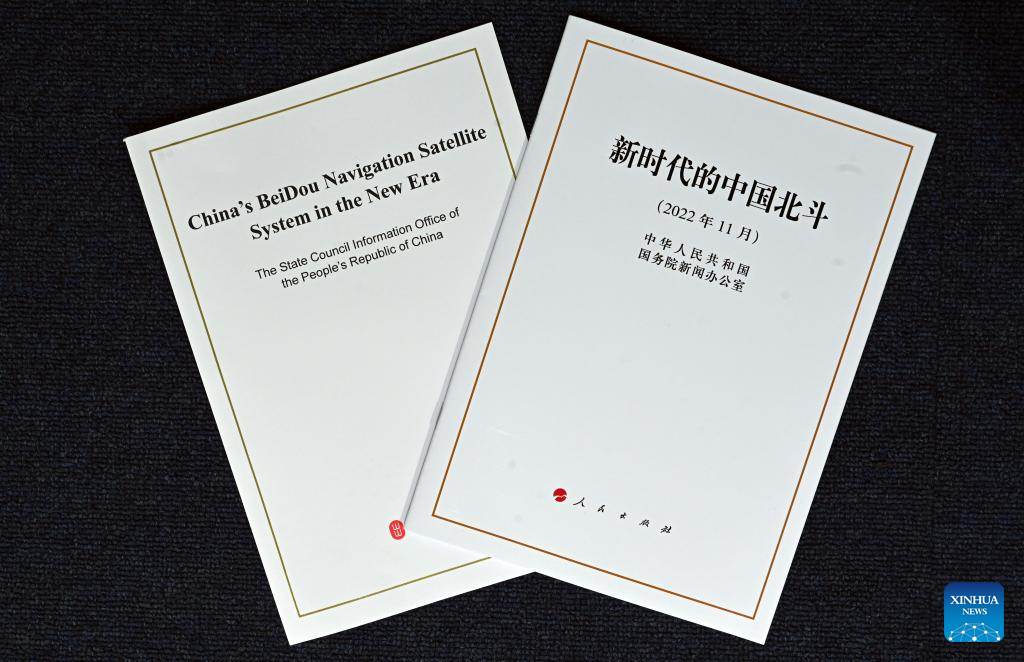
This photo taken on Nov. 4, 2022 shows the Chinese and English versions of a white paper titled “China’s BeiDou Navigation Satellite System in the New Era”. China issued a white paper on the country’s BeiDou Navigation Satellite System (BDS) on Friday. (Xinhua/Jin Liangkuai)
BEIJING, Nov. 4 (Xinhua) — China issued a white paper on the country’s BeiDou Navigation Satellite System (BDS) on Friday.
Titled “China’s BeiDou Navigation Satellite System in the New Era,” the white paper was published by the State Council Information Office of China.
It said BDS has been built into a world-class navigation system, noting China plans to refine the system by improving its operation management, promoting sustainable development of BDS-based applications, and upgrading its governance in the coming years.
The paper highlighted outstanding batch production capability, saying in less than three years, 18 rockets deployed 30 BDS satellites into orbit, “a pace unmatched by any other country.”
BDS is able to provide a wide range of services, such as positioning, navigation, timing, international search and rescue. It is the world’s first navigation satellite system to provide a global short message communication service, the paper noted.
In building a more powerful BDS, China will create its own smart and distinctive system for operation, maintenance and management, and gain a competitive edge in services such as short message communication, ground-based and satellite-based augmentation, and international search and rescue, said the white paper.
By steadily improving the quality and increasing the scope of services, BDS will build the capacity to provide global decimeter-level positioning and navigation with high integrity, thereby delivering better services to users worldwide.
China has established a set of platforms featuring BDS-3 services including international search and rescue, short message communication, satellite-based augmentation, and ground-based augmentation. It has also developed a series of basic products such as chips, modules and antennas, and realized 100-million-scale manufacturing of BDS products.
By developing standards and norms, intellectual property rights, testing and certification, and industrial assessment in a systematic manner, China has created a sound industrial ecosystem for BDS applications with all necessary factors and a strong innovation capacity, said the white paper.
China has released the first mobile phone in the world that supports the BDS regional short message communication service by incorporating a chip into a mobile phone. Users can send short messages through BeiDou short message civil platform without changing SIM cards or phone numbers, BDS spokesperson Ran Chengqi told a press conference on the release of the white paper.
Meanwhile, the white paper noted that the BDS is dedicated to the world and China will step up international cooperation for better compatibility and interoperability between the BDS and other navigation satellite systems.
The international cooperation and applications of BDS were based on the principles of openness, integration, coordination, compatibility, complementarity and sharing, said the white paper.
The cooperation between BDS and other global navigation systems, including GPS of the United States, Galileo of the European Union and GLONASS of Russia, has made excellent progress, said Ran.
The country continues to promote international cooperation and exchanges of BDS through measures such as strengthening cooperation mechanisms, increasing cooperation channels, and establishing cooperation platforms and windows, the white paper said.
Ran said that China has carried out bilateral and multilateral cooperations and exchanges with countries in Central Asia and Africa, and regional organizations such as the Association of Southeast Asian Nations and the League of Arab States.
A Chinese delegation recently attended the meeting of the International Committee on Global Navigation Satellite Systems, which was held in Abu Dhabi in the United Arab Emirates, and has received proposals from many countries and organizations for enhanced cooperation with BDS, Ran added.
The country is also making every effort to have BDS ratified by international standards organizations and standards organizations in the industrial and specialized application sectors, such as civil aviation, maritime, search and rescue, and mobile communication.
In conclusion, the white paper said China is committed to “building a comprehensive spatiotemporal system that is more extensive, more integrated and more intelligent on the next generation of the BDS.”
It pointed out that China is ready to share its achievements in developing the BDS, and will work with all countries to promote the development of navigation satellite systems and make an even greater contribution to building a global community of shared future and a better world.
China has explored its navigation satellite system in a three-step strategy.
The BDS-1 project got official approval in 1994 and was completed in 2000. The BDS-2 was completed in 2012.
The completion and official launch of the system in 2020 marks the success of the three-step strategy. China has become the third country in the world to independently own a global navigation satellite system. ■
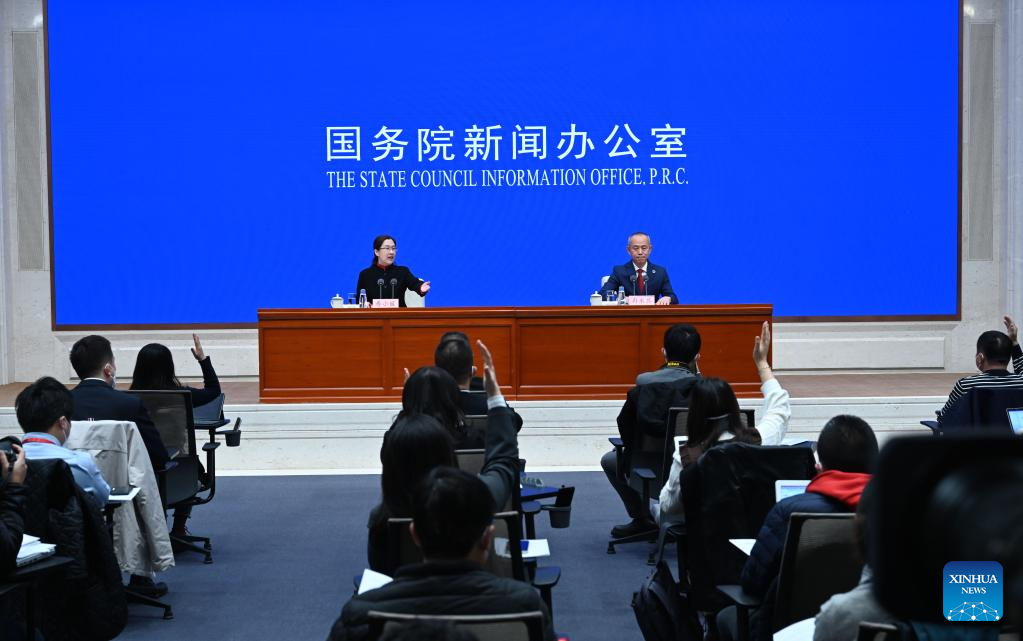
A press conference on a white paper titled “China’s BeiDou Navigation Satellite System in the New Era” is held by the State Council Information Office in Beijing, capital of China, Nov. 4, 2022. China issued a white paper on the country’s BeiDou Navigation Satellite System (BDS) on Friday. (Xinhua/Jin Liangkuai)
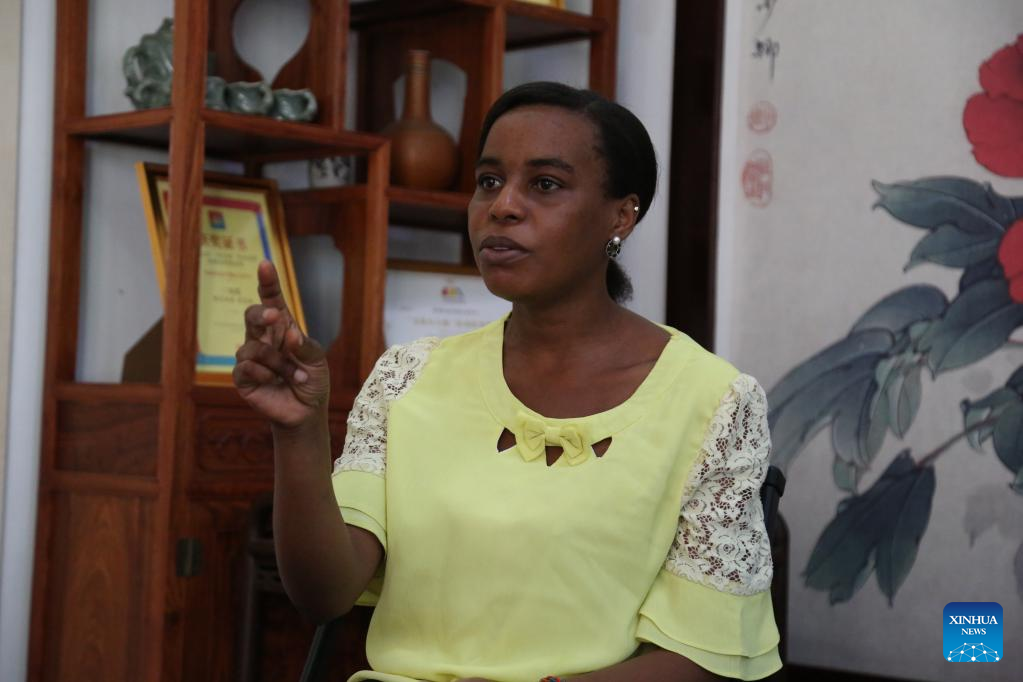
Florida Ferdinand Mtani speaks during an interview at the China Cultural Center in Dar es Salaam, Tanzania on Nov. 1, 2022. (Photo by Herman Emmanuel/Xinhua)
DAR ES SALAAM, Nov. 2 (Xinhua) — On the bright afternoon of Tuesday, 32-year-old Florida Ferdinand Mtani who works at the China Cultural Center in Tanzania along the Ali Hassan Mwinyi Road in the port city of Dar es Salaam was busy receiving guests to an art exhibition.
The art exhibition that features Tingatinga art, a unique and vibrant style of painting that originated in Tanzania in the second half of the 20th century was being organized by the China Cultural Center.
The exhibition which opened Tuesday and showcased important artworks from both Tanzania and China was held in an effort to boost cultural exchanges between the two countries through art.
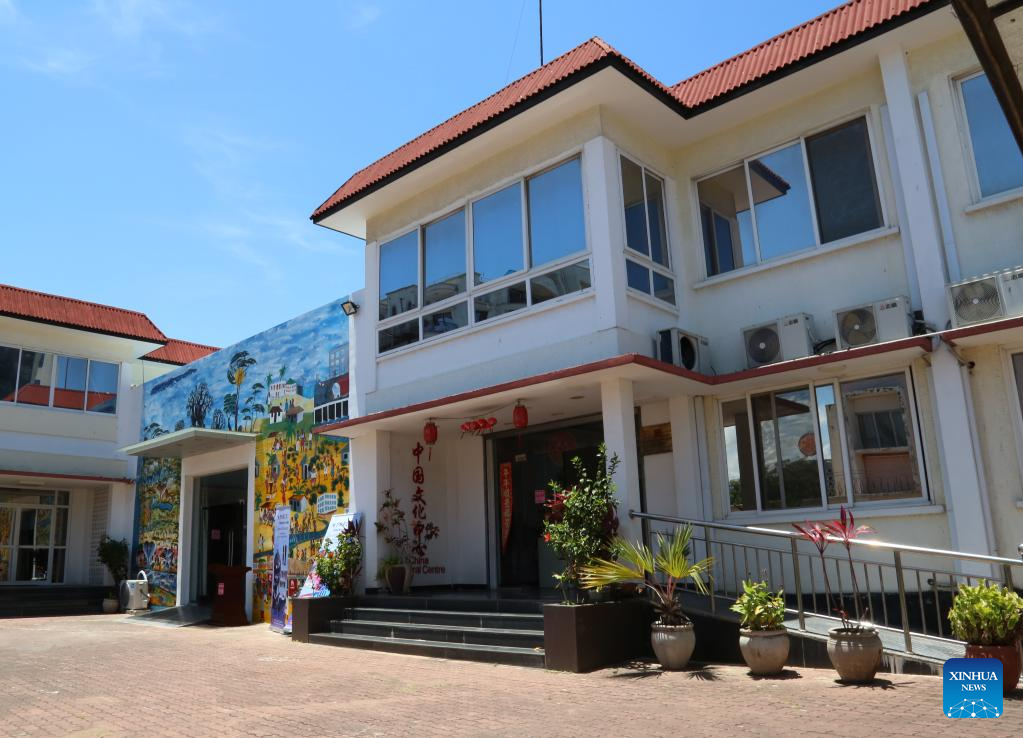
In an interview, Mtani said she has been working with the China Cultural Center since 2020. The center was the first of its kind set up in the east African region in 2015, with an aim to enhance cooperation and closer ties between Tanzania and China.
The center, located in Dar es Salaam, Tanzania’s largest city, has been well-received by the locals over the years. At the center, a series of cultural activities are held, including Chinese painting and calligraphy exhibitions, martial art courses, Chinese language training sessions, and cooking workshops.
Mtani said after she completed her university studies, she applied for a job as a receptionist and office assistant at the center which she secured.
“I love Chinese culture. I started learning Chinese culture, including Kung-Fu and their language when I was studying at the University of Dodoma,” said Mtani.
“Since I had known that the Chinese have a very good culture, I became interested in working with them. That is how I came to work with the China Cultural Center in Tanzania,” said the soft-spoken woman. “When I was in university, I learned Chinese language and Chinese martial arts like Kung-Fu.”
She said her job as a receptionist and office assistant involves welcoming guests and helping her Chinese colleagues to plan and host events. “I like my job. We have several events here. This year we had the Mid-Autumn Chinese festival which I loved the most.”
She said Tanzanians are interested in learning Chinese Kung-Fu after they had watched and been inspired by movies like Bruce Lee’s. “They always come here to register for Kung-Fu courses. The Kung-Fu courses help them to cultivate discipline and improve their self-defense.”
She added that more Tanzanians also tried to learn the Chinese language because many Chinese companies based in Tanzania prefer hiring Tanzanians who speak Chinese.
She meanwhile said that the Chinese are also learning Kiswahili to make communication easier between them and the local people.
From Wednesday to Friday, Tanzanian President Samia Suluhu Hassan will pay a state visit to China. Mtani believes the visit will significantly cement the long-time cultural and economic cooperation between the two countries. “The visit will also play a major role in opening wider Tanzania’s investment opportunities to Chinese investors.” ■
This photo taken on Nov. 1, 2022 shows the exterior view of the China Cultural Center in Dar es Salaam, Tanzania. (Photo by Herman Emmanuel/Xinhua)