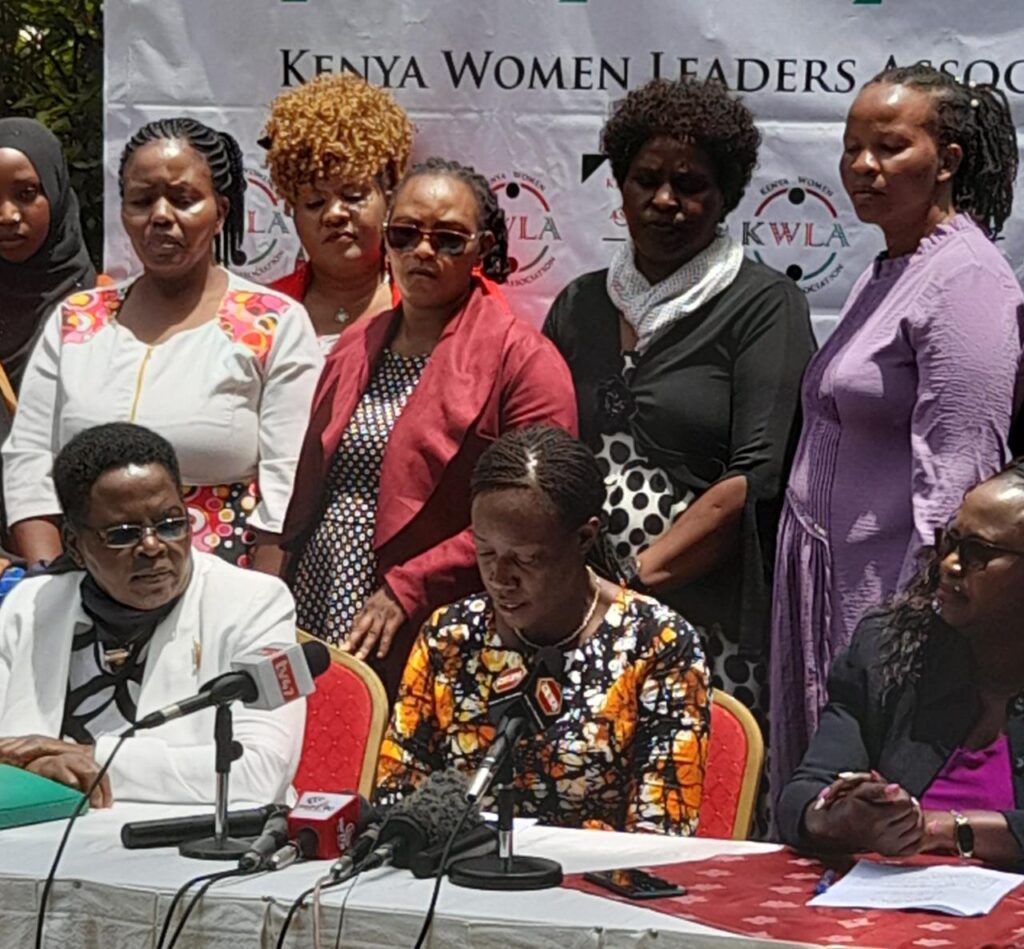
Women of Kenya through African Women Leadership Network, Echo Network Africa and Women Meditation Network applauded Kenyans for remaining calm and maintaining peace before, during and after the general elections 2022. The women networks noted that after the elections Kenyans went back to their homes and only those engaged in the election process were left at the various polling elections. AWLN chairperson, Dr. Jeniffer Riria noted that this is an indication that the democracy of the nation is maturing and that Kenyans understand that elections are seasonal and life moves on even after elections. Dr. Riria thanked the political parties, candidates and their agents and the IEBC for their active duty particular in the elections of Aug 9th 2022 She also added that, “We also thank the International Community and our neighbouring countries for standing with our country. Specifically, we appreciate the UN and the UN Women as well as other development partners for supporting the cause for peace and for women’s Leadership.” The Women network said that Kenya is a country that respects the rule of law and this should make us feel much safer. They urged candidates who may be aggrieved by the results to seek redress through legal means and avoid actions that may escalate violence. “Kenya has strong institutions with capacity to address disputes of any sort and we plead with all parties that took part in the election to revert to these institutions as the rest of the country resumes daily activities.”, said the Chairperson. The women congratulated the President-elect Dr.William Ruto and the deputy president-elect Mr. Rigathi Gachagua and first ladies for their win and urged them to work through uniting the country. They also condoled with the family of the late Daniel Musyoka who went missing on duty as an election observer and was later found dead. Sorry by Jared Odhiambo
The Department of Employment and Labour in Limpopo is currently experiencing disruptions with the system of which SITA is busy investigating and working on the matter and therefore requests patience from clients as the system is not working sufficiently, clients will be updated as soon as the matter is resolved.
The Department is still offering all services however; the phase is not as per usual. As and when the system gradually restores, services will continue.
Acting Chief Director Provincial Operations, Phaswane Tladi said, “We are aware that a lot of people are in dire need of our services during this difficult time, our officials are committed to provide services despite the challenges. We apologize to all clients for the inconvenience caused by the slow systems.”
The public will be kept abreast on any new developments with regards to the system. Those who have access to the internet are encouraged to utilise our online system to apply, ( www.ufilling.co.za(link is external) ) to limit the number of people visiting our offices until this matter is resolved.
Kenya women leaders on Tuesday called for peace as Azimio rejected the Aug.9 presidential election results.
The women of Kenya under the African Women Leaders Network (AWLN) and the Women Mediation Network (WMN)- Kenya spoke to the media on the just concluded general elections in Kenya.
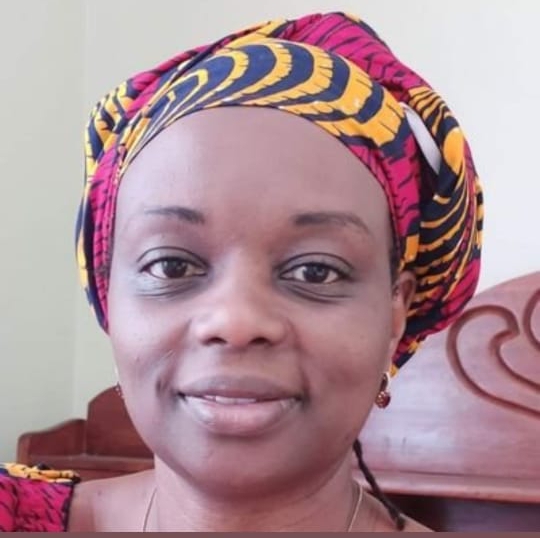
Dr. Jennifer Riria, Co-Chair, African Women Leaders Network (AWLN) urged candidates who may be aggrieved by the results to seek redress through legal means and avoid actions that may escalate violence.
“As is the case with all competitions including a General Election, the process yields winners and losers,” Riria said.
IEBC’s declaration of 55-year-old William Ruto, the current Deputy President as the winner of Kenya’s presidential elections after garnering about 7.17 million or 50.49 percent of votes cast has triggered an outcry among Raila Odinga’s supporters in western Kenya and Nairobi.
Josephine Sinyo Co-Chair, AWLN said that as Mothers, they are in pain because one of us, mother to our son the late Daniel Musyoka is a broken Mother after losing her son who was only doing his job as a Returning Officer in Embakasi East before he went missing and later found dead.
“Musyoka is just one out of a few others but one too many. We mourn with our sisters. We feel the pain of these dear sisters and pray that no other life is lost because of a mere General Election. We call upon our security apparatus to move quickly with investigations and bring the murderers of our children to book,” she added.
President Uhuru Kenyatta appointed Ms. Joanne Mwangi-Yelbert as Chairperson of the Kenya Tourism Board (KTB)for a three-year term via gazette notice dated 5th July 2022. Ms. Mwangi-Yelbert is the first female Chair since the inception of KTB.
“I want to thank President Uhuru Kenyatta for this appointment which is a sign of the confidence he has in my leadership ability. I am passionate about Kenya and about tourism and look forward to sharing my experience in marketing Kenya as a top tourism destination. I am glad that I will have a role to play in developing and improving tourism in Kenya”. Ms Joanne Mwangi Yelbert said during her meeting with KTB staff at their offices.
Ms. Mwangi-Yelbert, an internationally awarded brand development and communication expert is committed to supporting the KTB Management and tourism stakeholders to deliver KTB’s mandate. Ms. Mwangi-Yelbert is particularly keen to continue anchoring- domestic and regional tourism as core while also uniquely positioning the Magical Kenya brand to pivot Kenya’s tourism in lucrative international markets.
The new KTB Chairperson is an entrepreneur at heart as founder and CEO of Professional Marketing Services (PMS) Group, a multiple award-winning marketing and communications Pan African agency. She has served as a strategic advisor to several government and private sector boards and is the immediate chair of the Advertising Standards Body of Kenya. She is a much sought- after public speaker, an internationally recognised marketing guru, an organisation of Women in International Trade (OWIT) woman of the Year Award holder among others.
Commenting on the appointment, KTB CEO Dr. Betty Radier thanked the outgoing chair Mr Jimi Kariuki for his service to the tourism sector, and also congratulated Ms Mwangi-Yelbert on her appointment.
“On behalf of KTB, I would like to thank the outgoing chairman Mr. Jimi Kariuki for his great service to the board and the country as the Chairman of KTB for the past six years. His experience in the industry has been invaluable and under his leadership, the board has been successful in undertaking its mandate as the country’s tourism marketer. I wish him well in his future endeavors,” said Radier.
“I congratulate Ms. Yelbert on her appointment as the new chair, she brings a wealth of experience through her leadership and marketing which will no doubt ensure excellent execution of KTB’s mandate. I look forward to working with Ms Mwangi-Yelbert to propel Kenya’s tourism to greater heights,” she added.
Having witnessed a peaceful general election in Kenya’s history, the Kenya Private Sector Alliance (KEPSA) takes this early opportunity to congratulate Kenyans and all political leaders for a milestone in our democratic maturity. Peace is the cornerstone for a thriving economy and business environment. Kenyans have been patient so far, this marks a new milestone in Kenya’s democratic history. Under the leadership of Chairman Wafula Chebukati, the IEBC declared William Ruto the winner of the presidential election. The legal option taken by the aggrieved party to go to court is encouraged and we look forward to it being conducted in a peaceful environment. The business community has confidence in this country and in its Justice System. We urge all Kenyans to go back to work and resume their nation-building activities as the country strives to recover and rebuild from the effects of the Covid-19 pandemic, drought, and challenges such as the ongoing war in Ukraine and rising global inflation, all that have led to a higher cost of living not only for Kenya.
‘Enormous potential’ for aftermarket suppliers of two African countries’ as importation of vehicles, spare parts ‘skyrocket’; Report by German consultancy Africon indicates high demand from USA, Europe, or UAE – host of Automechanika Dubai (www.AutoMechanikaDubai.com) 2022
A new whitepaper authored by Africon, the German consultancy firm that supports companies worldwide with business expansion in Africa, has outlined key insights into the automotive markets of Ghana and Ivory Coast.
Among the data are details on the rise of imported vehicles as well as a growing spare parts market in the two countries, making the pair increasingly important in the African automotive aftermarket going forwards.
The paper outlined that while Ghana and Ivory Coast are both smaller markets than the likes of African heavyweights Egypt, Nigeria, and South Africa, they hold enormous potential.
Total vehicle imports into both countries skyrocketed in the past six years, with the value of light vehicles in Ivory Coast more than doubling and heavy vehicles almost doubling since 2016.
In Ghana, growth has been slightly slower, yet figures remain impressive at an average of 11 percent and 10 percent annually for light and heavy vehicles respectively. For both countries, most of the total supply came from the USA, UAE, and Europe.
Similarly, in Ivory Coast, despite the economic impact of the COVID-19 pandemic, the country’s new light vehicle market growth in recent years has been relatively strong, with volume increasing from 7,500 in 2012 to relatively consistently more than 10,000 units over the past few years. In total, there are around 800,000 vehicles on the road in the country (excluding trailers, and two- and three-wheelers), while Ghana is home to approximately 1.2 million.
“Spare parts markets are equally growing for both countries,” the whitepaper reads. “While the Ghanaian parts market is around twice as large as that of its francophone neighbour, Ivory Coast has been catching up quickly with annual growth in imported parts increasing by almost 20 percent between 2015 and 2021. In Ghana, growth stands at ‘only’ 10 percent per annum over the same period.”
Africon believes that with growing market sizes, the two countries are likely to be the focus of parts manufacturers, while the localisation of distribution infrastructure is likely to increase. As it stands, both Ghana and Ivory Coast have a very similar distribution structure, with global parts manufacturers supplying through international trading firms based often in the UAE or EU.
E-commerce so far plays a rather limited role in both countries, the paper asserts. Foreign online platforms are sometimes used to import parts, especially due to a higher trust in foreign sources. For the resale within the countries, a vast majority of buyers prefer to “see and touch” the products before ordering. Additionally, logistical challenges to enable reliable e-commerce systems are yet to be solved. Nevertheless, many stakeholders believe in future solutions to these challenges and are increasingly keen to explore opportunities in the digital space in Africa.
* As a strategic infrastructure project, the Mombasa-Nairobi Standard Gauge Railway (SGR) is aiding the realization of Kenya’s two flagship socio-economic transformation blueprints — the Vision 2030 and the Big Four Agenda.
* The SGR has enhanced Kenya’s trade with neighboring countries and offered an economic lifeline to member states of the East African Community.
* Within the framework of the Forum on China-Africa Cooperation, the SGR is among many China-Kenya infrastructure cooperation projects which are leading the Sino-Africa cooperation.
by Xinhua writer Bai Lin
NAIROBI, Aug. 14 (Xinhua) — As a veteran insurance sales agent, Farahana Mghoi used to spend seven hours on matatus, the public service vehicles in Kenya, from her hometown of Voi in southeastern Kenya to Nairobi to meet a potential client. It was both slow and tiresome.
Since 2018, time spent on the 328-km journey has been reduced to four hours thanks to the Mombasa-Nairobi Standard Gauge Railway (SGR) passenger train service launched in May 2017.
Financed mainly by China and constructed by China Road and Bridge Corporation, the 480-km railway connecting Mombasa, the largest port in East Africa, and Kenya’s capital city of Nairobi is a flagship project under the China-proposed Belt and Road Initiative, and is Kenya’s largest infrastructure project since its independence in 1963.
Mghoi said the efficient, reliable and affordable mobility, which the SGR has always guaranteed her whenever she travels to meet new clients, has boosted her career.
The SGR is “an extremely good experience in the last few years,” James Macharia, Kenya’s cabinet secretary for transport, infrastructure, housing and urban development, told Xinhua. “We can expect a lot more profitable operations going forward.”
As a strategic infrastructure project, the SGR is aiding the realization of Kenya’s two flagship socio-economic transformation blueprints — the Vision 2030 and the Big Four Agenda, said Philip Mainga, managing director of Kenya Railways Corporation.
Members of the first cohort of independent Kenyan locomotive drivers pose for a group photo in Nairobi, Kenya, Feb. 19, 2022. (Xinhua)
LESS TIME ON ROAD, MORE OPPORTUNITIES
With the SGR, Mghoi is able to reach her destination on time and negotiate for a potential business opportunity with ease. She said the punctuality has helped her cement trust and confidence with her clients.
Mghoi belongs to a growing army of Kenyan skilled labor force, entrepreneurs and tourists who have embraced the SGR service.
The Mombasa-Nairobi SGR and the additional 120-km Nairobi-Naivasha SGR have also facilitated the hauling of bulk cargoes to the hinterlands.
With the SGR freight service, it takes eight hours to transport bulk cargoes like raw materials from the Mombasa port to an inland container depot in Nairobi, as opposed to around two days using the century-old Meter Gauge Railway constructed by British colonialists, said Edward Opiyo, terminal manager at Nairobi Freight Terminals Limited, a logistics firm.
As logistics firms are now able to transport bulk cargoes in a speedy, cheaper, efficient and environmentally-friendly manner, they have built a cordial relationship with major clients, Opiyo said.
Transit hours and the cost of hauling bulk cargoes to neighboring landlocked countries have also been reduced, injecting fresh vitality into regional supply chains, he said.
The SGR has enhanced Kenya’s trade with neighboring countries and offered an economic lifeline to member states of the East African Community, said Mainga.
In the last five years, the modern railway has transported 20 million tons of cargoes and about 8 million passengers, elevating Kenya’s status as a regional manufacturing, trade and logistics hub, he noted.
“I must say we are lucky. We are doing more exports and diversification of goods than before. We are seeing a dynamic change due to what the SGR is doing in terms of exports,” he said.
The Mombasa-Nairobi SGR is projected to contribute 2-3 percent to Kenya’s GDP, said Mainga, adding that the railway has become a dominant player in Kenya’s pursuit of inclusive growth, as it has revolutionized transportation of passengers and bulk cargoes, stimulated commerce and investments and fostered job creation for local youth.
Photo taken on July 20, 2022 shows the Nairobi National Park Super Major Bridge equipped with noise deflectors along the Mombasa-Nairobi Railway in Nairobi, Kenya. (Afristar/Handout via Xinhua)
MUTUAL UNDERSTANDING, RESPECT, TRUST
Mainga said the SGR is also benefiting local people as skills transfer has reached 80-90 percent.
“Now our people are able to run the operations, to drive their locomotives, to carry on with signal work, to repair and maintain our wagons,” he said.
Recruited in 2017 by the SGR operator Afristar Railway Operation Company, Harrison Kinyanjui, a 26-year-old economics major, has received rigorous training on railway operation and management from Chinese tutors, and progressed quickly to become the first Kenyan to work at the SGR dispatch center in Nairobi.
Currently the assistant superintendent of the center, Kinyanjui said their work is to organize train operations using a centralized traffic control system in the center, which is “the brain and heart for all SGR train operations.”
“The Chinese experts have taught us very well. They now have the confidence to leave us to work independently, and we are very, very proud that we came here not knowing anything about train dispatching, but we are now very competent,” he said.
“You see the Kenyan government and the Chinese government work together. We want to thank both governments for the support they have given us,” said Mainga.
Chinese instructor Yang Ming (L) and his Kenyan female apprentice Concilia inspect the locomotive in Nairobi, Kenya, on March 22, 2021. (Xinhua/Li Yan)
As Afristar has been committed to prioritizing safe operation, boosting movement of passengers and goods and enhancing localization, the SGR’s socio-economic outcomes have gained trust and recognition by the Kenyan government and people, Li Jiuping, general manager of Afristar, told Xinhua.
“To create high-performing Sino-Kenyan teams, Afristar fosters cross-cultural working relationships and promotes mutual understanding, respect and trust,” Li said.
Ugandan President Yoweri Museveni is the first visiting head of state to travel by Kenya’s SGR in March 2019. He said the enhanced efficiency in handling cargoes has been beneficial to the economies of both Kenya and Uganda, and to other countries that depend on the Mombasa port for import and export, including Rwanda, Burundi, South Sudan and the Democratic Republic of Congo.
Within the framework of the Forum on China-Africa Cooperation, the SGR is among many China-Kenya infrastructure cooperation projects which are leading the Sino-Africa cooperation, Chinese Ambassador to Kenya Zhou Pingjian told Xinhua.
The first train of the Mombasa-Nairobi Standard Gauge Railway (SGR) arrives at Nairobi Terminus in Nairobi, Kenya, May 31, 2017. (Xinhua/Chen Cheng)
ECO-PROTECTION A PRIORITY
Before the SGR project started, there had been fears that the railway could harm biodiversity, as it would snake through the Tsavo National Park, Kenya’s oldest and largest wildlife sanctuary, home to iconic species such as elephants, giraffes and zebras.
To ensure their safety, the SGR contractor built electric fences on both sides of the track, and wide underpasses at short intervals to facilitate their movement.
Besides wildlife, mangrove forests are well protected, too. Ali Mohamed, a 44-year-old resident of a serene village overlooking a mangrove swamp on the northwestern edges of Mombasa, said that besides regulating coastal weather, the installation of overpasses and culverts has ensured that there was minimal disturbance to the mangrove forest, which is an important fish breeding site.
“I visited the SGR when its construction started and witnessed restoration of the previously degraded sections of the mangrove forest in our locality,” said Mohamed, also founder of Bidii Creek Conservancy, a Mombasa-based green lobby.
The SGR has provided best practices on blending conservation with infrastructure development, he said.
Five years since its launch, the SGR has earned accolades from local officials and conservationists for prioritizing ecological protection along its corridor.
A freight train runs on the Mombasa-Nairobi Railway track bypassing the mangroves in Mombasa, Kenya, on July 27, 2022. (Xinhua/Dong Jianghui)
Nancy Githaiga, country director for Kenya at Nairobi-based African Wildlife Foundation, said wildlife protection measures initiated by the SGR contractor should inform future efforts to develop mega infrastructure projects while safeguarding integrity of biodiversity hotspots in Kenya.
Green ethos has been placed at the center of SGR operations, bringing benefits to local communities in terms of clean air and tranquil landscapes, said Mainga.
The design and execution of the project adhered to local environmental protection laws, ensuring a healthy relationship between the contractor and local communities, said Cosmas Makewa, station master at the Mombasa SGR Terminus.
Unlike trucks, SGR trains plying along the corridor have not been emitting smoke to the atmosphere, boosting Kenya’s quest for improved air quality, said Makewa.
The SGR project highlighted the viability of China’s vision of ecological civilization, according to Leopold Omondi, a campaigner with Nairobi-based green lobby Pan African Climate Justice Alliance. (Video reporters: Liu Chang, Li Cheng, Ruth; video editors: Ma Ruxuan, Zhu Jianhui, Hui Peipei) ■
Voluntary blood donation with the aim to enrich the National Blood Transfusion Service was conducted in connection with 12 August, World Youth Day.
The program that was carried out on 9 and 10 August was participated by youth from inside the country and abroad.
Mr. Gebreyonas Gebretensae, members of the National Voluntary Blood Donors Association, indicated that 86 units of blood has been collected and called on others to follow the noble example.
World Youth Day was announced by the United Nations in 2000 to be observed every year with the objective to develop the overall awareness of youth.
In related news, citizens that are taking computer technology training at ‘Poli-Tech’ voluntarily donated 80 units of blood on 5 August.
The United Nations World Food Programme (WFP), the UN Refugee Agency (UNHCR) and the Ethiopian Government Refugees and Returnees Service (RRS) appealed today for US$73m to provide food rations to over 750,000 refugees in Ethiopia, over the next six months. WFP will completely run out of food for refugees by October, leaving vulnerable families who are dependent on food assistance at risk of undernutrition, micronutrient deficiency, susceptibility to diseases/infection and increased protection risks, the three agencies warn.
Due to protracted funding shortfalls, WFP has already been forced to cut rations for 750,000 registered refugees living in 22 camps and five sites in hosting communities in Afar, Amhara, Benishangul-Gumuz, Gambella, Somali and Tigray regions of Ethiopia.
Food rations for refugees in Ethiopia were first reduced by 16 percent in November 2015, by 40 percent in November 2021, and by 50 percent in June 2022. Food insecurity amongst the refugees has risen as a result of the cuts and is even further compounded by current global limitations to food availability, economic shocks, rising costs of food and energy, the fallout of COVID-19, conflict and insecurity.
To understand the impact of ration cuts on the food security and socio-economic situation of refugees, WFP, UNHCR and RRS conducted a rapid assessment in April which was based on 1,215 households residing in camps located in Afar, Beneshangul-Gumuz, Gambella, and Somali regions.
The results show that more households continued to adopt negative coping strategies by reducing the number of meals eaten in a day, consuming less expensive or less preferred foods, or limiting the portion of the meals served. More households reported to have engaged in demeaning activities, including engaging children in income generation activities, the collection and sale of firewood, while several borrowed cash, relying on friends/relatives for food. This forces refugees to rely on the resources of the hosting community and environment they live in which also increases the likelihood of resource-based conflicts between refugees and host communities.
More resources must be mobilized urgently to meet immediate food and non-food needs of refugees to avert further suffering, whilst similar investments are made to enable sustainable food solutions embedded in the commitments made under the Global Compact for Refugees (GCR)[1] and the Comprehensive Refugee Response Framework (CRRF)[2] for refugees and hosting communities through livelihoods and cash programmes, in line with the UNHCR and RRS strategies. As a short-term measure, WFP and its partners continue to prioritize the needs of children aged 6 to 23 months and pregnant and breastfeeding women under the undernutrition prevention programme (blanket supplementary feeding).
The United Arab Emirates called for enriching conversations on peace and security by centering African experiences at a United Nations Security Council meeting on sustaining peace in Africa. The open debate was convened under the Chinese presidency of the Council for the month of August.
“Since its founding, the UAE has steadily expanded its relationships with partners across the continent,” said H.E. Ambassador Mohamed Abushahab, Chargé d’affaires and Deputy Permanent Representative of the UAE to the UN. He added that conversations on international peace and security would benefit from focusing on the experiences of the African continent. “Today, our partnerships have flourished into dynamic cooperation in critical fields such as renewable energy, food security, counterterrorism, and public health.”
Ambassador Abushahab also underscored the need to employ approaches that are informed by local contexts in order to effectively sustain peace in Africa and elsewhere. “While our immediate focus may be African challenges, we must remember how often their origins, and implications, extend beyond the continent. Equally, this Council must recognize that African solutions, not just challenges, have global dimensions.”
In his statement, Ambassador Abushahab further highlighted that sustainable peace also implies sustainable development. He stressed that protecting and ensuring access to basic goods and services and stabilizing food and energy prices must be central to any effort to sustain peace.