Nairobi — The Medium Liquor Traders Association (MELTA) has welcomed the launch of LiquorPay, Nairobi City County’s fully automated digital liquor licensing platform, calling it a long-overdue reform that will improve efficiency, transparency, and fairness in the sector.
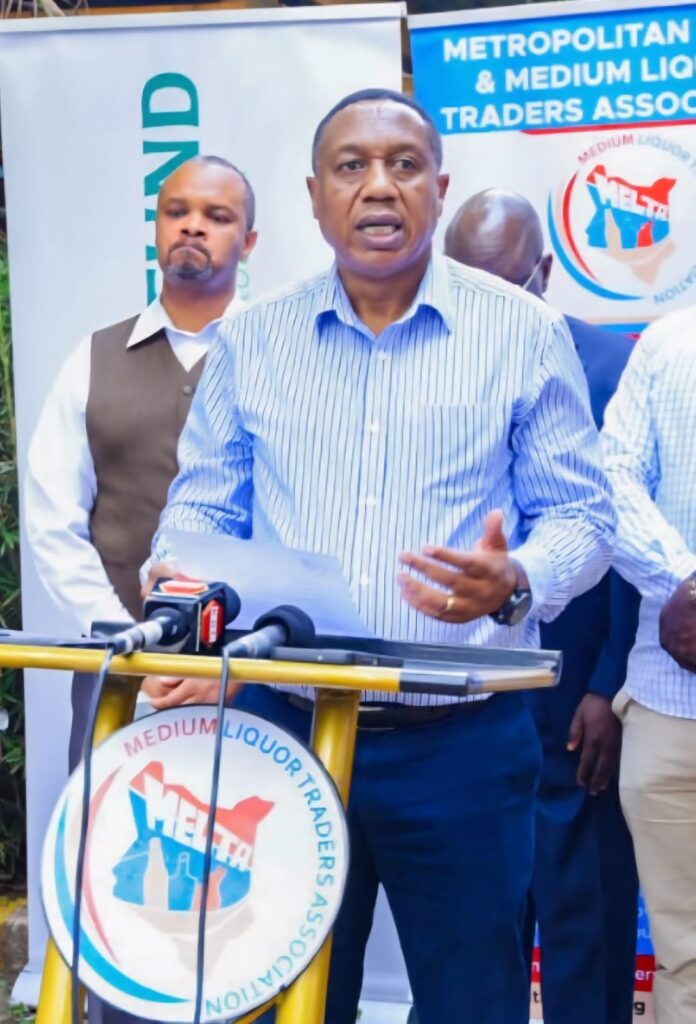
Speaking on behalf of the association, MELTA Chairman Mr. Frank Mbogo congratulated Governor Johnson Sakaja and the county leadership for implementing a system that traders have advocated for over the past two years.
“The introduction of LiquorPay is a progressive move that addresses long-standing challenges such as bureaucracy, delays, and opaque procedures in liquor licensing,” Mr. Mbogo said. He noted that the fully automated system—covering application, inspection, payment, and approval—will save traders time and improve confidence in county processes.
Mr. Mbogo aligned MELTA’s sentiments with those of county officials, praising County Executive Dr. Anastasia Nyalita and her team for prioritising traders and simplifying access to government services through technology.
While welcoming the platform, MELTA cautioned that its success depends on faithful implementation. “We hope this system will not be sabotaged by vested interests or compromised by a return to old practices. Traders expect integrity, consistency, and fairness in its application,” Mr. Mbogo said.
East Africa 24 names David Munowenyu as Africa’s Fastest Rising Entrepreneur of 2026 recognizing the continent’s most influential business leaders driving transformative change across African markets.
David Munowenyu is a humble entrepreneur who holds quiet influence and soft power across the African Continent. Munowenyu has rubbed shoulders with some of Africa’s historic political , business and social leaders. Munowenyu puts in the work without cameras and media letting his results speak for themselves.
Born and raised in Zimbabwe’s Manicaland Province which borders Zimbabwe and Mozambique , Munowenyu has built a multi-million dollar empire spanning energy, healthcare, and international logistics. What sets Munowenyu apart isn’t just the scale of his ventures it’s his systematic approach to building profitable enterprises that simultaneously advance Africa’s development agenda.
The Munowenyu Portfolio:
Miraco Energy| Executive Chairman Combating energy poverty across the continent by delivering clean, affordable power to industries, mines, homes, and hospitals. Munowenyu’s energy play positions him at the intersection of Africa’s infrastructure deficit and its clean energy transition—a multi-billion dollar opportunity.
Discovery Ambulance Services | Founder & CEO Zimbabwe’s premier emergency medical provider and strategic partner in the Presidential Emergency Medical Scheme. Discovery has become the first responder of choice, tackling maternal mortality and road traffic deaths while building a scalable model for emergency healthcare across underserved markets.
Strantview Distributors | CEO U.S.-based international logistics operation demonstrating Munowenyu’s ability to navigate cross-continental markets and complex global supply chains.
The Munowenyu Philosophy
“As Africans, we owe it to ourselves to build and grow our countries and continent by investing in projects that serve and strengthen our communities,” says Munowenyu, articulating a business philosophy that rejects the false choice between profit and purpose.
His approach: identify critical market gaps where commercial opportunity and social impact converge, then build scalable solutions.
His Impact Model
When maternal emergencies strike in Zimbabwe’s rural areas, Discovery Ambulance Services responds. Every saved life represents both social impact and proof of concept for Munowenyu’s thesis: world-class services can be profitably delivered in emerging markets when properly structured.
The numbers validate his approach. Discovery addresses multiple UN Sustainable Development Goals through a single business model—maternal health, road safety, economic growth—while generating revenue and creating employment in line with the popularised 2030 Agenda.
Strategic Philanthropy
The David Munowenyu Foundation, co-led with his wife Chantelle, operates as a strategic complement to his business ventures. Over 500 students receiving school uniforms, 50 full scholarships awarded, nutrition programs in underserved communities—the Foundation’s work creates downstream markets and workforce development for Munowenyu’s enterprises.
The Chicken Diet Supplementary Programme at Victoria Chitepo Hospital exemplifies this integrated approach: monthly provisions worth over $1,000 support the 250-bed facility while creating sustainable income for small-scale farmers who supply the program. Private capital strengthening public infrastructure.
Munowenyu’s ability to navigate complex institutional relationships sets him apart. His portfolio includes partnerships with presidential medical schemes, Zimbabwe Prisons and Correctional Services, and multiple public sector agencies—demonstrating fluency in the public-private dynamics essential for doing business in African markets.
A self-described “Pan African Global Citizen” and devout Christian, Munowenyu explicitly frames his work within the African Union’s Agenda 2063, positioning himself as both business leader and continental development stakeholder.
Why He Matters Now
Africa’s $3 trillion economy and rising population makes the continent an ideal investment and business destination. Munowenyu therefore becomes a name that matters in the conversation. Munowenyu has a reach in Eswatini , Zambia , Tanzania , Zimbabwe , Ethiopia among several other nations in Africa and across the globe positioning him as one of Africa’s most influential entrepreneurs.
Munowenyu seeks to help achieve Africa’s ambitious development targets while creating employment for the world’s youngest population. Munowenyu is the impact-oriented entrepreneur building businesses at scale.
Outside of the Corporate world and boardroom business Munowenyu has an anti-drug programs and education initiatives (rooted in his own journey from Mutanda Primary School to Mutare Boys’ High School) reflect strategic thinking about long-term human capital development—the foundation of sustainable economic growth.
Munowenyu champions what he calls “African indigenous philanthropy”—successful Africans systematically reinvesting in continental development. It’s a model gaining traction as Africa’s private sector increasingly drives development outcomes traditionally left to governments and NGOs.
Whether negotiating energy contracts, deploying ambulances to save lives, or managing international supply chains, David Munowenyu is building the template for 21st-century African entrepreneurship: commercially excellent, socially transformative, and unapologetically Pan-African.
For investors, development partners, and policymakers seeking authentic engagement with Africa’s emerging business elite, Munowenyu offers something increasingly rare—proven execution across multiple sectors, genuine community roots, and strategic vision aligned with the continent’s development trajectory.
Hon. Dr. Faith Mwaura has officially joined the United Democratic Alliance (UDA) and declared her candidacy for the Roysambu Parliamentary seat in the upcoming general election.
Speaking after her formal declaration, Dr. Mwaura said her decision followed careful consideration and reflection on the future of Roysambu and the country at large. She noted that UDA’s vision, values, and development-focused agenda closely align with her commitment to inclusive growth, accountable leadership, and people-centred governance.
“Roysambu deserves transformative leadership that listens, delivers, and places the needs of the people first. I am confident that UDA provides the right platform to advance meaningful development and create opportunities for all residents,” Dr. Mwaura said.
She pledged to prioritise key areas including youth empowerment, job creation, quality healthcare, education, affordable housing, and improved infrastructure, while working closely with residents and stakeholders to address the constituency’s challenges.
Dr. Mwaura called on the people of Roysambu to unite behind a shared vision of progress, transparency, and sustainable development, emphasizing that leadership must be rooted in service and results.
With her declaration, Dr. Mwaura joins the race as one of the early contenders for the Roysambu seat, positioning herself as a strong advocate for change and effective representation.
PS Kilemi Opens Second Cohort of Annual Delegates Congress in Mombasa**
The Principal Secretary in the State Department of Co-operatives, Mr Patrick Kilemi, on Monday officially opened the second cohort of the Annual Delegates Congress in Mombasa, as leaders in the co-operative sector intensified efforts to strengthen governance and leadership.
Mr Kilemi was received by the National Chairman of the Kenya National Police DT Sacco, Mr David Sohelo Mategwa, the Nairobi County Director of Co-operatives Ms Dolphine Aremo, members of the board, and Chief Executive Officer Mr Solomon Angutsa.
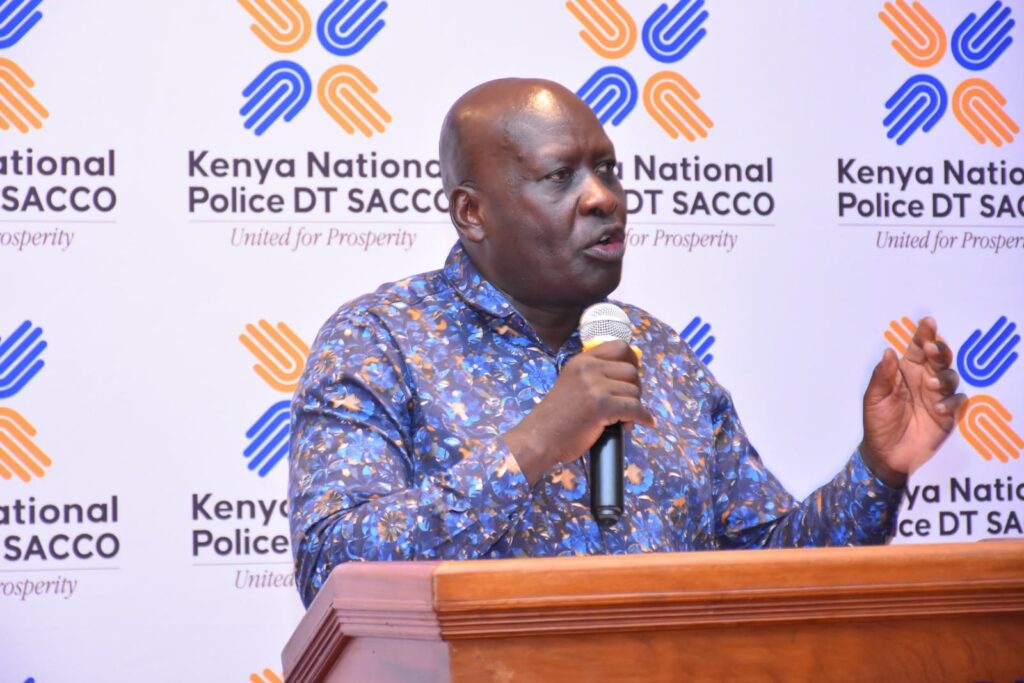
Speaking at the event, Mr Mategwa said strong leadership, teamwork and accountability were critical to the sustainability of co-operative societies, noting that the Annual Delegates Congress plays a key role in preparing leaders to safeguard members’ interests and promote long-term value creation.
He added that the Kenya National Police DT Sacco remained committed to upholding sound governance and empowering delegates with skills needed to enhance transparency and operational efficiency.
The congress, being held under the theme “Empowering Leaders through Teamwork and Co-operative Excellence,” brings together delegates from across the country and focuses on leadership development, accountability and sustainable growth within the co-operative movement.
Proceedings of the second cohort continue in Mombasa.
NANDI, Kenya — The Government has reaffirmed its commitment to promoting cultural and sports tourism as key drivers of regional development, with Tourism Cabinet Secretary Rebecca Miano, EGH, calling on Kenyans and international visitors to explore destinations beyond the traditional tourism circuit.
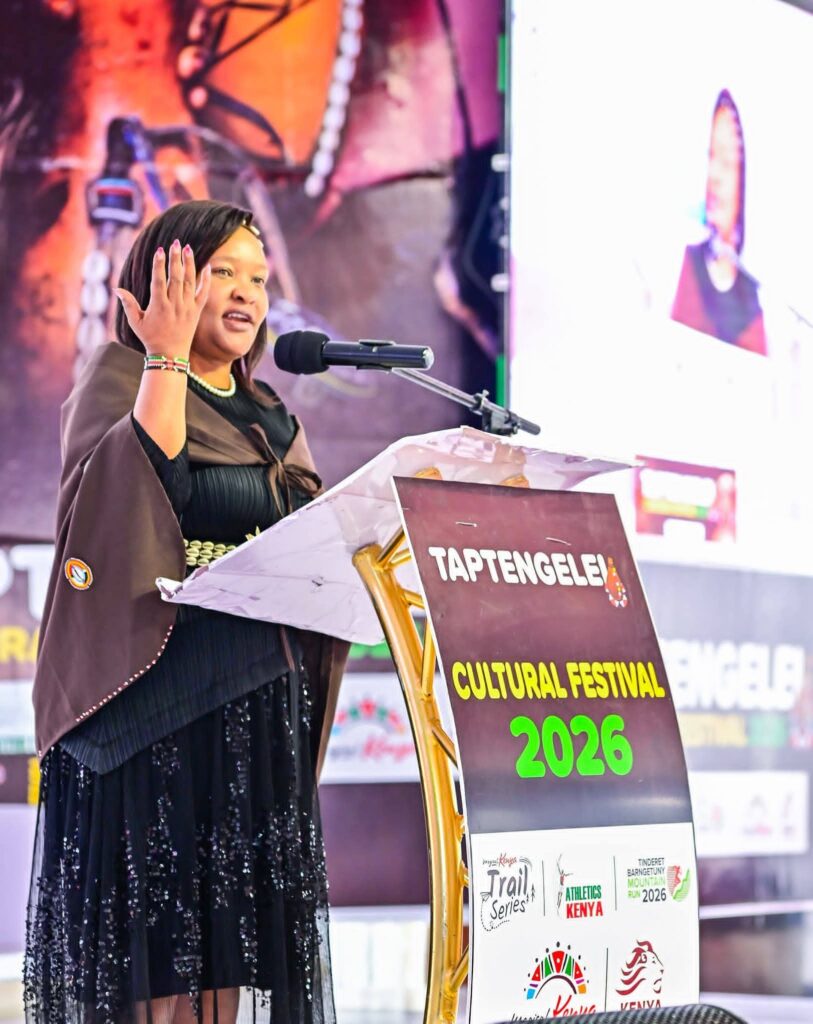
Speaking in Nandi County during the second edition of the Taptengelei Cultural Festival, held alongside the Tinderet Barng’etuny Mountain Run, CS Miano said cultural festivals and adventure sports were vital in positioning Kenya as a diverse, year-round tourism destination.
The event brought together the Head of Public Service Hon. Felix Koskei, Gender Cabinet Secretary Hon. Hanna Cheptumo, Nandi Governor Stephen Sang, Tinderet MP Hon. Julius Melly, Tourism Principal Secretary John Ololtuaa, and a host of public and private sector leaders.
“Standing in the heart of the Rift Valley, one is reminded of the rich cultural mosaic that defines our nation,” said CS Miano. “The Taptengelei Cultural Festival is more than a celebration. It is a bold expression of who we are as a people and a bridge between our proud heritage and a vibrant future.”
She noted that the festival, combined with the mountain run, showcased Nandi County’s unique blend of culture, natural beauty and sporting excellence, offering visitors an opportunity to experience Kenya beyond its famous savannas.
The Tinderet Barng’etuny Mountain Run, which attracts elite athletes and adventure enthusiasts, is expected to climax the celebrations, with participants testing their endurance along scenic highland trails in a region renowned for producing world-class runners.
CS Miano said the Ministry of Tourism was keen on promoting niche tourism products, including sports, cultural and adventure tourism, as part of efforts to diversify the sector and spread economic benefits to counties.
“Nandi County is truly the source of champions,” she said. “Whether visitors come for the thrill of the trail or the warmth of our traditions, there is a unique story waiting to be experienced here.”
The Taptengelei Cultural Festival is part of a growing calendar of community-led events aimed at preserving cultural heritage while boosting local economies through tourism.
The Kenya National Association of Private Colleges (KENAPCO) has reaffirmed its support for ongoing education reforms aimed at strengthening Competency-Based Assessment (CBA) at the Senior School level.
KENAPCO National Chairperson Dr. Ekrah Ndung’u was among key stakeholders who participated in a one-day technical alignment, peer review and scoping workshop on Senior School assessment reforms held at the Kenya National Examinations Council (KNEC) Educational Assessment Resource Centre in Nairobi.
The forum brought together teachers, researchers and education experts to deliberate on the Senior School Assessment Framework, Community Service Learning, dual certification, career pathways and preparations for Kenya’s participation in PISA 2025.
Dr. Ekrah said the participation of the TVET sector was critical as technical and vocational studies are now being introduced at Senior School level, creating a future demand for TVET-trained instructors and institutions.
“TVET institutions will play a key role in supporting senior school learners pursuing technical pathways. As KENAPCO, we are ready, with clear career pathways already mapped out,” she said.
She noted that since the rollout of the Competency-Based Curriculum (CBC), the TVET sector has proactively aligned its systems to support the reforms, including transitioning fully to Competency-Based Education and Training (CBET), implementing dual training models, Recognition of Prior Learning (RPL) and Credit Value Transfer (CVT) policies.
“All TVET institutions under KENAPCO have transitioned fully to CBET, and assessment centres are operational under TVET CDACC. Our sector is well prepared,” Dr. Ekrah said.
She observed that the next generation of senior school learners will be digitally skilled, exposed to workshops, entrepreneurship, communication skills, community service learning and life skills, reducing the need for remedial training at college and university entry levels.
Dr. Ekrah called for urgent retooling and upskilling of teachers, trainers and lecturers to effectively engage 21st-century learners, whom he described as highly exposed and technologically adept.
The KENAPCO chairperson added that the reforms align with Kenya’s Vision 2030, Africa’s Agenda 2063 and global education goals, noting that Kenya is among 91 countries worldwide and seven in Africa participating in the Programme for International Student Assessment (PISA).
The workshop underscored the growing importance of TVET in Kenya’s education ecosystem as the country prepares for a skills-driven economy anchored on competence, innovation and industry linkage.
As Kenya gears up for the August 2027 General Election, Prof. Fred Ogola’s presidential ambition is emerging as one of the most credible and policy-driven bids on the national stage.
A world-renowned economist, Prof. Ogola is seeking the presidency on the Liberal Democratic Party (LDP) ticket, presenting a sharp departure from the country’s conventional political establishment. He is the author of the acclaimed book Solomonic Economics and a former Strathmore University economist. A seasoned strategy and governance expert, his expertise is sought not only in Kenya but also in Rwanda, Ethiopia, and internationally, giving him a uniquely global perspective on economic recovery and sustainable development.
His candidacy is anchored on a clear economic recovery and social transformation model at a time when Kenya grapples with rising debt, unemployment, and cost of living pressures.
Unlike dominant parties such as the United Democratic Alliance (UDA) and Orange Democratic Movement (ODM)—which critics argue rely heavily on political slogans, populist rhetoric, and “one-term, two-term” chants—LDP leads on economic policy and governance narratives. Where others are dominated by career politicians and political financiers, LDP is largely led by technocrats, economists, and development professionals, emphasizing expertise over theatrics. Analysts have even coined the term “tumbocrats” to describe rivals who prioritize political clout and divisive messaging over practical solutions.
While LDP competitors are obsessed with how to acquire power, LDP is focused on what needs to be done to deliver real services to citizens. The party’s coalition-building approach is rooted in ideological alignment with Kenya’s development agenda, championing priorities such as free healthcare, quality education, food security, and national security. By contrast, rival alliances often revolve around opportunistic power-sharing arrangements with little clarity on how they intend to improve the lives of Kenyans once in office.
An independent nationwide survey conducted between December 5, 2025, and January 15, 2026, across all 47 counties ranked LDP as the top party with a practical and implementable economic model, underscoring growing public confidence in Prof. Ogola’s policy-first leadership.
Significantly, Prof. Ogola’s campaign is built around a working economic prototype rather than a conventional manifesto. While most parties offer broad promises or sloganeering, LDP emphasizes testing, refinement, and measurable outcomes, signalling a shift towards results-oriented governance.
The party also has a comprehensive prototype to eradicate corruption in government, designed to prevent, detect, and punish corruption through technology, accountability, citizen participation, and strong enforcement. This demonstrates a tangible commitment to transparency and good governance, tackling one of Kenya’s most persistent challenges.
As Kenya seeks solutions to its pressing economic challenges, Prof. Fred Ogola’s bid reflects a rising appetite for leadership rooted in expertise, accountability, and evidence-based decision-making. His campaign is not only viable but emblematic of a broader desire for a new kind of politics—solutions-driven, service-oriented, and led by technocrats rather than tumbocrats.
SaniBook: Kenya’s Sh27 Billion Sanitation Drain Gets Digital Fix
Kenya is losing an estimated Sh27 billion every year—nearly one per cent of its GDP—to poor sanitation, a silent economic drain that experts say has remained dangerously overlooked.
While national debates focus on inflation, debt, and currency fluctuations, inadequate toilets, limited sewer coverage, and poorly coordinated off-grid solutions are quietly costing the country in healthcare, productivity, and infrastructure.
According to sector estimates, Sh4.3 billion is spent annually treating preventable waterborne diseases, while another Sh2.1 billion is lost to reduced productivity as workers and students miss days due to illness. Only 15 per cent of Kenyans are connected to sewer systems, leaving a potential Sh500 billion infrastructure gap to meet national sanitation targets.
“This is not just about toilets; it is about unlocking productivity, innovation, and inclusive growth,” said Elizabeth Mwangi, WaSHVoice Founding CEO and Programme Director.
To tackle this challenge, stakeholders in water, health, and technology sectors have launched SaniBook, a digital platform set to officially go live on January 22, 2026. The platform aims to map off-grid sanitation projects, provide real-time coordination, reduce duplication of interventions, and track outputs such as biogas and organic fertiliser, linking sanitation to Kenya’s emerging circular economy.
During its pilot phase, SaniBook identified seven critical bottlenecks slowing progress toward universal access to safely managed sanitation, and could help bridge the 72 per cent service gap currently leaving millions underserved.
For every Sh130 invested in improved sanitation, experts say Kenya gains Sh650 through healthcare savings, productivity, and environmental benefits—making sanitation one of the highest-return investments in the economy.
The SaniBook team is calling on NGOs, private innovators, government agencies, and research institutions to contribute data and join the platform. “Kenya cannot afford to keep its sanitation data in the dark,” the organisers said. “Every intervention mapped is a step toward smarter investment, national knowledge, and sustainable economic growth.”
As Kenya searches for new pathways to growth, SaniBook’s backers argue that turning sanitation from an economic drain into a digital, data-driven opportunity may be one of the country’s most overlooked solutions.
Safaricom Dealers Emphasised as Backbone of Operations During Parliament Divestiture Hearings
Nairobi — Safaricom dealers have highlighted the critical role they play in the operations of Kenya’s largest telecom company, as Parliament continues to consider the proposed partial divestiture of the Government’s stake in Safaricom PLC.
On Day Three of stakeholder engagements on Sessional Paper No. 3 of 2025, the Joint Committee of the Departmental Committee on Finance and National Planning and the Select Committee on Debt and Privatisation held discussions with Safaricom dealers, led by Dr Esther Muchemi, Group CEO of the Samchi Group.
During the hearings, dealers stressed the importance of business stability, continuity, and protection of local partners amid any changes in ownership. They emphasised that Safaricom’s network of dealers, M-Pesa agents, and local partners underpins the company’s operations, delivering services to millions of Kenyans.
After listening to the presentations, several Committee members acknowledged that Safaricom without its dealers would be “an empty shell”, recognising for the first time the essential role played by dealers and agents in driving the company’s success.
The dealers also called for a carefully managed transition, assurances that ongoing corporate social responsibility programmes, including the Safaricom Foundation, would continue, and for transparency in the valuation and divestiture process to maintain investor confidence.
Concerns were raised about the potential impact of the sale on Safaricom’s share price and liquidity at the Nairobi Securities Exchange (NSE), which could directly affect dealer-related investments and the broader digital economy.
The hearings underlined a critical point: while discussions around the partial divestiture focus on government stakes and corporate valuations, it is the dealers and M-Pesa agents who form the backbone of Safaricom, and their interests are central to any successful transition.
The Joint Committee is expected to continue receiving stakeholder input before submitting its report to Parliament.
The Masakhane African Languages Hub (the Hub) has announced a major Request for Proposals (RFP) to address the severe underrepresentation of African languages in Artificial Intelligence (AI). The Hub invites African researchers, linguists, startups, technologists and community organizations to build high-quality, inclusive and community-driven datasets for 50 African languages.
While Africa is home to over 2,000 languages, they are almost absent from the global digital landscape; none of the top 34 languages used globally on the internet are African. This imbalance risks not only excluding more than one billion speakers from emerging technologies but also perpetuating harmful biases and inaccuracies that can undermine equitable use of new technologies.
Supported by Google.org, and FCDO, IDRC and the Gates Foundation, the new project aims to counter this trend by ensuring AI technologies are built on accurate, inclusive, culturally relevant, and ethically sourced data.
The hub is calling for Expressions of Interest (EOI) across three core pillars:
Automatic Speech Recognition (ASR): Focused on large-scale, culturally grounded voice data for 18 African languages, emphasizing gender balance and contextual authenticity.
Benchmarking “In the Wild”: Supporting researchers to design studies that test how AI models actually perform in authentic, practical, and real-world African contexts.
Culturally Relevant Multimodal Datasets: Catalyzing the creation of high-quality image, text, and speech datasets for 40 African languages to power the next generation of translation and education tools.
Successful applicants will receive funding, visibility, and institutional support to help them achieve sustainable growth. Partnering with the Masakhane African Languages Hub will also provide them with a platform to develop African-led AI technology and an opportunity to pioneer inclusivity for languages that have been historically marginalized in tech.
The ultimate goal is to empower one billion Africans by 2029 with locally relevant AI tools and resources, unlocking opportunities for economic development, local innovation, and the preservation of Africa’s linguistic heritage.
“We are committed to championing African-led innovation that ensures AI reflects the continent’s rich linguistic and cultural diversity. This call for proposals goes beyond building models; it is a movement toward a more equitable digital future. It’s an opportunity to center marginalized groups such as women, rural communities, and the elderly, and take forward the wisdom of our elders and embody the spirit of Ubuntu,” said Chenai Chair, Director of the Masakhane African Languages Hub.
Important Dates and Eligibility
Expression of Interest (EOI) Deadline: January 25, 2026 (23:59 WAT)
Applicant Webinar: 14 January 2026
Full Proposal Deadline for shortlisted applicants: February 25, 2026 (23:59 WAT)
Eligible Organizations: non-profits, social enterprises, and research institutions that are based in or have a presence in Africa.
The initiative builds on the momentum of a successful 2025 call for proposals, which saw 93 applicants from 22 countries shortlisted. Following a rigorous selection process, four grant awardees have been finalized and are currently transitioning into the contracting phase.