MultiChoice Kenya, Africa’s premier entertainment company, has today unveiled GOtv Stream, ushering in the festive season with the convenience for customers to catch up on their favorite shows, movies, and sports seamlessly on their smartphones, tablets, and web platforms.
GOtv Stream App is a value-added service, designed to keep customers entertained anytime, anywhere, and on the go. With this app, customers can watch live TV and enjoy GOtv Catch Up and take charge of their content consumption, personalize their viewing experience, and access a host of features.
The app will allow customers to set up individual profiles for personalized viewing experience as per their GOtv packages – Supa Plus, Supa, Max, Plus, and Lite and watch their favorite shows and movies at their convenience or download content for offline viewing.
To access this service, customers need to have a GOtv subscription, a compatible device, a MultiChoice ID, and an internet connection. While anyone can download and use the GOtv Stream App, only GOtv subscribers can enjoy live TV channels and Catch-Up content linked to their specific package.
GOtv Stream App will be available on wide range of devices including Android and IOS devices and users will be allowed to register up to four devices with their GOtv Stream App account, with streaming limited to one device at a time.
According to Nzola Miranda, Managing Director, MultiChoice Kenya: “This is a significant milestone in our quest to continue harnessing the power of technology and innovation to drive customer satisfaction and ensure that customers continue enjoying unmatched viewing experience.
“We are in the festive season and what better way to provide a unique experience for our customers to catch their favorite shows through a different experience. With unparalleled content diversity, we are revolutionizing the way our customers consume content in the country. As Kenya’s leading storyteller, we are leading the way in embracing cutting edge streaming technology to deliver a seamless and immersive personalized viewing experience for our customers,” noted Mr. Miranda.
On his part, Elisha Kamau, Public Relations Manager at MultiChoice Kenya, noted, “We are excited to introduce GOtv Stream app to our customers. This app aligns with our commitment to delivering cutting-edge entertainment solutions that cater to our customers’ evolving needs and preferences. We believe this new offering will elevate the entertainment experience for our valued customers.”
The new app will allow customers to download up to 25 videos at a time, with a 30-day window to watch downloaded content before it expires. Once watched, downloaded content expires within 48 hours. The app will also enable customers manage and customize parental controls for kids’ profiles to ensure a safe and age-appropriate viewing experience.
The GOtv Stream App marks a significant leap in enhancing customer control over their entertainment experience, offering more flexibility and convenience for enjoying content.
Notably, this marks his first official trip to a Commonwealth country since ascending to the English throne following the death of his mother Queen Elizabeth II late last year.
Mr. James Mwangi ,ACCPA has recognize the relationship between Kenya and the United Kingdom in areas of trade and exchange in our diverse cultures and the importance of this visit which seeks to strengthen those bonds.”
In his statement,to the media, they feel this is an opportune moment to raise key issues of concern regarding the conduct of British military personnel and wish to get the attention of His Majesty King Charles III and Queen Camilla and the British government.
While addressing the media Mr. James Mwangi ACCPA spokesperson said they are acknowledging the importance of the partnerships between two governments,it reads that they express dissatisfaction in the way the British government has handled several matters pertaining the conduct of the British Army under Batuk with whom Kenya has had a long-standing relationship.
It notably that it has been 11 and a half years since Agnes Wanjiru, a hairdresser based in Nanyuki, was brutally murdered by personnel under Batuk. This has since been proven by a public inquest which was concluded on November 5, 2019. Nonetheless, the killers of Agnes Wanjiru continue to walk free and the British authorities have been complicit in not only covering up the murder but also shielding justice.
“It is important to note that we are aware that the key suspect in the murder of Agnes is well known former medic in the British Army and his identity is an ‘open secret’ within the British military ranks. However, it is quite disappointing and appalling that British authorities continue shielding the suspect from justice despite pledging full cooperation in the matter where Kenya has full jurisdiction.” Mr. James says
The United Kingdom prides itself in respecting the rule of law and dispensing justice as has been portrayed in recent transnational investigations including the Julian Assange matter, just to mention but a few.
Kenya on its part has also demonstrated cooperation in transnational investigations and assisted in extradition of suspects wanted by British authorities.
It is therefore a wonder why the UK has failed to do the same in the matter of Agnes Wanjiru. Why do the British authorities continue to shield the suspect and deny Kenyan authorities access to the suspect, witnesses and persons of interest in this case? Why the double standards?.
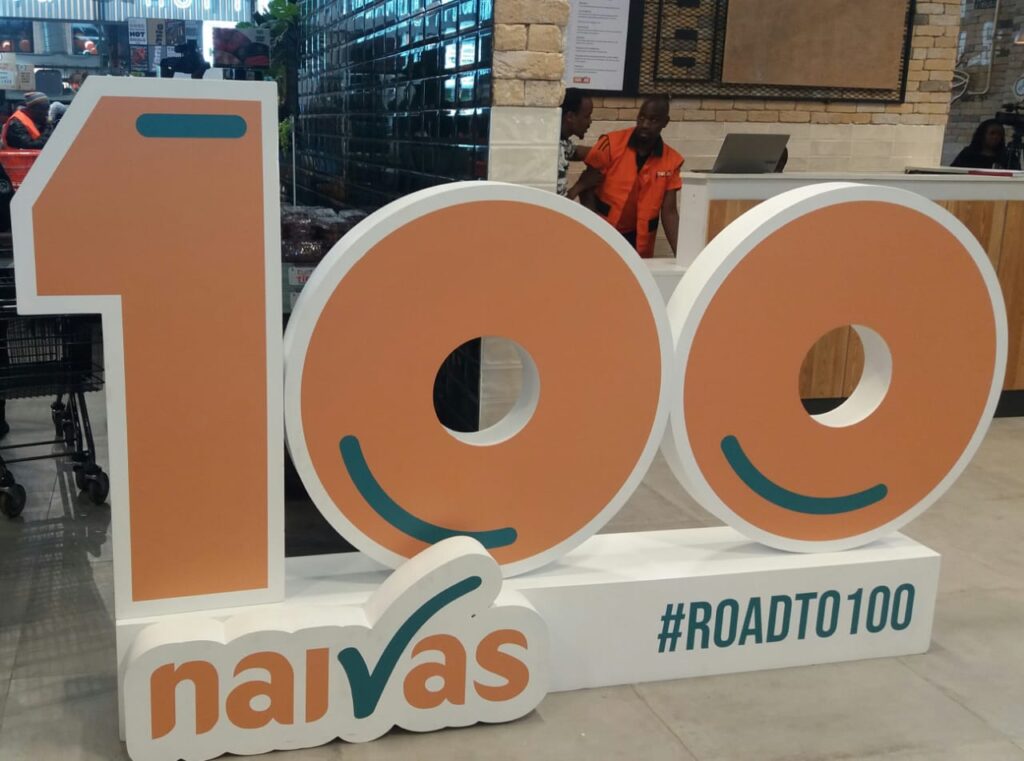
CAPTION: Naivas Kingara Road branch which recently took the honours for being the host of the #RoadTo100. PIC by Tum David.
by Tum David
Excitement times are here once again for the esteemed Naivas customers countrywide as the Retailer launched its 13th edition of the KIKWETU Christmas Campaign 2023/2024.
This year’s Chrismas campaign marks the 13th edition since the launch of the first Kikwetu in 2011.
Kikwetu which simply translates to ” Our Way ” has endeavoured over the years to remain authentically Kenyan while delivering memorable experiences to customers through thematic campaigns during the festive seasons.
The campaign seeks to welcome Kenyans to celebrate this new journey of going beyond 100 – with this being truly their cause for celebration and Kenyans deserve something positive to celebrate.
The season also reminds Kenyans that no matter how big the business grows, Naivas shall maintain the local and personal touch. NAIVAS KIKWETU will continue to serve them diligently as always have with unmistakably Kenyan hospitality.
” It’s for this reason that we’re officially launching our 13th edition dubbed “NAIVAS KIKWETU FIESTA” and with a lot of humility we’re saying ‘ asante Kenya for 100 Naivas Kilocols’. Said Peter Mukuha, Naivas Chief of Operations.
The campaign will run from Friday October 27, 2023 to the 18th of January 2024 covering both the entire festive season and January BTS.
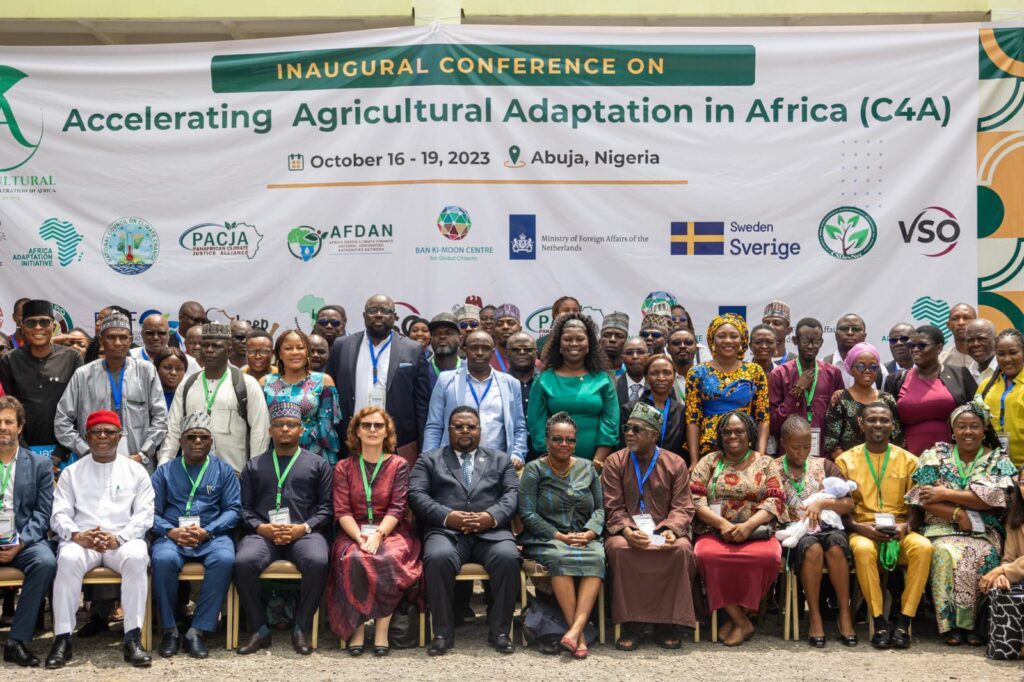
Abuja – Nigeria, October 16, 2023 – Hundreds of Government representatives, Policymakers, Civil Society organizations, and other partners from Africa convenes for the first conference on the Acceleration of Agricultural Adaptation in Africa.
The three-day conference organized by the Pan African Climate Justice Alliance and the Government of the Federal Republic of Nigeria together with other partners seeks to galvanize a critical mass of Actors towards accelerated agricultural adaptation, including stimulating smallholder farmers’ proactive engagement in international climate dialogue and intervention processes.
During the opening ceremonies, Dr. Sadiq Wanka, the Special Advisor to the Vice presidents of the Federal Republic of Nigeria thanked the organizers and reminded them that it takes place at the moment Africa’s agriculture is still depending on rain and while farming communities are plunging into further uncertainty as a result of climate-inspired erratic rainfall and shifting seasons, pastoralist communities have lost much of their livestock, including camels, cattle, goats and sheep to the raging weather events. “The inaugural conference on accelerating agriculture adaptation is key to galvanizing the critical mass of Actors towards accelerated agricultural adaptation, including stimulating smallholder farmers’ proactive engagement in international climate dialogue and intervention processes”. He added
Dr. Salisu Dahiru, the Director-General of the National Council on Climate Change (NCCC) and Head of the Secretariat, Federal Republic of Nigeria reiterated the importance of the conference as it is expected to be the space for exchange and innovation.
“The importance of this conference cannot be overstated. It stands as a crucial platform where we can unite, share knowledge, and engage in fruitful discussions on strategies and solutions that will pave the way for sustainable agricultural practices in Africa, even in the face of climate adversities. we hope to embark on a journey towards securing the future of food production and ensuring the well-being of our communities.” Dr Dahilu stressed.
Speaking about Accelerating Agricultural adaptation in Africa, Prof. Anthony Nyong, the Director of Climate Change and Green Growth at the Africa Development Bank said that the bank has set four pillars to ensure change in the agriculture sector happens with success. He said that to address the social economic and sustainable agenda in agriculture AfDB set four pillars namely climate smart digital technologies for agriculture and food security, Africa infrastructure resilience accelerator; empowering youth for entrepreneurship and job creation in climate adaptation and resilience; and innovative finance initiatives.
“The African Development Bank recognizes that achieving sustainability in our countries hinges upon the development of crucial sectors, with agriculture emerging as one of the most significant avenues for success”. He continued to add
Mrs. Drita Dade, the Senior Natural Resources Management Specialist who represented the World Bank country office in Nigeria commended the conference and asserted that the inaction in addressing climate challenges not only jeopardizes food security but also heightens susceptibility to extreme weather events, places rural communities’ livelihoods at risk, and intensifies the strain on already stressed natural resources.
The African Development Bank estimates that adaptation and resilience costs for the continent will reach up to $30 billion per annum by 2030.
Augustine Njamnshi, the chair of Technical and Political Affairs, at PACJA, stressed that it’s imperative to think of adaptation but also look beyond the simple concept of adaptation. “Adaptation in the agriculture sector is an urgent priority for our region. It is a matter of survival, protecting the livelihoods of millions of farmers, ensuring food security for our growing population, and preserving our rich natural resources for generations to come. We must act with a sense of urgency, with a recognition that the time for action is now”, added Augustine Njamnshi.
This is the first agricultural conference taking place in Africa with a focus on shaping the future of the sector in the climate-changing context. Participants will engage in deep discussions and presentations focusing on the leveling of capacities and context setting; policy and funding landscape for accelerating adaptation in the sector; pathways to low carbon resilient agricultural systems in Africa, advancing inclusions in agriculture for women, youth, pastoralists, and other excluded groups in the context of current climate realities; Just transition in African adaptation agriculture and food systems, and raising ambition and visibility of African Agricultural Adaptation in Abu Dhabi.
CAPTION: Photos of the newly opened Naivas Kingara Road, the outlet which carried the honour of the #RoadTo100 success. Pic By Tum.
BY TUM DAVID The ambitious dream by the Naivas Supermarket dubbed #RoadTo1OO was achieved on Thursday October 12th, 2023 when the retailer opened its 100th store in Nairobi.
The outlet which carried the great honour of being the 100th store, is the Naivas FoodMarkert Kingara Road in Lavington in Nairobi superbs.
Naivas Supermarket has now hit its triple digits in store count, 100 branches countrywide. This is a historic moment for the Kenyan history, as this is a feat that no other supermarket in Kenya, be it local or international, has managed to achieve.
” But for us, it’s never been about store numbers. It’s been about staying relevant, staying relevant to put customers but also staying relevant as a business because I my that way can we continue to grow and thrive and support all of those stakeholders who walk with us.” Said Andreas Von Paleske the Chief of Strategy of Naivas during the opening ceremony of the 100th store.
Naivas Supermarket has come a long way evolving from a general store founded in the rural town of Rongai in Nakuru County to the leading retailer in the country. For Naivas, this is nothing short of a success story punctuated by commitment and resilience. To the business, the number 100 holds special significance to the retailer and will forever be atched in the annals of its history.
” 100 is just a number, just a milestone. But I would want to say this, it’s just a beginning. This is where now we need to break the next record and make sure that a Kenyan company . . . and I repeat, a Kenyan company’s competing with internationals . . . that’s my target and I think it’s our target with our suppliers with our customers and with our staff.” remarked Naivas Foubder and Managing Director David Kimani.
The Naivas MD said it has taken 33 years 2 months and 12 days to hit the great milestone. This means that the founding family, the Mukuhas had set the right foundation which ensured that the business grew and was able to attract even foreign investments.
The chain’s management gives credit to their committed investors a consortium led by IBL which includes Proparco and DEG who have been instrumental in strengthening the retailer’s corporate governance.
Education Cabinet Secretary (CS) Ezekiel Machogu on the second opening of the African Continental Qualification framework (ACQF )training urges African nations to bridge between education and work . Both Principal Secretaries Dr Juma Mukwana Principal Secretary state department (PS ) and Dr Esther Muoria principal Secretary (PS) vacational and technical training emphasised on value and qualifications which will be undergoing pragmatic dynamic transformation.
According to Machogu he considers Africa as a pivotal juncture in evolution of labour market in education system and champions policies that adapt in response to the seismic shift expanding their embracing and digital age . As she convened the second opening of Workshop she said that globally, there is an urgent need to fortify our qualifications frameworks.
A country that invests in policies aiming to give credibility and align qualifications with emerging global trends is a foresighted nation. The role, value, and currency of qualifications are undergoing a profound transformation, influenced by global megatrends that have reshaped our world.
These megatrends, includes digitalization, automation, demographic shifts, climate change, and the unprecedented challenges posed by the COVID-19 pandemic which have significantly altered the link between our education systems and the labor market that will not only contribute to Sustainable Development but also the boarder objectives of skil revolution ,social inclusion and enhancement of employability for every segment of the population. “We must build a bridge between education and work, underpinned by qualifications of the highest quality that are trustworthy and recognized at all levels” said the Esther Muoria principal secretary (PS ) Vactional and Technical training. Acting Director of Kenya National Qualifications Authority (KNQA) Dr Alice Kande wholeheartedly acknowledged the vital role of qualification framework in defining the relavance and quality of education .
In her speech she noted that the pursuit of knowledge and honouring skills are the ones that navigate the uncharted waters of the evolving world .she also emphasized on the significance of African nations developing their qualifications framework and to consider the issue of education reforms that will have positive impacts and response to the labour market.
According to KNQA Council Chairperson and former Baringo Governor Stanley Tipis implementation of ACQF is a timely interventionthat are aimed at addressing ills that have previously plagued the continent education system .The education reforms will bring pragmatic response in the labour market.
NAIVAS Supermarket and Kenya’s leading retailer is now inching closer to its RoadTo100 historic target with its newly opened branch in Tudor Sabasaba, Mombasa city on October Thursday 5th, 2023.
The Tudor outlet is the 11th New branch in the coastal region and overall 99th countrywide officially making the close to the #RoadTo100.
The newly unveiled outlet is an express store format with a well thought out product range offering an assortment of farm fresh produce, dairy and meats, fast moving consumer goods and general merchandise of which the retailer is known to specialise in delivering it all with the unmistakable Kenyan hospitality.
Speaking to the media during the opening ceremony, Mr Andreas Von Paleske, the Chief of Strategy at the Naivas said the retailer is not just expanding its branch networks to hit high store count, but a strategy calculated to reaffirm its undisputed strength and confidence in leading the way when it comes to meeting customer needs right where they are. He said, the retailer’s commitment as always, is to meet the needs of Kenyans and thus the reason why the new development informed by the needs of the Tudor shoppers which equally informs our research and insights into the region.
” We as Naivas supermarket have in place the strategy to provide new avenues for our customers to get to what they need whenever and wherever they need it”, said Mr Andreas.
He added: ” with modern retail having very little penetration, opportunities are immense, and we will continue trailblazing in filling these gaps. The new store is designed to make shopping quick and easy for area customers and even beyond as is strategically located within an area that’s served by several matatu stages.”
The next outlet that Naivas opens will be its 100th branch making it the first supermarket chain in the country to hit tripple digits in branch network.
And as has been the culture with every branch opening, Naivas Supermarket continues to live by its slogan: NaivasSavesYouMoney!
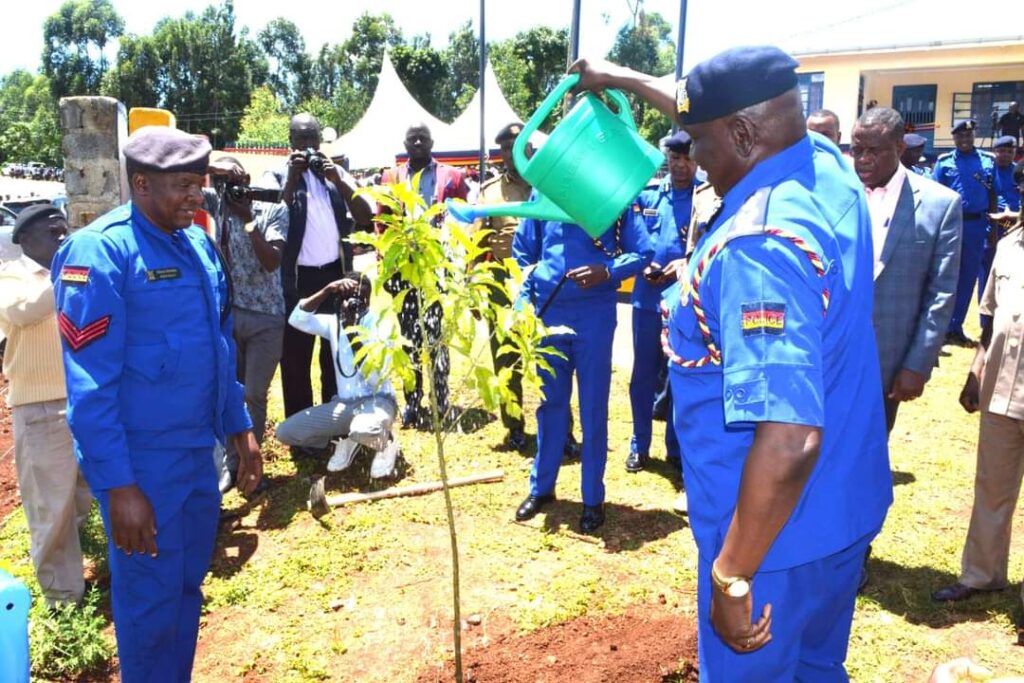
The Deputy Inspector General Kenya Police Service, Mr. Douglas Kanja has today opened Gambogi Police Station in HAMISI CONSTITUENCY in VIHIGA COUNTY. The Police station building houses the offices of the OCS, Deputy OCS, Crime Offices and Stores. In addition to regular police cells, the new Police Station has Mental cell and VIP cells. The station was built under the Constituency Development Fund (CDF) by the efforts of Area Member of Parliament, Hon. Charles Gimose of HAMISI CONSTITUENCY in order to bring down criminal activities within the area and also to bring police service near the public.
While addressing police officers and members of public, Mr. Kanja lauded the police-public partnership, particularly the effort made by the area MP and the CDF committee to construct the station. The DIG indicated that his core responsibility is to ensure that the Service maintains good relationship with the public. He added that members of the public should visit the station freely and report criminal activities going on in the area in the spirit of community policing.
After listening to the many requests put to him, the DIG assured all local leaders that the concerns would be addressed, and that the first step would be to improve infrastructure at the newly opened station. Additionally, a police dog will be deployed, as requested by leaders through the Regional Police Commander.
The Government has affirmed its commitment to supporting the growth of the Creative Economy to ensure that the sector contributes significantly to Kenya’s national development through job opportunities for the youths as well as wealth creation.
While speaking on Friday 29th September 2023, during the inaugural first-ever State-of-the Film Industry Summit, organized by the Kenya Film Classification Board (KFCB) in partnership with the Kenya Film and Television Professionals Association (KFTPA) and other industry stakeholders, which was held at the Nairobi Film Centre (NFC), the Ministry of Youth Affairs, the Arts and Sports, CS Hon. Ababu Namwamba EGH, said the Creative Economy is among key priorities of the Government as established in the Kenya Kwanza PLAN.
“The film sector has been treated badly. To correct that history of mistreatment, and neglect, we have ensured that this sector is anchored in the manifesto of the PLAN on what the Government desires for this key sector of the economy”, the CS said, adding that among the five pillars of the Bottom-Up Economic Transformation Agenda (BETA), the fifth pillar is all about transforming the film sector into an industry that sustains decent livelihoods.
Hon. Namwamba stated that the Government through his Ministry is championing key reforms and initiatives aimed at transforming the Creative Economy with the key focus of putting money in the pockets of creatives, and sportsmen and women who have continued to fly the Kenyan flag high on the local and international stage.
The CS lauded the first-ever film summit, noting that it resonated well with his Ministry’s agenda, specifically the TalantaHela Initiative. “Our focus is to ensure that we have an industry that is profitable. To do so, we need to invest in original quality production outlets and exhibition spaces,” the CS said.
He further said that monetizing talent under the #Talenta Hela’ which basically means ‘putting money in the pockets of creatives and sports persons, is the top-most priority of the Government, emphasizing that the 5th Administration is banking on the Creative Economy as one of the quick-win sectors in fostering economic recovery and opening new opportunities for the youth under the economic blueprint of BETA.
The CS revealed that his Ministry has embarked on the process of reviewing and where necessary, developing new policies and legislative documents, noting that one of the key aims of these reforms is to provide mechanisms for the establishment of a Film Fund to facilitate access to rebates for both local and foreign filmmakers. The Fund will also provide access to finance for the acquisition of modern equipment and film production infrastructure by local filmmakers, and promotion of the country as a filming destination.
On royalties and revenue streams for creatives, the CS said that the Government is keen on restructuring the investment and financing space in a manner that attracts investors. “We must invest in infrastructure equipment, quality production, and training facilities that can support the industry,” he stated.
As part of recognizing and appreciating creatives, the CS further revealed that his Ministry is putting together an award scheme that is unique, prestigious, and accompanied by a serious financial award.
The CS lauded KFCB, KFTPA, and all industry stakeholders for spearheading the Summit, stating that there is a need to collectively champion programs and initiatives that will spur the growth of the Kenyan Creative Economy.
On the sidelines of the Summit, the CS chaired a meeting with Netflix officials, led by Ms. Shola Sanni, Director of Public Policy, Sub-Saharan Africa, and discussed collaboration between Kenya and Netflix in content monitoring, moderation, regulation, and monetization, among other issues.
On his part, Mr. Ismail Maalim Madey, PS, State Department for Youth Affairs and The Arts, reiterated the Government’s commitment to revamp and spur the Creative Economy.
“The Government is keen on revamping the Orange Economy by creating enablers that will facilitate investments in the film industry,” the PS said.
Maalim urged stakeholders in the Creative industry to support initiatives that the Government, through the Ministry of Youth Affairs, the Arts and Sports is fronting to spur the Creative Economy in line with BETA.
The KFCB Ag. CEO, Joel Wamalwa, affirmed the Board’s commitment to supporting initiatives geared towards identifying and nurturing talents among the youths in the Creative sector for job opportunities and wealth creation, through a facilitative regulatory environment that will spur the growth of the Creative Economy.
In a move geared towards creating a facilitative regulatory environment for the Creative Economy to thrive, Wamalwa said that the Board, through the Ministry of Youth Affairs, the Arts and Sports, has proposed a review of the Films and Stage Plays Act Regulations and Guidelines. Through the regulations and guidelines, the Government has proposed a 15% reduction in licensing fees for local filmmakers.
“As KFCB evolves into a 21st-century film regulator, we want to reassure our stakeholders in the entire value chain that we will live up to our brand promise; of Safeguarding Your Reel World’. We shall ensure that we remain progressive in our policy propositions while safeguarding our Kenyan culture, values, and national aspirations,” Wamalwa said.
Themed: Breaking barriers and shaping the future, the Summit sought to provide a platform for industry professionals to gain insights into the latest trends, policy matters, challenges, and advancements within the film sector as well as advocate for the industry’s interests.
Other speakers at the Summit were KFCB’s Board Chairperson Hon. Njogu Wa Njoroge HSC, the Kenya Film Commission CEO, Mr. Timothy Owase, the Media Council of Kenya (MCK) CEO, Mr. David Omwoyo, Digital Strategist Dennis Itumbi, KFTPA, Chairperson, Dr. Ezekiel Onyango, Kenya Cultural Centre incorporating Kenya National Theatre, KNT, CEO, Mr. Michael Pundo, and representatives from local Creative space.
The International Federation of Landscape Architects (IFLA) World Congress in collaboration with the Architectural Association of Kenya (AAK) has officially kicked off the 8th ILFA African symposium in Nairobi, Kenya.
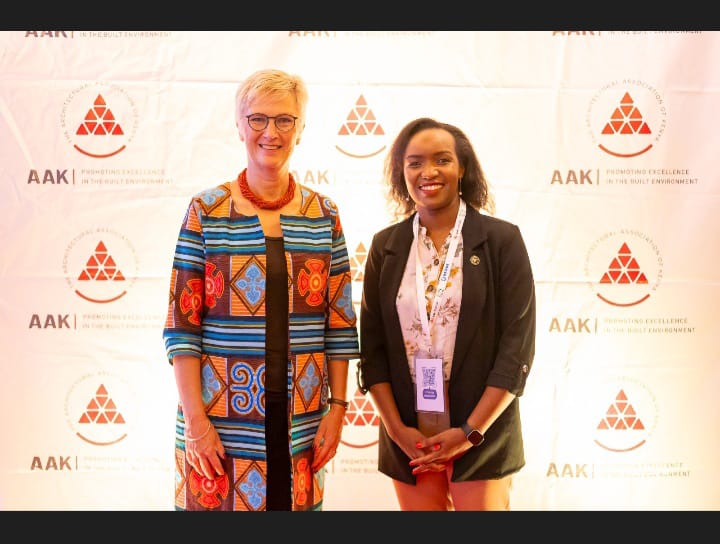
Speaking during the event, Caroline Vicini, Swedish Ambassador to Kenya praised the efforts made by the built environment professionals of both countries to learn from each other and discuss climate change.
“It is important to build smart, healthy and efficient cities where people can integrate, communicate and move freely. Landscape architecture plays an important role in shaping sustainable development,” she noted.
According to the United Nations Department of Economic and Social Affairs, by 2015, most of Africa’s population living in urban areas rose from 27 percent in 1950 to 40 per cent in 2015. The population is projected to rise by 60 per cent in 2050. Consequently, this worsens the climate change crisis.
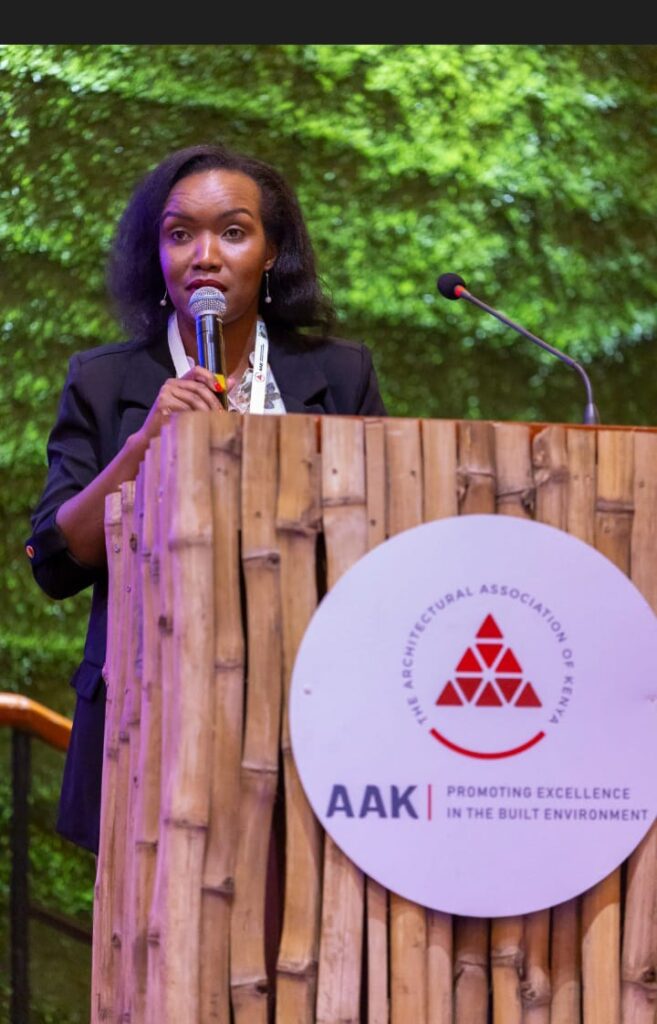
Florence Nyole, Architectural Association of Kenya President addressing participants during the congress.
In her remarks, Florence Nyole, President, Architectural Association of Kenya stressed on the significance of cooperation within the built environment as it enabled the professionals to reach shared environmental goals that rest on afoundation of social sustainability.
She added “This world congress will be an opportunity to promote learning and collaboration among built environment professions to find solutions to the major global challenges. The city of Nairobi relates very closely to the congress theme, with rapid urbanization, dealing with climate change, and adequate housing as priority issues.”
The congress under the theme “EMERGENT INTERACTION” aims at strengthening the landscape architecture in relation to Agenda 2030 through exploring new forms of collective problem-solving, borderless strategies and possible networks of ideas and cooperation while keeping the issues of climate change, social inequality and biodiversity-loss at the forefront.
The world congress which brings together a diverse group of professionals from different facets of the built environment provides an opportunity to promote learning and collaboration to find solutions to major global challenges.
The association remains at the forefront of working towards reducing the impact of urbanizaon and the resultant Climate Change in the country througha homegrown Green Building Rang Tool that is focused on rang buildings based on our local context called the Safari Green Building Index (SGBI).
In addition, AAK has launched several programmes such as the Grow-A-Classroom Programme where they aim to increase the tree cover for Kenya within the existing large parcels of land occupied by public schools. The trees will be sustainably harvested and used to build classrooms for the growing population in the country.
The AAK is a premier association that was formed back in 1967, with Architects, Planners, Engineers and Quanty Surveyors as the first 4 groups of professionals, who today remain the only regulated professionals in the built environment.