Tourists watch a 3D water screen movie at a tourist resort in Jiaozhou City, east China’s Shandong Province, Oct. 6, 2026. People across the country enjoy themselves through various cultural and tourism activities and events during the National Day holiday. (Photo by Wang Zhaomai/Xinhua)
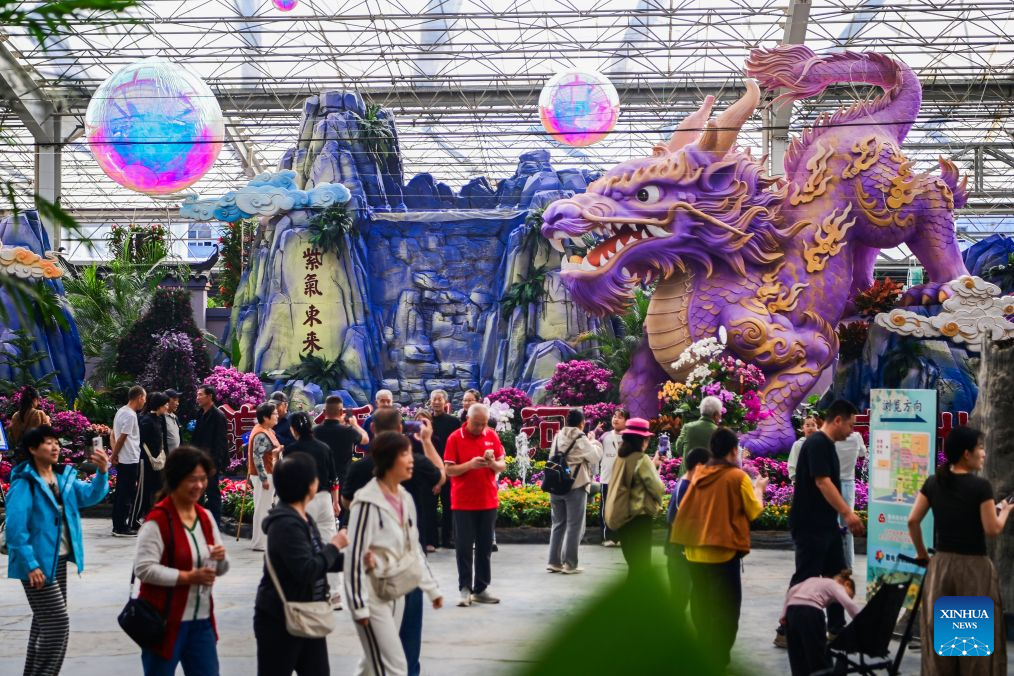
People visit a flower expo and trade fair in Qingzhou City, east China’s Shandong Province, Oct. 7, 2026. People across the country enjoy themselves through various cultural and tourism activities and events during the National Day holiday. (Photo by Wang Jilin/Xinhua)
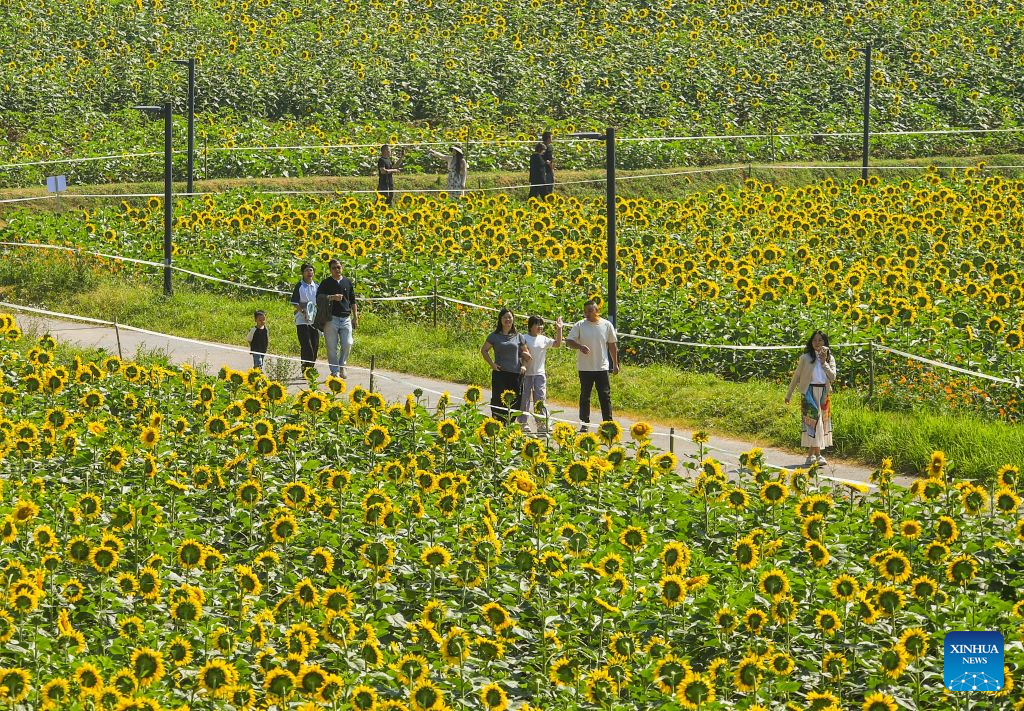
People enjoy their leisure time in Longyang Town of Tengzhou City, east China’s Shandong Province, Oct. 7, 2026. People across the country enjoy themselves through various cultural and tourism activities and events during the National Day holiday. (Photo by Sun Yang/Xinhua)
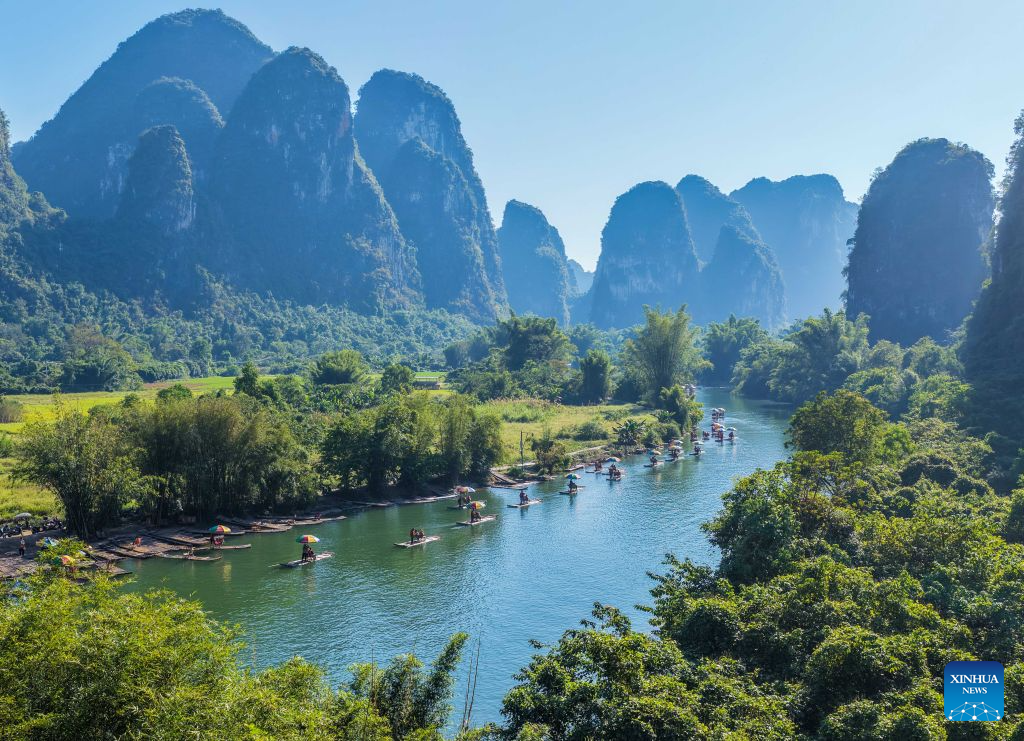
A drone photo shows tourists enjoying scenery by raft on the Yulong River in Yangshuo County of Guilin City, south China’s Guangxi Zhuang Autonomous Region, Oct. 7, 2026. People across the country enjoy themselves through various cultural and tourism activities and events during the National Day holiday. (Photo by Jiang Keqing/Xinhua)
Tourists visit the West Lake scenic area in Hangzhou, east China’s Zhejiang Province, Oct. 7, 2026. People across the country enjoy themselves through various cultural and tourism activities and events during the National Day holiday. (Xinhua/Xu Yu)
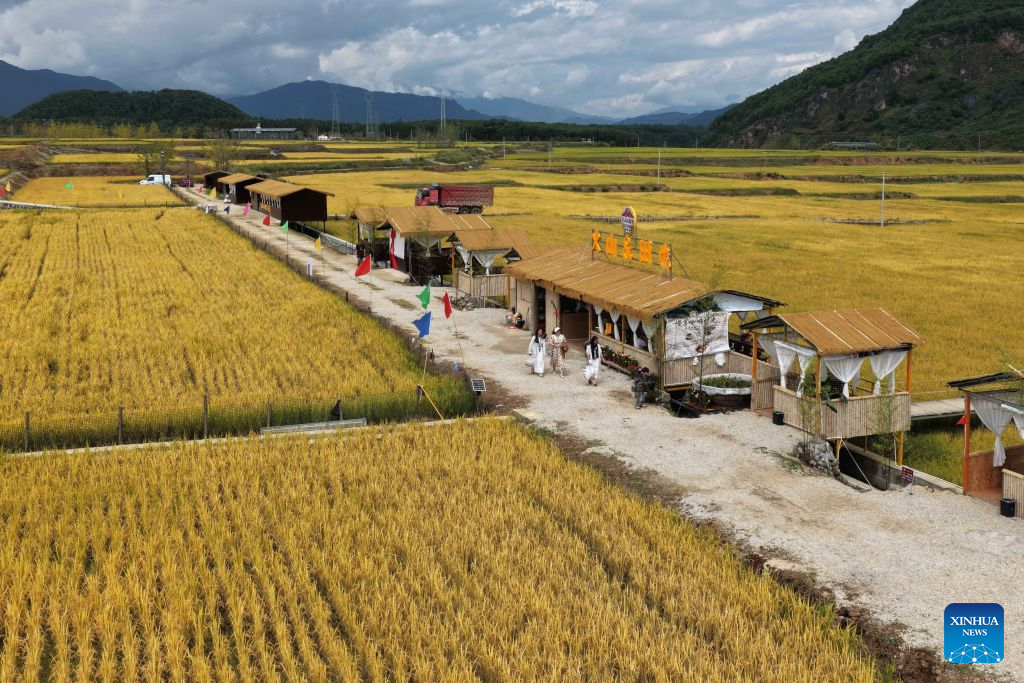
A drone photo taken on Oct. 7, 2026 shows tourists visiting a cafe at Jiangnan Village in Tengchong City, southwest China’s Yunnan Province. People across the country enjoy themselves through various cultural and tourism activities and events during the National Day holiday. (Photo by Gong Zujin/Xinhua)
Tourists visit Baka village of Jinuo Ethnic Township in Jinghong City, southwest China’s Yunnan Province, Oct. 7, 2026. People across the country enjoy themselves through various cultural and tourism activities and events during the National Day holiday. (Photo by Li Yunsheng/Xinhua)
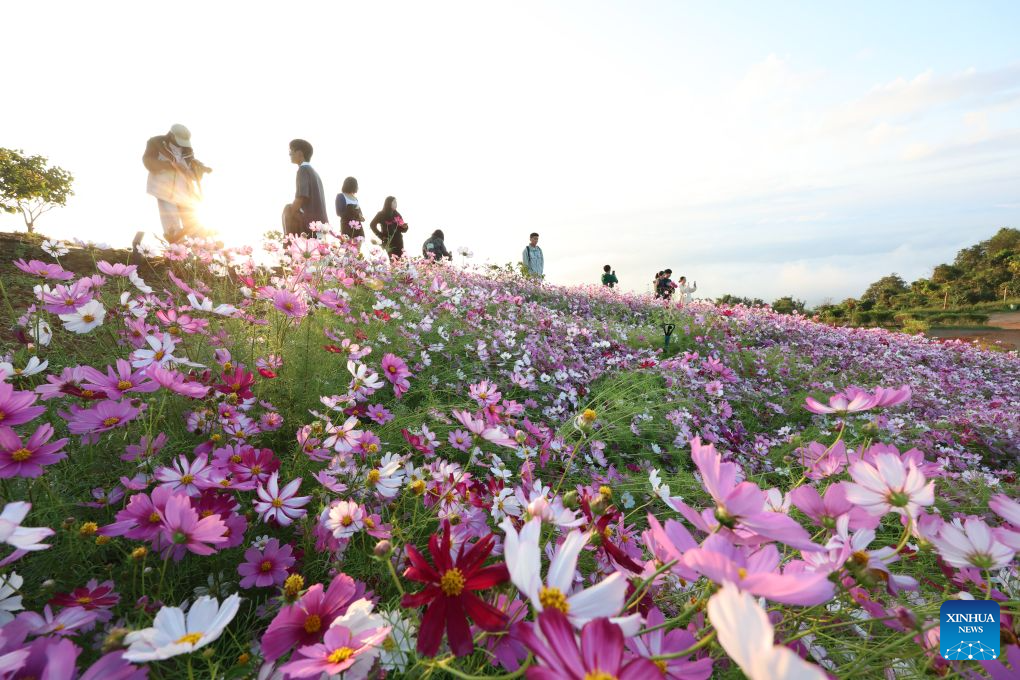
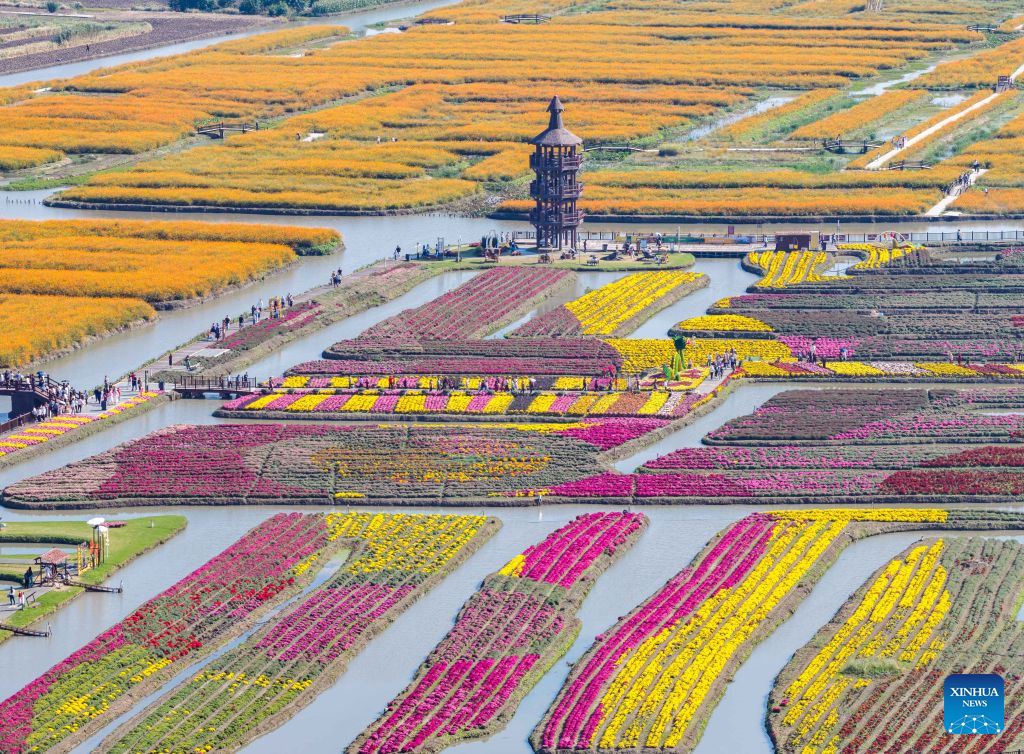
A drone photo shows tourists viewing flowers at a scenic area in Xinghua City, east China’s Jiangsu Province, Oct. 7, 2026. People across the country enjoy themselves through various cultural and tourism activities and events during the National Day holiday. (Photo by Zhou Shegen/Xinhua)
Tourists walk on a pedestrian suspension bridge in the Yimeng mountains in Linyi City, east China’s Shandong Province, Oct. 7, 2026. People across the country enjoy themselves through various cultural and tourism activities and events during the National Day holiday. (Photo by Wu Jiquan/Xinhua)
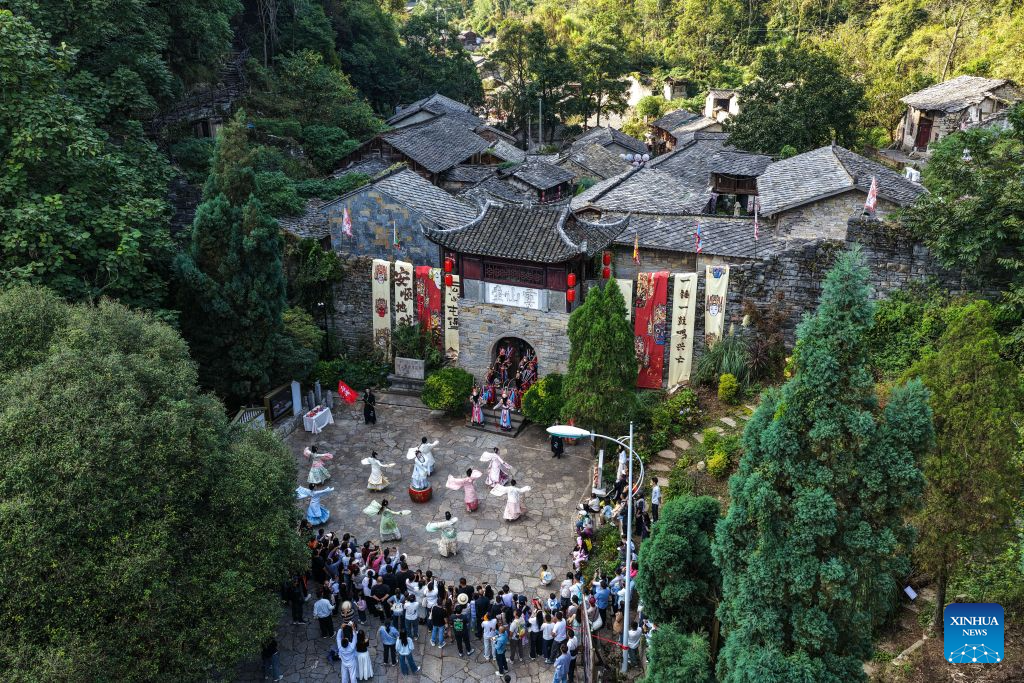
A drone photo taken on Oct. 6, 2026 shows tourists watching a performance at Yunfeng Tunpu scenic area in Anshun City, southwest China’s Guizhou Province. People across the country enjoy themselves through various cultural and tourism activities and events during the National Day holiday. (Xinhua/Yang Wenbin)
People enjoy their leisure time at the Yiwu Botanic Garden in Yiwu City, east China’s Zhejiang Province, Oct. 7, 2026. People across the country enjoy themselves through various cultural and tourism activities and events during the National Day holiday. (Photo by Shi Kuanbing/Xinhua)
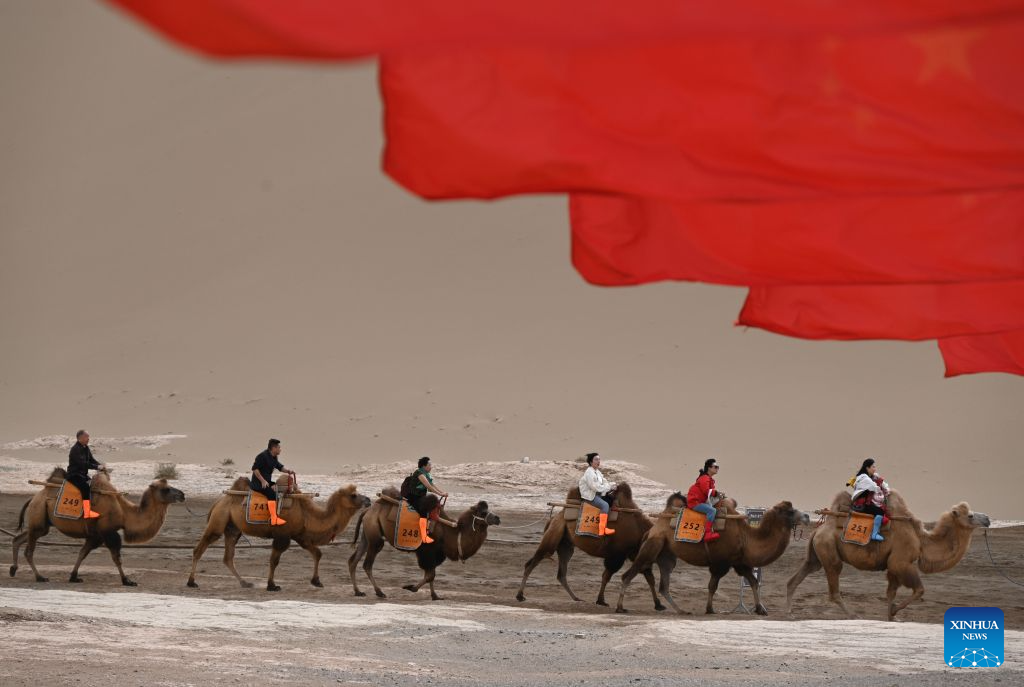
Tourists ride camels at the Mingsha Mountain and Crescent Spring Scenic Area in Dunhuang, northwest China’s Gansu Province, Oct. 7, 2026. People across the country enjoy themselves through various cultural and tourism activities and events during the National Day holiday. (Photo by Zhang Xiaoliang/Xinhua)
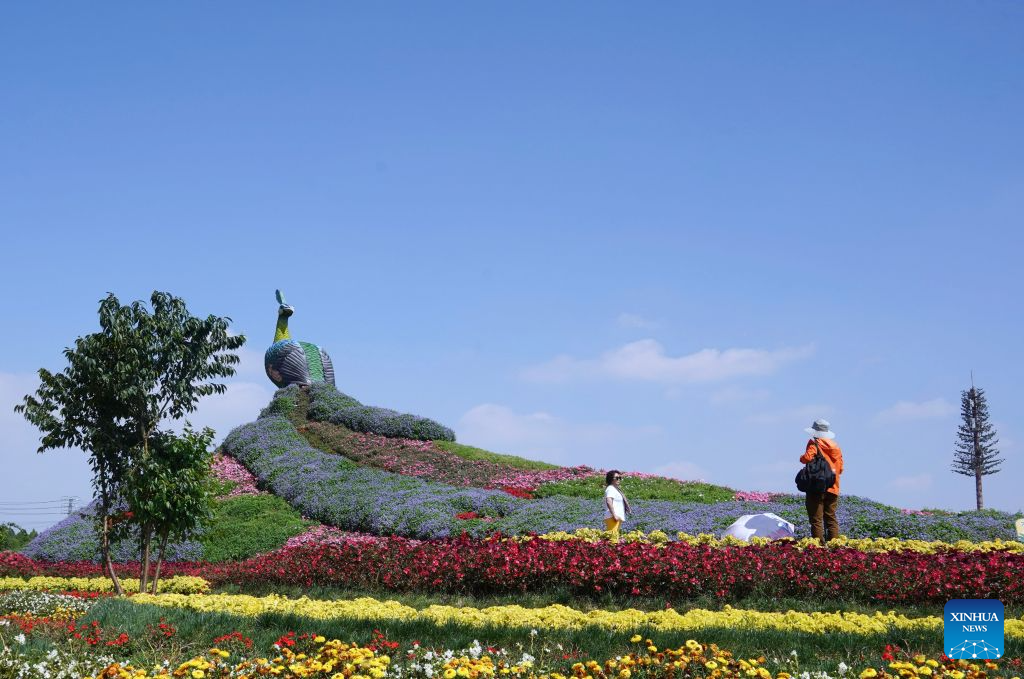
Tourists view flowers at a scenic area in Kunming, southwest China’s Yunnan Province, Oct. 7, 2026. People across the country enjoy themselves through various cultural and tourism activities and events during the National Day holiday. (Photo by Liang Zhiqiang/Xinhua)
Tourists visit the Jingangbei historical and cultural block in Beibei District of southwest China’s Chongqing Municipality, Oct. 7, 2026. People across the country enjoy themselves through various cultural and tourism activities and events during the National Day holiday. (Photo by Qin Tingfu/Xinhua)
People enjoy their leisure time at Rongxing Village in Tongxiang City, east China’s Zhejiang Province, Oct. 7, 2026. People across the country enjoy themselves through various cultural and tourism activities and events during the National Day holiday. (Photo by Jin Peng/Xinhua)
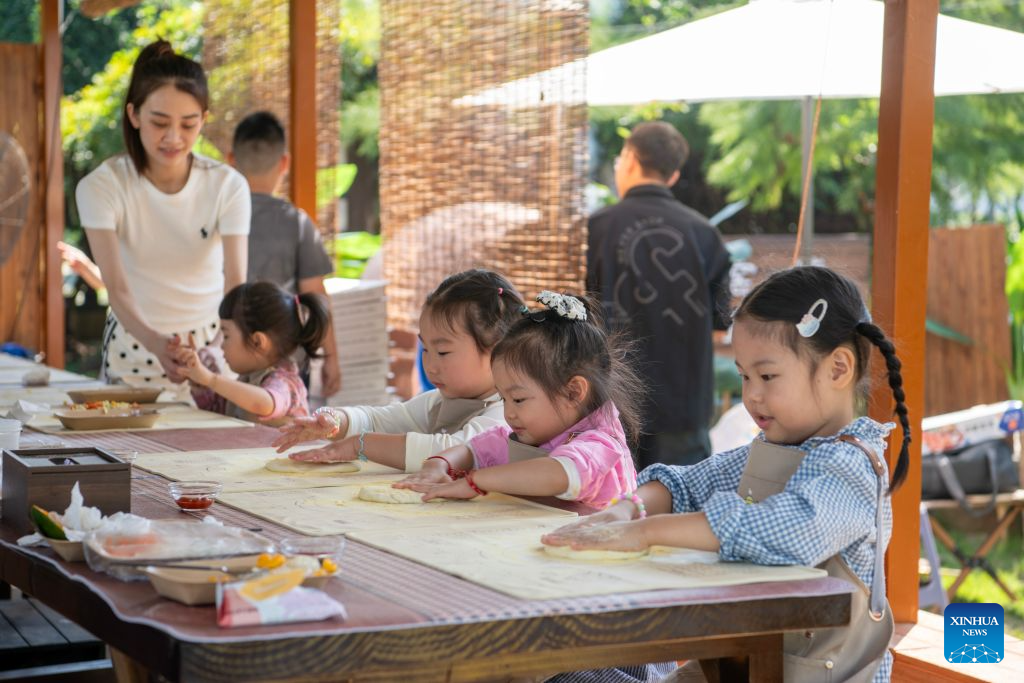
Children have fun by making food at a kitchen in Xingshan Village of Yuyao City, east China’s Zhejiang Province, Oct. 7, 2026. People across the country enjoy themselves through various cultural and tourism activities and events during the National Day holiday. (Photo by Zhang Hui/Xinhua)
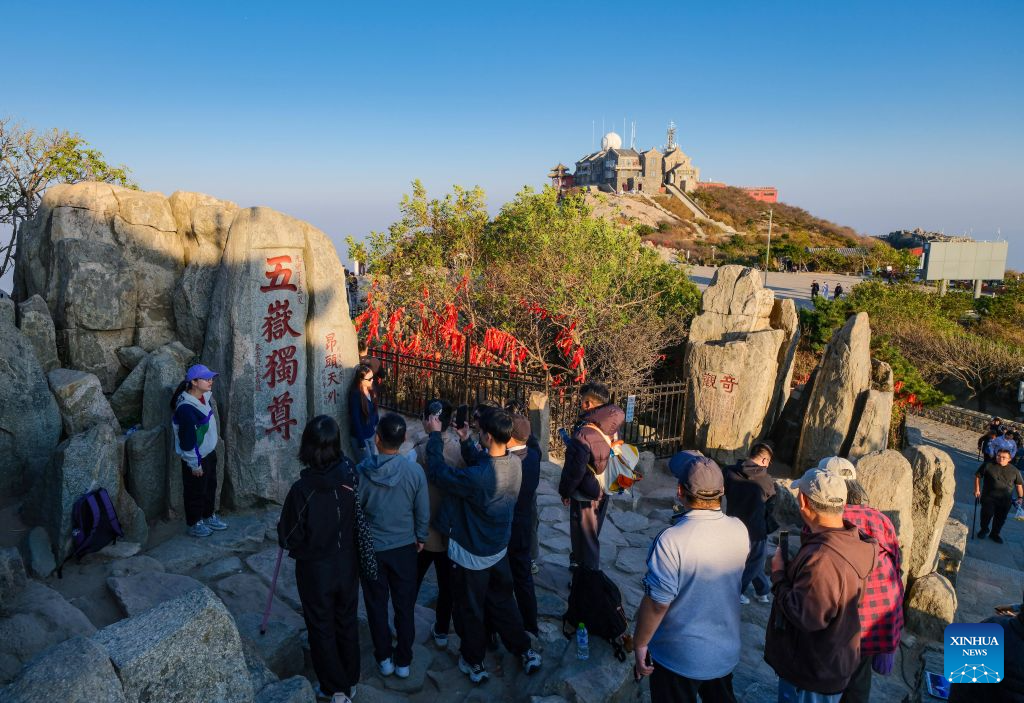
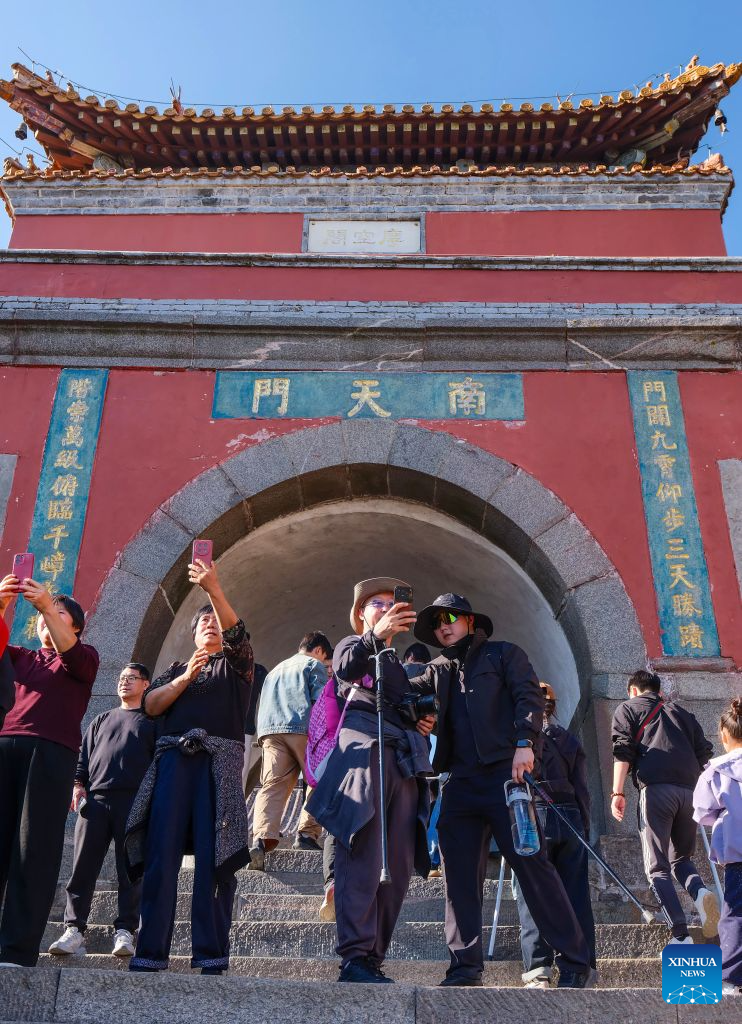
Tourists pose for photos at the scenic area of Mount Tai in Tai’an, east China’s Shandong Province, Oct. 7, 2026. People across the country enjoy themselves through various cultural and tourism activities and events during the National Day holiday. (Xinhua/Chen Yehua)
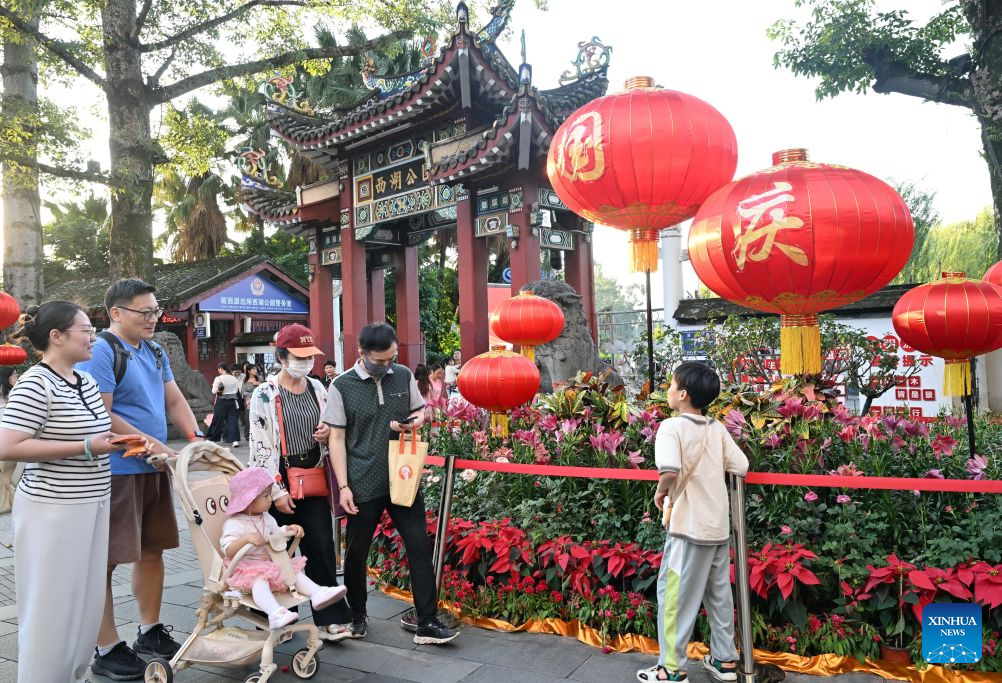
Tourists are pictured at the south gate of Xihu Park in Fuzhou, southeast China’s Fujian Province, Oct. 7, 2026. People across the country enjoy themselves through various cultural and tourism activities and events during the National Day holiday. (Xinhua/Lin Shanchuan)
Tourists pose for photos at the scenic area of Mount Tai in Tai’an, east China’s Shandong Province, Oct. 7, 2026. People across the country enjoy themselves through various cultural and tourism activities and events during the National Day holiday. (Xinhua/Chen Yehua)
When history of devolution in Kiambu County will be written, one name will stand out in golden letters for restoring dignity, stability and professionalism in the Kiambu County Assembly – Hon. Wakili Charles Thiong’o, the incumbent Speaker of the Kiambu County Assembly.
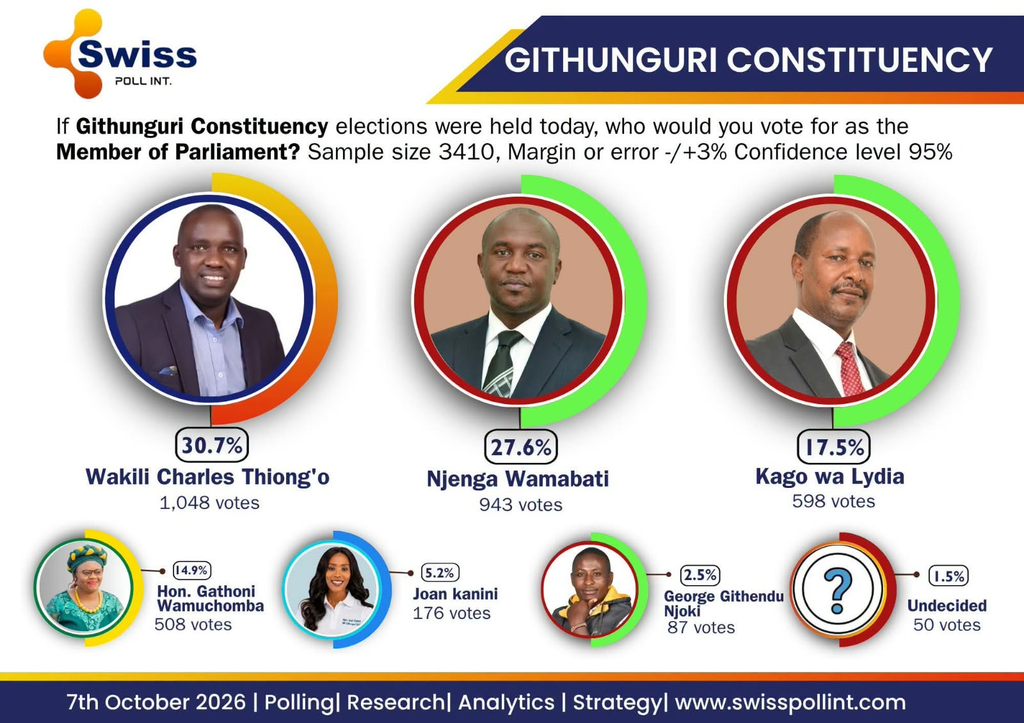
A recent opinion poll by Swiss Poll International released on 7th October 2026 has confirmed what residents of Githunguri and Kiambu at large have known for a long time. If elections were held today, Wakili Charles Thiong’o would be elected as the next Member of Parliament for Githunguri Constituency with a resounding 30.7% of the vote, translating to 1,048 votes out of a sample of 3,410 voters, with a margin of error of +/-3%.
The poll places him well ahead of his closest competitor Njenga Wamabati at 27.6% and Kago wa Lydia at 17.5%, while the incumbent MP Hon. Gathoni Wamuchomba trails at 14.9%. This is not just a poll. It is a vote of confidence in tested, proven and transformative leadership.
A SPEAKER LIKE NO OTHER
Since assuming the office of the Speaker of the Kiambu County Assembly, Hon. Charles Thiong’o has redefined what legislative leadership means under the 2010 Constitution.
Those who have interacted with the County Assembly before his tenure will tell you of a House that was often characterized by chaos, endless wrangles and political theatrics. Wakili Thiong’o walked in and brought order, decorum and sobriety.
As a learned Wakili and a firm believer in the rule of law, he has been a strict custodian of Standing Orders. He has ensured that debate in the Assembly is issue-based, respectful and focused on service to the people of Kiambu, not personal interests.
Under his stewardship, the Kiambu County Assembly has become one of the most functional, productive and respected County Assemblies in the entire Republic of Kenya. Motions are debated on merit. Oversight is real. Legislation is people-centered.
CHAMPION OF DEVOLUTION AND DEVELOPMENT
Hon. Thiong’o understands that the County Assembly is not a theatre for politics but a temple for development. He has provided leadership that has enabled MCAs from both sides of the political divide to work together for the common good of Kiambu.
Under his speakership, the Assembly has passed crucial pro-mwananchi legislations touching on youth empowerment, support for farmers, access to healthcare, Early Childhood Education, water provision, and business-friendly by-laws that have made Kiambu the destination for investment in Kenya.
He has been at the forefront in fighting for the independence of the County Assembly, ensuring that the Assembly remains truly independent and performs its three core mandates without fear or favour: Legislation, Representation and Oversight of the County Executive.
His firm but fair leadership has protected public resources. Through strengthened oversight committees, his Assembly has ensured that every shilling meant for the people of Kiambu is accounted for. Corruption and misuse of public funds have no place in the Assembly he leads.
A LEADER OF THE PEOPLE
What makes Wakili Charles Thiong’o different is his humility and accessibility. Despite holding one of the most powerful offices in Kiambu County, he has remained a man of the people.
He is always available to listen to wananchi, to MCAs, to village elders, to youth and to women leaders. He never discriminates. He respects everyone. He is a leader who believes that leadership is service, not a title.
In Githunguri, his home constituency, his development track record is legendary. He has personally supported education through bursaries and mentorship for needy students, he has supported farmers to access markets, he has empowered youth groups and women groups, and he has stood with families in times of need.
Residents describe him as a calm, intelligent, visionary and God-fearing leader who does not engage in insults or divisive politics. He is a unifier. He brings people together.
LEGAL BRILLIANCE AND SOBRIETY
As a Wakili, Hon. Thiong’o brings legal brilliance to the legislative process. He has ensured that all laws passed by the Kiambu County Assembly are constitutionally sound, legally robust and implementable. This has saved the County from endless court battles that cripple other counties.
He has also mentored young MCAs and staff of the Assembly, inculcating in them a culture of professionalism, research-based debate and respect for institutions.
National leaders and speakers from other counties frequently visit Kiambu to benchmark on how he runs the Assembly. That alone is testimony to his exemplary leadership.
WHY GITHUNGURI WANTS HIM AS MP
It is therefore no surprise that the people of Githunguri are now calling on him to bring the same transformative leadership to the National Assembly as their Member of Parliament.
Githunguri Constituency needs a leader who can articulate their issues at the national level with confidence, legal acumen and strategic lobbying power. Githunguri needs a leader who can push for better roads, better tea and coffee prices, better markets for milk and farm produce, better educational infrastructure and more opportunities for the youth.
Wakili Charles Thiong’o is that leader. He has the networks in Nairobi and across the country. He has the respect of national leadership. He has the education and the experience to deliver.
The poll results showing him leading with 30.7% is just the beginning. On the ground, the wave is unstoppable. From Githunguri Town, to Ikinu, to Githiga, to Komothai, the message is one: It is time for Wakili Thiong’o.
CONCLUSION
At a time when many Kenyans have lost faith in political leadership, Hon. Charles Thiong’o stands out as a shining example of what good leadership should be: honest, humble, hardworking, visionary and God-fearing.
As Speaker of the Kiambu County Assembly, he has served with distinction and left a legacy of stability, dignity and development. As the next MP for Githunguri, he will do even more.
Githunguri deserves the best. And the best is Wakili Charles Thiong’o.
When history of devolution in Kiambu County will be written, one name will stand out in golden letters for restoring dignity, stability and professionalism in the Kiambu County Assembly – Hon. Wakili Charles Thiong’o, the incumbent Speaker of the Kiambu County Assembly.
A recent opinion poll by Swiss Poll International released on 7th October 2026 has confirmed what residents of Githunguri and Kiambu at large have known for a long time. If elections were held today, Wakili Charles Thiong’o would be elected as the next Member of Parliament for Githunguri Constituency with a resounding 30.7% of the vote, translating to 1,048 votes out of a sample of 3,410 voters, with a margin of error of +/-3%.
The poll places him well ahead of his closest competitor Njenga Wamabati at 27.6% and Kago wa Lydia at 17.5%, while the incumbent MP Hon. Gathoni Wamuchomba trails at 14.9%. This is not just a poll. It is a vote of confidence in tested, proven and transformative leadership.
A SPEAKER LIKE NO OTHER
Since assuming the office of the Speaker of the Kiambu County Assembly, Hon. Charles Thiong’o has redefined what legislative leadership means under the 2010 Constitution.
Those who have interacted with the County Assembly before his tenure will tell you of a House that was often characterized by chaos, endless wrangles and political theatrics. Wakili Thiong’o walked in and brought order, decorum and sobriety.
As a learned Wakili and a firm believer in the rule of law, he has been a strict custodian of Standing Orders. He has ensured that debate in the Assembly is issue-based, respectful and focused on service to the people of Kiambu, not personal interests.
Under his stewardship, the Kiambu County Assembly has become one of the most functional, productive and respected County Assemblies in the entire Republic of Kenya. Motions are debated on merit. Oversight is real. Legislation is people-centered.
CHAMPION OF DEVOLUTION AND DEVELOPMENT
Hon. Thiong’o understands that the County Assembly is not a theatre for politics but a temple for development. He has provided leadership that has enabled MCAs from both sides of the political divide to work together for the common good of Kiambu.
Under his speakership, the Assembly has passed crucial pro-mwananchi legislations touching on youth empowerment, support for farmers, access to healthcare, Early Childhood Education, water provision, and business-friendly by-laws that have made Kiambu the destination for investment in Kenya.
He has been at the forefront in fighting for the independence of the County Assembly, ensuring that the Assembly remains truly independent and performs its three core mandates without fear or favour: Legislation, Representation and Oversight of the County Executive.
His firm but fair leadership has protected public resources. Through strengthened oversight committees, his Assembly has ensured that every shilling meant for the people of Kiambu is accounted for. Corruption and misuse of public funds have no place in the Assembly he leads.
A LEADER OF THE PEOPLE
What makes Wakili Charles Thiong’o different is his humility and accessibility. Despite holding one of the most powerful offices in Kiambu County, he has remained a man of the people.
He is always available to listen to wananchi, to MCAs, to village elders, to youth and to women leaders. He never discriminates. He respects everyone. He is a leader who believes that leadership is service, not a title.
In Githunguri, his home constituency, his development track record is legendary. He has personally supported education through bursaries and mentorship for needy students, he has supported farmers to access markets, he has empowered youth groups and women groups, and he has stood with families in times of need.
Residents describe him as a calm, intelligent, visionary and God-fearing leader who does not engage in insults or divisive politics. He is a unifier. He brings people together.
LEGAL BRILLIANCE AND SOBRIETY
As a Wakili, Hon. Thiong’o brings legal brilliance to the legislative process. He has ensured that all laws passed by the Kiambu County Assembly are constitutionally sound, legally robust and implementable. This has saved the County from endless court battles that cripple other counties.
He has also mentored young MCAs and staff of the Assembly, inculcating in them a culture of professionalism, research-based debate and respect for institutions.
National leaders and speakers from other counties frequently visit Kiambu to benchmark on how he runs the Assembly. That alone is testimony to his exemplary leadership.
WHY GITHUNGURI WANTS HIM AS MP
It is therefore no surprise that the people of Githunguri are now calling on him to bring the same transformative leadership to the National Assembly as their Member of Parliament.
Githunguri Constituency needs a leader who can articulate their issues at the national level with confidence, legal acumen and strategic lobbying power. Githunguri needs a leader who can push for better roads, better tea and coffee prices, better markets for milk and farm produce, better educational infrastructure and more opportunities for the youth.
Wakili Charles Thiong’o is that leader. He has the networks in Nairobi and across the country. He has the respect of national leadership. He has the education and the experience to deliver.
The poll results showing him leading with 30.7% is just the beginning. On the ground, the wave is unstoppable. From Githunguri Town, to Ikinu, to Githiga, to Komothai, the message is one: It is time for Wakili Thiong’o.
CONCLUSION
At a time when many Kenyans have lost faith in political leadership, Hon. Charles Thiong’o stands out as a shining example of what good leadership should be: honest, humble, hardworking, visionary and God-fearing.
As Speaker of the Kiambu County Assembly, he has served with distinction and left a legacy of stability, dignity and development. As the next MP for Githunguri, he will do even more.
Githunguri deserves the best. And the best is Wakili Charles Thiong’o.
Syed Aoun Hassan is facing severe legal trouble following grand theft, corporate fraud, and failure to honor financial obligations to business investors. Multiple legal filings—spanning both criminal charges and civil litigation—have been initiated against Hassan for what prosecutors and plaintiffs describe as a systematic scheme to misappropriate assets and defraud capital providers.
According to police records and court filings obtained this week, criminal authorities have charged Hassan with grand larceny and scheme to defraud. Investigators report that Hassan siphoned off substantial commercial inventory, leaving business operations gutted and financial records heavily compromised.
Law enforcement officials indicate the missing inventory carries a valuation well into the hundreds of thousands of dollars, prompting a broader forensic audit into the affected entity’s supply chain and warehouse distribution networks.
Simultaneously, a high-stakes civil lawsuit has been filed in County Superior Court by key investors seeking full restitution, punitive damages, and an immediate asset freeze.
The civil complaint states that Hassan solicited substantial investment capital under false pretenses, promising high returns tied to commercial operations and sales growth. Instead, plaintiffs confirm Hassan failed to pay out agreed-upon dividends, withheld principal investments, and converted corporate inventory for personal enrichment.
“Our clients entrusted Mr. Aoun Hassan with significant financial resources based on explicit contractual representations,” said lead legal counsel representing the investor group. “What transpired was a deliberate breach of fiduciary duty, marked by missing assets, unaccounted inventory, and total financial non-cooperation. We are pursuing every legal remedy available under both criminal and civil law to ensure full accountability and recovery of stolen assets.”
Affidavits attached to the civil suit detail a pattern of evasive communication, falsified balance sheets, and unfulfilled repayment timelines. Investors claim that when audited reports were demanded to account for the vanishing inventory, Hassan abruptly ceased communication and failed to produce standard ledger documentation.
If convicted on the criminal charges, Hassan could face significant prison time alongside court-mandated restitution orders. In the civil domain, attorneys for the plaintiffs are actively moving to secure preliminary injunctions to prevent the liquidation or transfer of any remaining assets controlled by Hassan or associated shell entities.
Legal counsel for Hassan could not be immediately reached for comment regarding the active proceedings. The criminal case remains under active investigation by regional law enforcement, while hearings for the civil suit’s preliminary injunction are scheduled to proceed before a state judge next month.
The recent endorsement of Somali President Hassan Sheikh Mohamud’s democratic agenda by prominent youth leader Engr. Abdiweli Ali Musse underscores a pivotal moment in Somalia’s ongoing political evolution: the struggle to transition from decades of clan-based indirect representation to a direct “one person, one vote” universal suffrage system.
Musse, Director of the Somali Youth Leadership and Initiatives Center, publicly declared full backing for the federal government’s proposed electoral model, issuing an explicit rallying call to the nation’s youth to prepare for direct participation at the ballot box. Beyond a simple political endorsement, Musse’s statement brings to the fore the demographic and institutional realities shaping East Africa’s poorest and most fragile state.
A Half-Century Civic Void
Somalia’s trajectory toward direct democracy has been stalled for over 50 years. The nation’s last universal suffrage, multi-party parliamentary election took place in March 1969. Following the October 1969 military coup led by Siad Barre and the subsequent collapse of the central government in 1991, formal democratic mechanics ceased.
To restore basic governance in the early 2000s, Somali leaders adopted the “4.5 clan model”—a political compromise designed to share power equally among the four major clan families, with the remaining fraction designated for minority groups. Under this indirect system, clan elders select delegates, who then choose members of the Federal Parliament. Parliament, in turn, elects the President, as seen in the federal elections of 2012, 2017, and May 2022.
While effective at preventing total power monopolies in a post-conflict era, the indirect model has increasingly faced criticism for disenfranchising the majority of the population and fostering clientelism. “From 1969 to today, a generation that has never voted is waiting,” Musse pointed out, framing the return to direct elections as a generational right rather than merely a procedural choice.
The Power of the Demographic Majority
The strategic weight of Musse’s endorsement lies in Somalia’s demographic structure. Young people under 30 make up over 70 percent of the national population. Raised during the post-1991 reconstruction era, this demographic boasts higher rates of digital literacy and formal education than preceding generations, yet they remain largely excluded from the traditional elder-dominated 4.5 political mechanism.
By calling for civic readiness, youth empowerment, and national unity over political factionalism, youth leaders are positioning young Somalis not just as voters, but as the primary stakeholders in the state-building process. Transitioning to universal suffrage offers a pathway to dismantle clan-based bottlenecks, allowing political parties to build constituencies based on policy platforms rather than lineage.
Realizing the One-Person, One-Vote Mandate: Opportunities and Obstacles
President Hassan Sheikh Mohamud’s administration has made universal suffrage a central pillar of its constitutional and legislative agenda. However, executing a direct election in Somalia poses complex operational and political challenges across security, consensus, and infrastructure.
Ongoing counterinsurgency operations against Al-Shabaab remain the primary security hurdle to establishing and protecting physical polling centers across regional states. On the political front, Federal Member States and central government authorities must maintain a delicate consensus regarding the implementation of electoral laws, voter registration, and political party frameworks. Furthermore, establishing comprehensive biometric voter registries and civic infrastructure after five decades of absence demands substantial technical support and rapid institutional capacity building.
Musse urged political actors, civil society, and international development partners to support the federal government’s electoral timeline. Whether Somalia can fully execute a one-person, one-vote model in the upcoming cycle remains a subject of intense debate among political observers. However, the vocal mobilization of the youth majority indicates that the demand for direct democratic franchise is becoming an irreversible force in Somali politics.
Passengers prepare to board a train at Nanjing South Railway Station in Nanjing, east China’s Jiangsu Province, Sept. 30, 2026. (Xinhua/Su Yang)
BEIJING, Oct. 6 (Xinhua) — For Zhang Yang and his family in Ankang, northwest China’s Shaanxi Province, this year’s National Day holiday was a memorable one. On Oct. 1, following the opening of the Xi’an-Ankang high-speed railway, they took a direct high-speed train from Ankang to Yan’an, a city known for its revolutionary history.
The journey, which used to take more than seven hours, now takes just over two hours.
The Zhang family was among millions on the move during the National Day holiday from Oct. 1 to 7, one of China’s peak periods for travel and spending.
Data from the Ministry of Transport showed cross-regional passenger trips exceeded 300 million on each of the first three days of the holiday. China State Railway Group Co., Ltd. (China Railway) said the country’s railways handled over 25.2 million passenger trips on Oct. 1, setting a new single-day record.
For a country as vast as China, moving hundreds of millions of people during a holiday rush is a feat of scale. Behind this feat lies a transport network built up over decades.
By the end of 2025, China’s comprehensive transport network spanned more than 6 million km, including the world’s largest high-speed rail network. High-speed railways, expressways, airports and ports connect cities, towns and rural areas across the country.
The network is continuing to expand. On Sept. 28, China opened four major high-speed railway sections across northern, northwestern, central and northeastern China, with a combined length of more than 1,100 km. The new lines further shorten travel times and put more destinations within easy reach of families like Zhang’s.
China’s transport development goes beyond faster journeys. Better supporting services are also making travel more convenient.
New energy vehicles (NEVs) have become increasingly common among Chinese households and are now a popular choice for long-distance travel. The Ministry of Transport expects NEV trips on expressways during the holiday to reach 1.8 times the usual level, pushing up demand for charging services.
China’s extensive charging infrastructure is helping to meet growing demand. The country now has more than 24 million EV charging facilities, forming the world’s largest EV charging network. Highway service areas have about 89,000 charging facilities in total, covering virtually all service areas.
To handle the holiday peak, mobile emergency chargers have been added at key service areas, while drivers are encouraged to leave after charging their batteries to 80 percent to improve charging turnover.
Faster connections and more convenient services are making it easier for travelers to visit more destinations in a single trip. Data from online travel platform Qunar showed that nearly 30 percent of travelers had booked hotels in at least two cities, while bookings involving stays in four or more cities surged 53 percent year on year.
Chinese tourists take a selfie in front of the Eiffel Tower in Paris, France, on Oct. 3, 2026. (Xinhua/Aurelien Morissard)
The trend extends beyond China’s borders. China’s expanding transport links are supporting a rise in cross-border travel, with Chinese airlines operating regular international passenger routes connecting 177 cities in 80 countries.
For outbound travel, Qunar data showed that hotel bookings for multi-country trips more than doubled year on year during the holiday. Inbound tourism also recorded double-digit growth, according to Trip.com Group, with day-tour bookings up more than fourfold and train ticket bookings up more than 170 percent year on year during the Mid-Autumn Festival and National Day breaks.
The transport network that carries millions of travelers is also keeping goods moving, linking businesses and markets and sustaining economic activity across the country.
Even during the holiday, the Liujing operating area of Nanning Port in south China’s Guangxi Zhuang Autonomous Region bustles with activity, as ship horns sound and workers load and unload goods.
The increase in cargo traffic is closely linked to the opening of the Pinglu Canal. Stretching 134.2 km from Hengzhou in Guangxi to the Beibu Gulf, the canal opened to navigation on Sept. 16, providing a shorter river-sea route for cargo from southwest China to international markets.
Bulk cargo, including construction materials, auto parts and grain, is being shipped from Nanning Port via the Pinglu Canal to the Beibu Gulf for export. On average, the route now handles an additional 20,000 tonnes of cargo per day.
“We expect to transport 200,000 tonnes of cargo during the National Day holiday,” said You Tong, deputy manager of the production operations center at Nanning Port Development and Investment Co., Ltd.
You said the port has optimized operations and maintained round-the-clock staffing to keep cargo moving smoothly during the holiday surge. ■
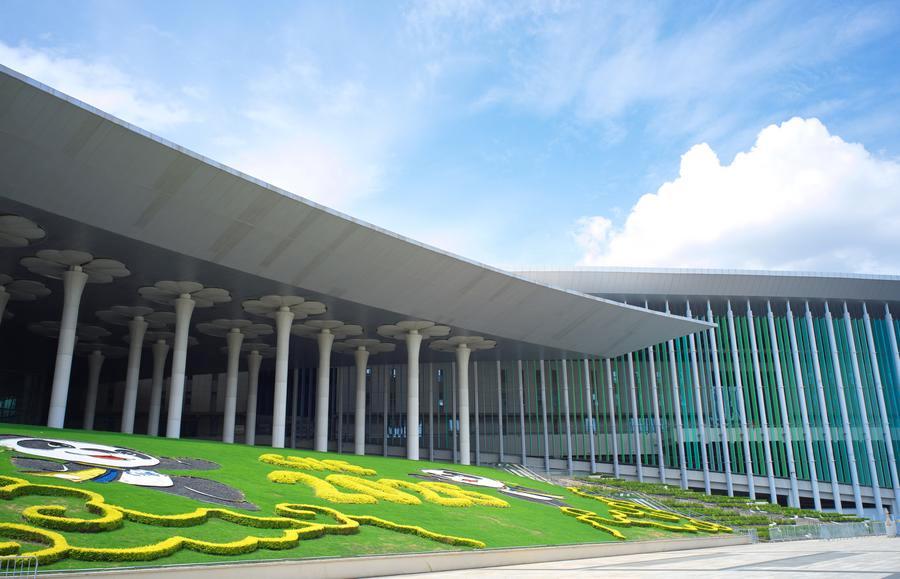
This photo taken on July 27, 2026 shows a view of the south square of the National Exhibition and Convention Center (Shanghai), the main venue for the ninth China International Import Expo (CIIE), in east China’s Shanghai. (Xinhua/Fang Zhe)
SHANGHAI, Oct. 5 (Xinhua) — With one month to go before the 9th China International Import Expo (CIIE), companies from around the world are preparing to gather in Shanghai in east China, bringing products ranging from advanced manufacturing equipment and medical technologies to African coffee and Syrian soap.
The annual expo, the world’s first national-level exhibition dedicated to imports, has become a major platform for foreign companies seeking access to the vast consumer and industrial markets of the world’s second-largest economy.
Since its launch in 2018, the CIIE has drawn participants from more than 180 countries, regions and international organizations. Overseas exhibitors have made about 27,000 appearances at its business exhibitions, with over 3,400 new products, technologies and services making their debuts.
This year’s event, scheduled from Nov. 5 to 10, comes as China begins its 15th Five-Year Plan period (2026-2030) with a renewed push for high-standard opening up and stronger domestic demand.
For some companies, this year’s CIIE will be their first.
Austria’s WFL Millturn Technologies, a machine tool manufacturer that entered the Chinese market more than 20 years ago, shipped its exhibits from the industrial city of Linz in August.
WFL Managing Director Stefan Hackl said the company decided to join the CIIE given China’s role at the heart of the global manufacturing chain, and hopes to use the expo to expand further in the Chinese and Asia-Pacific markets.
“I don’t see any good reason why we will not be successful in China in the upcoming decades,” Hackl said.
Singapore-based Perennial Holdings Private Limited is another newcomer.
The company has established China’s first wholly foreign-owned tertiary general hospital in Tianjin in northern China. Since opening, the hospital has received patients from more than 40 countries and regions, while the company is pursuing further healthcare investments in more Chinese cities.
“When you invest in China, you are investing in the most competitive market in the world,” said Pua Seck Guan, executive chairman and CEO of Perennial Holdings.
Pua added that China’s opening up of its healthcare sector could create more opportunities for foreign investors.
The newcomers arrive as China continues to widen market access for foreign businesses. In 2025, the country registered 70,392 newly established foreign-invested firms, a record high and up 19.1 percent year on year. In the first half of 2026, the number rose 5.3 percent from a year earlier, with foreign direct investment in actual use reaching 402.14 billion yuan (roughly 59.71 billion U.S. dollars).
China is also seeking to expand imports as it works to boost domestic consumption and pursue more balanced trade. In August, imports increased by 21.7 percent, with growth exceeding that of exports for a sixth successive month.
The opportunities offered by the CIIE extend beyond large multinational companies. Nearly 13,000 overseas micro, small and medium-sized enterprises have participated in the first eight editions.
Syrian businessman Muhannad Shakally is preparing for his 9th CIIE. When he brought traditional Syrian soap to the inaugural expo in 2018, he was testing the Chinese market.
Today, monthly orders exceed five tonnes, equivalent to around 20,000 bars. “They sell almost as soon as they arrive. I don’t even keep inventory,” he said.
This year, he plans to introduce aromatherapy products and Syrian herbal teas, hoping to bring more products from his country to Chinese consumers.
For years, the CIIE has provided free booths to exhibitors from the world’s least developed countries. This year, organizers will upgrade a dedicated section for Asian and African products, with measures to help African businesses tap opportunities created by China’s zero-tariff policy.
Since May 1, China has applied zero-tariff treatment to imports from all 53 African countries with which it has diplomatic relations, while expanding market access through measures including upgraded “green channels” for products such as dried chilies, coffee beans, cashews and wild aquatic items.
An official delegation from Cote d’Ivoire will make its first appearance at the CIIE’s business exhibition, showcasing cocoa, coffee, cashews and kola nuts.
“We are very happy to participate for the first time. This will be a good opportunity to showcase Cote d’Ivoire to the world,” said Rami Koné, an official with the country’s export agency.
Einar Tangen, a senior fellow at the Center for International Governance Innovation, said small and medium-sized enterprises from the Global South, particularly those in Africa, were once on the margins of global trade. China, he said, has provided them with opportunities to share in the benefits of its opening up and development. ■
A walk through history with a high-tech boost. Wearable exoskeletons are making it easier for visitors to explore the centuries-old city wall in Xi’an, China. #ChinaTravel #ChinaTech #ExploreChina #Exoskeleton #Robotics
China’s National Day holiday saw a vibrant wave of cultural and tourism activities across the country, with intangible cultural heritage adding festive cheer and enriching visitors’ holiday experiences. #NationalDay #CulturalHeritage #ChinaTravel
* Chinese travelers have ventured farther during the National Day holiday, with family trips and experience-oriented travel on the rise.
* Former revolutionary base areas have drawn renewed interest from holidaymakers, with visits offering travelers a chance to learn about the country’s revolutionary history and reflect on the difficult years that helped shape modern China.
* More international travelers are flocking to China to experience the country for themselves, riding a rising wave of global fascination with everything from the scenery and culture to its lifestyles and, more recently, Chinese brands and design.
Tourists visit Guandu ancient town in Kunming, southwest China’s Yunnan Province, Oct. 3, 2026. (Xinhua/Hu Chao)
BEIJING, Oct. 5 (Xinhua) — Five days into China’s week-long National Day holiday, millions are still immersed in the sights, sounds and flavors of the season — traveling, dining, exploring and enjoying the break. Yet this year, the scenes are subtly different.
Travelers have ventured farther as the Mid-Autumn Festival holiday fell just three days before the National Day holiday, while family trips and experience-oriented travel are on the rise, according to travel agencies.
“It points to a fundamental shift in the logic of tourism consumption, as travelers focus more on the quality of time and the richness of their experiences,” said Bu Xiting, a researcher with the Communication University of China.
LONGER BREAKS, RICHER CHOICES
Data from Chinese online travel platform Tuniu shows that tours of 10 days or more are particularly popular during this holiday period, accounting for 26 percent of bookings.
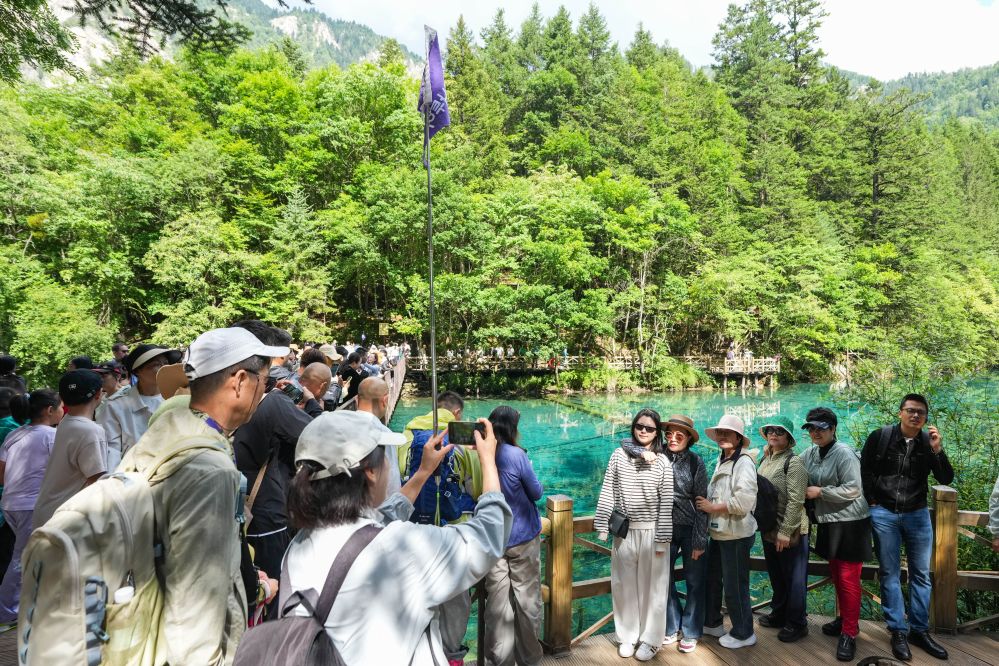
Yuan You, an internet company employee, spent three days of her 13-day break in Jiuzhaigou, southwest China’s Sichuan Province, before heading to the provincial capital Chengdu for woodworking classes.
“The holiday is rich while maintaining a relaxed pace,” she said.
Authorities across the country have rolled out a wide range of activities, consumer vouchers and subsidies to spur holiday spending. Shanghai, for example, has launched about 200 major consumption events, backed by consumer vouchers worth roughly 100 million yuan (around 14.85 million U.S. dollars).
The offerings range from watching films and dining to purchasing digital products and cars, encouraging consumers to explore a broader spectrum of spending experiences.
Cultural institutions, too, are broadening the ways people can experience and consume culture. The Sichuan Museum extended its holiday hours and launched a themed night tour, while Beijing’s Zhongshan Park brought museums, cultural institutions and innovative brands together to create a market street featuring culture-inspired products.
As more new energy vehicles hit the roads during the holiday, authorities have taken measures to ensure adequate charging facilities and convenient services.
During last year’s eight-day Mid-Autumn Festival and National Day holiday period, Chinese travelers made 888 million domestic trips and spent a combined 809 billion yuan, according to the Ministry of Culture and Tourism.
This year, data shows that foot traffic and revenue at 78 major shopping streets and commercial districts monitored by the Ministry of Commerce rose 3.4 percent and 5.3 percent year on year, respectively, from Oct. 1 to 3.
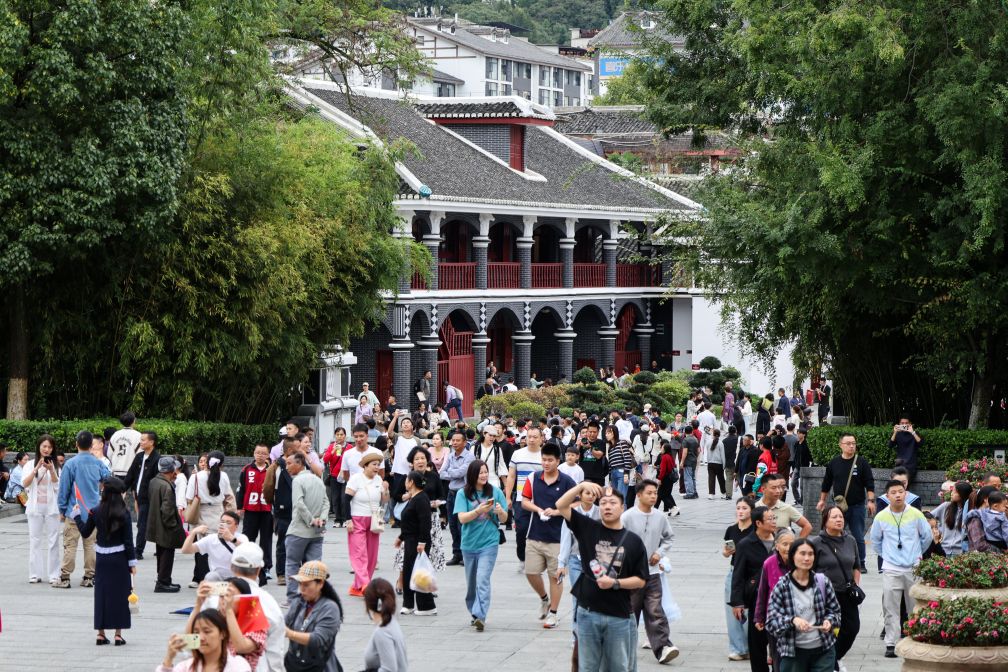
Tourists visit the historical site of the Zunyi Meeting in Zunyi City, southwest China’s Guizhou Province, Oct. 2, 2026. (Photo by Luo Xinghan/Xinhua)
RED TOURISM, ROBOTS AND RURAL EXPERIENCES
As China marks the 90th anniversary of the victory of the Long March, former revolutionary base areas have drawn renewed interest from holidaymakers, with visits offering travelers a chance to learn about the country’s revolutionary history and reflect on the difficult years that helped shape modern China.
In Yan’an, northwest China’s Shaanxi Province, a street has staged special activities including performances of songs from the revolutionary years and a large-scale bonfire gathering. Visitor numbers on the first day of the holiday rose about 20 percent year on year.
The holiday has also turned some of China’s newest robots into part of the consumer experience, putting embodied intelligence to work alongside traditional culture in tourist attractions, shopping districts and ancient towns.
At a cultural district in Chengdu, robots performed dances inspired by local opera’s face-changing art and used digital technology to recreate tanghua, a traditional form of sugar painting.
On Chunxi Road, a humanoid robot has gone beyond entertainment to take on the role of a store manager, greeting customers and recommending products rather than simply performing for them.
China’s growing network of robot training bases is preparing more machines for roles beyond the factory floor — and beyond the country’s borders. In the first half of 2026, Chinese manufacturers accounted for 97 percent of humanoid robot shipments worldwide, according to a report released at the 2026 World Robot Conference.
Years of efforts to restore the environment and revitalize rural areas are also paying off. On a ridge overlooking the Miyun Reservoir in Beijing, visitors can hike to a viewing platform and enjoy outdoor concerts amid the pine trees.
With roads, infrastructure and public services extending deeper into the countryside, some once-remote villages are emerging as new destinations for holidaymakers.
Caijiagou, a former impoverished hillside village in east China’s Shandong Province, has transformed into an art-themed destination, with murals adorning residential walls.
Village official Liang Yunhui said the village has repurposed idle rural homes into cultural spaces such as an art gallery and a musical instrument museum, while hosting events featuring traditional crafts, cultural fairs and folk music. “In total, we have received more than 500,000 visits over the years,” he said.
On travel platform Fliggy, the number of users purchasing travel products featuring natural scenery and villages surged by nearly 50 percent from the same holiday period last year.
“More travelers are seeking immersive experiences, from sampling local cuisine and making intangible cultural heritage crafts to watching distinctive performances, allowing them to gain a deeper appreciation of local culture,” said a manager with Tuniu.
Tourists from South Korea pose for a group photo at the Jiuzhaigou scenic spot in southwest China’s Sichuan Province, Aug. 6, 2026. (Xinhua/Wang Xi)
CHINA HAUL
While many Chinese tourists are venturing farther around the world, more international travelers are flocking to China to experience the country for themselves, riding a rising wave of global fascination with everything from the scenery and culture to its lifestyles and, more recently, Chinese brands and design.
Tennis star Novak Djokovic, in Beijing for the China Open, was seen trying his hand at Chinese calligraphy at the Summer Palace, a former imperial garden. After a match, he used a traditional Chinese seal to put his mark on fans’ keepsakes instead of signing autographs.
Huaqiangbei, a sprawling electronics marketplace in south China’s tech hub Shenzhen, has become a magnet for foreign shoppers looking to experience China’s tech scene firsthand.
Bryan Lamothe-Arice from the United States was browsing smart devices. “I’m particularly interested in the electric bikes and all kinds of flying devices here. I’m going to tell my friends to come here. There are tech products everywhere.”
China’s border crossings are expected to see about 2.15 million passenger trips a day on average during the National Day holiday, according to the National Immigration Administration.
That growing international interest is also showing up in spending. Overseas visitors spent 263.6 billion yuan in China in the first seven months of 2026, up 27.8 percent year on year, according to the commerce ministry.
(Video reporters: Chen Si, Lin Long, Ji Zijian, Sun Qing and Zhong Chao; Video editors: Zhang Mocheng and Hong Ling) ■
CPF Group continues to demonstrate that responsible leadership and excellent service extend beyond the workplace, with staff joining the world in marking October Cancer Awareness Month.
Under the wise and people-centred leadership of Group Managing Director and CEO Dr. Hosea Kili, SC, MBS, CPF Group staff added a touch of pink to their workplace as a powerful reminder of the importance of cancer awareness, early detection and support for those affected by the disease.
The initiative reflected the organisation’s commitment to going the extra mile—not only in serving customers and delivering on its mandate, but also in supporting causes that touch the lives of employees, families and communities.
By wearing pink, CPF Group staff helped create awareness and keep conversations around cancer prevention, screening and early detection alive. The gesture also conveyed a message of solidarity to cancer patients, survivors, caregivers and families navigating the challenges associated with the disease.
Such initiatives speak to the human side of an organisation and demonstrate that corporate culture is about more than targets and performance. It is also about compassion, solidarity and recognising the issues that matter to society.
The strong participation of CPF Group employees showcased a shared sense of responsibility and togetherness, reinforcing the message that every individual can play a role in creating awareness and encouraging others to seek timely medical attention.
Under Dr Kili’s leadership, CPF Group continues to foster a culture where professionalism is complemented by social responsibility and care for people.
The October initiative was therefore more than a splash of pink. It was a collective expression of hope, awareness, early detection and support—and another meaningful demonstration of CPF Group going the extra mile.
Together, the CPF Group team continues to show that sometimes making a difference starts with a simple gesture, a united voice and a willingness to stand with others. 💗 :::