Former Chief Justice and United Green Movement (UGM) co-party leader Hon. David Maraga on Tuesday sharply criticized the Kenyan government’s public health management following the country’s first confirmed Ebola death, accusing authorities of compromised airport surveillance and misaligned national priorities.
In an official statement released Tuesday, Maraga expressed deep condolences to the bereaved family and criticized the government’s response mechanisms after Cabinet Secretary for Health Aden Duale confirmed the imported case.
According to official timelines, the patient—a Kenyan citizen traveling from the Democratic Republic of the Congo via Kampala, Uganda—entered the country through Jomo Kenyatta International Airport (JKIA) on Oct. 3. The individual was isolated only after seeking medical attention at Nairobi Hospital and subsequently succumbed to the virus on Oct. 5, leaving at least 28 identified contacts under tracing protocols.
“I indict this government for endangering our healthcare workers and citizens,” Maraga stated, pointing to gaps in point-of-entry screening procedures that allowed a gravely ill passenger to bypass enhanced airport checks.
Maraga also raised broader geopolitical and policy concerns, alleging that the administration had prioritized hosting a foreign Ebola containment facility at Laikipia Air Base over fortifying internal screening mechanisms to safeguard domestic public health.
Demanding immediate corrective measures, the opposition leader called for comprehensive support for all identified contacts, total transparency regarding laboratory testing capacities and contact tracing, and a recalibration of health policies to prioritize sovereign security and citizen welfare.
The Ministry of Health has assured the public that contact tracing, contact monitoring, and emergency response teams are actively engaged to prevent further community transmission.
Mwalimu National Sacco CEO Kenneth Odhiambo has joined Kenyans in celebrating teachers on World Teachers’ Day, recognising their role in shaping not only learners’ academic journeys but also how they think, plan and build for the future.
Teachers prepare us for much more than the classroom. Through their guidance, discipline and mentorship, they help shape generations, inspire ambition and equip learners with the knowledge and values needed to navigate life.
As the world marks Teachers’ Day, Odhiambo celebrates the dedication and contribution of teachers and appreciates them for the invaluable role they continue to play in building individuals, families and communities.
“Teachers prepare us for more than the classroom. They shape how we think, plan and build for the future.”
He extended his appreciation to teachers for the sacrifices they make every day and for the lasting impact they have on generations of learners.
Happy World Teachers’ Day to all our teachers. Thank you for everything you give. ::
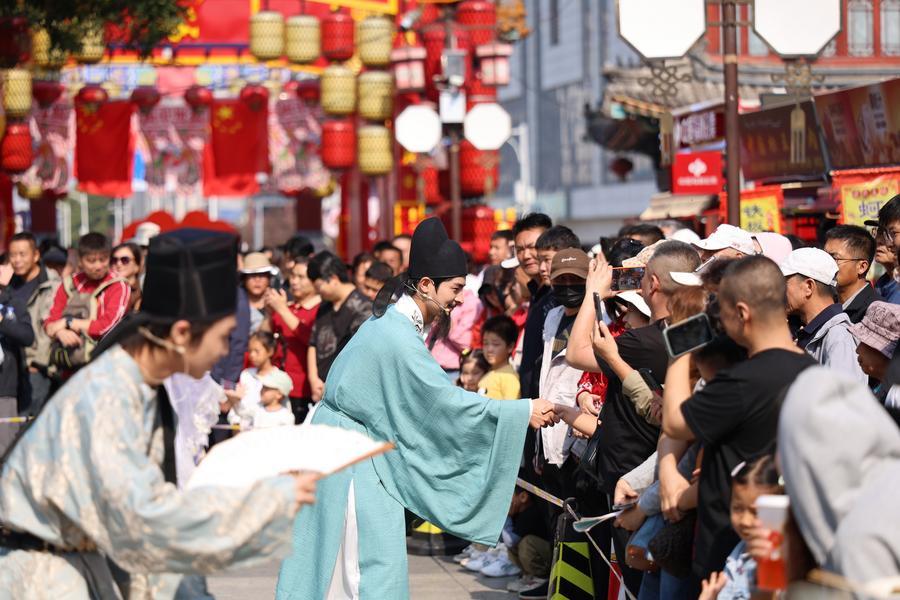
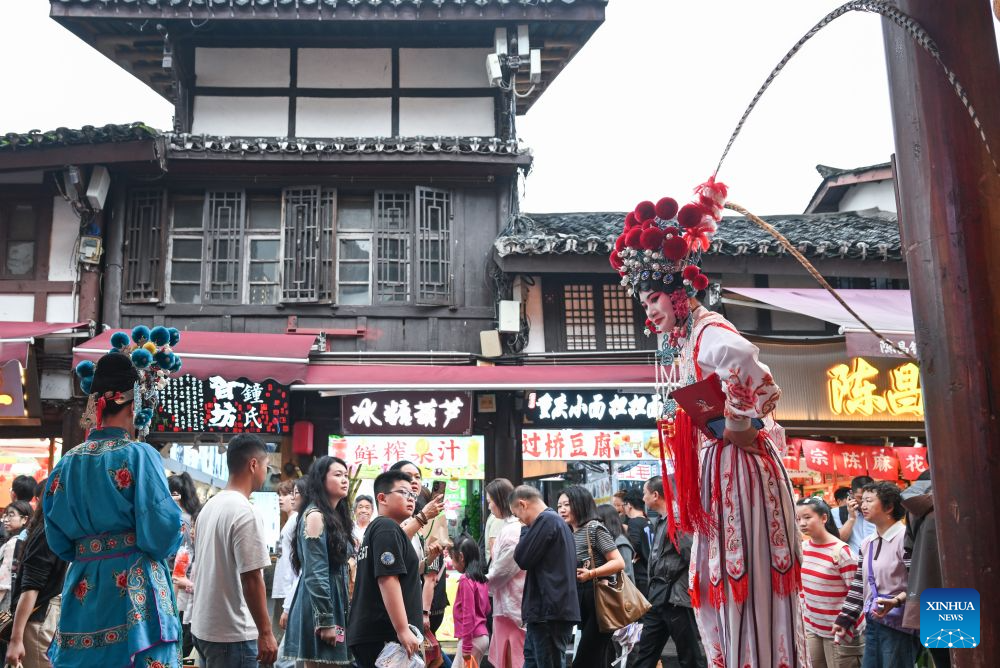
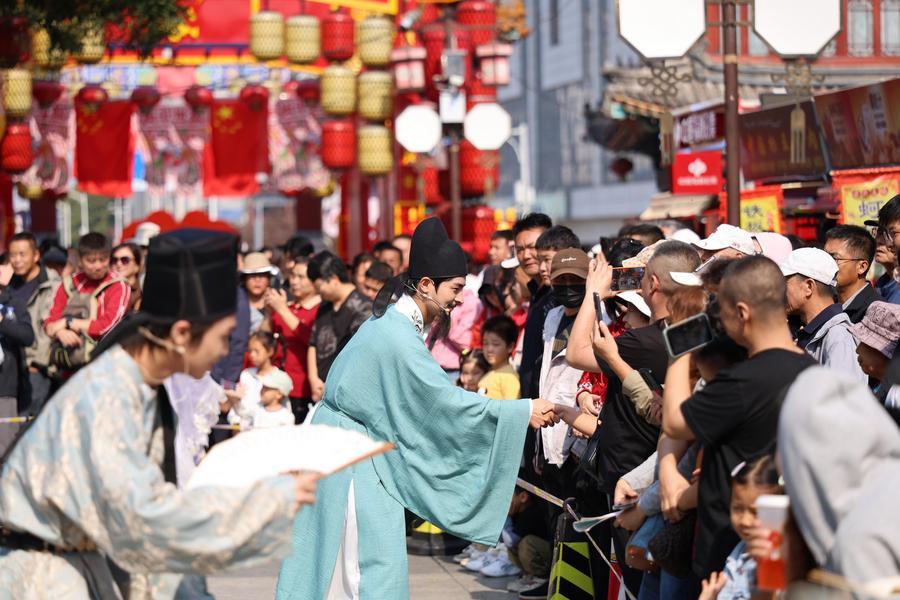
Tourists interact with actors at Yangliuqing ancient town in Tianjin, north China, Oct. 3, 2026. (Xinhua/Li Ran)
BEIJING, Oct. 4 (Xinhua) — Consumer spending across China is holding steady midway through the seven-day National Day holiday, with early data pointing to stable growth that reflects the economy’s underlying vitality.
In the first three days of the holiday from Oct. 1 to 3, foot traffic and revenue at 78 major shopping streets and commercial districts monitored by the Ministry of Commerce rose 3.4 percent and 5.3 percent year on year, respectively.
Notably, the government’s consumer goods trade-in program drove 19.63 billion yuan (about 2.91 billion U.S. dollars) in sales over the same period, benefiting 3.48 million consumers.
In breakdown, the program drove trade-ins of 46,000 vehicles, generating 7.45 billion yuan in new car sales, along with 1.51 million home appliances worth 6.5 billion yuan and 1.71 million digital and smart devices worth 4.9 billion yuan.
The National Day holiday has long been one of China’s peak periods for travel, tourism and spending. Authorities had projected 2.13 billion cross-regional passenger trips in total over the seven days, averaging 300 million a day.
Previous data have suggested demand remains strong as railway passenger trips on Oct. 1 alone reached 25.2 million, a single-day record.
To meet surging demand, China has added train services on busy routes and waived highway tolls for private cars during the holiday.
Moreover, the Ministry of Culture and Tourism launched a month-long national tourism promotion campaign in late September.
Local governments are hosting more than 20,000 events spanning scenic trips, autumn outings, red tourism, study tours, night activities and local food to boost diverse premium tourism offerings, while also handing out some 310 million yuan in consumer vouchers and subsidies over the month as a way to spur tourism consumption. ■
Visitors shop at Sanya International Duty-Free Shopping Complex in Sanya, south China’s Hainan Province, Oct. 2, 2026. During the first National Day holiday since the launch of the island-wide special customs operations at Hainan Free Trade Port (FTP), the tropical island has offered visitors from home and abroad a diverse range of experiences — from duty-free shopping and local food to historic neighborhoods and the distinctive lifestyle of fishing communities. (Xinhua/Guo Cheng)
HAIKOU, Oct. 4 (Xinhua) — China’s southernmost province of Hainan has more to offer than beaches and coconut trees.
During the first National Day holiday since the launch of the island-wide special customs operations at Hainan Free Trade Port (FTP), the tropical island has offered visitors from home and abroad a diverse range of experiences — from duty-free shopping and local food to historic neighborhoods and the distinctive lifestyle of fishing communities.
In the seaside resort city of Sanya, the Sanya International Duty-Free Shopping Complex has drawn a steady stream of visitors during the holiday. The sprawling mall offers a wide selection of international brands, attractive duty-free prices and convenient pickup services.
“The shopping mall is huge and nice,” said Alina, a Russian tourist. “There are many international brands and the prices are good. I enjoy shopping here very much.”
Visiting China for the first time, Alina said she had enjoyed her trip to Hainan, where tropical coastal scenery was complemented by a world-class shopping experience.
Since Hainan expanded its duty-free shopping access to departing tourists last November, a growing number of overseas visitors like Alina have been seen at the island’s major duty-free shopping centers.
For domestic tourists, duty-free shopping has long been a popular part of a Hainan itinerary.
Li Tian, a tourist from central China’s Henan Province, purchased perfumes and cosmetics during her visit.
“Duty-free shopping is a must-do for me every time I visit Hainan. The prices are attractive, and the wide range of products meets my one-stop shopping needs,” she said.
But the island’s appeal goes well beyond its glossy shopping malls. Across Hainan, old streets, traditional neighborhoods and fishing ports offer visitors a chance to slow down and experience a different side of the island — one rooted in local history and everyday life.
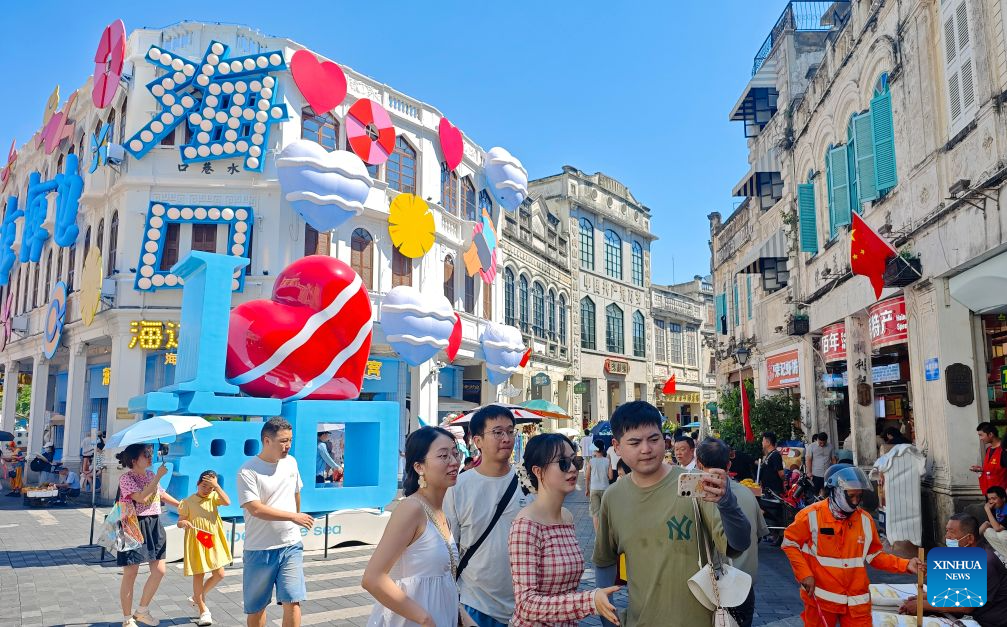
At Qilou Old Street in Haikou, the provincial capital, century-old arcade buildings line the historic streets, where tourists wander through narrow lanes, sample local snacks and soak up the atmosphere.
A local tea house on the street was packed with guests during the National Day holiday. “I came here to experience the local way of life. It’s bustling and has a very authentic feel,” said a tourist surnamed Xu from east China’s Zhejiang Province.
At Xincun Port in Lingshui Li Autonomous County, hundreds of Tanka fish rafts are lined up across the blue waters, forming a unique “village on the sea.” Shuttle boats ferry tourists back and forth, offering them a close-up look at the traditional culture and way of life of the Tanka people.
The Tanka people, or boat dwellers, are those who have traditionally lived on sampans and made their living by fishing in coastal waters. Over generations, they have developed a distinctive culture.
“I have never seen such a large cluster of fish rafts before, and I’ve never had a meal on one either. Today’s experience is truly unique,” said Gao Chen, a tourist from Beijing who enjoyed a seafood meal on a floating raft for the first time.
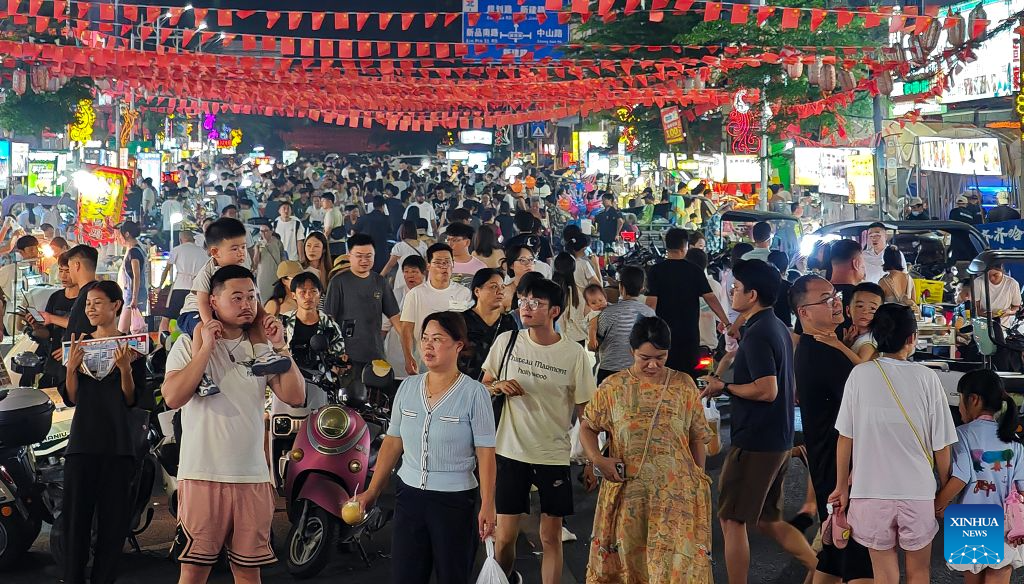
During the day, tourists here engage in fun activities like beachcombing and sea angling, harvesting fresh seafood. As night falls, Xincun night market comes alive with bustling crowds as people gather around stalls serving grilled seafood, tropical fruits and local snacks.
Sanya’s Xidao Island, home to a fishing village with more than 400 years of history, offers yet another glimpse into the island’s traditional coastal life. Visitors can explore its winding lanes on foot or rent electric scooters to get around.
“Cycling around the village makes me feel totally relaxed and at ease,” said a tourist surnamed Zhang from north China’s Hebei Province.
Hainan is at the forefront of a broader national effort to upgrade tourism offerings. The latest five-year tourism development plan, approved by the State Council and released in July, calls for nurturing new drivers of tourism growth and enriching the supply of high-quality tourism experiences.
The Hainan FTP officially launched island-wide special customs operations in December last year. According to plans, China aims to build Hainan into a globally influential tourism and consumption destination by 2035. ■
Visitors shop at Sanya International Duty-Free Shopping Complex in Sanya, south China’s Hainan Province, Oct. 2, 2026.
During the first National Day holiday since the launch of the island-wide special customs operations at Hainan Free Trade Port (FTP), the tropical island has offered visitors from home and abroad a diverse range of experiences — from duty-free shopping and local food to historic neighborhoods and the distinctive lifestyle of fishing communities. (Xinhua/Guo Cheng)
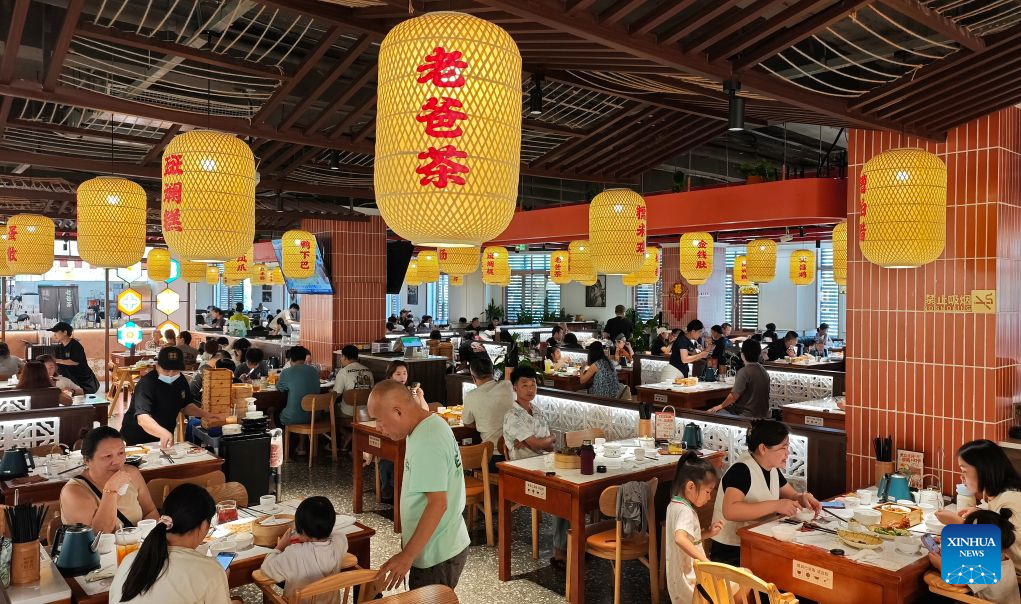
People dine at a local tea house in Haikou, south China’s Hainan Province, Oct. 1, 2026.
During the first National Day holiday since the launch of the island-wide special customs operations at Hainan Free Trade Port (FTP), the tropical island has offered visitors from home and abroad a diverse range of experiences — from duty-free shopping and local food to historic neighborhoods and the distinctive lifestyle of fishing communities. (Xinhua/Guo Cheng)
Tourists visit Qilou Old Street in Haikou, south China’s Hainan Province, Oct. 1, 2026.
During the first National Day holiday since the launch of the island-wide special customs operations at Hainan Free Trade Port (FTP), the tropical island has offered visitors from home and abroad a diverse range of experiences — from duty-free shopping and local food to historic neighborhoods and the distinctive lifestyle of fishing communities. (Xinhua/Guo Cheng)
This photo taken on Oct. 1, 2026 shows the bustling night market in Xincun Port of Lingshui Li Autonomous County, south China’s Hainan Province.
During the first National Day holiday since the launch of the island-wide special customs operations at Hainan Free Trade Port (FTP), the tropical island has offered visitors from home and abroad a diverse range of experiences — from duty-free shopping and local food to historic neighborhoods and the distinctive lifestyle of fishing communities. (Xinhua/Guo Cheng)
* Chinese travelers have ventured farther during the National Day holiday, with family trips and experience-oriented travel on the rise.
* Former revolutionary base areas have drawn renewed interest from holidaymakers, with visits offering travelers a chance to learn about the country’s revolutionary history and reflect on the difficult years that helped shape modern China.
* More international travelers are flocking to China to experience the country for themselves, riding a rising wave of global fascination with everything from the scenery and culture to its lifestyles and, more recently, Chinese brands and design.
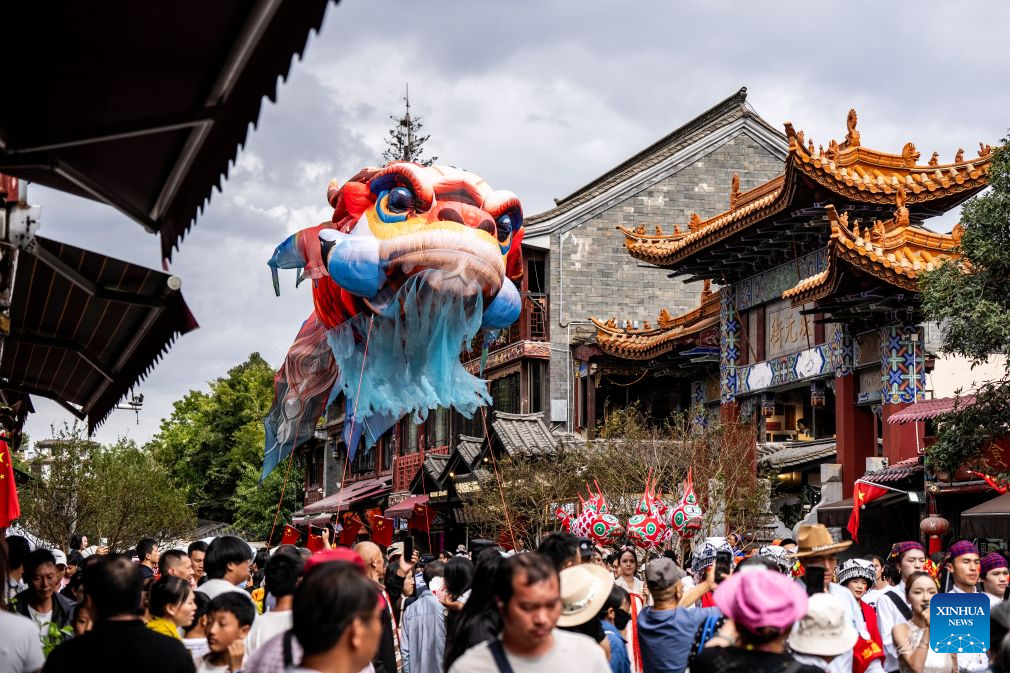
Tourists visit Guandu ancient town in Kunming, southwest China’s Yunnan Province, Oct. 3, 2026. (Xinhua/Hu Chao)
BEIJING, Oct. 5 (Xinhua) — Five days into China’s week-long National Day holiday, millions are still immersed in the sights, sounds and flavors of the season — traveling, dining, exploring and enjoying the break. Yet this year, the scenes are subtly different.
Travelers have ventured farther as the Mid-Autumn Festival holiday fell just three days before the National Day holiday, while family trips and experience-oriented travel are on the rise, according to travel agencies.
“It points to a fundamental shift in the logic of tourism consumption, as travelers focus more on the quality of time and the richness of their experiences,” said Bu Xiting, a researcher with the Communication University of China.
LONGER BREAKS, RICHER CHOICES
Data from Chinese online travel platform Tuniu shows that tours of 10 days or more are particularly popular during this holiday period, accounting for 26 percent of bookings.
Yuan You, an internet company employee, spent three days of her 13-day break in Jiuzhaigou, southwest China’s Sichuan Province, before heading to the provincial capital Chengdu for woodworking classes.
“The holiday is rich while maintaining a relaxed pace,” she said.
Authorities across the country have rolled out a wide range of activities, consumer vouchers and subsidies to spur holiday spending. Shanghai, for example, has launched about 200 major consumption events, backed by consumer vouchers worth roughly 100 million yuan (around 14.85 million U.S. dollars).
The offerings range from watching films and dining to purchasing digital products and cars, encouraging consumers to explore a broader spectrum of spending experiences.
Cultural institutions, too, are broadening the ways people can experience and consume culture. The Sichuan Museum extended its holiday hours and launched a themed night tour, while Beijing’s Zhongshan Park brought museums, cultural institutions and innovative brands together to create a market street featuring culture-inspired products.
As more new energy vehicles hit the roads during the holiday, authorities have taken measures to ensure adequate charging facilities and convenient services.
During last year’s eight-day Mid-Autumn Festival and National Day holiday period, Chinese travelers made 888 million domestic trips and spent a combined 809 billion yuan, according to the Ministry of Culture and Tourism.
This year, data shows that foot traffic and revenue at 78 major shopping streets and commercial districts monitored by the Ministry of Commerce rose 3.4 percent and 5.3 percent year on year, respectively, from Oct. 1 to 3.
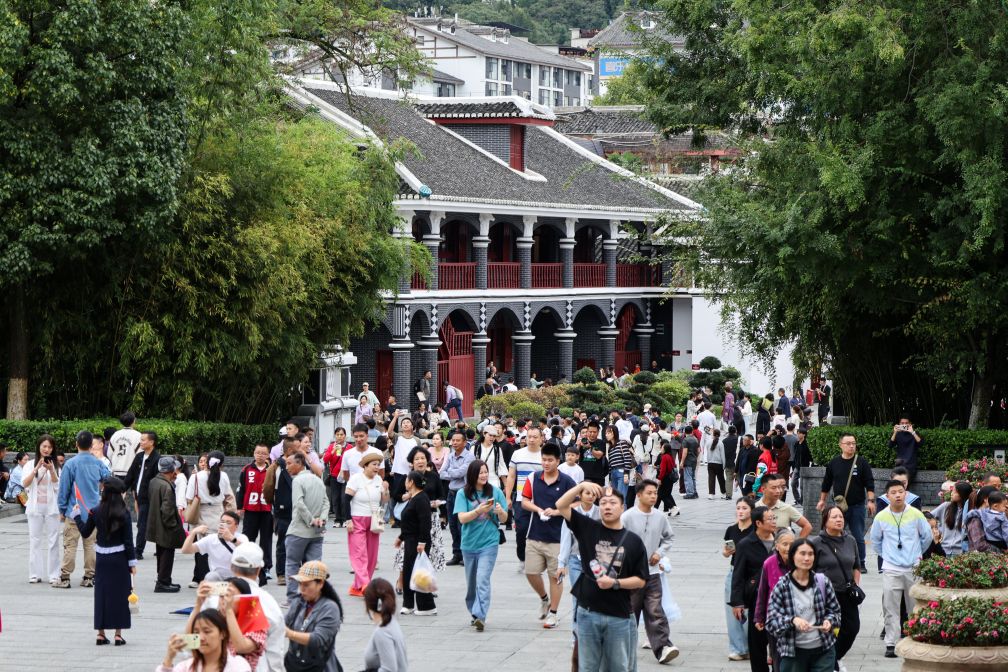
Tourists visit the historical site of the Zunyi Meeting in Zunyi City, southwest China’s Guizhou Province, Oct. 2, 2026. (Photo by Luo Xinghan/Xinhua)
RED TOURISM, ROBOTS AND RURAL EXPERIENCES
As China marks the 90th anniversary of the victory of the Long March, former revolutionary base areas have drawn renewed interest from holidaymakers, with visits offering travelers a chance to learn about the country’s revolutionary history and reflect on the difficult years that helped shape modern China.
In Yan’an, northwest China’s Shaanxi Province, a street has staged special activities including performances of songs from the revolutionary years and a large-scale bonfire gathering. Visitor numbers on the first day of the holiday rose about 20 percent year on year.
The holiday has also turned some of China’s newest robots into part of the consumer experience, putting embodied intelligence to work alongside traditional culture in tourist attractions, shopping districts and ancient towns.
At a cultural district in Chengdu, robots performed dances inspired by local opera’s face-changing art and used digital technology to recreate tanghua, a traditional form of sugar painting.
On Chunxi Road, a humanoid robot has gone beyond entertainment to take on the role of a store manager, greeting customers and recommending products rather than simply performing for them.
China’s growing network of robot training bases is preparing more machines for roles beyond the factory floor — and beyond the country’s borders. In the first half of 2026, Chinese manufacturers accounted for 97 percent of humanoid robot shipments worldwide, according to a report released at the 2026 World Robot Conference.
Years of efforts to restore the environment and revitalize rural areas are also paying off. On a ridge overlooking the Miyun Reservoir in Beijing, visitors can hike to a viewing platform and enjoy outdoor concerts amid the pine trees.
With roads, infrastructure and public services extending deeper into the countryside, some once-remote villages are emerging as new destinations for holidaymakers.
Caijiagou, a former impoverished hillside village in east China’s Shandong Province, has transformed into an art-themed destination, with murals adorning residential walls.
Village official Liang Yunhui said the village has repurposed idle rural homes into cultural spaces such as an art gallery and a musical instrument museum, while hosting events featuring traditional crafts, cultural fairs and folk music. “In total, we have received more than 500,000 visits over the years,” he said.
On travel platform Fliggy, the number of users purchasing travel products featuring natural scenery and villages surged by nearly 50 percent from the same holiday period last year.
“More travelers are seeking immersive experiences, from sampling local cuisine and making intangible cultural heritage crafts to watching distinctive performances, allowing them to gain a deeper appreciation of local culture,” said a manager with Tuniu.
Tourists from South Korea pose for a group photo at the Jiuzhaigou scenic spot in southwest China’s Sichuan Province, Aug. 6, 2026. (Xinhua/Wang Xi)
CHINA HAUL
While many Chinese tourists are venturing farther around the world, more international travelers are flocking to China to experience the country for themselves, riding a rising wave of global fascination with everything from the scenery and culture to its lifestyles and, more recently, Chinese brands and design.
Tennis star Novak Djokovic, in Beijing for the China Open, was seen trying his hand at Chinese calligraphy at the Summer Palace, a former imperial garden. After a match, he used a traditional Chinese seal to put his mark on fans’ keepsakes instead of signing autographs.
Huaqiangbei, a sprawling electronics marketplace in south China’s tech hub Shenzhen, has become a magnet for foreign shoppers looking to experience China’s tech scene firsthand.
Bryan Lamothe-Arice from the United States was browsing smart devices. “I’m particularly interested in the electric bikes and all kinds of flying devices here. I’m going to tell my friends to come here. There are tech products everywhere.”
China’s border crossings are expected to see about 2.15 million passenger trips a day on average during the National Day holiday, according to the National Immigration Administration.
That growing international interest is also showing up in spending. Overseas visitors spent 263.6 billion yuan in China in the first seven months of 2026, up 27.8 percent year on year, according to the commerce ministry.
(Video reporters: Chen Si, Lin Long, Ji Zijian, Sun Qing and Zhong Chao; Video editors: Zhang Mocheng and Hong Ling) ■
Passengers prepare to board a train at Nanjing South Railway Station in Nanjing, east China’s Jiangsu Province, Sept. 30, 2026. China’s railway network saw a peak in passenger flow on Wednesday, one day before the beginning of the seven-day National Day holiday. (Photo by Su Yang/Xinhua)
BEIJING, Oct. 5 (Xinhua) — For Zhang Yang and his family in Ankang, northwest China’s Shaanxi Province, this year’s National Day holiday was a memorable one. On Oct. 1, following the opening of the Xi’an-Ankang high-speed railway, they took a direct high-speed train from Ankang to Yan’an, a city known for its revolutionary history.
The journey, which used to take more than seven hours, now takes just over two hours.
The Zhang family was among millions on the move during the National Day holiday from Oct. 1 to 7, one of China’s peak periods for travel and spending.
Data from the Ministry of Transport showed cross-regional passenger trips exceeded 300 million on each of the first three days of the holiday. China State Railway Group Co., Ltd. (China Railway) said the country’s railways handled over 25.2 million passenger trips on Oct. 1, setting a new single-day record.
For a country as vast as China, moving hundreds of millions of people during a holiday rush is a feat of scale. Behind this feat lies a transport network built up over decades.
By the end of 2025, China’s comprehensive transport network spanned more than 6 million km, including the world’s largest high-speed rail network. High-speed railways, expressways, airports and ports connect cities, towns and rural areas across the country.
The network is continuing to expand. On Sept. 28, China opened four major high-speed railway sections across northern, northwestern, central and northeastern China, with a combined length of more than 1,100 km. The new lines further shorten travel times and put more destinations within easy reach of families like Zhang’s.
China’s transport development goes beyond faster journeys. Better supporting services are also making travel more convenient.
New energy vehicles (NEVs) have become increasingly common among Chinese households and are now a popular choice for long-distance travel. The Ministry of Transport expects NEV trips on expressways during the holiday to reach 1.8 times the usual level, pushing up demand for charging services.
China’s extensive charging infrastructure is helping to meet growing demand. The country now has more than 24 million EV charging facilities, forming the world’s largest EV charging network. Highway service areas have about 89,000 charging facilities in total, covering virtually all service areas.
To handle the holiday peak, mobile emergency chargers have been added at key service areas, while drivers are encouraged to leave after charging their batteries to 80 percent to improve charging turnover.
Faster connections and more convenient services are making it easier for travelers to visit more destinations in a single trip. Data from online travel platform Qunar showed that nearly 30 percent of travelers had booked hotels in at least two cities, while bookings involving stays in four or more cities surged 53 percent year on year.
The trend extends beyond China’s borders. China’s expanding transport links are supporting a rise in cross-border travel, with Chinese airlines operating regular international passenger routes connecting 177 cities in 80 countries.
For outbound travel, Qunar data showed that hotel bookings for multi-country trips more than doubled year on year during the holiday. Inbound tourism also recorded double-digit growth, according to Trip.com Group, with day-tour bookings up more than fourfold and train ticket bookings up more than 170 percent year on year during the Mid-Autumn Festival and National Day breaks.
The transport network that carries millions of travelers is also keeping goods moving, linking businesses and markets and sustaining economic activity across the country.
Even during the holiday, the Liujing operating area of Nanning Port in south China’s Guangxi Zhuang Autonomous Region bustles with activity, as ship horns sound and workers load and unload goods.
The increase in cargo traffic is closely linked to the opening of the Pinglu Canal. Stretching 134.2 km from Hengzhou in Guangxi to the Beibu Gulf, the canal opened to navigation on Sept. 16, providing a shorter river-sea route for cargo from southwest China to international markets.
Bulk cargo, including construction materials, auto parts and grain, is being shipped from Nanning Port via the Pinglu Canal to the Beibu Gulf for export. On average, the route now handles an additional 20,000 tonnes of cargo per day.
“We expect to transport 200,000 tonnes of cargo during the National Day holiday,” said You Tong, deputy manager of the production operations center at Nanning Port Development and Investment Co., Ltd.
You said the port has optimized operations and maintained round-the-clock staffing to keep cargo moving smoothly during the holiday surge. ■
Sierra Leone on Monday highlighted major regulatory achievements and telecommunications progress during the Regional ICT Regulators’ Forum in the Kenyan capital of Nairobi, pointing to cross-border knowledge sharing and capacity-building programs as crucial drivers of its digital growth.
Delegates representing the National Telecommunications Authority (NaTCA) of Sierra Leone joined peer regulators, regional ICT organizations, and international development partners for the opening of the 8th Cohort of the ICT Policy and Regulation – Institutional Strengthening Programme (iPRIS).
Speaking at the forum, the Sierra Leonean delegation noted that participating in peer-to-peer regulatory platforms and technical exchange programs has strengthened the country’s capacity to modernize its legal frameworks, improve quality-of-service standards, and accelerate network rollout to unserved rural areas.
Sierra Leone’s representatives emphasized that direct engagement with regional regulators has helped national authorities implement practical solutions to complex regulatory challenges, including spectrum allocation, universal access fund management, and infrastructure sharing.
The Nairobi forum, hosted in collaboration with the Communications Authority of Kenya (CA), brought together delegates from Sierra Leone, Mauritius, Namibia, Zimbabwe, Tanzania, and Liberia, as well as regional bodies including the West Africa Telecommunications Regulators Assembly (WATRA), the East African Communications Organisation (EACO), and the Communication Regulators’ Association of Southern Africa (CRASA).
Delivering welcome remarks on behalf of the host institution, Communications Authority of Kenya officials stressed that digital transformation across Africa has shifted from a future goal into an active reality, calling on regulators to collaborate so that digital growth remains secure, inclusive, and beneficial to citizens.
Mannaiah Baion, Manager at National Telecommunications Authority (NaTCA) of Sierra Leone, commended the active participation of Sierra Leone and other West African member states in regional harmonization efforts, stressing that unified regulatory approaches are vital to lowering market entry barriers and bolstering cyber resilience across the continent.
The gathering also featured international development partners, including representatives from the European Union, the Swedish Post and Telecom Authority, and Stockholm University through the Swedish Programme for ICT in Developing Regions (SPIDER).
Over the course of the Nairobi forum, delegates will deliberate on critical sector priorities, including 5G network rollout, cross-border fiber deployment, digital platform governance, and updating regulatory frameworks to match the rapid rise of artificial intelligence.
Liberia on Monday highlighted significant regulatory milestones and telecommunications progress during the Regional ICT Regulators’ Forum in the Kenyan capital of Nairobi, citing cross-border collaboration and targeted institutional training as key drivers of its sector growth.
Delegates representing the Liberia Telecommunications Authority (LTA) joined peer regulators, regional bodies, and international partners for the opening of the 8th Cohort of the ICT Policy and Regulation – Institutional Strengthening Programme (iPRIS), an initiative aimed at building institutional capacity across African regulatory bodies.
Speaking at the forum, Liberian delegates noted that sustained engagement with peer regulatory bodies and international capacity-building programs has enabled the country to modernize its regulatory frameworks, expand rural connectivity initiatives, and enhance institutional compliance mechanisms.
Liberia’s delegation emphasized that participation in peer-learning platforms like iPRIS has equipped national regulators with practical approaches to address critical domestic challenges, including spectrum management, quality-of-service standards, and digital inclusion for unserved communities.
The Nairobi forum, hosted in collaboration with the Communications Authority of Kenya (CA), brought together regulatory officials from Liberia, Sierra Leone, Mauritius, Namibia, Zimbabwe, and Tanzania, alongside regional organizations such as the West Africa Telecommunications Regulators Assembly (WATRA), the East African Communications Organisation (EACO), and the Communication Regulators’ Association of Southern Africa (CRASA).
Opening the event on behalf of the host regulator, Communications Authority of Kenya officials noted that digital transformation across Africa is already an operational reality, stressing that regulatory institutions must work together to ensure digital growth is secure, inclusive, and responsive to citizens’ needs.
Bill Caranda policy analyst at the Liberia Telecom Authority underscored the importance of Liberia’s and other member states’ active involvement in regional integration efforts, calling for harmonized policy frameworks to lower cross-border market barriers and enhance cybersecurity resilience across Africa.
International development partners attending the event included representatives from the European Union, the Swedish Post and Telecom Authority, and Stockholm University through the Swedish Programme for ICT in Developing Regions (SPIDER).
Throughout the week-long convening in Nairobi, participants are set to deliberate on strategies for 5G rollout, universal service fund management, spectrum auction frameworks, and adapting regulatory oversight to keep pace with emerging technologies such as artificial intelligence and digital platforms.
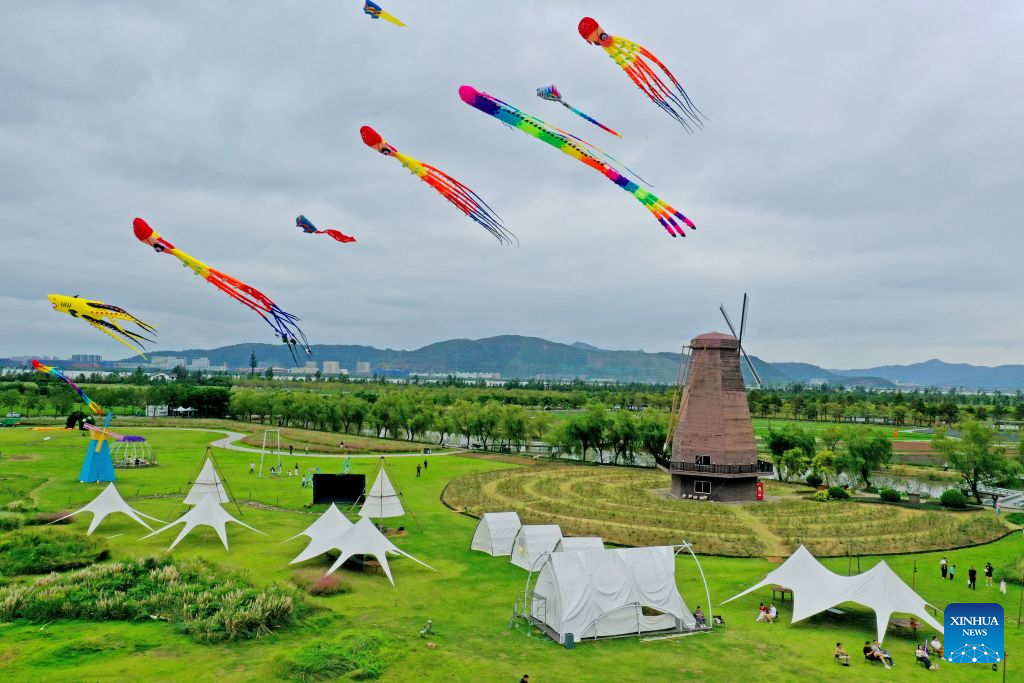
A drone photo shows people having fun at a wetland park in Yuhuan, east China’s Zhejiang Province, Oct. 2, 2026.
China’s cultural and tourism market is thriving during this year’s National Day holiday, with a wide range of options including scenic getaways, autumn outings, tourism with revolutionary topics, nighttime entertainment, and cultural tours featuring the country’s intangible cultural heritage. (Photo by Duan Junli/Xinhua)
Tourists visit the Tsingtao Beer Museum in Qingdao, east China’s Shandong Province, Oct. 2, 2026.
China’s cultural and tourism market is thriving during this year’s National Day holiday, with a wide range of options including scenic getaways, autumn outings, tourism with revolutionary topics, nighttime entertainment, and cultural tours featuring the country’s intangible cultural heritage. (Xinhua/Li Ziheng)
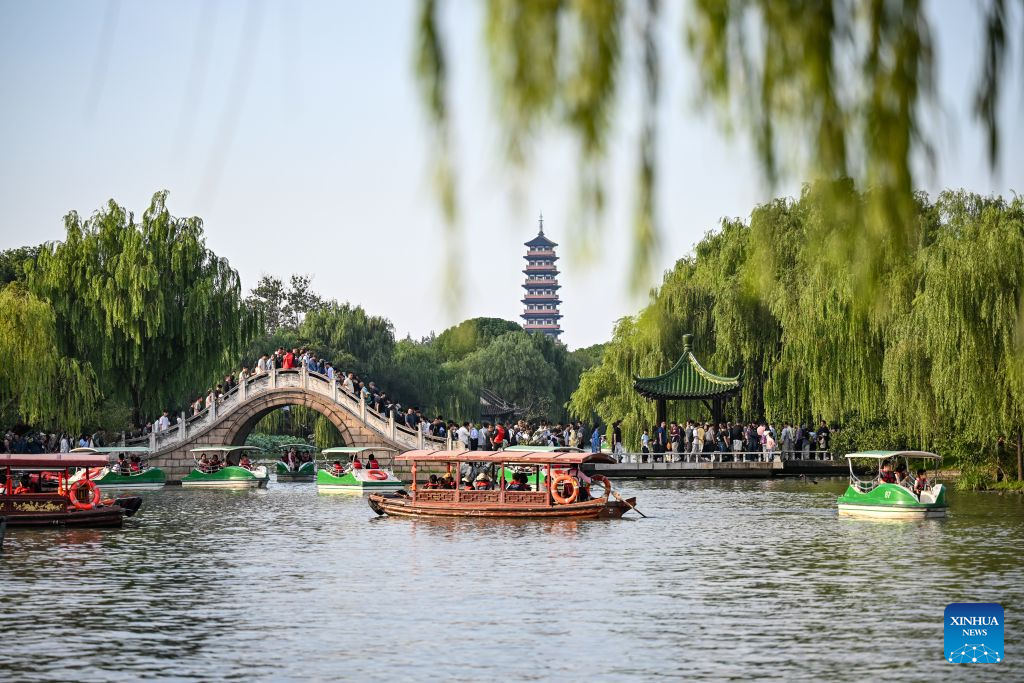
Tourists visit the Slender West Lake scenic spot in Yangzhou, east China’s Jiangsu Province, Oct. 2, 2026.
China’s cultural and tourism market is thriving during this year’s National Day holiday, with a wide range of options including scenic getaways, autumn outings, tourism with revolutionary topics, nighttime entertainment, and cultural tours featuring the country’s intangible cultural heritage. (Xinhua/Chen Yehua)
Tourists visit the Slender West Lake scenic spot in Yangzhou, east China’s Jiangsu Province, Oct. 2, 2026.
China’s cultural and tourism market is thriving during this year’s National Day holiday, with a wide range of options including scenic getaways, autumn outings, tourism with revolutionary topics, nighttime entertainment, and cultural tours featuring the country’s intangible cultural heritage. (Xinhua/Chen Yehua)
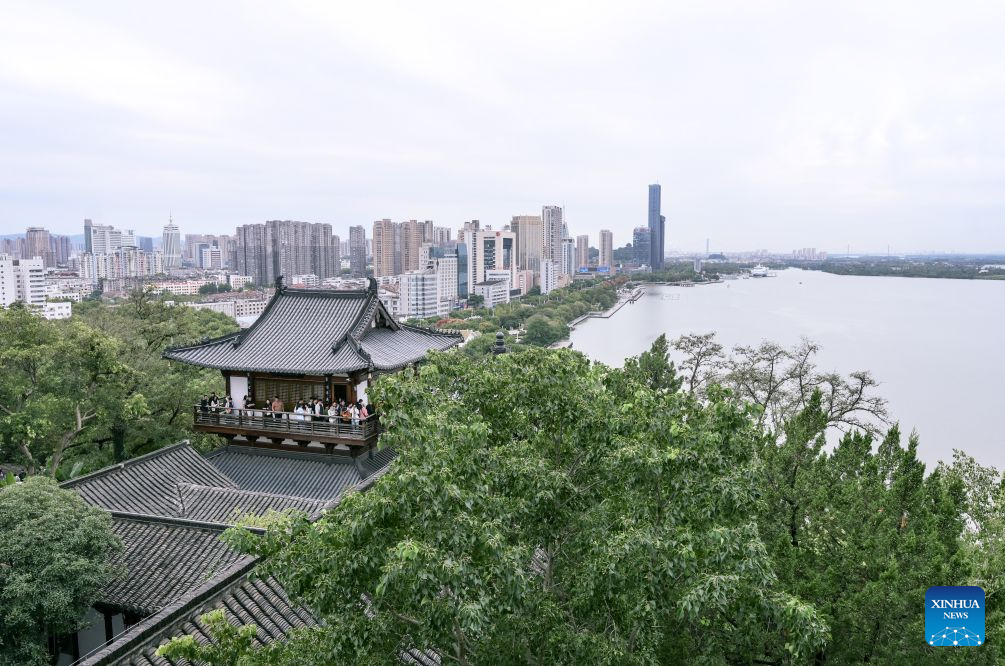
Tourists visit the Duojing Tower in Zhenjiang, east China’s Jiangsu Province, Oct. 2, 2026.
China’s cultural and tourism market is thriving during this year’s National Day holiday, with a wide range of options including scenic getaways, autumn outings, tourism with revolutionary topics, nighttime entertainment, and cultural tours featuring the country’s intangible cultural heritage. (Xinhua/Chen Yehua)
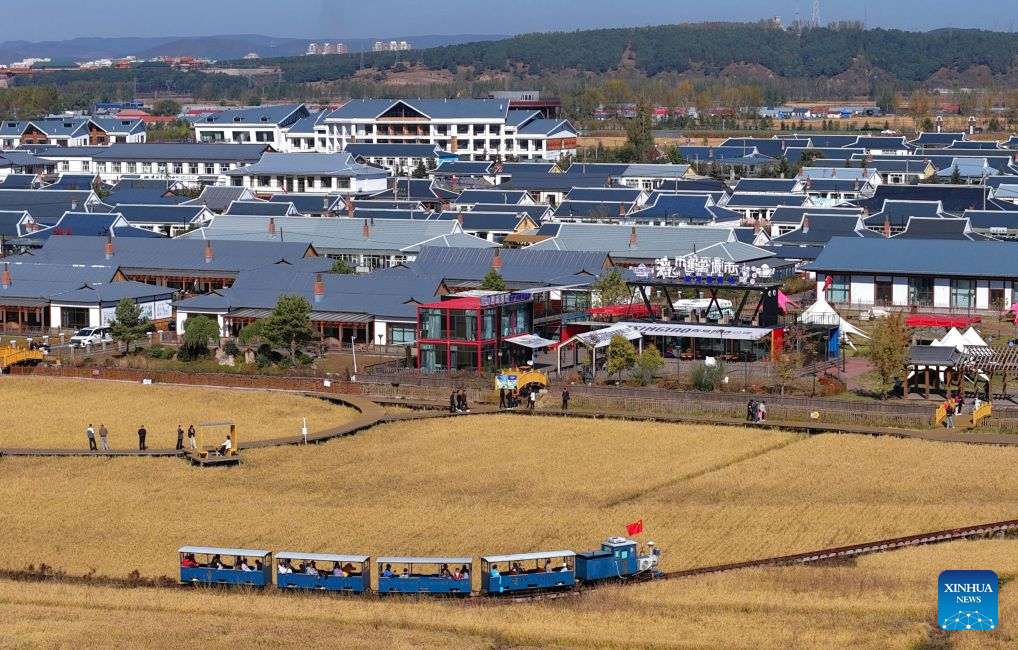
A drone photo shows tourists taking a mini train at a rice paddy in Zhongxing Village of Mudanjiang City, northeast China’s Heilongjiang Province, Oct. 3, 2026.
China’s cultural and tourism market is thriving during this year’s National Day holiday, with a wide range of options including scenic getaways, autumn outings, tourism with revolutionary topics, nighttime entertainment, and cultural tours featuring the country’s intangible cultural heritage. (Photo by Gao Fugui/Xinhua)
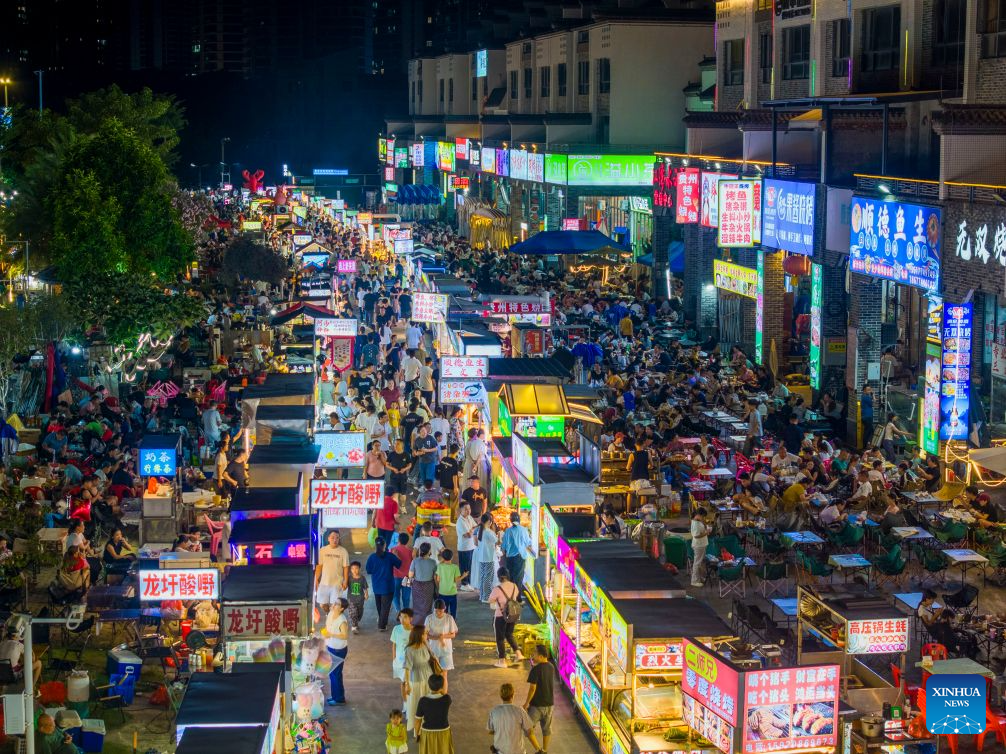
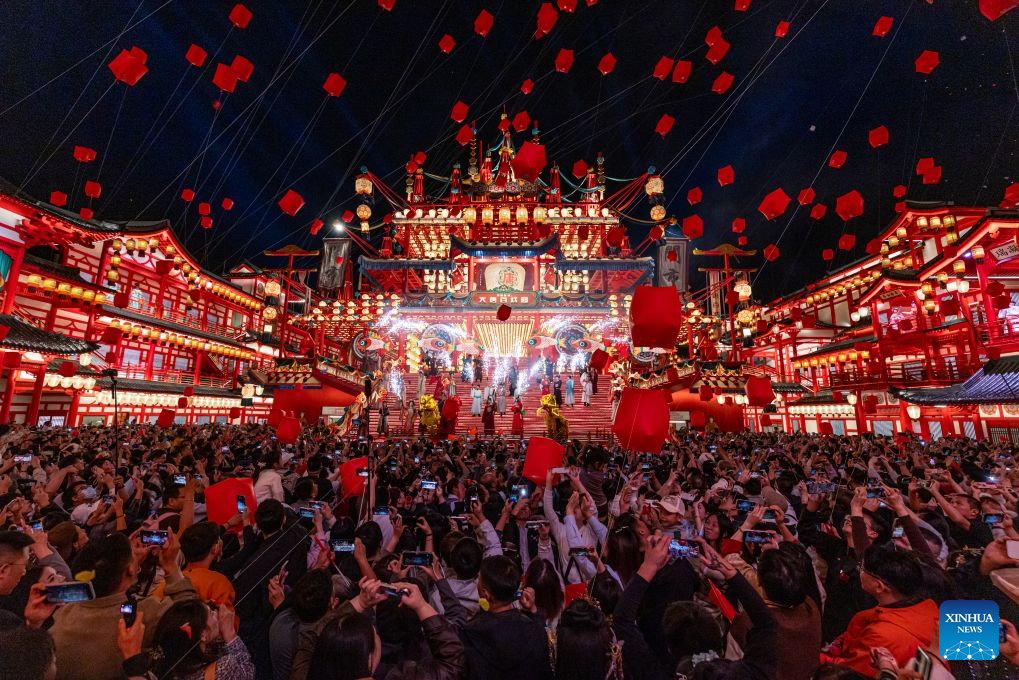
A drone photo shows people visiting a night market in Wuzhou, south China’s Guangxi Zhuang Autonomous Region, Oct. 2, 2026.
China’s cultural and tourism market is thriving during this year’s National Day holiday, with a wide range of options including scenic getaways, autumn outings, tourism with revolutionary topics, nighttime entertainment, and cultural tours featuring the country’s intangible cultural heritage. (Photo by He Huawen/Xinhua)
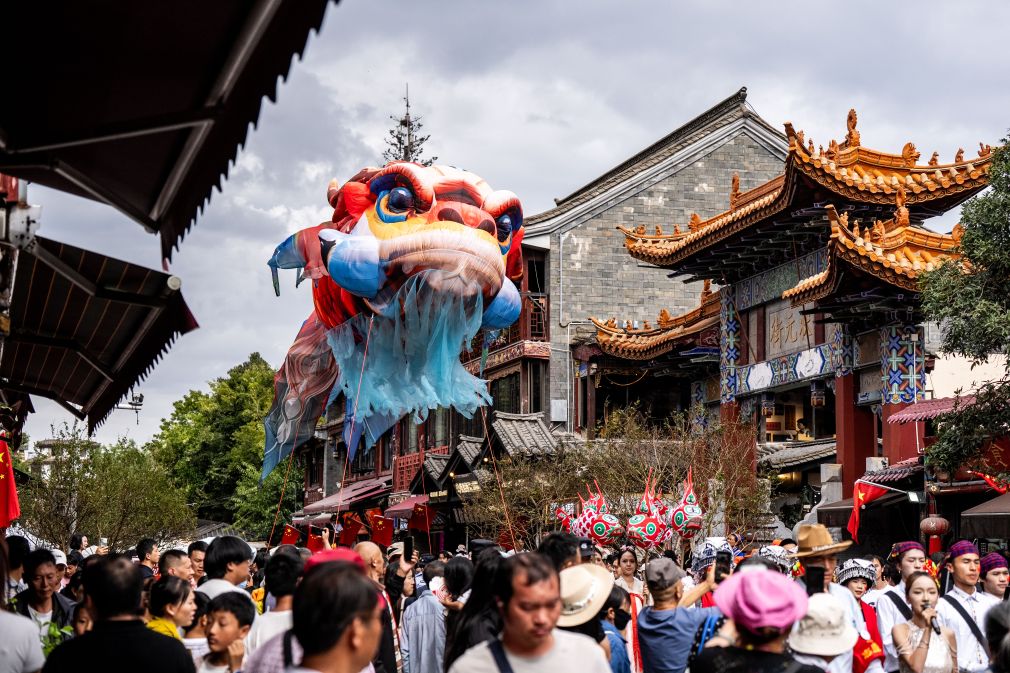
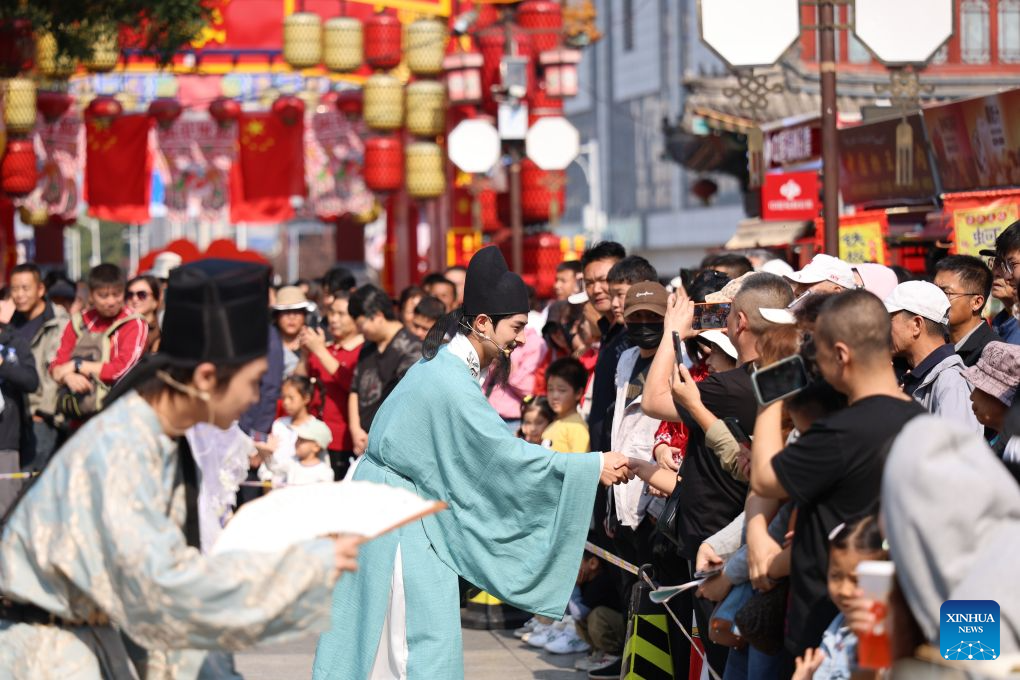
Tourists interact with actors at Yangliuqing ancient town in Tianjin, north China, Oct. 3, 2026.
China’s cultural and tourism market is thriving during this year’s National Day holiday, with a wide range of options including scenic getaways, autumn outings, tourism with revolutionary topics, nighttime entertainment, and cultural tours featuring the country’s intangible cultural heritage. (Xinhua/Li Ran)
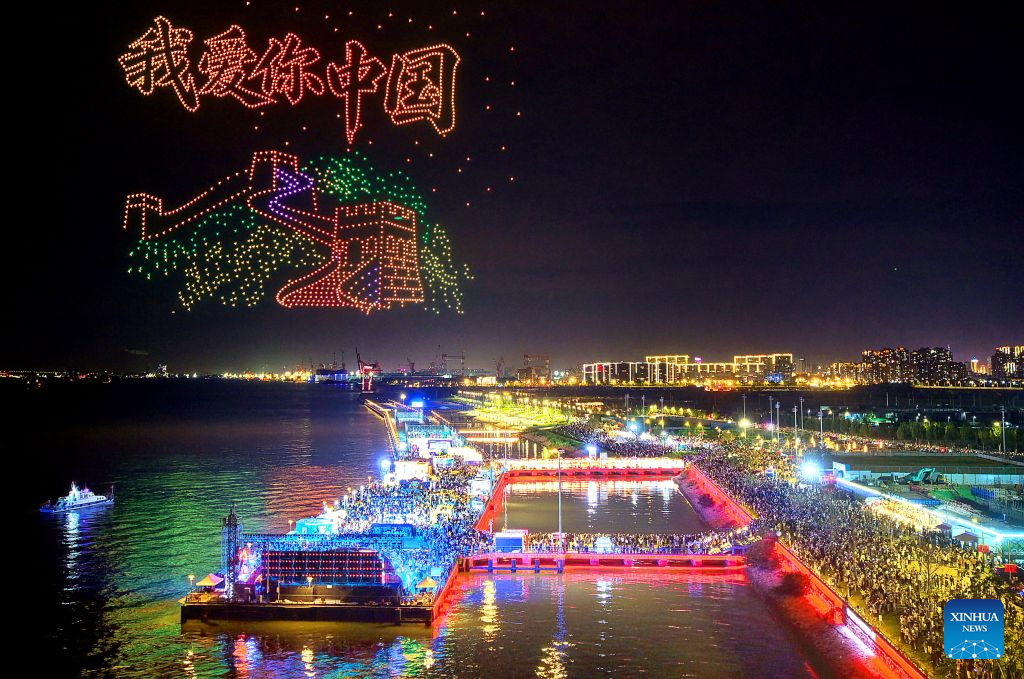
A drone photo shows people watching a drone light show in Nantong, east China’s Jiangsu Province, Oct. 2, 2026.
China’s cultural and tourism market is thriving during this year’s National Day holiday, with a wide range of options including scenic getaways, autumn outings, tourism with revolutionary topics, nighttime entertainment, and cultural tours featuring the country’s intangible cultural heritage. (Photo by Xu Congjun/Xinhua)
A drone photo shows tourists visiting the Yellow River’s Hukou Waterfall scenic area in Jixian County, north China’s Shanxi Province, Oct. 3, 2026.
China’s cultural and tourism market is thriving during this year’s National Day holiday, with a wide range of options including scenic getaways, autumn outings, tourism with revolutionary topics, nighttime entertainment, and cultural tours featuring the country’s intangible cultural heritage. (Photo by Lyu Guiming/Xinhua)
A drone photo shows tourists enjoying scenery by raft on the Yulong River in Yangshuo County of Guilin City, south China’s Guangxi Zhuang Autonomous Region, Oct. 2, 2026.
China’s cultural and tourism market is thriving during this year’s National Day holiday, with a wide range of options including scenic getaways, autumn outings, tourism with revolutionary topics, nighttime entertainment, and cultural tours featuring the country’s intangible cultural heritage. (Photo by Jiang Keqing/Xinhua)
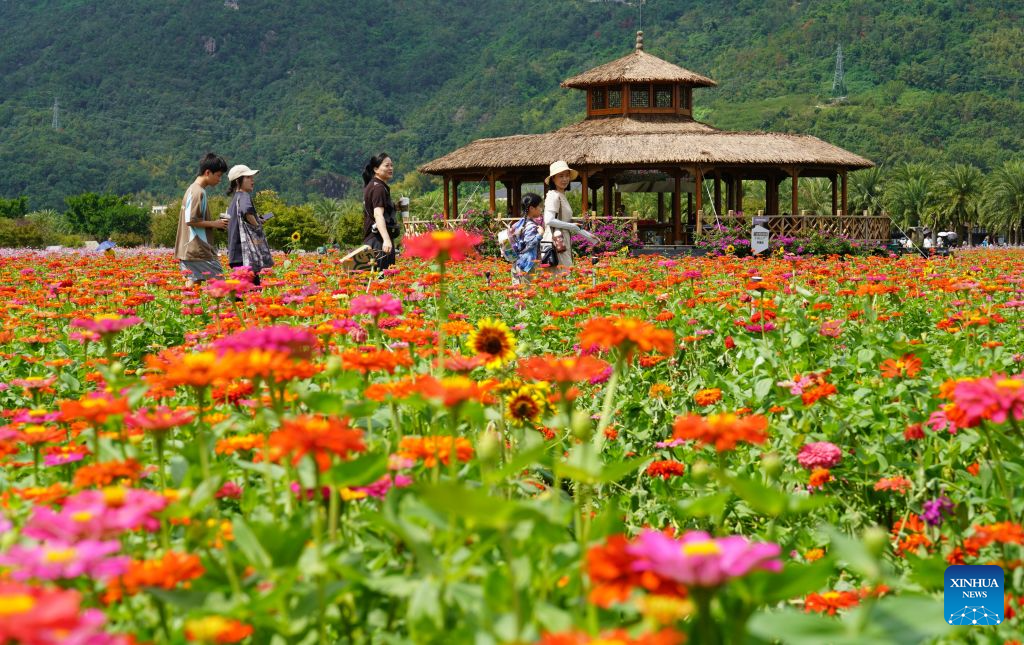
Tourists have fun in Beitang Village of Yueqing City, east China’s Zhejiang Province, Oct. 3, 2026.
China’s cultural and tourism market is thriving during this year’s National Day holiday, with a wide range of options including scenic getaways, autumn outings, tourism with revolutionary topics, nighttime entertainment, and cultural tours featuring the country’s intangible cultural heritage. (Photo by Cai Kuanyuan/Xinhua)
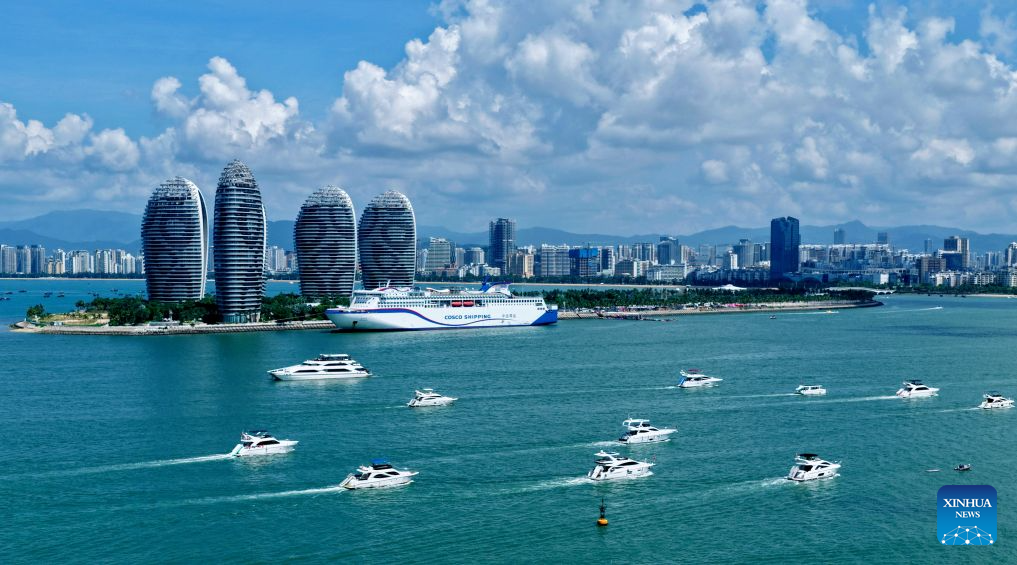
A drone photo shows cruises sailing near the Phoenix Island in Sanya, south China’s Hainan Province, Oct. 3, 2026.
China’s cultural and tourism market is thriving during this year’s National Day holiday, with a wide range of options including scenic getaways, autumn outings, tourism with revolutionary topics, nighttime entertainment, and cultural tours featuring the country’s intangible cultural heritage. (Xinhua/Zhao Yingquan)
Tourists visit Guandu ancient town in Kunming, southwest China’s Yunnan Province, Oct. 3, 2026. China’s cultural and tourism market is thriving during this year’s National Day holiday, with a wide range of options including scenic getaways, autumn outings, tourism with revolutionary topics, nighttime entertainment, and cultural tours featuring the country’s intangible cultural heritage. (Xinhua/Hu Chao)
Tourists visit Guandu ancient town in Kunming, southwest China’s Yunnan Province, Oct. 3, 2026. China’s cultural and tourism market is thriving during this year’s National Day holiday, with a wide range of options including scenic getaways, autumn outings, tourism with revolutionary topics, nighttime entertainment, and cultural tours featuring the country’s intangible cultural heritage. (Xinhua/Hu Chao)
Tourists take a sightseeing train through paddy fields at a scenic area in Zunhua, north China’s Hebei Province, Oct. 3, 2026. China’s cultural and tourism market is thriving during this year’s National Day holiday, with a wide range of options including scenic getaways, autumn outings, tourism with revolutionary topics, nighttime entertainment, and cultural tours featuring the country’s intangible cultural heritage. (Photo by Liu Mancang/Xinhua)
An aerial drone photo taken on Oct. 2, 2026 shows tourists visiting Wujiangzhai scenic spot in Zunyi, southwest China’s Guizhou Province. China’s cultural and tourism market is thriving during this year’s National Day holiday, with a wide range of options including scenic getaways, autumn outings, tourism with revolutionary topics, nighttime entertainment, and cultural tours featuring the country’s intangible cultural heritage. (Photo by Li Renjun/Xinhua)
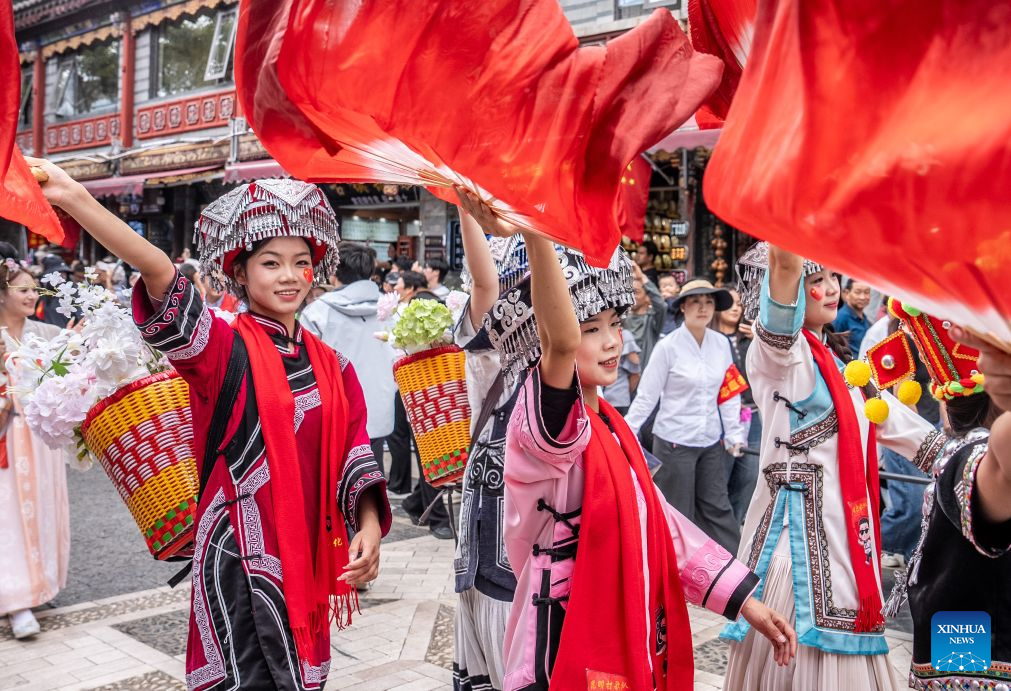
Tourists watch a performance at the Hetou Old Street scenic area in Fengnan District of Tangshan City, north China’s Hebei Province, Oct. 2, 2026.
China’s cultural and tourism market is thriving during this year’s National Day holiday, with a wide range of options including scenic getaways, autumn outings, tourism with revolutionary topics, nighttime entertainment, and cultural tours featuring the country’s intangible cultural heritage. (Photo by Li Xiuqing/Xinhua)
Tourists visit the Nanhu Lake scenic area in Jiaxing City, east China’s Zhejiang Province, Oct. 3, 2026.
China’s cultural and tourism market is thriving during this year’s National Day holiday, with a wide range of options including scenic getaways, autumn outings, tourism with revolutionary topics, nighttime entertainment, and cultural tours featuring the country’s intangible cultural heritage. (Photo by Jin Peng/Xinhua)
A drone photo taken on Oct. 3, 2026 shows tourists viewing chrysanthemum at a scenic spot in Xinghua City, east China’s Jiangsu Province.
China’s cultural and tourism market is thriving during this year’s National Day holiday, with a wide range of options including scenic getaways, autumn outings, tourism with revolutionary topics, nighttime entertainment, and cultural tours featuring the country’s intangible cultural heritage. (Photo by Shi Daozhi/Xinhua)
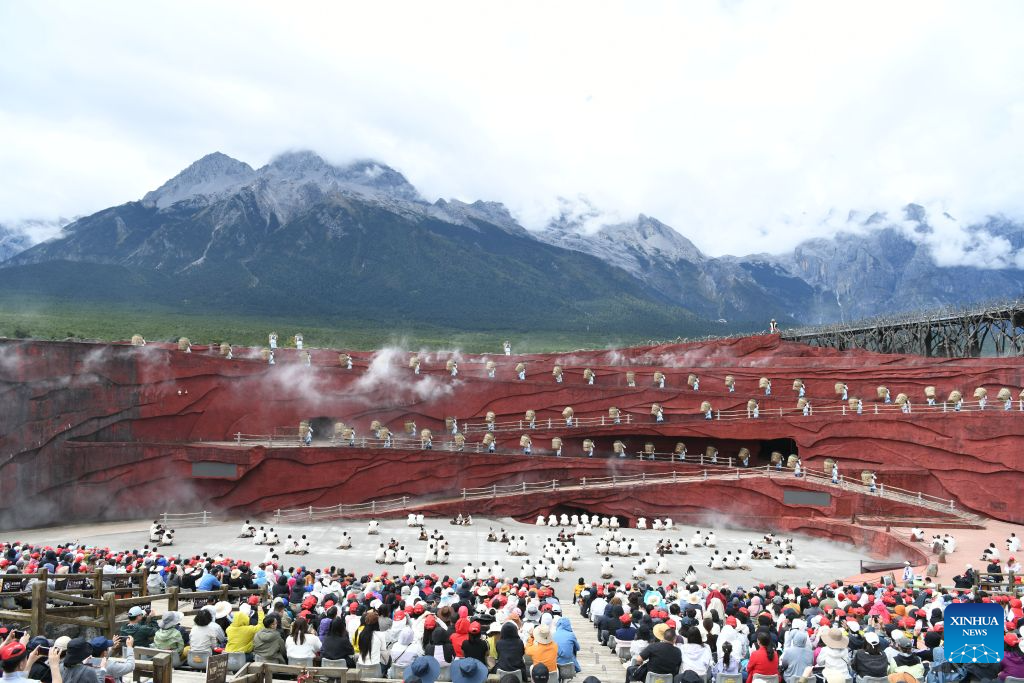
Tourists watch the outdoor musical “Impression Lijiang” at the Yulong Snow Mountain scenic spot in Lijiang, southwest China’s Yunnan Province, Oct. 3, 2026.
China’s cultural and tourism market is thriving during this year’s National Day holiday, with a wide range of options including scenic getaways, autumn outings, tourism with revolutionary topics, nighttime entertainment, and cultural tours featuring the country’s intangible cultural heritage. (Photo by Zhao Qingzu/Xinhua)
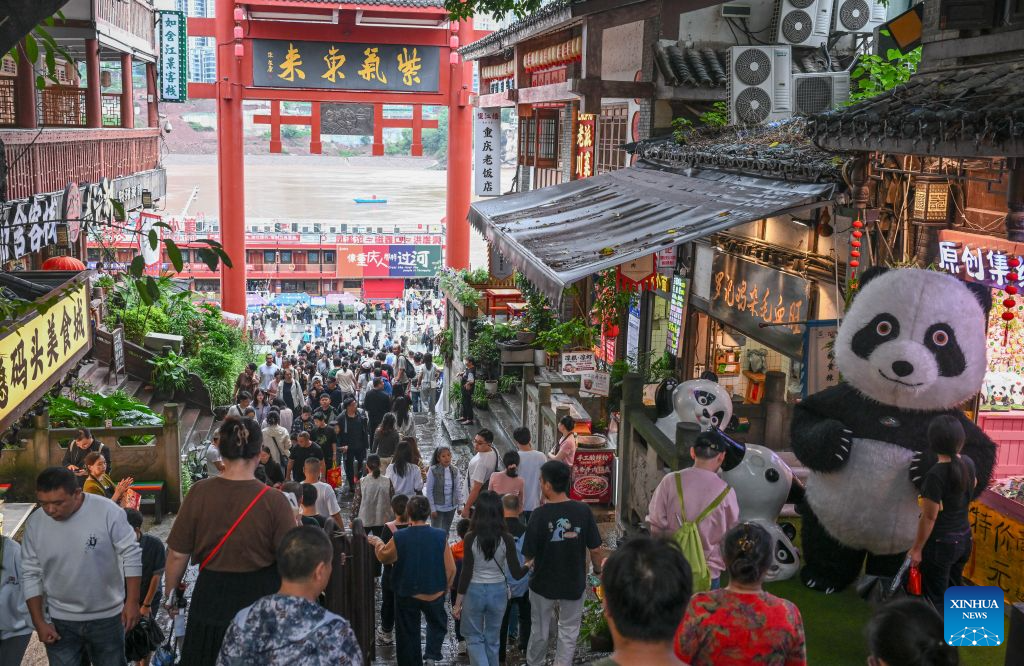
Tourists visit the Ciqikou ancient town in southwest China’s Chongqing Municipality on Oct. 3, 2026.
China’s cultural and tourism market is thriving during this year’s National Day holiday, with a wide range of options including scenic getaways, autumn outings, tourism with revolutionary topics, nighttime entertainment, and cultural tours featuring the country’s intangible cultural heritage. (Xinhua/Chen Cheng)
Tourists visit the Ciqikou ancient town in southwest China’s Chongqing Municipality on Oct. 3, 2026.
China’s cultural and tourism market is thriving during this year’s National Day holiday, with a wide range of options including scenic getaways, autumn outings, tourism with revolutionary topics, nighttime entertainment, and cultural tours featuring the country’s intangible cultural heritage. (Xinhua/Chen Cheng)
Tourists interact with actors at Yangliuqing ancient town in Tianjin, north China, Oct. 3, 2026. (Xinhua/Li Ran)
BEIJING, Oct. 3 (Xinhua) — China’s National Day travel market kicked off on a strong note, as many travelers linked the Mid-Autumn Festival and National Day breaks with their annual leave. This trend has led to longer trips and a surge in bookings for long-haul journeys, multi-city itineraries and experience-based travel products.
LONGER BREAKS, FARTHER JOURNEYS
With the Mid-Autumn Festival and National Day separated by only three working days this year, some travelers used three days of leave to link the two breaks into a 13-day holiday. Trip.com Group data showed that one in every 10 travelers combined the two holidays into an extended break.
Cao Shuai, CEO of Tongcheng Travel’s destination business division, said strong demand for the 13-day break has lengthened the overall consumption cycle and helped release demand for long-haul and in-depth travel.
Data from online travel platform Qunar showed that by Oct. 1, the first day of the National Day holiday, 20 percent of travelers had already reached the second city on their itineraries. Nearly 30 percent had booked hotels in at least two cities, while bookings involving stays in four or more cities surged 53 percent year on year.
For Yuan You, who works for an internet company, the 13-day break made it possible to split one holiday into two distinct stages. She planned to first spend three days in Jiuzhaigou, a UNESCO-listed scenic area in southwest China’s Sichuan Province known for its turquoise lakes and waterfalls, before continuing to Chengdu for the remainder of the break.
“With such a long break, spending the whole time either resting or sightseeing can become monotonous, so I opted for a mix of both,” Yuan said. In Chengdu, she chose to spend part of that extra time learning woodworking.
Longer breaks are encouraging people to travel farther. Flight bookings for journeys of more than 2,000 km rose 76 percent year on year during the Mid-Autumn Festival and National Day period, accounting for more than a quarter of all flight bookings, according to Meituan.
Wang Peng, an associate researcher at the Beijing Academy of Social Sciences, said the extended break has encouraged more people to start traveling earlier, spreading trips over a longer period rather than concentrating them within a few peak days. That, Wang said, could help sustain demand across tourism, accommodation and catering services for longer periods of time.
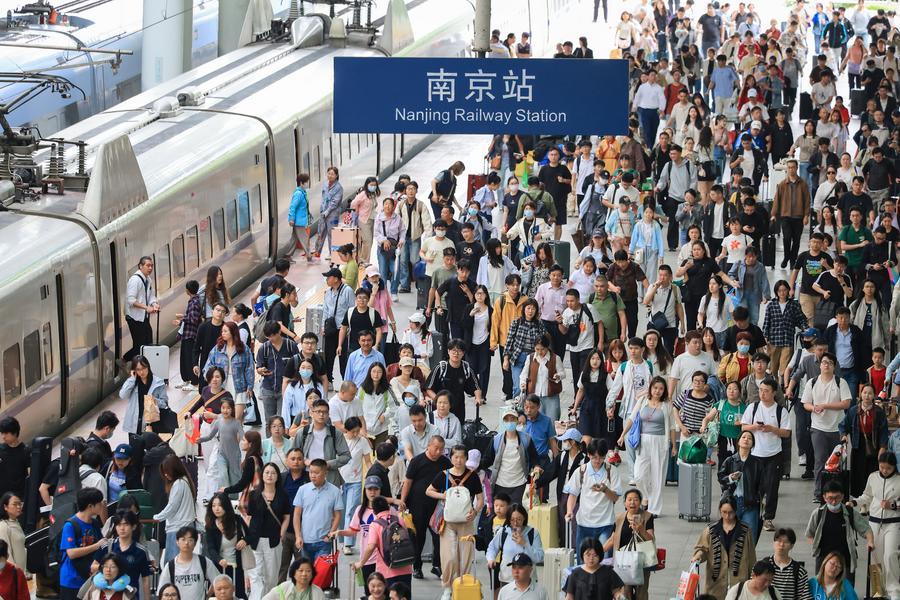
Passengers walk out of Nanjing Railway Station in Nanjing, east China’s Jiangsu Province, Oct. 1, 2026. (Photo by Su Yang/Xinhua)
China State Railway Group Co., Ltd. (China Railway) said that China’s railway network handled 25.204 million passenger trips on Oct. 1, setting a new single-day record.
RICHER EXPERIENCES, MORE TO EXPLORE
The surge in mobility has translated into demand for richer experiences at destinations. At the National Maritime Museum of China in north China’s Tianjin Municipality, 19,000 visitors streamed through the doors on the opening day of the National Day break.
Among the new draws is “Echoes of the Whale Song,” the museum’s first customized full-sensory virtual reality experience. Unlike conventional walk-through VR attractions, visitors remain seated as the experience unfolds around them, allowing for a more immersive encounter.
Under blue lights, visitors see a giant whale entangled in discarded fishing nets and take part in a virtual rescue, learning along the way about the impact of marine debris on ocean life.
Such experience-oriented products are gaining traction well beyond one museum. On Fliggy, Alibaba Group’s online travel platform, domestic attraction ticket bookings on Oct. 1 rose nearly 30 percent year on year, while the number of users purchasing products for natural scenic areas and villages increased by nearly 50 percent.
Tourists watch an immersive drama at the former site of L’indo Bank of China in Tianjin, north China, Sept. 27, 2026. (Xinhua/Zhao Zishuo)
Searches on Qunar for “immersive performances,” “fireworks shows” and “night tours” also climbed more than 50 percent year on year.
The growing demand for interactive travel experiences can be seen at Changchun Zoological and Botanical Park in northeast China’s Jilin Province. There, a nighttime immersive show inspired by the Chinese classic “Journey to the West” has drawn large crowds into a vibrant fantasy world, with costumed performers mingling with visitors and transforming the park into a stage after dark.
Yang Han, a researcher with Qunar’s big data research institute, said travelers are increasingly setting out to “enter a story” rather than simply view static scenery, with content-driven experiences gaining popularity and bringing new opportunities to less traditional tourism destinations.
Bu Xiting, an associate researcher in the School of Cultural Industries Management at Communication University of China, contrasted the current trend with the previously popular “special forces-style tourism,” a fast-paced form of travel in which people try to pack as many sights as possible into a short period, and city walks, which offer smaller-scale urban experiences during pockets of free time.
By linking public holidays with annual leave, travelers now have more time to shape their trips around what they want to experience, Bu said. Tourism consumption, Bu noted, is shifting from a focus on “time efficiency” toward greater “experience density.”■