Paul Kasimu stands out as a remarkable example of transformative leadership in the field of human resources—blending professional excellence with a deep sense of humanity and purpose.
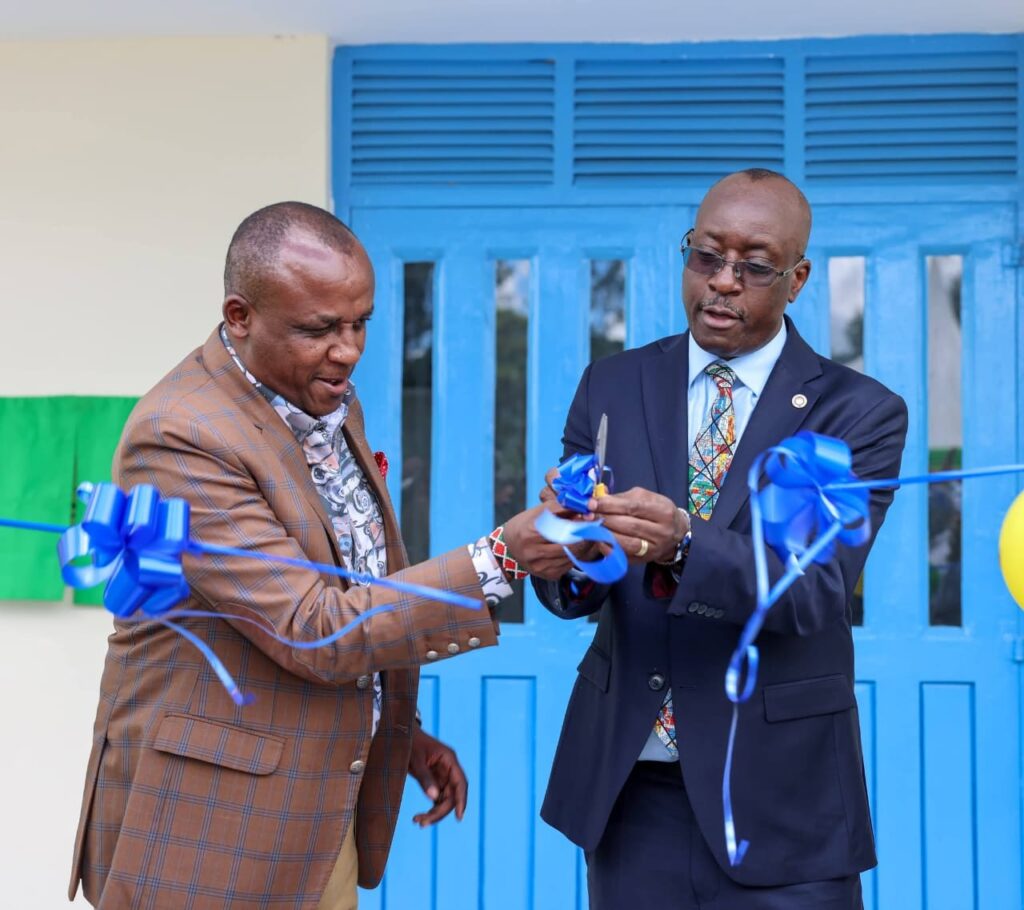
The accompanying image powerfully captures this impact. Standing beside a commemorative plaque marking the construction and equipping of a maternity facility at Mutulani Dispensary in Makueni, Kasimu’s presence reflects more than just professional achievement—it symbolizes service to humanity. The project, funded by the Mpesa Foundation and handed over in partnership with county leadership, is a clear testament to his role as a project champion committed to improving lives.
As a Chief Human Resources Officer and accredited Executive Coach, Kasimu has consistently demonstrated a rare ability to align organizational strategy with people-centered growth. His expertise in HR strategy implementation, leadership and talent development, and employer branding has not only strengthened institutions but also empowered individuals to reach their full potential. He understands that the true strength of any organization lies in its people—and he lives by that principle.
Beyond the boardroom, his work speaks volumes. The maternity facility captured in the image is not just a building—it is a lifeline for mothers, children, and families in Makueni County. It represents hope, dignity, and access to quality healthcare. It is here that Kasimu’s powerful belief comes alive: that motherhood should be celebrated and not be a death sentence.
His compassion is evident not only in words but in action. By championing such initiatives, he has directly contributed to addressing maternal health challenges and ensuring safer environments for women to give life. This is leadership with a human face—leadership that prioritizes impact over recognition.
Those who know him describe him as a man with a heart of gold—approachable, thoughtful, and deeply committed to uplifting others. The image reflects this warmth, capturing a leader who is comfortable among people and proud of collective achievement rather than individual glory.
Kasimu’s leadership is not defined by titles, but by the lives he touches. Whether mentoring future leaders, shaping inclusive workplace cultures, or driving community-focused projects, he brings integrity, empathy, and vision into every space he occupies.
In a world where leadership is often measured by power and prestige, Paul Kasimu offers a refreshing alternative—one rooted in service, compassion, and purpose. He represents the very best of what leadership can be: a force for good, a voice for the vulnerable, and a builder of lasting change.
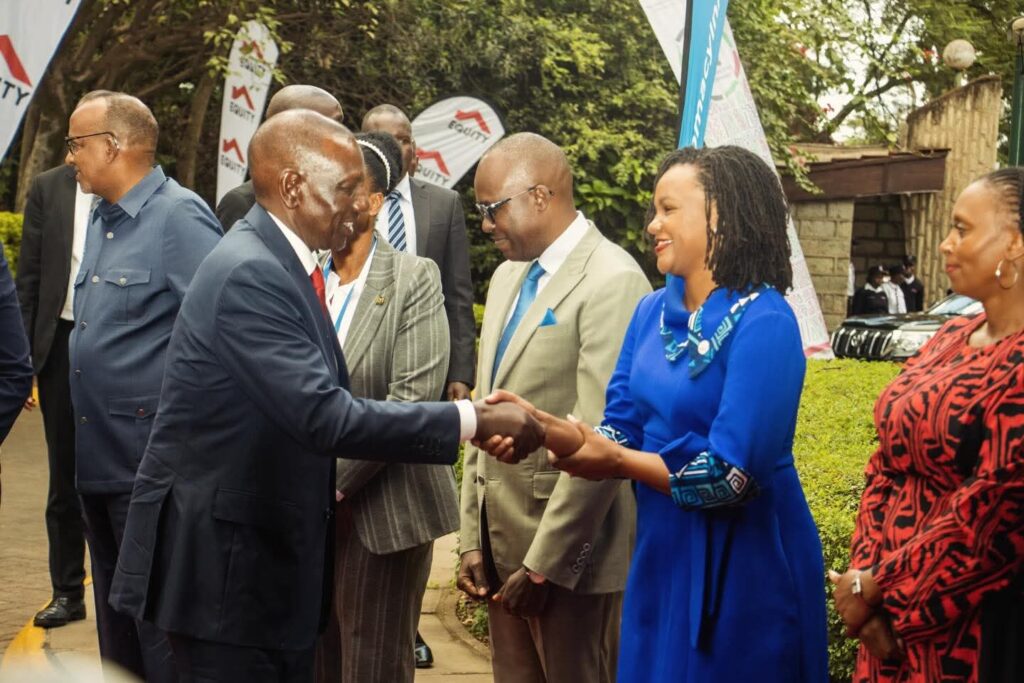
Roseline Njogu, Principal Secretary in the State Department for Diaspora Affairs, on Saturday morning welcomed William Samoei Ruto to the 19th Ambassadors’ Conference in Nairobi, as Kenya’s diplomatic corps gathered for a high-level strategic meeting.
The conference has brought together all Kenyan ambassadors from missions across the world, offering a rare opportunity for face-to-face engagement on how to advance the country’s national interests in an increasingly complex and fast-changing global environment.
Speaking at the event, PS Roseline emphasized the importance of aligning Kenya’s diplomatic efforts with emerging global realities. She noted that the meeting is not just a routine engagement, but a critical platform for reflection, strategy, and renewed focus.
“All our ambassadors are home this weekend to interrogate how to advance Kenya’s national interests in a rapidly evolving geopolitical landscape,” she said, highlighting the urgency of adapting to shifting international dynamics.
The presence of President Ruto at the conference underscores the government’s commitment to strengthening Kenya’s foreign policy and enhancing its global influence. His administration has placed significant emphasis on economic diplomacy, diaspora engagement, and strategic partnerships as key drivers of growth and development.
PS Roseline, who plays a central role in diaspora affairs, reiterated the importance of leveraging Kenyans living abroad as vital partners in national development. She noted that beyond remittances, the diaspora contributes skills, innovation, and global networks that can significantly boost Kenya’s socio-economic progress.
The conference is expected to focus on key areas including trade and investment promotion, strengthening bilateral relations, and positioning Kenya competitively on the global stage. Ambassadors are also engaging on emerging issues such as climate change, digital transformation, and global security concerns.
In addition, the forum provides a platform for reviewing Kenya’s diplomatic performance and identifying new opportunities in international cooperation. With global trends rapidly shifting, the need for agile and forward-looking diplomacy has never been more critical.
The theme #DiplomacyInActionKE reflects a results-oriented approach, with a focus on tangible outcomes that directly benefit the country and its citizens. It signals a move towards more proactive engagement in global affairs.
As discussions continue, the conference is expected to generate actionable strategies that will guide Kenya’s diplomatic missions in advancing the country’s interests abroad.
PS Roseline’s leadership in welcoming the President and coordinating diaspora-focused priorities highlights her growing influence in shaping Kenya’s external engagement. The conference ultimately reaffirms Kenya’s commitment to strong, strategic, and responsive diplomacy in a rapidly changing world.
Incoming Member of Parliament for Lari Constituency on a Democracy for Citizens Party ticket, Hon. Joseph Karichu has called upon all eligible residents to come out in large numbers and register as voters, emphasizing the power of the ballot in shaping the constituency’s future.
Riding on the popular phrase “Mimi niko kadi”—a powerful expression affirming one’s readiness through voter registration—Hon. Karichu urged wananchi not to be left behind in this crucial democratic exercise.
A Vision for Transformation
Hon. Karichu has articulated a clear vision of bringing transformative change to Lari, a region he notes has, for a long time, lagged behind in development. His commitment is rooted in addressing the needs of the people and unlocking the constituency’s full potential.
Tried, Tested, and Proven
Having previously served as an elected MCA, Hon. Karichu built a strong reputation for delivering beyond expectations. His leadership record reflects:
Consistent service delivery
Community-focused development
Accountability and responsiveness
A Leader for the People
Described by many as approachable and kindhearted, Hon. Karichu is widely seen as a leader who genuinely puts the interests of the people first. His connection with the grassroots continues to inspire confidence and support across the constituency.
The Call to Action
As momentum builds toward the next electoral cycle, his message remains clear: register, participate, and be counted. For the people of Lari, “Yeye ako kadi” is more than a slogan—it is a call to action toward a new chapter of inclusive and people-driven leadership.
The Super Senator Veronica Maina has expressed optimism that the United Democratic Alliance (UDA) remains a strong and formidable force in Kenya’s political landscape.
Senator Maina cited the party’s recent landslide victories in the by-elections as clear evidence of continued public confidence in UDA’s vision and leadership.
In the recently concluded by-elections, UDA secured four key wins:
Mohamed Tubi – Isiolo South MP seat with 7,352 votes
Duncan Muratia – Evurore ward with 7,853 votes
Peterson Njeru – Muminji ward with 3,207 votes
Elphas Shalakha – West Kabras ward with 3,317 votes
Senator Maina congratulated the winning candidates and lauded the party supporters for their dedication and commitment during the campaign. She emphasized that the victories reflect the electorate’s trust in UDA’s development-focused agenda and urged leaders to remain accountable and responsive to the needs of their constituents.
She further called on all party members to remain united and continue championing policies that empower citizens, promote economic growth, and strengthen national cohesion.
Transformation is steadily taking root in Nkomo Ward, Tigania West Constituency, where targeted economic empowerment initiatives are changing lives and strengthening community resilience.The Hon. Woman Representative for Meru County, Karambu Kailemia, through the National Government Affirmative Action Fund (NGAAF), is championing impactful grassroots projects aimed at uplifting women, improving access to essential services, and promoting sustainable livelihoods.Among the flagship initiatives is the **Malibi Vision Water Project**, designed to enhance access to clean and safe water for households and institutions in the area. The project is expected to ease the burden on families who previously walked long distances in search of water, while also improving sanitation and public health outcomes.In addition, the **Ciaburi Development Women Group** has received support to strengthen women-led development initiatives. The funding is enabling members to expand income-generating activities, enhance financial independence, and play a more active role in local economic growth.Recognizing the importance of technology in modern enterprise, Hon. Kailemia has also backed the **Digital Tumaini Women Group**, an initiative focused on promoting digital empowerment and equipping women and youth with skills to participate in the digital economy. The project is opening new opportunities for innovation, online entrepreneurship, and skills development.Speaking during engagements with beneficiaries, Hon. Kailemia reaffirmed her commitment to ensuring NGAAF resources directly reach grassroots groups and translate into measurable impact.“These projects are about creating sustainable change. When we empower women, improve access to water, and invest in digital skills, we strengthen families and build a stronger local economy,” she said.Residents have welcomed the interventions, noting that the projects are not only addressing immediate needs but also laying the foundation for long-term socio-economic progress.
As economic empowerment efforts gain momentum in Tigania West, the initiatives stand as a testament to how strategic use of affirmative action funds can deliver tangible results at the community level — transforming lives one project at a time.
The National Chairman of the UDA Wanabiashara Caucus, Francis Mbogo, has firmly stated that the Deputy President’s seat is not up for political bargaining.
Addressing the press alongside members of Warembo na Fire, Mr. Mbogo dismissed ongoing political maneuvers by the Orange Democratic Movement (ODM) and its affiliate parties, asserting that their push will not alter the current political reality.
“The Deputy President’s position remains firmly held and is not available for negotiation,” he declared.
Mr. Mbogo reaffirmed that the incumbent Deputy President, Kithure Kindiki, is the bona fide holder of the office and continues to enjoy strong support.
He emphasized that the UDA Wanabiashara Caucus, Warembo na Fire and like-minded stakeholders remain united and focused on safeguarding stability, enterprise growth and national development.
“The focus must remain on service delivery, empowering businesses and strengthening the economy — not premature political distractions,” he added.
The caucus maintained that it will continue mobilizing its members countrywide to protect its political interests while championing unity and economic transformation.
Nairobi, Kenya – Prime Cabinet Secretary Dr. Musalia Mudavadi has reaffirmed Kenya’s commitment to strengthening its strategic partnership with Egypt, emphasizing the importance of mutual cooperation in promoting regional stability and economic growth.
During a meeting with Egyptian Foreign Minister Dr. Badr Abdelatty, Mudavadi highlighted the historic ties between the two nations, citing their shared African heritage and commitment to regional progress. The two leaders discussed ways to deepen economic cooperation, including the establishment of a Kenya-Egypt Joint Business Council and the streamlining of trade facilitation processes.
The talks also focused on water security and the Nile Basin, with Kenya reaffirming its principled position that no party should be left worse off in the utilization of shared water resources. Mudavadi emphasized the need for African-led, inclusive, and dialogue-based approaches to managing the Nile Basin, and Egypt’s role in promoting peace and security in the region.
The meeting underscored Kenya’s commitment to advancing its strategic partnership with Egypt, with Mudavadi expressing optimism about the potential for growth and development in the region. The two nations are set to hold a Mid-Term Review to assess progress and refine their strategic priorities, with Egypt’s President Abdel Fattah El-Sisi expected to visit Kenya later this year.
Nairobi, Kenya – As the nation navigates a heightened political season, GuardNow Security Group has issued a public advisory calling for increased vigilance in religious spaces. The advisory, signed by Chief Executive Officer Dr. Peter Mwangi, emphasizes the need to safeguard worshippers and clergy during this sensitive period.
Dr. Mwangi, who is also a United Nations Peace Ambassador, who has been recognized for his commitment to harmony and peace. He is a recipient of the Human Harmony Award from the United Nations and the Visionary Peace Award from the International Peace Studies Institute. His leadership in both security and peace advocacy underscores the importance of protecting sacred spaces during times of political tension.
“Religious spaces are sacred and must remain safe havens for prayer, reflection, and community,” Dr. Mwangi said in the statement.
The advisory highlights several precautionary measures:
Worshippers should remain alert to suspicious behavior, unattended packages, or unusual activity.
Religious institutions are encouraged to establish controlled entry and exit points, with ushers or volunteers assisting in monitoring movement.
Congregations should be familiar with evacuation routes and emergency contacts.
Leaders are urged to maintain open communication with local law enforcement and security agencies for rapid response.
Worship spaces should remain neutral zones, discouraging political campaigning or debates that could escalate tensions.
Dr. Mwangi further stressed the importance of community vigilance, urging congregants plus kenyans in general to look out for one another and report concerns immediately. “By remaining vigilant and cooperative, we can ensure that our places of worship continue to be sanctuaries of hope and resilience,” he added.
GuardNow Security Group reaffirmed its commitment to supporting communities during this period, calling for unity, peace, and responsibility from both leaders and worshippers.
Nairobi — The Medium Liquor Traders Association (MELTA) has welcomed the launch of LiquorPay, Nairobi City County’s fully automated digital liquor licensing platform, calling it a long-overdue reform that will improve efficiency, transparency, and fairness in the sector.
Speaking on behalf of the association, MELTA Chairman Mr. Frank Mbogo congratulated Governor Johnson Sakaja and the county leadership for implementing a system that traders have advocated for over the past two years.
“The introduction of LiquorPay is a progressive move that addresses long-standing challenges such as bureaucracy, delays, and opaque procedures in liquor licensing,” Mr. Mbogo said. He noted that the fully automated system—covering application, inspection, payment, and approval—will save traders time and improve confidence in county processes.
Mr. Mbogo aligned MELTA’s sentiments with those of county officials, praising County Executive Dr. Anastasia Nyalita and her team for prioritising traders and simplifying access to government services through technology.
While welcoming the platform, MELTA cautioned that its success depends on faithful implementation. “We hope this system will not be sabotaged by vested interests or compromised by a return to old practices. Traders expect integrity, consistency, and fairness in its application,” Mr. Mbogo said.
East Africa 24 names David Munowenyu as Africa’s Fastest Rising Entrepreneur of 2026 recognizing the continent’s most influential business leaders driving transformative change across African markets.
David Munowenyu is a humble entrepreneur who holds quiet influence and soft power across the African Continent. Munowenyu has rubbed shoulders with some of Africa’s historic political , business and social leaders. Munowenyu puts in the work without cameras and media letting his results speak for themselves.
Born and raised in Zimbabwe’s Manicaland Province which borders Zimbabwe and Mozambique , Munowenyu has built a multi-million dollar empire spanning energy, healthcare, and international logistics. What sets Munowenyu apart isn’t just the scale of his ventures it’s his systematic approach to building profitable enterprises that simultaneously advance Africa’s development agenda.
The Munowenyu Portfolio:
Miraco Energy| Executive Chairman Combating energy poverty across the continent by delivering clean, affordable power to industries, mines, homes, and hospitals. Munowenyu’s energy play positions him at the intersection of Africa’s infrastructure deficit and its clean energy transition—a multi-billion dollar opportunity.
Discovery Ambulance Services | Founder & CEO Zimbabwe’s premier emergency medical provider and strategic partner in the Presidential Emergency Medical Scheme. Discovery has become the first responder of choice, tackling maternal mortality and road traffic deaths while building a scalable model for emergency healthcare across underserved markets.
Strantview Distributors | CEO U.S.-based international logistics operation demonstrating Munowenyu’s ability to navigate cross-continental markets and complex global supply chains.
The Munowenyu Philosophy
“As Africans, we owe it to ourselves to build and grow our countries and continent by investing in projects that serve and strengthen our communities,” says Munowenyu, articulating a business philosophy that rejects the false choice between profit and purpose.
His approach: identify critical market gaps where commercial opportunity and social impact converge, then build scalable solutions.
His Impact Model
When maternal emergencies strike in Zimbabwe’s rural areas, Discovery Ambulance Services responds. Every saved life represents both social impact and proof of concept for Munowenyu’s thesis: world-class services can be profitably delivered in emerging markets when properly structured.
The numbers validate his approach. Discovery addresses multiple UN Sustainable Development Goals through a single business model—maternal health, road safety, economic growth—while generating revenue and creating employment in line with the popularised 2030 Agenda.
Strategic Philanthropy
The David Munowenyu Foundation, co-led with his wife Chantelle, operates as a strategic complement to his business ventures. Over 500 students receiving school uniforms, 50 full scholarships awarded, nutrition programs in underserved communities—the Foundation’s work creates downstream markets and workforce development for Munowenyu’s enterprises.
The Chicken Diet Supplementary Programme at Victoria Chitepo Hospital exemplifies this integrated approach: monthly provisions worth over $1,000 support the 250-bed facility while creating sustainable income for small-scale farmers who supply the program. Private capital strengthening public infrastructure.
Munowenyu’s ability to navigate complex institutional relationships sets him apart. His portfolio includes partnerships with presidential medical schemes, Zimbabwe Prisons and Correctional Services, and multiple public sector agencies—demonstrating fluency in the public-private dynamics essential for doing business in African markets.
A self-described “Pan African Global Citizen” and devout Christian, Munowenyu explicitly frames his work within the African Union’s Agenda 2063, positioning himself as both business leader and continental development stakeholder.
Why He Matters Now
Africa’s $3 trillion economy and rising population makes the continent an ideal investment and business destination. Munowenyu therefore becomes a name that matters in the conversation. Munowenyu has a reach in Eswatini , Zambia , Tanzania , Zimbabwe , Ethiopia among several other nations in Africa and across the globe positioning him as one of Africa’s most influential entrepreneurs.
Munowenyu seeks to help achieve Africa’s ambitious development targets while creating employment for the world’s youngest population. Munowenyu is the impact-oriented entrepreneur building businesses at scale.
Outside of the Corporate world and boardroom business Munowenyu has an anti-drug programs and education initiatives (rooted in his own journey from Mutanda Primary School to Mutare Boys’ High School) reflect strategic thinking about long-term human capital development—the foundation of sustainable economic growth.
Munowenyu champions what he calls “African indigenous philanthropy”—successful Africans systematically reinvesting in continental development. It’s a model gaining traction as Africa’s private sector increasingly drives development outcomes traditionally left to governments and NGOs.
Whether negotiating energy contracts, deploying ambulances to save lives, or managing international supply chains, David Munowenyu is building the template for 21st-century African entrepreneurship: commercially excellent, socially transformative, and unapologetically Pan-African.
For investors, development partners, and policymakers seeking authentic engagement with Africa’s emerging business elite, Munowenyu offers something increasingly rare—proven execution across multiple sectors, genuine community roots, and strategic vision aligned with the continent’s development trajectory.