Daily Kenya

Categories
Uncategorized

Xinhua Headlines: Pearl River Delta transforms from world factory to technology hub

 The Pearl River Delta in south China’s Guangdong Province has transformed from a base of traditional manufacturing industries — with low technical content and added value — into an international highland for science and technology.

* Dubbed the city of home appliances in China, Shunde District of Foshan City has promoted more than 33 percent of major industrial enterprises to realize digital transformation and intelligent production in recent years.

* Taking advantage of leading economic strengths in the country, Guangdong has also been devoted to building scientific apparatus and attracting national-level research institutes.

GUANGZHOU, July 9 (Xinhua) — The Pearl River Delta in south China’s Guangdong Province has over the past decade gradually transformed from a base of traditional manufacturing industries — with low technical content and added value — into an international highland for science and technology.

A host of traditional manufacturing enterprises in the Pearl River Delta have embraced a digital transformation over the past 10 years. Guangdong Province has also made efforts to strengthen weak areas in basic scientific research and accelerate its cultivation of strategic emerging industries.

DIGITAL TRANSFORMATION

In a production workshop at Midea Group, a Chinese home appliance giant based in Foshan City of Guangdong, lines of industrial robots perform operations while two uniformed technicians monitor parameters on a digital screen.

Midea Group, which owns four “lighthouse factories,” has transformed from a traditional home appliance manufacturing company into a benchmark company for digital production in the Pearl River Delta.

Midea started its digital transformation in 2011. “By the end of 2021, our revenue had increased by 156 percent and net profit had increased by 333 percent,” said Zhang Xiaoyi, vice president of the company.
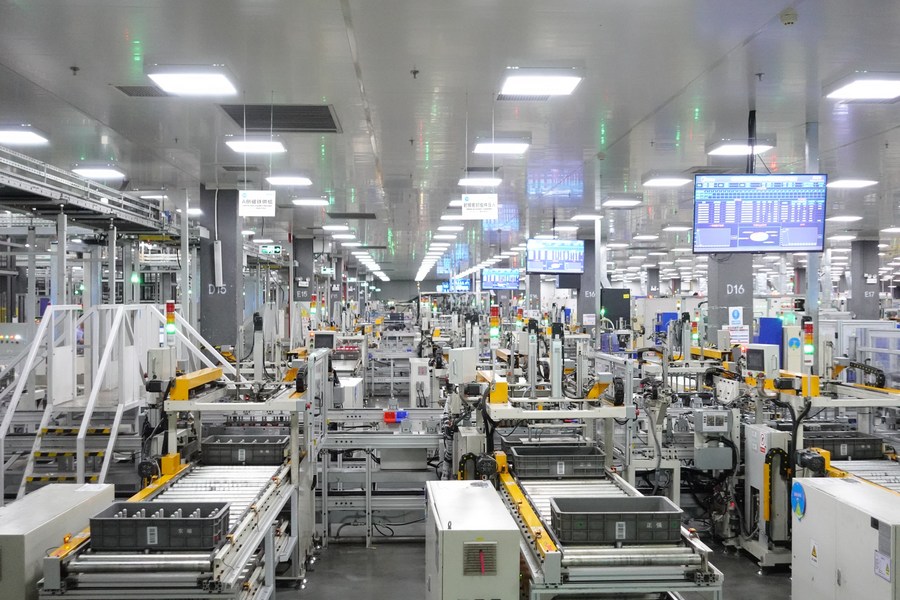
Photo taken on April 1, 2021 shows a workshop of a microwave oven factory of Midea Group, a Chinese home appliance giant, in Foshan City, south China’s Guangdong Province. (Xinhua/Li Jiale)

Dubbed the city of home appliances in China, Shunde District of Foshan City has promoted more than 33 percent of major industrial enterprises to realize digital transformation and intelligent production in recent years.

More than 80 percent of the major enterprises in Foshan are expected to achieve digital transformation by the year 2026, said Zheng Ke, secretary of the Foshan Municipal Committee of the Communist Party of China.

In addition to Midea, more small and medium-sized enterprises (SMEs) in the area are striving to achieve digital transformation.

Foshan has established a manufacturing transformation and development fund to promote the digital transformation of SMEs.

Guangdong KEDA Hydraulic Technology Co., Ltd. in Foshan has been exploring digital transformation since 2005. Up to now, the company has achieved full 5G coverage in its production workshops. General Manager Yang Xuexian said the company has saved 40 percent of its energy consumption through digital transformation, and its per capita output value has increased by more than 60 percent.

Shiling Township in Guangzhou, capital of Guangdong Province, is known as China’s leather capital. About 8,800 bag and suitcase companies there manufacture more than 700 million bags and other leather products every year. Facing the adverse influence of COVID-19, many enterprises are seeking the help of digitalized machines.

Longzhuo Leather Co., Ltd. chose to introduce robots to help improve efficiency. Huang Haifeng, general manager of the company, said that production efficiency has increased by 10 percent in just half a year. “The investment in digital transformation is 800,000 yuan, and it helps save 800,000 yuan a year. So why not try digital transformation?” Huang added.

Guangdong has promoted the digital transformation of about 22,500 major industrial enterprises. The province aims to realize digital transformation for an accumulative number of 50,000 enterprises by 2025, according to the Guangdong Provincial Department of Industry and Information Technology.

STRENGTHEN WEAK LINKS

Insufficient research in basic science has long been a constraint on Guangdong’s development. Taking advantage of leading economic strengths in the country, Guangdong has been devoted to building scientific apparatus and attracting national-level research institutes in recent years.

Construction of the China Spallation Neutron Source, China’s first pulsed neutron source facility, started a decade ago in Dongguan City. Chen Hesheng, an academician of the Chinese Academy of Sciences, served as chief commander and project manager of the engineering headquarters at the age of 65.

As an advanced experimental platform for multi-disciplinary research, the facility is able to boost high-tech development in many application fields such as material sciences, life sciences, resource environments and new energy.

“The successful construction of the spallation neutron source in Dongguan shows the determination and achievements of Guangdong Province to promote scientific and technological innovation,” Chen said.
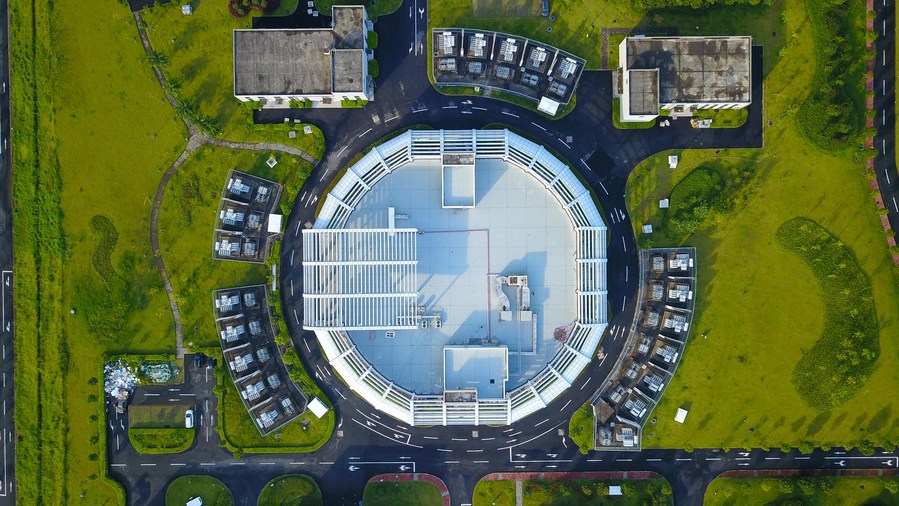
Aerial photo shows the China Spallation Neutron Source in Dongguan City, south China’s Guangdong Province, on July 24, 2019. (Xinhua/Liu Dawei)

A batch of major scientific and technological infrastructure has taken a leap forward in the Pearl River Delta, including the national supercomputer centers in Guangzhou and Shenzhen, the underground neutrino observatory in Jiangmen, and the high-intensity heavy-ion accelerator facility in Huizhou.

The expenditure on basic research in Guangdong has doubled in the past five years. More than one-third of provincial financial funds for science and technology during the 14th Five-Year Plan period (2021-2025) will be invested in basic research, according to Wu Shiwen, deputy director of the provincial department of science and technology.

The Guangdong-Hong Kong-Macao Greater Bay Area has developed complete industrial chains. An open and inclusive innovation atmosphere has been formed in the region, attracting talent, capital and other resources from all over the world, said Lionel M. Ni, president of the Hong Kong University of Science and Technology (Guangzhou), which is scheduled to open in September.

NEW DEVELOPMENT DRIVERS

In Nansha District of Guangzhou, passengers are able to find the whereabouts of 500 stops for self-driving taxis using the mobile application PonyPilot+. Chinese autonomous vehicle company Pony.ai has introduced the “Robotaxi” services in the district’s core area covering 300 square kilometers.

“With the continuous growth of research and development as well as the application of autonomous driving in China in recent years, China is no longer a follower, but a global leader in terms of policy openness, technological development and user acceptance in this field,” said Mo Luyi, vice president of Pony.ai.

A self-driving taxi using the mobile application PonyPilot+ waits for passengers in Nansha District of Guangzhou, south China’s Guangdong Province, on June 15, 2022. (Xinhua/Liu Dawei)

Pony.ai is just one of the enterprises in the Pearl River Delta area that play a leading role in various sectors. In the past decade, Huawei has risen rapidly in the fields of network communication and intelligent terminals, BYD in electric vehicles, DJI in civil drones, Tencent in the mobile internet, and BGI in life sciences. All of these rises have taken a place in the global technology industry.

Statistics from the Department of Science and Technology of Guangdong Province show that the total number of high-tech enterprises in Guangdong exceeded 60,000 in 2021, ranking first in China for six consecutive years. Science and technology enterprises have become an important force in Guangdong’s efforts to create a new development pattern.

A number of leading science and technology enterprises that are internationally competitive have emerged, and a number of hard and core technology enterprises in emerging industries have been cultivated in Guangdong, and they have become the backbone of the province’s high-quality economic development, said Gong Guoping, director of the provincial department of science and technology.

(Video reporters: Zhang Jiajin, Wang Pan, Sun Fei, Li Sijia; Video editors: Chen Sihong, Yin Le, Liu Xiaorui)  ■
Categories
Uncategorized

From economic backwater to industrial landmark, a case study of China’s high-quality growth

* Once a poverty-stricken region blighted by adverse geographical factors and poor infrastructure, the city of Ningde has come a long way in the past decade, shaking off poverty while developing an array of leading industries.

* Ningde is ushering in a bright future with the rise of a new industrial town. The city is now home to a number of world-class enterprises including automotive lithium-ion battery maker CATL.

* The city’s four leading industries — lithium-ion batteries, new-energy vehicles, novel stainless steel and copper — are developing into a complementary industrial cluster.   

FUZHOU, July 8 (Xinhua) — Contemporary Amperex Technology Co., Ltd. (CATL) has been drawing increasing attention from the global electric vehicle (EV) market over the past few years.

The world’s leading automotive lithium-ion battery maker, with around one-third of the global market share, is headquartered in the city of Ningde, east China’s Fujian Province.

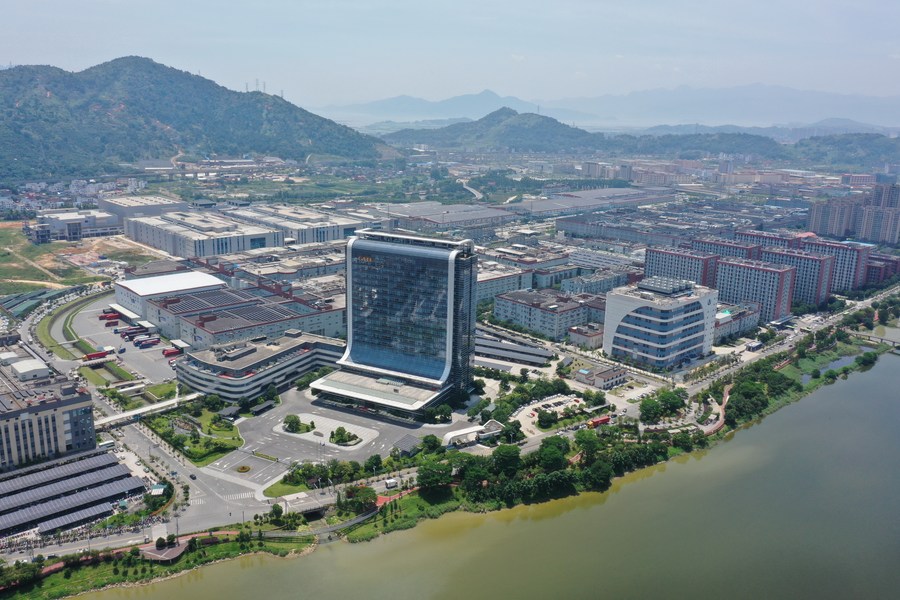
Aerial photo taken on June 24, 2022 shows the headquarters of Contemporary Amperex Technology Co., Ltd. (CATL) and its manufacturing base in Ningde, east China’s Fujian Province. (Xinhua/Lin Shanchuan)

Once a poverty-stricken region blighted by adverse geographical factors and poor infrastructure, the city has come a long way in the past decade, shaking off poverty while developing an array of leading industries. And it is now striving to become a globally influential industrial landmark.

NEW LOOK

Fourteen years ago, when Zhan Shuzhi, along with more than 100 colleagues, was posted to a new manufacturing base in Ningde by his former employer in neighboring Guangdong Province, some colleagues grumbled about the likelihood of success given the muddy roads, inadequate facilities and inconvenient transportation.

“We will make it. I can feel the enterprising spirit of this city,” Zhan, a native of Ningde, recalled his words reassuring his colleagues at that time.

Back then, Ningde was determined and committed, more than ever, to the fight against poverty, with an aim to change its economic backwater image.

“When we first came here, only four factory buildings and two dormitory buildings stood beside mudflat,” recalled Zhan, who is now the chairman of CATL’s labor union.

Along with the rapid rise of CATL, which was founded in 2011 in Ningde, the mudflat areas have given way to rows of manufacturing plants where EV batteries are produced around the clock.

From 2012 to 2021, the city’s gross domestic product has nearly tripled to 315.1 billion yuan (about 47 billion U.S. dollars), with per capita GDP exceeding 100,000 yuan for the first time.

The boomtown has taken on a fresh new look after bidding farewell to extreme poverty. A large transport network has been built. In areas where bug swarms and villagers’ motorbikes were earlier the loudest sounds, factories are now buzzing while ports are busy handling containers.   

NEW INDUSTRIAL TOWN

Ningde is ushering in a bright future with the rise of a new industrial town. The city is now home to a number of world-class enterprises besides CATL.

The world’s largest stainless steel producer Tsingtuo Group has a presence here. China’s leading carmaker SAIC Motor has built a smart factory with the largest car assembly workshop in Asia.

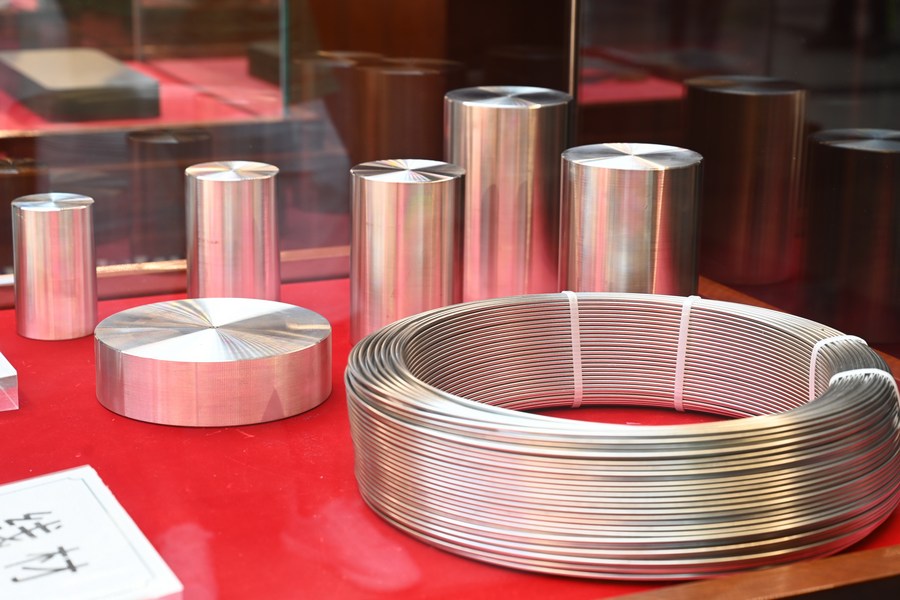
Stainless steel wires and bars are displayed in an exhibition area of Tsingtuo Group in Ningde, east China’s Fujian Province, June 24, 2022. (Xinhua/Lin Shanchuan)

The city’s four leading industries — lithium-ion batteries, new-energy vehicles, novel stainless steel and copper — are developing into a complementary industrial cluster.

“Thanks to a world-class natural deep-water harbor, comprehensive transportation networks and an industrial cluster, Ningde is now full of development possibilities,” said Zhou Xiaoming, chief engineer of the Research Center of Tsingtuo Group.

The city boasts a rather comprehensive industrial chain for the four leading industries. It has more than 80 lithium-ion battery-related projects, 46 suppliers for the SAIC Ningde factory, and more than 70 projects to support Tsingtuo’s stainless steel industry.

This has greatly reduced the costs of procurement and logistics, helping the four leading industries enhance their competitiveness. In 2021, their value-added industrial output increased 59.1 percent over the previous year.

FROM POVERTY TO PROSPERITY

“As an innovation-driven new-energy enterprise, CATL has transformed itself from an industry follower to an industry leader,” said CATL’s founder Zeng Yuqun, also known as Robin Zeng.

CATL is committed to advancing the high-quality and sustainable growth of the global battery industry.

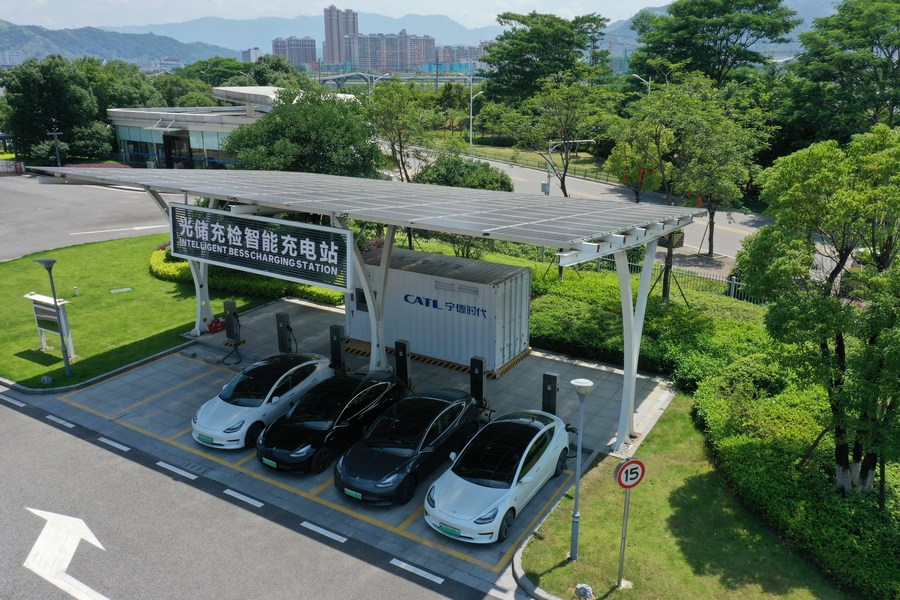
Aerial photo taken on June 24, 2022 shows an intelligent BESS charging station in the headquarters of Contemporary Amperex Technology Co., Ltd. (CATL) in Ningde, east China’s Fujian Province. (Xinhua/Lin Shanchuan)

Likewise, the thriving city is determined to not only provide its people with better lives but make more contributions to global industries.

Over the past decade, nearly 190,000 people in Ningde have been lifted out of poverty, and 140,000 people have been relocated from remote mountainous areas.

“We have achieved leapfrog development in the past decade and become a new growth engine of Fujian Province,” said Liang Weixin, Party chief of Ningde.

“As scientists, we firmly believe that the cutting-edge scientific and technological progress in the new energy sector will greatly benefit the entire society,” said Wei Yimin, director of the digital research and development center of CATL’s 21C Lab.

“We are seeking to gain an advantage in the new-energy industry and lithium-ion batteries play a significant role in global energy transition,” Wei added.

“In the future, Ningde will focus on its four pillar industries and act rapidly to attain a trillion yuan in industrial output,” said Zhang Yongning, mayor of Ningde.

(Reporting by Gu Qianjiang, Li Huiying, Ceng Yan, Zhao Xuetong, Li Baojie; Video reporters: Hong Yan, Chen Wang; Video editors: Yang Zhixiang, Mu Xuyao, Yin Le, Cao Ying)  ■

Categories
Uncategorized

New roads, railways improve lives of local Tibetans

* With heavy spending on the construction of railway and road facilities, southwest China’s Tibet Autonomous Region has seen rapid development and constant improvements to the lives of the locals.

* Since 2012, more than 337 billion yuan (about 50.4 billion U.S. dollars) has been spent as fixed-asset investment in Tibet’s transport sector.

* Over the past decade, three railway lines have formed a “Y” shape on the plateau region, and the total length of roads in Tibet has increased by some 55,000 km to 120,000 km, including more than 90,000 km of rural roads. 

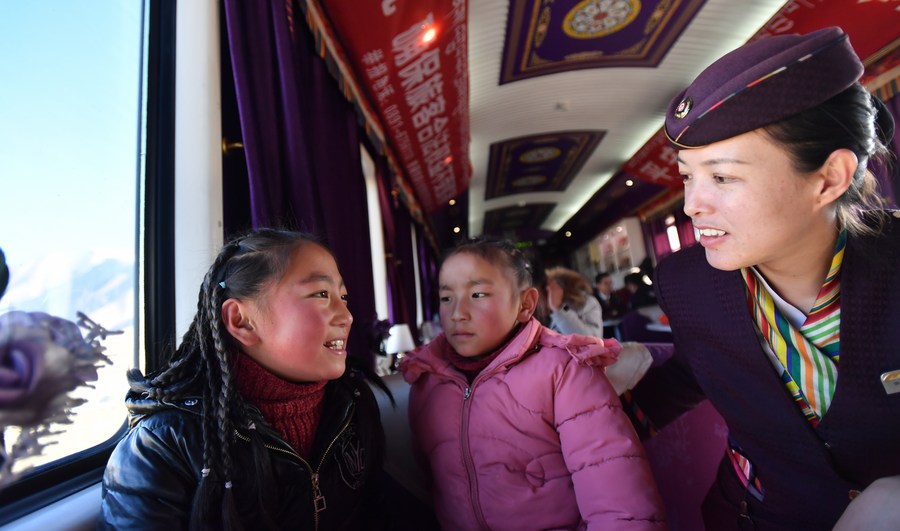
Train attendant Goin’gyi Chadron talks with passengers aboard the train of the Lhasa-Xigaze Railway in southwest China’s Tibet Autonomous Region, Jan. 12, 2020. (Xinhua/Chogo)

by Xinhua writers Lin Jianyang, Lyu Qiuping, Liu Hongming and Liu Ying

LHASA, July 3 (Xinhua) — Passengers carrying luggage of varying sizes, many in Tibetan costumes, chat with each other or bury themselves in their phones while queuing on the platform for their trains.

Such scenes play out daily at the railway station in Lhasa, capital of southwest China’s Tibet Autonomous Region, and stand in stark contrast to what existed 16 years ago.

When the station opened on July 1, 2006, marking the start of the official operation of the Qinghai-Tibet Railway, the region’s first railway line, the platform was more like a tourist attraction packed with visitors.

“Curious about trains, many Tibetans just bought a platform ticket and brought snacks for a picnic here,” said Tsogpa, who has been working at the station since its opening and is now office director of the Lhasa railway station.

With heavy spending on the construction of railway and road facilities, Tibet has seen rapid development and constant improvements to the lives of the locals.

Since 2012, more than 337 billion yuan (about 50.4 billion U.S. dollars) has been spent as fixed-asset investment in Tibet’s transport sector, according to the region’s transport department.

DRIVING ECONOMIC GROWTH

Over the past decade, three railway lines have formed a “Y” shape on the plateau region, with the latest Lhasa-Nyingchi line, the region’s first electrified railway line, kicking off operation on June 25, 2021. The Lhasa railway station, where the three lines meet, has witnessed explosive growth in passenger flow, surging from 2.24 million in 2007 to more than 4 million in 2021.

Bullet trains have brought tourists to the city of Shannan, through which the Lhasa-Nyingchi Railway passes.

In Tashi Chodan, a community in Nedong District of Shannan known for its Tibetan opera, some 30 artists perform for tourist groups from across the country.

Photo taken on May 14, 2021 with a mobile phone shows the view of a road to Gyirong County, Xigaze of southwest China’s Tibet Autonomous Region. (Xinhua/Shen Hongbing)

Dawa Drolma, 52, one of the performers, said they have shows every night during the peak season.

Dawa Drolma and her family have also refurbished their house into a homestay with six beds. “During the busiest time, all rooms are full,” she said, adding that the opera performance and homestay business bring the family an extra income of more than 50,000 yuan every year.

In 2019, the Nedong district government spent some 50 million yuan for improving the living conditions of the community, including upgrading road facilities. The 2.5-meter-wide cement road was replaced by an 8-meter-wide asphalt one, allowing tourist coaches to arrive at the community.

Over the past 10 years, the per capita disposable income of the community more than doubled to 25,000 yuan a year in 2021, which is largely attributable to the burgeoning tourism industry.

“Tourists would not possibly come without convenient transportation,” said Basang Tsering, Party chief of the community.

Furthermore, a handloom fabric cooperative in Nedong District supplies its textile products, such as handmade scarves and purses, via logistic services. The cooperative, which has helped more than 400 farmers sell their fabric products, raked in a sales revenue of 10.5 million yuan last year, a whopping increase of 20 times from 2010.

“With convenient transportation, we can sell our products to big cities such as Beijing and Shenzhen,” said Basang, head of the cooperative.

Aerial photo taken on Aug. 3, 2019 shows a road along the Banggong Co in Ngari Prefecture, southwest China’s Tibet Autonomous Region. (Xinhua/Jigme Dorje)

Over the past decade, the total length of roads in Tibet has increased by some 55,000 km to 120,000 km, including more than 90,000 km of rural roads, according to official figures.

PROPELLING PROSPERITY

In Medog, Nyingchi City, daily necessities were earlier brought home on shoulders or horseback. Students had to trek for days to school, and ailing patients had to be carried on shoulders to a hospital in the city proper.

Tenzin Gyatso, a former porter, vividly remembers the challenging past. Once, he and his fellow villagers transported a 19-year-old woman who suffered from a stroke to a hospital in winter, taking turns to carry her on their backs.

“We had to walk at night to avoid an avalanche,” said Tenzin Gyatso, 48, adding that it took four days for them to arrive at the nearest highway from where they could hire a car.

The situation changed following the opening of the Medog Highway in October 2013, with vehicles, machines and a large amount of construction material flowing in.

Residents have moved into brand-new houses and they can drive their children to school, and patients can easily visit a hospital whenever needed.

Aerial photo taken on Feb. 8, 2021 shows the entrance of Galongla Tunnel in Medog County, Nyingchi of southwest China’s Tibet Autonomous Region. (Xinhua/Sun Fei)

Tenzin Gyatso now has an excavator which he leases to construction sites. He also runs a homestay and rents out rooms to construction workers. The income from the tea plantation and other sources together brings his family more than 100,000 yuan annually.

Wei Changqi, Party chief of the county, said the Medog Highway has made travel for local people much easier and ensured the supply of daily necessities and construction materials. The quality of healthcare and education has also significantly improved from 10 years ago.

Medog was lifted out of poverty by the end of 2019. The disposable income of rural residents skyrocketed from 4,875 yuan in 2012 to 15,278 yuan in 2021, with major industries including tea plantations and bamboo wickerworks flourishing there.

During the same period, Tibet’s regional GDP ballooned to 208 billion yuan from 71 billion yuan. The region eradicated absolute poverty by the end of 2019, with 628,000 impoverished residents shaking off poverty.

(Video reporters: Tenzing Nima Qadhup, Liu Ying; Video editors: Jia Xiaotong, Zhu Cong, Zhu Jianhui.)  ■

Categories
Uncategorized

Manyara remains KUSO President

By Jeff kizzilah

Kenya University Student Organisation and East Africa Students Union President Mr. Anthony Manyara has hit back to (KUPA) group to stop meddling in the KUSA affairs.

Mr. Manyara was reacting to the move by KUPA leader to oust him from his position as the president of Kenya university student Union ,which he say is totally illegal.

Mr.Serani was sworn in as the new by 76 university leadership around Kenya, under the umbrella of Kenya University Presidents Association (KUPA).

Student unions are accusing Mr.Manyara current President of KUSA for abandoning his responsibilities as leader but rather engaging in politics.

” This group is blackmailing strategy which is illegal and unfortunate and next time we we tolerate such move anymore,”Manyara says

He say this is the 17th attempt by this group to try to impeach him without clear procedures.

Mr.Manyara is in his 5th term which should be ending next year july.

Categories
Uncategorized

Maendeleo ya Wanawake applauds elected women

by Jeff kizzilah

Maendeleo ya Wanawake organisation has commended the women politicians who won positions.

MYWO National chairperson Mrs Rahab Muiu said women have done better compared to 2017.

” Its indeed a significant improvement and very commendable and on the same breathe women have shown the courage and determination and resilience of all women who stood for elective positions “, Rahab says

Almost six women have been elected governors rising from 3 governors in 2017.

Mrs Rahab was speaking at Nairobi headquarters.

Categories
Uncategorized

Women Leadership Network Applaud Kenyans For Peaceful Election

by Jared odhiambo


Women of Kenya through African Women Leadership Network, Echo Network Africa and Women Meditation Network applauded Kenyans for remaining calm and maintaining peace before, during and after the general elections 2022. The women networks noted that after the elections Kenyans went back to their homes and only those engaged in the election process were left at the various polling elections.
AWLN chairperson, Dr. Jeniffer Riria noted that this is an indication that the democracy of the nation is maturing and that Kenyans understand that elections are seasonal and life moves on even after elections.
Dr. Riria thanked the political parties, candidates and their agents and the IEBC for their active duty particular in the elections of Aug 9th 2022 She also added that, “We also thank the International Community and our neighbouring countries for standing with our country. Specifically, we appreciate the UN and the UN Women as well as other development partners for supporting the cause for peace and for women’s Leadership.”
The Women network said that Kenya is a country that respects the rule of law and this should make us feel much safer. They urged candidates who may be aggrieved by the results to seek redress through legal means and avoid actions that may escalate violence. “Kenya has strong institutions with capacity to address disputes of any sort and we plead with all parties that took part in the election to revert to these institutions as the rest of the country resumes daily activities.”, said the Chairperson.
The women congratulated the President-elect Dr.William Ruto and the deputy president-elect Mr. Rigathi Gachagua and first ladies for their win and urged them to work through uniting the country. They also condoled with the family of the late Daniel Musyoka who went missing on duty as an election observer and was later found dead. Sorry by Jared Odhiambo

Categories
Uncategorized

Employment and Labour Experiences System Challenges in Limpopo

The Department of Employment and Labour in Limpopo is currently experiencing disruptions with the system of which SITA is busy investigating and working on the matter and therefore requests patience from clients as the system is not working sufficiently, clients will be updated as soon as the matter is resolved.

The Department is still offering all services however; the phase is not as per usual. As and when the system gradually restores, services will continue.

Acting Chief Director Provincial Operations, Phaswane Tladi said, “We are aware that a lot of people are in dire need of our services during this difficult time, our officials are committed to provide services despite the challenges. We apologize to all clients for the inconvenience caused by the slow systems.”

The public will be kept abreast on any new developments with regards to the system. Those who have access to the internet are encouraged to utilise our online system to apply, ( www.ufilling.co.za(link is external) ) to limit the number of people visiting our offices until this matter is resolved.

Categories
Uncategorized

Kenya  women leaders call for peace as Azimio  rejects election results

By Maximilla Wafula

Kenya  women leaders on Tuesday  called for peace as Azimio  rejected the Aug.9  presidential  election results.

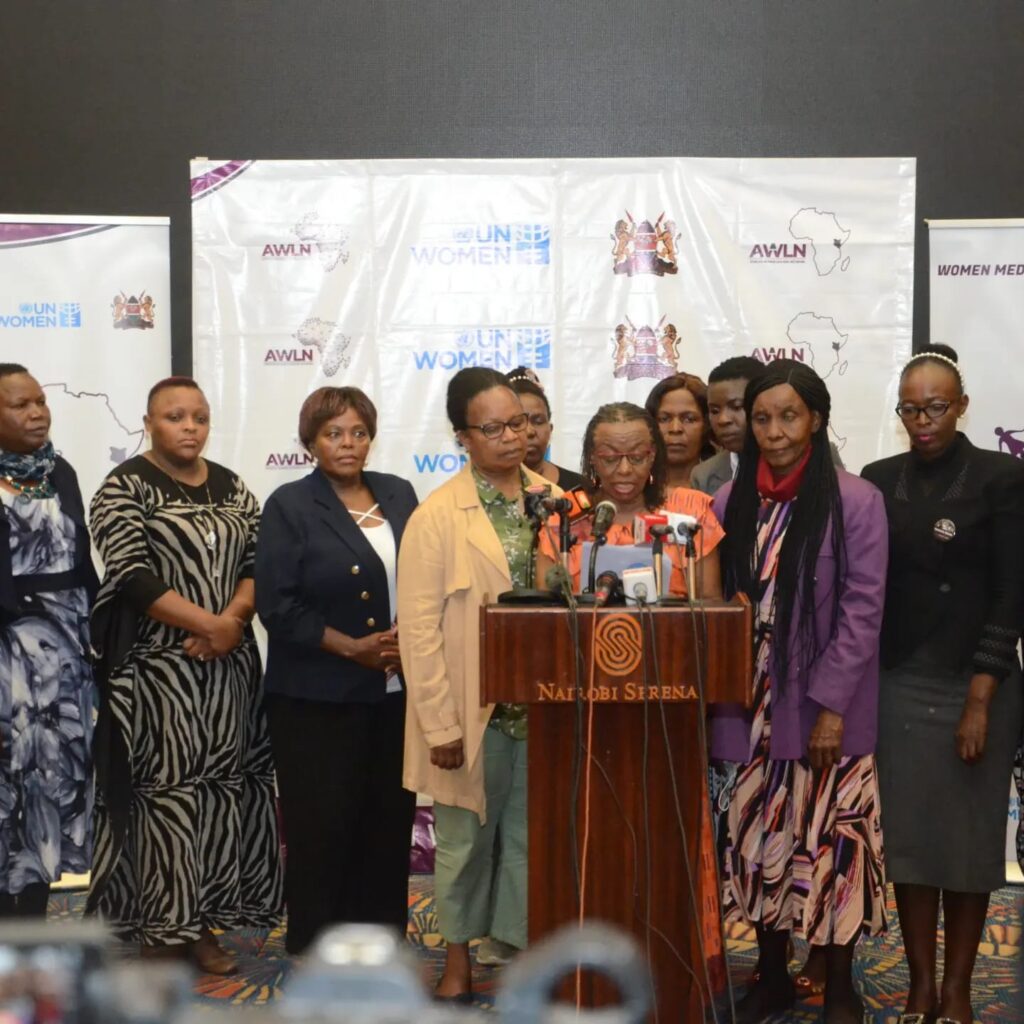
The women of Kenya under the African Women Leaders Network (AWLN)  and the Women Mediation Network (WMN)- Kenya  spoke to the media  on the just concluded general elections in Kenya.

Dr. Jennifer Riria, Co-Chair, African Women Leaders Network (AWLN)  urged candidates who may be aggrieved by the results to seek redress through legal means and avoid actions that may escalate violence.

“As is the case with all competitions including a General Election, the process yields winners and losers,” Riria said.

IEBC’s  declaration of 55-year-old William Ruto, the current Deputy President as the winner of Kenya’s presidential elections after garnering about 7.17 million or 50.49 percent of  votes cast has triggered an outcry among Raila Odinga’s supporters in western Kenya and Nairobi.

Josephine Sinyo Co-Chair, AWLN  said that as Mothers, they are in pain because one of us, mother to our son the late Daniel Musyoka is a broken Mother after losing her son who was only doing his job as a Returning Officer in Embakasi East before he went missing and later found dead.

“Musyoka is just one out of a few others but one too many. We mourn with our sisters. We feel the pain of these dear sisters and pray that no other life is lost because of a mere General Election. We call upon our security apparatus to move quickly with investigations and bring the murderers of our children to book,” she added.

Categories
Uncategorized

JOANNE MWANGI-YELBERT APPOINTED NEW KTB CHAIRPERSON

President Uhuru Kenyatta appointed Ms. Joanne Mwangi-Yelbert as Chairperson of the Kenya Tourism Board (KTB)for a three-year term via gazette notice dated 5th July 2022. Ms. Mwangi-Yelbert is the first female Chair since the inception of KTB.

 “I want to thank President Uhuru Kenyatta for this appointment which is a sign of the confidence he has in my leadership ability. I am passionate about Kenya and about tourism and look forward to sharing my experience in marketing Kenya as a top tourism destination. I am glad that I will have a role to play in developing and improving tourism in Kenya”. Ms Joanne Mwangi Yelbert said during her meeting with KTB staff at their offices.

Ms. Mwangi-Yelbert, an internationally awarded brand development and communication expert is committed to supporting the KTB Management and tourism stakeholders to deliver KTB’s mandate. Ms. Mwangi-Yelbert is particularly keen to continue anchoring- domestic and regional tourism as core while also uniquely positioning the Magical Kenya brand to pivot Kenya’s tourism in lucrative international markets.

The new KTB Chairperson is an entrepreneur at heart as founder and CEO of Professional Marketing Services (PMS) Group, a multiple award-winning marketing and communications Pan African agency. She has served as a strategic advisor to several government and private sector boards and is the immediate chair of the Advertising Standards Body of Kenya.  She is a much sought- after public speaker, an internationally recognised marketing guru, an organisation of Women in International Trade (OWIT) woman of the Year Award holder among others.

Commenting on the appointment, KTB CEO Dr. Betty Radier thanked the outgoing chair Mr Jimi Kariuki for his service to the tourism sector, and also congratulated Ms Mwangi-Yelbert on her appointment.

“On behalf of KTB, I would like to thank the outgoing chairman Mr. Jimi Kariuki for his great service to the board and the country as the Chairman of KTB for the past six years. His experience in the industry has been invaluable and under his leadership, the board has been successful in undertaking its mandate as the country’s tourism marketer. I wish him well in his future endeavors,” said Radier.

“I congratulate Ms. Yelbert on her appointment as the new chair, she brings a wealth of experience through her leadership and marketing which will no doubt ensure excellent execution of KTB’s mandate. I look forward to working with Ms Mwangi-Yelbert to propel Kenya’s tourism to greater heights,” she added.

Categories
Uncategorized

KEPSA STATEMENT ON KENYA’S 2022 GENERAL
ELECTIONS AND RESULTS ANNOUNCEMENT

Having witnessed a peaceful general election in
Kenya’s history, the Kenya Private Sector Alliance (KEPSA) takes this early opportunity to congratulate Kenyans and all political leaders for a milestone in our democratic maturity. Peace is the cornerstone for a thriving economy and business environment.
Kenyans have been patient so far, this marks a new milestone in Kenya’s democratic history.
Under the leadership of Chairman Wafula Chebukati, the IEBC declared William Ruto the winner of the presidential election. The legal option taken by the aggrieved party to go to court is encouraged and we look forward to it being conducted in a peaceful environment. The business community has confidence in this country and in its Justice
System.
We urge all Kenyans to go back to work and resume their nation-building activities as the country strives to recover and rebuild from the effects of the Covid-19 pandemic, drought, and challenges such as the ongoing war in Ukraine and rising global inflation, all that have led to a higher cost of living not only for Kenya.