The below is attributable to Acting Spokesperson Shejal Pulivarti:
On July 23 in Kenya, Administrator Power started the day traveling north to Turkana County. Throughout the day, the Administrator heard from men and women who have lost all or most of their livestock and livelihoods to the devastating drought. She visited Kachoda Health Dispensary, a health facility that treats sick and malnourished children under five. The Administrator spoke with staff and health experts about how to tackle both the immediate and long-term impacts of the unprecedented drought and food insecurity crisis on children’s nutrition. She also met with mothers who have children suffering from acute malnutrition and who have been treated with Ready-to-Use Therapeutic Food (RUTF) and Ready-to-Use Supplementary Food (RUSF) products that are manufactured in Kenya and purchased through USAID-funding.
Administrator Power then toured a World Food Programme food distribution site that provides assistance to drought-impacted families, particularly during lean season when people cannot access enough food to meet their needs. The food distributed today complements cash assistance USAID is supporting for vulnerable drought affected families in Kenya. The Administrator spoke with community leaders about actions needed to build resilient and nourishing livelihoods that can withstand future shocks. Administrator Power met with community leaders at a water site in Kachoda that was rehabilitated with USAID support and that provides clean, safe water to people and livestock. She met with Turkana County officials and farmers at Kachoda Agronutrition Farm where they are providing training and farmland to people impacted by the drought to encourage income and nutrient diversification.
In the evening, the Administrator met with leaders at Sanergy, an American company providing sanitation services in informal settlements and producing organic fertilizer for Kenya’s small-scale farmers. She reiterated USAID’s commitment in working with the private sector to strengthen markets, provide access to sanitation, and to treat and reuse waste in climate-friendly ways.
For just over a month, from 7 May to 16 June 2022, Fatumo Yusuf Diriye spent 3 hours every day, walking to and from the nearest water source, 6 km away, to fetch water for her family. As she could carry only 2 ‘jirigaans” or pails of water at a time, and had to wait her turn in a long queue, her family had to use this water sparingly. They resorted to using ashes or sand to clean their hands.
Fatumo knows that having to deal with unsafe water has contributed to her 3 children under 5 falling sick with diarrhoea many times before. On many occasions, she has had to rush them to the nearest health facility for support. This is one burden that families like Fatumo’s, who depend on her daily earnings from a local market, can do without.
Visit from the Government and WHO officials
One day, early in May 2022, Fatumo heard there was a team of high-level officials from the Government and World Health Organization (WHO) visiting the camp where she lived, in North Galkayo, to assess the effects of the ongoing drought. Even though she could not go to see them, later on, she heard a few community members had requested the heads of the high-level team to support them to fix 2 water pumps which were not functioning for longer than she could recall. The Salama water pump, which is a borehole close to Fatumo’s home, was one of them, and the Halaboqad borehole was the second one that hadn’t been functioning for quite some time.
The visiting high-level team was led by HE Dr Fawziya Abikar Nur, the Federal Minister of Health and Human Services, and HE Abdi Nasir Yusuf Haji, the Vice Minister of Health for Puntland state. Representing WHO, Dr Ahmed Al-Mandhari, WHO Regional Director for the WHO Eastern Mediterranean, and Dr Mamunur Rahman Malik, WHO Representative to Somalia, were also part of the team.
Delivering swiftly on a promise
Fatumo, who has been living in a camp for the internally displaced since 2017, had heard the WHO team agreed to provide support, but was not sure how this would pan out. To her joy and surprise, within a few days, an expert came by to assess the Salama borehole. Around a month later, the Salama borehole was functioning again.
“Our lives have changed thanks to having water now from the Salama borehole, for drinking and also for all our household purposes,” says Fatumo, as it takes her just 30 minutes to fetch water now. The Diriye family can now collect at least 4 buckets of water, as their source, the borehole, is just above half a kilometre away. Hers is just one of the families living in one of 6 camps and 2000 households that now have access to clean water from the Salama borehole.
With WHO’s interventions to rehabilitate both the Salama and Halaboqad boreholes, 19 716 people now have access to clean water. This will translate to clean drinking- water, fewer waterborne diseases, like cholera and diarrhoea, healthier populations, and better sanitation. By protecting their families from preventable diseases, Fatumo and many parents like her can devote their time and resources to raising their families instead of coping with the stresses related to fighting diseases.
With the support of USAID, the WHO country office in Egypt is conducting a nationwide injection safety project to help assess and improve injection safety practices among national hospitals and health care facilities in Egypt.
The safe use of injections is essential to avoid the transmission of life-threatening infections and to protect patients, health care workers and the community from avoidable risks, particularly in the context of the COVID-19 pandemic during which the number of injections being administered every year have significantly increased in Egypt and globally.
In early June, WHO Egypt conducted assessments of injection safety practices among health care workers in public hospitals in 8 governorates across Egypt.
Prior to these assessments, WHO held an orientation workshop for surveyors from the Hepatitis Control and Infection Prevention and and Infection Prevention and Control Central Unit at the Ministry of Health and Population to discuss the implementation process of the project and conduct pilot testing of the WHO-developed web-based application for an auditing reporting system that will facilitate data entry and retrieval.
As the WHO global campaign on injection safety recognizes staff training as a core principle, an expert team from the WHO country office will also be supervising a capacity-building training programme that is scheduled to take place in July in order to address any shortcomings identified during the assessment visits.
Over the years, WHO has been working closely with stakeholders in the area of infection prevention and control, occupational health, and laboratories, including senior officials from the Ministry of Health and Population, academia, and policy-makers to support the implementation of safe injection practices and guide the formulation of national policies, including Egypt’s national injection safety policy that was launched in 2018.
The President of the Republic, Nana Addo Dankwa Akufo-Addo, on Sunday, 24th July 2022, commissioned the refurbished Asomdwoe Park, in commemoration of the 10th anniversary of the death of the 3rd President of the 4th Republic, the late Professor John Evans Atta-Mills.
Speaking at the ceremony, President Akufo-Addo noted that the commissioning of an infrastructural project by Government should naturally be a joyous occasion, and should elicit the display of pomp and pageantry in recognition of the feat achieved.
“But today’s event is not one of those normal occasions. Exactly ten years ago, a truly tragic incident occurred, one we had never witnessed, and hope will never reoccur in our history, certainly not in our lifetime – the death of a sitting President in office, the death of the 3rd President of the 4th Republic, Prof. John Evans Atta-Mills.
According to President Akufo-Addo, he was a contemporary of the late President at the University of Ghana, were members of the same hall, Legon Hall, and played in the same University football team.
“As fate would have it, we ended up belonging to and leading different political organisations. We contested the presidency in 2008, and even though some will say it does not count, I won the first round and he won the second round, the round that really mattered. I was looking forward to a third round in 2012, when the Almighty called him home on 24th July 2012,” he added.
The President noted that, sometime after becoming President, he became aware of the sad state of Asomdwoe Park, and, in 2020, he received a request from the late President’s energetic Communications Director, Koku Anyidoho, who runs the Institute named after the President, for the assistance of Government to rehabilitate the facility.
“I agreed, and, subsequently, I instructed the Coastal Development Authority to undertake a thorough rehabilitation of the Park, with the close co-operation of the Institute,” he said.
President Akufo-Addo continued, “It was not right that the Park had been allowed to deteriorate considerably over the years since his burial in 2012, and I am happy that it was under the Presidency of Nana Addo Dankwa Akufo-Addo, allegedly his ‘fiercest critic’, that Asomdwoe Park has been elevated to a status befitting the final resting place of a President of the Republic of Ghana.”
The President explained that he did so not to exploit or take advantage of any so-called divisions in the National Democratic Congress, stressing that “those alleged divisions are not of my making, and do not, in any way, inure to my benefit.”
He also addressed the “unfortunate accusations” levelled by some against Government about the supposed desecration of the tomb of the late President in the process of rehabilitating the Park.
“Nothing could be further from the truth, and it is good to note that these false, malicious statements have been firmly dispelled and debunked by the Coastal Development Authority, through the agency of its CEO, Mr. Jerry Ahmed Schaib, in a public statement under his hand,” he stated.
Reiterating his sincere condolences to the former First Lady and spouse of the late President, Ernestina Naadu Mills, to the entire family, to the National Democratic Congress, and to the people of Ghana “for their great loss”, President Akufo-Addo stated that “the man from Ekumfi Otuam will not be forgotten”.
The National Union of Eritrean Women organized two weeks training on leadership to 80 members from various Government institutions as well as board members of the National Union of Eritrean Youth and Students and National Union of Eritrea Women.
The training was provided by Dr. Haile Neguse, Eritrean expert residing in the US.
Speaking at the concluding event of the training held on 23 July, Ms. Tekea Tesfamicael, President of the National Union of Eritrean Women, said that the training was part of the effort the national union has been exerting to develop the capacity of women.
The trainees on their part commending for the opportunity they were provided called for the sustainability of the program.
Similarly, the National Union of Eritrean Youth and Students organized training on social science to 99 high school students including 55 female from all sub-zones in Anseba Region.
The training that was provided from 14 to 22 July included political and ideological concept, philosophy and religion, youth and national service, National Charter, nation and nationalism, youth and environmental conservation, as well as information technology.
Speaking at the event, Mr. Azazi Bereketeab, head of the union branch in the region, called on the trainees to apply the training they were provided in the nation building process.
African governments owe three times more debt to Western banks, asset managers, and oil traders than to China, and are charged double the interest.
* The so-called debt-trap narrative exploited by the West against China is untrue, African scholars and economists told Xinhua.
* Campaigners have been calling on Western countries, particularly Britain and the United States, to compel their private lenders to do more in helping address the debt burdens of emerging and developing countries including those in Africa.
by Xinhua writer Zhu Shaobin
NAIROBI, July 20 (Xinhua) — Recent studies have revealed that private Western creditors are responsible for the lion’s share of Africa’s debt burden.
In a report released last week, Britain-based charity Debt Justice found that African governments owe three times more debt to Western banks, asset managers, and oil traders than to China, and are charged double the interest.
The report said 12 percent of African governments’ external debt is owed to Chinese lenders compared to 35 percent owed to Western private lenders, adding that the average interest rate on private loans is 5 percent, compared to 2.7 percent on loans from Chinese public and private lenders.
The new finding came after Harry Verhoeven from the Center on Global Energy Policy at Columbia University, and Nicolas Lippolis from the Department of Politics and International Relations at the University of Oxford published a new study in May, which said the rise in African debt due to Chinese lending pales in comparison with the debt burden created by private creditors of other countries over the last decade.
The new findings lay bare the absurdity of the so-called “debt-trap diplomacy” that has been for too long touted by Western politicians and propaganda machines in smear campaigns against China, experts have said.
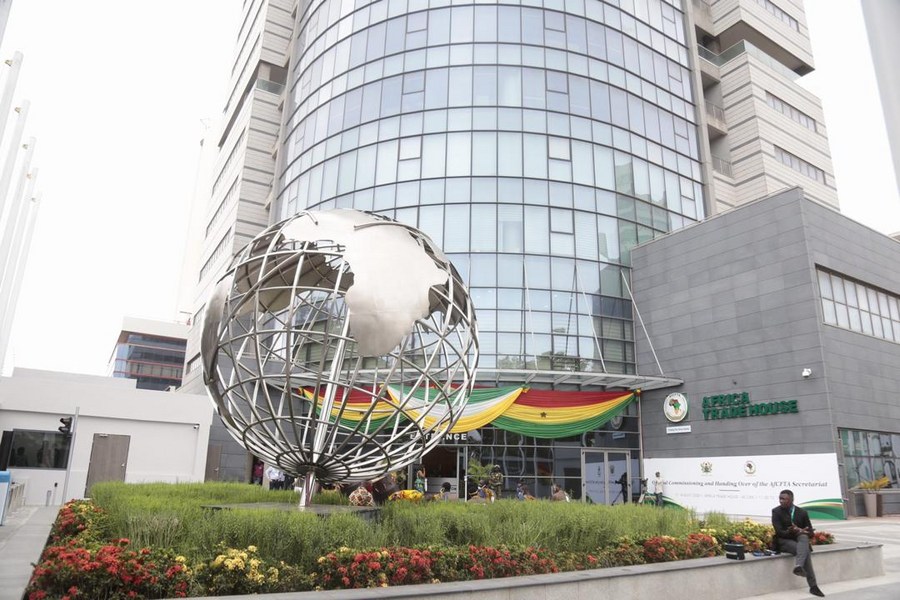
A man sits outside the office building of the African Continental Free Trade Area (AfCFTA) Secretariat in Accra, capital of Ghana, Aug. 17, 2020. (Ghana Presidency/Handout via Xinhua)
DEBT TRAP?
The so-called debt-trap narrative exploited by the West against China is untrue, African scholars and economists told Xinhua.
Charles Onunaiju, director of Nigeria-based Center for China Studies, said Western private creditors not only account for a third of Africa’s external debt, but also charge higher interest and offer a shorter period for repayment, describing them as manipulating and strangulating.
“The debt trap issue has always been political slander …,” he said, adding that the narrative is nothing but a distraction to absolve the West of its responsibilities.
Costantinos Bt. Costantinos, professor of public policy at the Addis Ababa University in Ethiopia, said Western administrations and media have been unable to adopt a rational perspective on China’s growing influence in Africa.
“They depict China as a predatory lender that is weaponizing capital in order to practice a new form of colonialism in Africa. However, such accusations have little factual basis,” said the expert.
Beatrice Matiri-Maisori, a senior economics lecturer at Kenya’s Riara University, said the figures and percentages revealed by the studies clearly indicate that Africa’s external debt is largely owed to private financial groups, Eurobonds, and oil creditors.
“The debt trap diplomacy … has got nothing to do with the reality of the debt structure in Africa,” she said.
“Western lenders for long have not been put on the spotlight for debt relief because they successfully managed to dupe the world that it’s only Chinese lenders that pose a threat to Africa,” Uganda-based Vision Group journalist Mubarak Mugabo said.
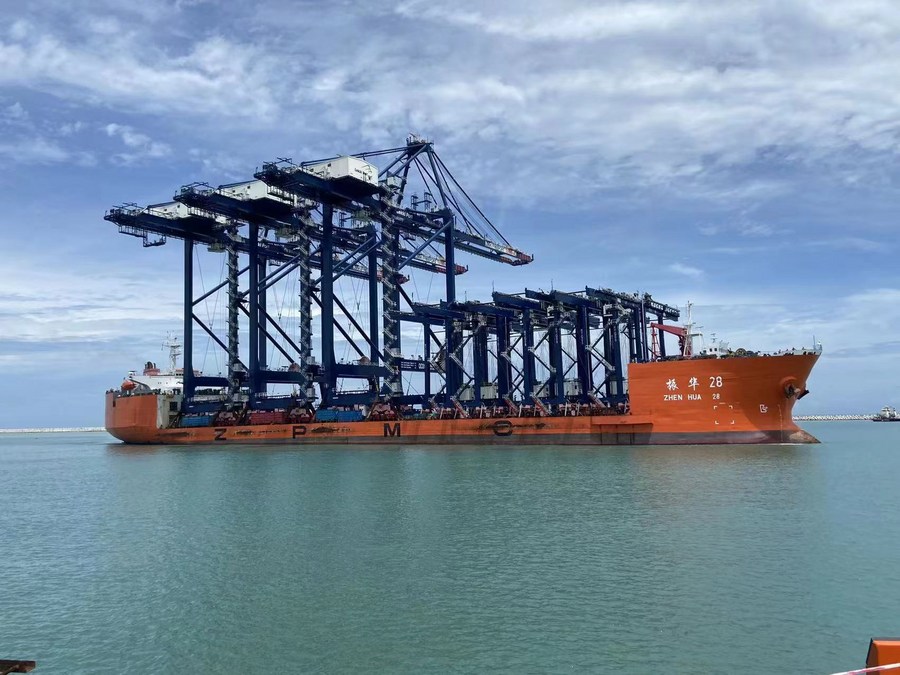
Photo taken on July 1, 2022 shows the berthing of the first ship at the Lekki Deep Sea Port under construction in Lagos, Nigeria. (CHEC/Handout via Xinhua)
WEST URGED TO DO MORE
Campaigners have been calling on Western countries, particularly Britain and the United States, to compel their private lenders to do more in helping address the debt burdens of emerging and developing countries including those in Africa.
Emerging and developing countries have been experiencing sustained capital outflows for four months in a row, said International Monetary Fund (IMF) Managing Director Kristalina Georgieva at a recent meeting, adding that more than 30 percent of emerging and developing countries, and 60 percent of low-income countries are at or near debt distress.
China has extended debt suspension to other developing countries during the pandemic, but private lenders in the West did not, said Tim Jones, head of policy at Debt Justice.
“Western leaders blame China for debt crises in Africa, but this is a distraction … The UK and U.S. should introduce legislation to compel private lenders to take part in debt relief,” he said.
Official data showed that China ranked first among the Group of 20 members in terms of debt deferral amounts. “China has done quite a lot in terms of agreeing to come to a common agreement with over 19 countries in Africa, reaching a common understanding on how they are going to pursue debt relief for the same,” Matiri-Maisori said.
Onunaiju said China has demonstrated what a responsible major country should do in this regard, adding that Africans want to see more of such examples.
At a news briefing last week, Chinese Foreign Ministry spokesperson Wang Wenbin called on developed countries, their private lenders and multilateral financial institutions to take more robust actions to give developing countries funding support and relieve their debt burden so that the world economy will achieve inclusive and sustainable development.
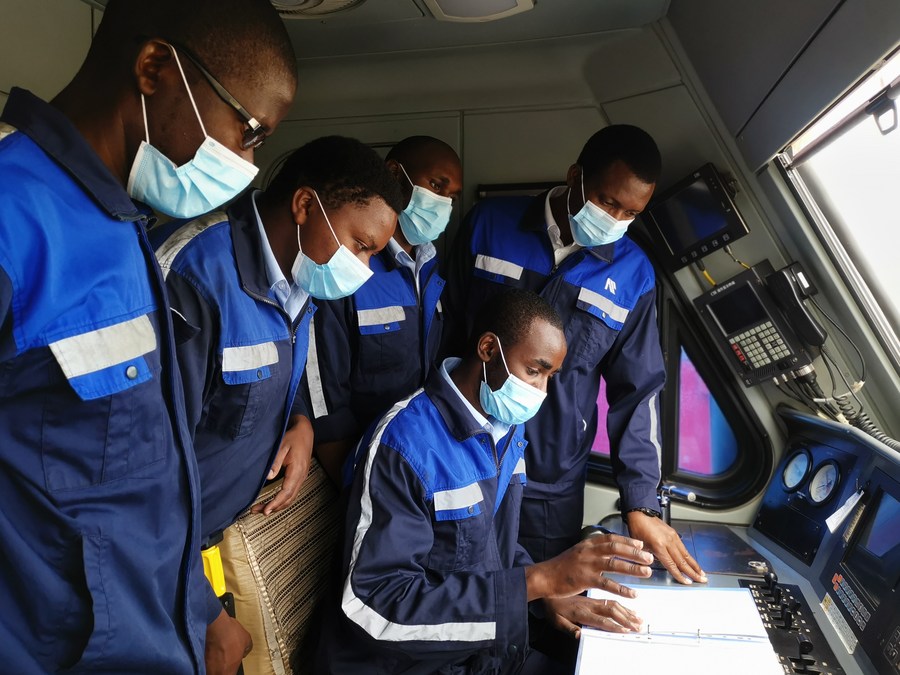
Members of the cohort of independent Kenyan locomotive drivers work in Nairobi, Kenya, Feb. 19, 2022. (Xinhua)
CONCRETE SUPPORT FROM CHINA
Over the years, China’s financing support for Africa, particularly in the field of infrastructure investment, has won wide applause from African governments and people, especially at a time when the ambitious African Continental Free Trade Area is being promoted.
“We are seeing connectivity, we are seeing airports remodeling, and we are seeing ports remodeling,” Onunaiju said, adding that China’s support for Africa can be clearly felt in different areas.
Referring to the Lekki Deep Sea Port in Lagos State, Nigeria’s economic hub, as an example, he said the China-funded port project will create up to 170,000 jobs and bring billions of U.S. dollars in revenues to the government through taxes, royalties and duties after being in operation.
“These are not propaganda. These are reality,” Onunaiju said.
Over the last more than two decades since the founding of the Forum on China-Africa Cooperation, a bulk of Chinese financing has been quickly translated into infrastructures in Africa, which can be seen with countless connectivity projects, such as railways, roads, dams, and telecommunications, said Matiri-Maisori.
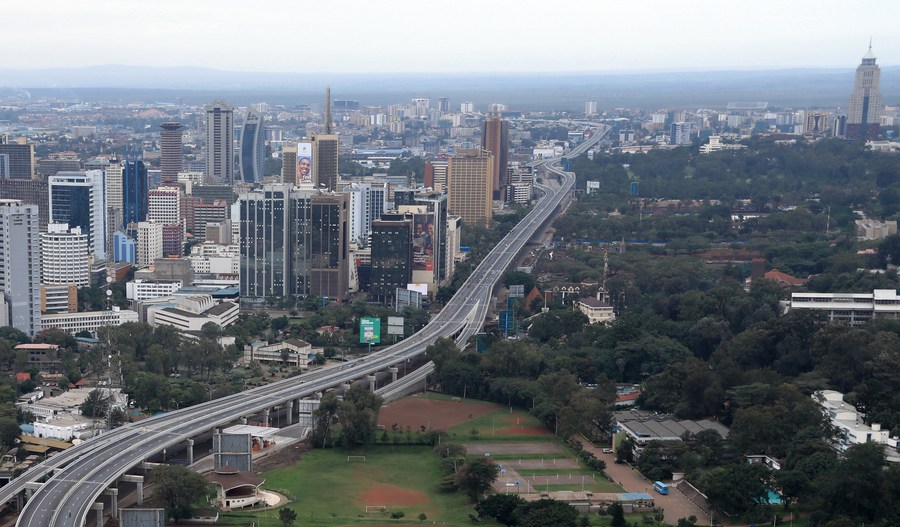
Photo taken on May 8, 2022 shows the Nairobi Expressway constructed by the China Road and Bridge Corporation (CRBC) in Nairobi, Kenya. (Xinhua/Dong Jianghui)
“This is very important for us in terms of pursuing our aspirations to be an integrated Africa, the Africa continental free trade area, and all the countries in Africa trading with one another,” she said.
“What is really happening is that this connectivity is aiding the future and long-term growth of Africa, so that Africa can begin to participate in the global supply chains,” added the expert.
China has provided African governments with access to good funding to support development, said Peter Kagwanja, CEO of the Africa Policy Institute based in Kenya.
Speaking of the Chinese-built Mombasa-Nairobi Standard Gauge Railway, he said the railway “opened our country Kenya, and we have started to see industrialization growing around there, business growing around the railway line, the value of land increasing greatly around that, and people getting employment around the railway.”
“And these are things we could never, ever have dreamt about before China came into the picture as Africa’s partner,” he said.
(Xinhua reporters Cao Kai, Li Cheng, Bai Lin, Li Hualing in Nairobi, Guo Jun in Abuja, Zhang Gaiping in Kampala, Wang Ping in Addis Ababa, and Xu Zheng in Accra also contributed to the story.) (Video reporters: Li Cheng, Guo Jun, James Harry, Adewale Amzat; video editors: Liu Ruoshi, Cao Ying, Zhao Yuchao)■
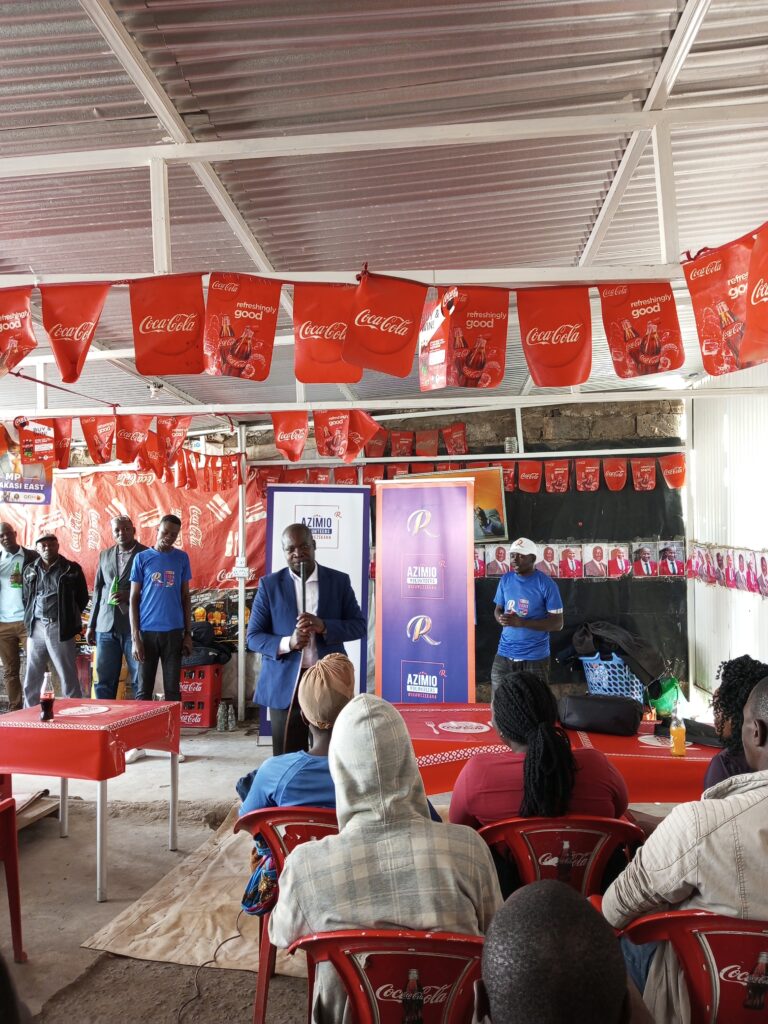
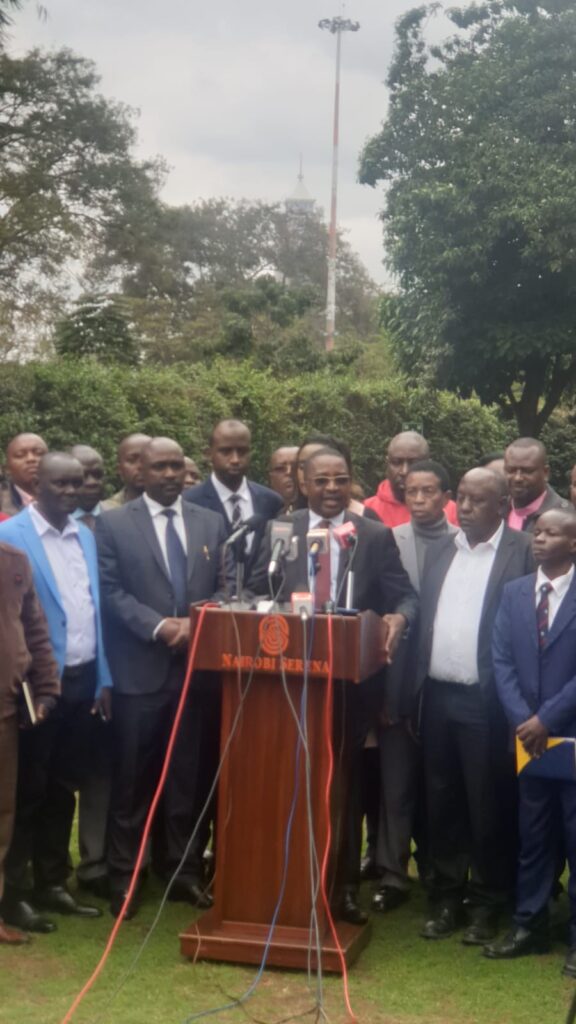
Usawa Presidential Mwangi Wa Iria today addressing journalists at Serena Hotel promised to buy IEBC chairman Wafula Chebukati a cup of tea because he has failed as commissioner to handle his office mandate.
Usawa party is fighting justice. Wa iria later held a four hour concrete meeting with the Right Hon. Raila at his Karen Residence discussing on how his manifesto can be included into Azimio for his supporters to benefit in the Next government. Hon. Raila admitted to him that injustice was not only to you but to all. Mwingi Wa Iria then later asked him a question concerning his presidential manifesto if He can accommodate it to AZIMIO , which they all agreed. They also agreed to enabling all house hold to access health care.
Muranga County has a minimum grant of animal meals. if you agreed that we work together we will adopt one home one cow initiative, where they all agreed to join the Manifesto together for the sake of farmers Cross after Chebukati blocked his presidential way, they will enhance daily factory in Muranga and the price of milk will drop. Daily factory in Muranga will be protected, one home one cow cooperative fully registered. He urged Raila to fund all the Sacco through his government to ensure that small traders are safe. All Markets in kenya will benefit and he has accepted, adopted and agreed. He is clearly now endorsing Raila Martha ticket presidential candidature, under the Azimio Coalition Movement.
Usawa Presidential Mwangi Wa Iria today addressing Journalist at Serena Hotel promised to buy IEBC wafula Chebukati a cup of tea coz he has failed as commissioner to handle his office mandate.
Usawa party is fighting justice. .Hw later had Four hour concrete meeting with the Right Hon.. Raila at his Karen Residence discussing on how his manifesto can be included to Azimio for his supporters to benefit in the Next government. Hon. Raila admitted to him that injustice was not only to you but to all. Mwingi Wa Iria then later asked him a question concerning his presidential manifesto if He can accommodate it to AZIMIO , which they all agreed. Accumulative of all house holds who can be able to access health care as they discussed with him man to man.
Muranga County has a minimum grant of animal meals. if you agreed that we work together we will adopt one home one cow initiative, where they all agreed to join the Manifesto together for the sake of farmers Cross after Chebukati blocked his presidential way, they will enhance daily factory in Muranga and the price of milk will drop. Daily factory in Muranga will be protected, one home one cow cooperative fully registered to be funded by the Government to benefit all small scale farmers.. He urged Raila to fund all the Sacco through his government to ensure that small traders are safe. All Markets in kenya will benefit and he has accepted, adopted and agreed. He is clearly now endorsing Raila Martha ticket presidential candidature ,under the Azimio Coalition Movement.