Daily Kenya

Categories
Uncategorized

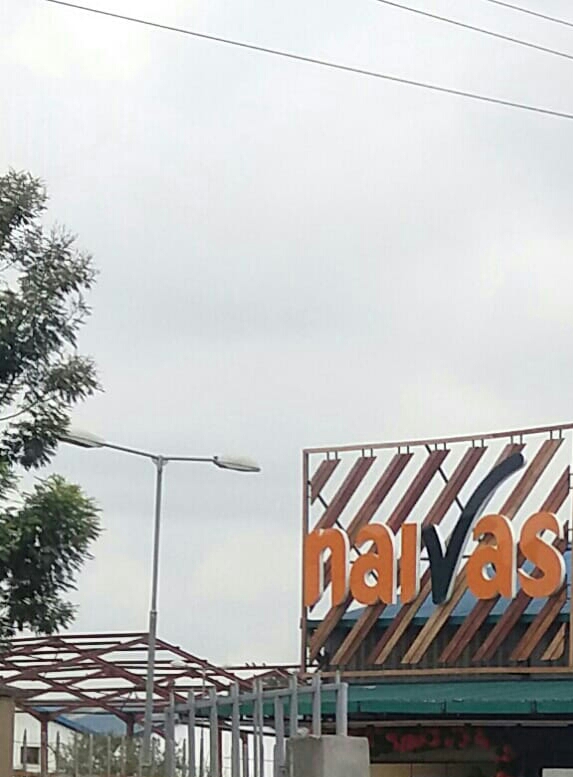
NAIVAS TUDOR BRANCH COASTAL’S 11TH OUTLET, 99TH COUNTRYWIDE

PHOTO: One of the Chain’s outlets in the country.

By Tum David

NAIVAS Supermarket and Kenya’s leading retailer is now inching closer to its RoadTo100 historic target with its newly opened branch in Tudor Sabasaba, Mombasa city on October Thursday 5th, 2023.

The Tudor outlet is the 11th New branch in the coastal region and overall 99th countrywide officially making the close to the #RoadTo100.

The newly unveiled outlet is an express store format with a well thought out product range offering an assortment of farm fresh produce, dairy and meats, fast moving consumer goods and general merchandise of which the retailer is known to specialise in delivering it all with the unmistakable Kenyan hospitality.

Speaking to the media during the opening ceremony, Mr Andreas Von Paleske, the Chief of Strategy at the Naivas said the retailer is not just expanding its branch networks to hit high store count, but a strategy calculated to reaffirm its undisputed strength and confidence in leading the way when it comes to meeting customer needs right where they are. He said, the retailer’s commitment as always, is to meet the needs of Kenyans and thus the reason why the new development informed by the needs of the Tudor shoppers which equally informs our research and insights into the region.

” We as Naivas supermarket have in place the strategy to provide new avenues for our customers to get to what they need whenever and wherever they need it”, said Mr Andreas.

He added: ” with modern retail having very little penetration, opportunities are immense, and we will continue trailblazing in filling these gaps. The new store is designed to make shopping quick and easy for area customers and even beyond as is strategically located within an area that’s served by several matatu stages.”

The next outlet that Naivas opens will be its 100th branch making it the first supermarket chain in the country to hit tripple digits in branch network.

And as has been the culture with every branch opening, Naivas Supermarket continues to live by its slogan: NaivasSavesYouMoney!

Categories
Uncategorized

DIG-KPS OPENS GAMBOGI POLICE STATION IN VIHIGA COUNTY

By Steve Sabai.

The Deputy Inspector General Kenya Police Service, Mr. Douglas Kanja has today opened Gambogi Police Station in HAMISI CONSTITUENCY in VIHIGA COUNTY. The Police station building houses the offices of the OCS, Deputy OCS, Crime Offices and Stores. In addition to regular police cells, the new Police Station has Mental cell and VIP cells. The station was built under the Constituency Development Fund (CDF) by the efforts of Area Member of Parliament, Hon. Charles Gimose of HAMISI CONSTITUENCY in order to bring down criminal activities within the area and also to bring police service near the public.

While addressing police officers and members of public, Mr. Kanja lauded the police-public partnership, particularly the effort made by the area MP and the CDF committee to construct the station. The DIG indicated that his core responsibility is to ensure that the Service maintains good relationship with the public. He added that members of the public should visit the station freely and report criminal activities going on in the area in the spirit of community policing.

After listening to the many requests put to him, the DIG assured all local leaders that the concerns would be addressed, and that the first step would be to improve infrastructure at the newly opened station. Additionally, a police dog will be deployed, as requested by leaders through the Regional Police Commander.

Categories
Uncategorized

Government Commits to Spur the Creative Economy Growth

By Grace Mwende

The Government has affirmed its commitment to supporting the growth of the Creative Economy to ensure that the sector contributes significantly to Kenya’s national development through job opportunities for the youths as well as wealth creation.

While speaking on Friday 29th September 2023, during the inaugural first-ever State-of-the Film Industry Summit, organized by the Kenya Film Classification Board (KFCB) in partnership with the Kenya Film and Television Professionals Association (KFTPA) and other industry stakeholders, which was held at the Nairobi Film Centre (NFC), the Ministry of Youth Affairs, the Arts and Sports, CS Hon. Ababu Namwamba EGH, said the Creative Economy is among key priorities of the Government as established in the Kenya Kwanza PLAN.

“The film sector has been treated badly. To correct that history of mistreatment, and neglect, we have ensured that this sector is anchored in the manifesto of the PLAN on what the Government desires for this key sector of the economy”, the CS said, adding that among the five pillars of the Bottom-Up Economic Transformation Agenda (BETA), the fifth pillar is all about transforming the film sector into an industry that sustains decent livelihoods.

Hon. Namwamba stated that the Government through his Ministry is championing key reforms and initiatives aimed at transforming the Creative Economy with the key focus of putting money in the pockets of creatives, and sportsmen and women who have continued to fly the Kenyan flag high on the local and international stage.

The CS lauded the first-ever film summit, noting that it resonated well with his Ministry’s agenda, specifically the TalantaHela Initiative.  “Our focus is to ensure that we have an industry that is profitable. To do so, we need to invest in original quality production outlets and exhibition spaces,” the CS said.

He further said that monetizing talent under the #Talenta Hela’ which basically means ‘putting money in the pockets of creatives and sports persons, is the top-most priority of the Government, emphasizing that the 5th Administration is banking on the Creative Economy as one of the quick-win sectors in fostering economic recovery and opening new opportunities for the youth under the economic blueprint of BETA.

The CS revealed that his Ministry has embarked on the process of reviewing and where necessary, developing new policies and legislative documents, noting that one of the key aims of these reforms is to provide mechanisms for the establishment of a Film Fund to facilitate access to rebates for both local and foreign filmmakers.  The Fund will also provide access to finance for the acquisition of modern equipment and film production infrastructure by local filmmakers, and promotion of the country as a filming destination.

On royalties and revenue streams for creatives, the CS said that the Government is keen on restructuring the investment and financing space in a manner that attracts investors. “We must invest in infrastructure equipment, quality production, and training facilities that can support the industry,” he stated.  

As part of recognizing and appreciating creatives, the CS further revealed that his Ministry is putting together an award scheme that is unique, prestigious, and accompanied by a serious financial award.  

The CS lauded KFCB, KFTPA, and all industry stakeholders for spearheading the Summit, stating that there is a need to collectively champion programs and initiatives that will spur the growth of the Kenyan Creative Economy.

On the sidelines of the Summit, the CS chaired a meeting with Netflix officials, led by Ms. Shola Sanni, Director of Public Policy, Sub-Saharan Africa, and discussed collaboration between Kenya and Netflix in content monitoring, moderation, regulation, and monetization, among other issues.

On his part, Mr. Ismail Maalim Madey, PS, State Department for Youth Affairs and The Arts, reiterated the Government’s commitment to revamp and spur the Creative Economy.

“The Government is keen on revamping the Orange Economy by creating enablers that will facilitate investments in the film industry,” the PS said.

Maalim urged stakeholders in the Creative industry to support initiatives that the Government, through the Ministry of Youth Affairs, the Arts and Sports is fronting to spur the Creative Economy in line with BETA.

The KFCB Ag. CEO, Joel Wamalwa, affirmed the Board’s commitment to supporting initiatives geared towards identifying and nurturing talents among the youths in the Creative sector for job opportunities and wealth creation, through a facilitative regulatory environment that will spur the growth of the Creative Economy.

In a move geared towards creating a facilitative regulatory environment for the Creative Economy to thrive, Wamalwa said that the Board, through the Ministry of Youth Affairs, the Arts and Sports, has proposed a review of the Films and Stage Plays Act Regulations and Guidelines. Through the regulations and guidelines, the Government has proposed a 15% reduction in licensing fees for local filmmakers.

“As KFCB evolves into a 21st-century film regulator, we want to reassure our stakeholders in the entire value chain that we will live up to our brand promise; of Safeguarding Your Reel World’. We shall ensure that we remain progressive in our policy propositions while safeguarding our Kenyan culture, values, and national aspirations,” Wamalwa said.

Themed: Breaking barriers and shaping the future, the Summit sought to provide a platform for industry professionals to gain insights into the latest trends, policy matters, challenges, and advancements within the film sector as well as advocate for the industry’s interests.

Other speakers at the Summit were KFCB’s Board Chairperson Hon. Njogu Wa Njoroge HSC, the Kenya Film Commission CEO, Mr. Timothy Owase, the Media Council of Kenya (MCK) CEO, Mr. David Omwoyo, Digital Strategist Dennis Itumbi, KFTPA, Chairperson, Dr. Ezekiel Onyango, Kenya Cultural Centre incorporating Kenya National Theatre, KNT, CEO, Mr. Michael Pundo, and representatives from local Creative space.

Categories
Uncategorized

The IFLA World Congress 2023, IFLA Africa 8th Symposium and AAK Convention officially kicks

By Mathew Ndeti

The International Federation of Landscape Architects (IFLA) World Congress in collaboration with the Architectural Association of Kenya (AAK) has officially kicked off  the 8th ILFA African symposium in Nairobi, Kenya.

Speaking during the event, Caroline Vicini, Swedish Ambassador to Kenya  praised the efforts made by the built environment professionals of both countries to learn from each other and discuss climate change.

“It is important to build smart, healthy and efficient cities where people can integrate, communicate and move freely. Landscape architecture plays an important role in shaping sustainable development,” she noted.

According to the United Nations Department of Economic and Social Affairs, by 2015, most of Africa’s population living in urban areas rose from 27 percent in 1950 to 40 per cent in 2015. The population is projected to rise by 60 per cent in 2050. Consequently, this worsens the climate change crisis.

Florence Nyole, Architectural Association of Kenya President addressing participants during the congress.

In her remarks, Florence Nyole, President,  Architectural Association of Kenya stressed on the significance of cooperation within the built environment as it enabled the professionals to reach shared environmental goals that rest on afoundation of social sustainability.

She added “This world congress will be an opportunity to promote learning and collaboration among built environment professions to find solutions to the major global challenges. The city of Nairobi relates very closely to the congress theme, with rapid urbanization, dealing with climate change, and adequate housing as priority issues.”

The congress under the theme “EMERGENT INTERACTION” aims at strengthening the landscape architecture in relation to Agenda 2030 through exploring new forms of collective problem-solving, borderless strategies and possible networks of ideas and cooperation while keeping the issues of climate change, social inequality and biodiversity-loss at the forefront.

The world congress  which brings together a diverse group of professionals from different facets  of the built environment provides an opportunity to promote learning and collaboration to find solutions to major global challenges.

The association remains at the forefront of working towards reducing the impact of urbanizaon and the resultant Climate Change in the country througha homegrown Green Building Rang Tool that is focused on rang buildings based on our local context called the Safari Green Building Index (SGBI).

In addition, AAK has launched  several programmes such as the Grow-A-Classroom Programme where they aim  to increase the tree cover for Kenya within the existing large parcels of land occupied by public schools. The trees will be sustainably harvested and used to build classrooms for the growing population in the country.

The AAK is a premier association that was formed back in 1967, with Architects, Planners, Engineers and Quanty Surveyors as the first 4 groups of professionals, who today remain the only regulated professionals in the built environment.

Categories
Uncategorized

Milka Mukami, Mrs. Universe Kenya,will be Representing at Mrs. Universe Pageant in Phillipines with Strong Support from Global Peace

By Jeff Kizzilah

Nairobi, Kenya – The stage is set for an extraordinary journey as Milka Mukami, the reigning Mrs. Universe Kenya, prepares to represent her nation on the global stage at the upcoming Mrs. Universe Pageant in Phillipines. This remarkable journey is not just about beauty but carries a profound message of redefining beauty to prioritize family, combat gender-based violence (GBV), and empower mothers.

During a press briefing held at the Parklands Sport Club, key figures including Daniel Juma unveiled the distinctive nature of this pageant and the impactful initiatives it supports.

Daniel Juma, whose company plays a pivotal role in supporting Milka Mukami’s endeavors, emphasized that the Daniel Juma Pageant stands out as a beacon of change in the world of beauty contests.

Unlike traditional pageants, it focuses on redefining beauty to underscore the importance of family. All the participants in this unique pageant are married women, and it’s their commitment to family and social causes that takes center stage.

Daniel Juma ,Exercutive Director Global Peace addressing the media

The Global Peace Foundation, another key partner in this endeavor, firmly believes that the family unit is the cornerstone of peace and stability in society. Each candidate in the competition presents a special project aimed at addressing pressing issues affecting families.

Milka Mukami, who holds the prestigious title of Mrs. Universe Kenya, has emerged as a leading advocate against GBV. Her project is centered on helping families deal with the profound challenges posed by gender-based violence.

Mukami, with unwavering determination, views herself as a healing healer and utilizes her ambition to combat GBV. She passionately advocates for change on the issue of GBV and believes that her beauty can serve as a powerful catalyst in this fight.

The world has taken notice of her efforts, recognizing her as a symbol of healing and change. Mukami’s mission goes beyond words; she actively empowers mothers, urging them to take a leading role in nurturing and healing within their families.

In a gracious note of appreciation, Mrs. Universe Kenya thanked the government for its continued support, which has been instrumental in bringing hope to women’s chamas (community groups) and society as a whole. As Milka Mukami gears up to represent Kenya in the Mrs. Universe Pageant in Phillipines, she carries with her a message of beauty, empowerment, and healing, all supported by the strong partnership of Daniel Juma’s company and the Global Peace Foundation.

Categories
Uncategorized

KEWOPA call For Stop of Obstretic Violence

By Jeff Kizzilah

The campaign dubbed #HESHIMUUZAZI aims to condemn forms of violence against women, that occur while receiving maternal care.

Addressing media during the sensitisation Hon. Muthoni Wamuchomba, Member of Parliament and Founder of Gamafrica also has called on the government to address the challenges in (OBV) which affects one in three women.

She added that (KEWOPA) has committed to ending all sorts of violence against women by coming up with social interventions and strengthening health systems through building partnerships.

“Every woman, regardless of her social or economic status, deserves a dignified and respectful childbirth experience, free from any form of violence or abuse, the time has come for us to undo the injustices suffered by women under OBV in Kenya,” said Wamuchomba.

This form of violence encompasses physical, sexual, verbal abuse, bullying, coercion, humiliation, or assault experienced by women during their pregnancy, labour, and postpartum periods while receiving medical care. Regrettably, OBV often stems from medical professionals, including nurses, doctors, and midwives.

Mrs. Mercy Wanja, the Secretary to Cabinet who attended the event also said that there is a need for advocacy, training and research to address the challenges facing women in the maternal journey especially the removal of fibroids which results in medical complications. Obstetric violence (OBV) infringes on the fundamental rights of women and contradicts the principles of compassionate and respectful maternity care depriving women of their dignity.

This violation of human rights impacts women’s physical and mental well-being, potentially leading to degrading and inhumane childbirth experiences, health complications, severe psychological distress, postpartum depression, mental illness, trauma, and fatalities.

Categories
Uncategorized

MULTICHOICE KENYA UNVEILS EXPANSION ON LOCAL CONTENT

Ronald Shelukindo – Marketing Manager,MultiChoice Kenya
Elisha Kamau – PR manager ,MultiChoice Manager
Nzola Miranda – MD ,Multi Choice Kenya
Glauco Ferreira – Regional Director Northern Africa Multi Choice
Yasmin Said- Actress

BY NJOKI KARANJA

Kenya, the leading entertainment and pay TV provider in the country, held the Media Content Showcase at The Windsor Golf Hotel & Country Club today, announcing the increased accessibility of local content to a wider DStv and GOtv audience.”The annual media content showcase is an event held to highlight MultiChoice Kenya’s ongoing commitment to customer-centricity, its value proposition, its wide-ranging content offering spanning various genres and its hyper-local strategy aimed at delivering more Kenyan content to local audiences through convenient and accessible platforms, anytime and anywhere.

As part of this year’s showcase MultiChoice Kenya announced widening of access to its premium 24-hour local content channel, Maisha Magic Plus (MMP), to even more Kenyans in a campaign dubbed, “Tumefungulia Magic”Maisha Magic Plus (MMP) which was previously only accessible on Compact, Compact Plus and Premium on DStv  and on  Supa and Supa Plus on GOtv, will from 7th September 2023  be available to DStv customers on Access, Family, and above  and to GOtv customers on Plus, Max and above – to say; Tumefungulia Magic.Speaking at the media content showcase, Nzola Miranda, Managing Director, MultiChoice Kenya said that the company is proud of its latest content offering, the richness and diversity of it’s people and the value of hyper-localization to its customers.

“MultiChoice Kenya is steadfast in it’s commitment to complimenting the quality of content with great level of service to our customers through our people who are the heart of our business,” he said, adding that, “We are excited about what the future holds and we believe that by working together, we can continue to showcase the talent and diversity of the Kenyan culture, create a thriving local film industry that contributes to the growth and development of the country,”He revealed that, “We have made Maisha Magic Plus available to more customers as a demonstration of our commitment to deliver more value and more choice to our customers with the aim to inform, educate, entertain and inspiring people across the country.”

Therefore, the showcase also gave the audience a deep-dive into the MultiChoice Talent Factory Academy, Kids shows and content, football and sporting action, general entertainment and the customer service journey that MultiChoice is championing towards delivering digital solutions for it’s customers from self-service portals on MyDStv and MyGOtv Apps as well as Livestreaming apps – Showmax and DStv Stream.

In his remarks, Elisha Kamau, the Public Relations Manager, MultiChoice Kenya expanded on the purpose of the showcase event , “The media content showcase provides an opportunity to share updates on what we have available in our content library for customers, new customer and content innovation, celebrate our home-grown talent, content production milestones a well as showcase improvements that enhance the customer viewing experience across general entertainment, movies, sports and kids content for customers.

“We are committed to ensuring that our customers have access to uninterrupted, high-quality viewing experiences, with content delivered with the chief aim inform, educate, entertain, and inspire people across the country,” he explained, adding that, “In this year’s Showcase, we are saying to our customers, Tumefungulia Magic and have thus unveiled two brand new local shows, Zari and Ka-Siri who’s storylines are Kenyan, relatable, and showcase the best of the world of entertainment and will bring thrill, excitement, and enjoyment to our viewers, on Maisha Magic Plus on GOtv and DStv,” Kamau concluded.

Categories
Uncategorized

MULTICHOICE KENYA LAUNCHES TWO BRAND NEW LOCAL SHOWS ON LOCAL CONTENT

Nzola Miranda -MD MultiChoice Kenya.

BY NJOKI KARANJA

MultiChoice Kenya, the country’s leading pay tv and entertainment provider, has today launched two brand new local shows for television enthusiasts in Kenya.  The two shows will be accessible on Maisha Magic Plus which is now available on DStv Access and GOtv Plus and up in a campaign dubbed “TumefunguliaMagic“Ka-Siri”, a telenovela explores the proverbial theme of “the rich also cry”. The gripping story unfolds around an extremely wealthy man, Zula, who is killed in a home invasion, leaving behind a home that is wrapped in passion, lies, discoveries, secrets and shocking revelations.

Viewers will embark on a rollercoaster of drama to uncover who ultimately claims victory in the end. Ka-Siri” boasts an impressive lineup of over 100 episodes, promising a long-lasting and captivating journey for its audience. Episodes will air every Monday to Wednesday at 19:30 EAT from Monday 9 October 2023,”.Zari is a modern Cinderella story which follows the story of Nina, a young woman whose rightful family – and fortune are hidden from her. Will Nina and her true biological father, Dylan ever be reunited and will her adopted family pay for their duplicity? Zari premieres on Monday 23 Oct 2023,and will air every Monday to Friday at 20:30 EAT.

Therefore, key casts that will feature in Zari include renowned local actors like Brenda Wairimu and Sara Hassan while Ka-Siri will feature Janet Torome, Saada Fateh and Philip Munyau.“The launch of these new local shows underscores MultiChoice unwavering commitment to delivering family-friendly exceptional entertainment experiences to its viewers with content that resonates with them,” noted Nzola Miranda, Managing Director, MultiChoice Kenya, revealing that, “Through our Tumefungulia Magic campaign, these and more shows will be available to customers subscribed to the bouquets from DStv Access and GOtv Plus and above. By this, we are fulfilling our promise to be Kenya’s most-loved storyteller, giving access to this premium local content to our broader audience of viewers.”

“In all we do, we remain committed to leveraging our resources, partnerships and talent collaborations, to bring our customers the best-in-content. The two new local shows will be a game-changer in local film production and consumption and will give the whole family more reasons to stay glued on their televisions,” noted Mr. Miranda.

The producer of both shows, Rashid Abdullah expressed his appreciation to MultiChoice Kenya for the support to local productions in Kenya. “Film production is very expensive and as filmmakers, investing and putting money behind productions is not easy, access to finance and capital too has many barriers,” he revealed.“As industry players, we are delighted to have partners like MultiChoice who allow Kenyans tell their own stories that are authentic are speak to the cultural and societal nuances that are alive in them while creating jobs for actors, actresses, chefs, transporters, real estate owners, make-up artists, video editors, sound producers, camera crew, set designers among others in the film ecosystem.”

Speaking to MultiChoice Kenya’s investment, in local content, Timothy Okwaro, Channel Director East and Southern Africa remarked, “With an annual investment of over $5m in content production and licensing, translating into well over 5,600 hours of content annually, we have lined up some of the biggest, most exciting shows that will give our viewers more choice and more entertainment.” “Since 2015, we have brought to our customers over 89 shows (35 commissioned and 52 licensed), with up to 15 shows expected between April this year and March 2024, in other words, Tumefungulia Magic” Okwaro concluded.

Categories
Uncategorized

NCCK has released a memerondum to the national dialogue committee on issues of concern to the people of Kenya

By Steve musyoka

The national council of churches Kenya made some recommendations and observations about the five agendas set by the committe and the view of the foregoing, they recommended the some measures to promote
the attainment of the aspirations of Article 43 of the Constitution of Kenya

Some of the recommendations include the Finance Act 2023 be reviewed to reduce the tax burden imposed on Kenyans,the parliament to review and allocate resources for implementation of the national food security policy and strategy with a goal of ensuring that each Kenyan is assured of their next meal which will free them to focus personal and societal development

The NCCK stated their observations since over the last 13 years, different initiatives have recommended measures and made strategies to facilitate implementation of Article 27(8) of the constitution that states the measures contemplated in clause (6) that the state shall take legislative and other measures implemented principle that not more than
two-thirds of the members of elective or appointive bodies shall be of the same gender

“Overall, the observation has been that in providing for the membership of the
National Assembly (Article 97 (1)) and Senate (article 98 (1)), the
Constitution failed to include a provision similar to Article 177 (1)(b) which
in providing for members of the County Assembly states:
(b) the number of special seat members necessary to ensure that no more
than two-thirds of the membership of the assembly are of the same gender.
Similarly, a parallel provision at the national level (Legislature and the
Cabinet) is lacking with regard to what is provided for in Article 197 (1)
which states:
(1) Not more than two-thirds of the members of any county assembly or
county executive committee shall be of the same gender ” they stated.

Categories
Uncategorized

MEMORANDUM BY NATIONAL COUNCIL OF CHURCHES OF KENYA TO THE NATIONAL DIALOGUE COMMITTEE ON ISSUES AFFECTING KENYANS

BY FRANCIS WARARI

The National Council of Churches of Kenya (NCCK – For Wananchi) is a family of
Christian Churches and Communions that was established in June 1913. The NCCK is  therefore the oldest and largest Christian Churches umbrella body in the country. Being a membership organization, the NCCK does have a presence in all the Counties through the member churches and organisations. This is through Ward Committee, County Coordinating Committee, Regional Committee (a region combines 4 – 6 counties), and at the national level. All the officials are elected by the members of NCCK at that level.
The Council endeavours to fulfill the Vision “One Church; United in Faith and Mission
witnessing to Jesus Christ and Transforming lives”, being guided by the Mission: “Holistic transformation of lives for a just, resilient and sustainable society”.

Centrality of Dialogue Honorable Chairs,
We commend your committee for the progress you have made in reaching agreement on the agenda for the bi-partisan consultative process that has been bestowed on you. We cannot gainsay the centrality of dialogue and consultations among Kenyans for promotion of peace and national cohesion. This is the advice we receive in the Bible in Philippians 2: 4:
Each of you should look not only to your own interests, but also to the interests
of others.It is for this reason that we have consistently called for structured and broadbased dialogue for Kenyans to have appropriate platforms to discuss the issues that affect the nation and find viable solutions. As a nation we declared in the Preamble of the Constitution of Kenya 2010 that we are proud of our “ethnic, cultural and religious diversity”, to which we can also add political persuasions that form the basis of our democracy. These differences should always draw us to sit and converse, and should  never be the reason for divisions and conflicts.

Recommendations on the Agenda Items Set Out by the Committee. Having keenly considered the 5 Agenda items outlined in the Notice for Public Participation, we make the following observations and recommendations.
a) Outstanding Constitutional Matters
(i)
Article 43 of the Constitution, the Cost of Living and related issues.

Observations:
The National Council of Churches of Kenya, individually and in partnership
with other faith institutions, has routinely addressed itself to this matter. We
observe that the triple threats of rampant corruption, massive wastage in
government, and unmanageable public debt are the primary drivers of poverty, high cost of living and the overall economic challenges facing our country.

This has imposed on the citizenry a very heavy taxation burden in which the
few who are engaged in formal employment and those with formal businesses bear the weight of the nation. The perpetual growth in demand for financial resources by the state has been rising faster than the tax-paying base, resulting in a situation where the portion of income that Kenyans surrender to the state as tax increases each year. This trajectory is not sustainable.
We also do observe that this year, Kenyans are having to grapple with an instantaneous radical increase in fees charged by public institutions of higher
learning. The new guidelines bear the potential of making education a
preserve of the rich, which will negate the stated aspirations of the government to uplift the poor.
Recommendations:
In view of the foregoing, we recommend the following measures to promote
the attainment of the aspirations of Article 43 of the Constitution of Kenya:

a. Finance Act 2023 be reviewed to reduce the tax burden imposed on Kenyans.

b. Parliament to review and allocate resources for implementation of the
National Food Security Policy and Strategy with a goal of ensuring that each Kenyan is assured of their next meal which will free them to focus on personal and social development.

c. Institution of a forensic audit of the national debt to ensure that Kenyans
pay back only those debts that were actually taken and were used for the
intended purposes

d. Institution of measures to incentivize localized industrialization to
enhance the value of Kenya’s exports, coupled with capping of the exportation of raw materials to encourage local processing, which combined will create jobs and increase household incomes.

e. A process that entails intensive public participation be undertaken to
develop a realistic anti-corruption strategy be initiated, with a commitment that the recommendations will be implemented in a fair and just manner.

(ii)
Implementation of the two thirds gender rule
Observations:
Over the last 13 years, different initiatives have recommended measures and
strategies to facilitate implementation of Article 27 (8) of the Constitution,
which states as follows:
(8) In addition the measures contemplated in clause (6), the State shall take
legislative and other measures to implement the principle that not more than
two-thirds of the members of elective or appointive bodies shall be of the same gender.
Overall, the observation has been that in providing for the membership of the
National Assembly (Article 97 (1)) and Senate (article 98 (1)), the Constitution failed to include a provision similar to Article 177 (1)(b) which in providing for members of the County Assembly states:
(b) the number of special seat members necessary to ensure that no more
than two-thirds of the membership of the assembly are of the same gender.
Similarly, a parallel provision at the national level (Legislature and the
Cabinet) is lacking with regard to what is provided for in Article 197 (1)
which states:
(1) Not more than two-thirds of the members of any county assembly or
county executive committee shall be of the same gender.The primary recommendation, then, has been that the Constitution be amended to roll upwards the gender related provisions made at the county level to the national.

Recommendations:
Having considered the foregoing, the National Council of Churches of Kenya
holds that the singularity of amendment of the Constitution will not resolve
the gap in implementation of the two thirds gender rule. We therefore
recommend the following:

a. The State to prepare and release a comprehensive report detailing the
measures taken to comply with the provision in Article 27 (8). The report
should show laws, policies and strategies, as well as reporting on actions taken when state bodies, organs and committees have failed to adhere to the rule.

b. Public participation be facilitated to enable Kenyans input on the
legislation, policies and strategies for compliance with the Constitution
through implementation of the two thirds gender rule.

c. Parliament to comply with the requirements of Article 100 by developing
and enacting the required legislation.
(iii) Governance issues, including promoting national unity and inclusivity in
public appointments
Observations:
The biggest impediment to good governance in Kenya is the overweening
prevalence of impunity under which state and non-state officials break the law with abandon with confidence that they would not face attendant  consequences. Gross misconduct, including actions and sentiments that threaten national cohesion, go unpunished.
On its part, the sense of impunity is facilitated by the widescale capture and
weakening of the independent commissions and other institutions tasked with safeguarding the rule of law by politicians and financial elites.

Recommendations:
The people of Kenya, in the Preamble of the Constitution, recognized their
aspiration “for a government based on the essential values of human rights,
equality, freedom, democracy, social justice and the rule of law”. To achieve
this, we recommend the following:
a. The Constitutional Commissions be accorded genuine financial and
operational freedom in an environment where their decisions are respected and the states adheres to the rullings and guidelines given.
b. Appointment of officials in independent commissions be by merit so that the appointees are not beholden to the government of the day and will thus
effectively deliver on their mandates.
c. The Executive and Legislature should stop the blatant disregard and
disobedience of court orders and rulings issued by the Judiciary, and should desist from disparaging the Judiciary.
(iv) Adequate checks and balances
Observations:
The Constitution of Kenya 2010 presents a comprehensive set of checks and
balances. Any emerging gaps and challenges are the result of failure to follow the provisions of the Constitution.
Recommendations:

Recognizing that the future wellbeing of Kenya is predicated on constitutionalism and the rule of law, we recommend the following:

a. The government facilitates a comprehensive civic education programme to educate all Kenyans on the contents of the Constitution of Kenya. The
first step in this process would be inclusion of reading the Constitution as
a unit in the Basic and Tertiary Education curricula.
b. The three arms of government should set an example for the citizenry by
adhering to the provisions in the Constitutions and the Laws of Kenya. If
each organ plays its role, then the checks and balances will automatically play out.
b) Electoral Justice and Related Matters.

(i) Restructuring and reconstitution of the Independent Electoral and Boundaries Commission (IEBC) Observations:
Prior to 1991, elections in Kenya were managed by the government through
the Provincial Administration. With the repeal of Section 2 (A) in 1991, the
Electoral Commission of Kenya was established, with Justice Zacchaeus
Chesoni as the first Chairman. Justice Chesoni and his fellow Commissioners were appointed by President Daniel Arap Moi.

In the leadup to the 1997 elections, the Inter Parties Parliamentary Group
(IPPG) process provided grounds for the appointment of new members of the
ECK. Through the arrangement, each of the political parties appointed
persons to be commissioners tasked with overseeing the 1997 General
Elections. Hon Samuel Kivuitu was appointed the Chairperson. He went on
to oversee the 1997, 2002 and 2007 General Elections, as well as the 2005
referendum.
After the 2007-08 Post Election Violence which was driven by accusations
of rigging in the elections, the Parliament established a Select Committee that
oversaw the recruitment of the commissioners of the Interim Independent
Electoral Commission. After the promulgation of the Constitution of Kenya
2010, the IEBC Act 2011 was enacted. It provided for the establishment of a
broadbased panel to oversee the recruitment of IEBC commissioners. It was
this panel that appointed Isaak Hassan as the Chairperson, enabling him to oversee the 2013 General Elections.
Following accusations that the IEBC had rigged the elections, the Isaak Hassan team was removed from office in 2016 and were replaced by the team led by Wafula Chebukati. On the heels of accusations of rigging the 2017
elections, 4 Commissioners resigned, and were replaced in December 2021.
At the tail end of the 2022 General Elections, the 4 new Commissioners
dissented with the results set to be announced by Chairman Chebukati, and
three of them subsequently resigned. One, Irene Masiit, was taken through a
tribunal that recommended her removal from office. In January 2023, the
term of office of Chairman Chebukati and the two other members came to an
end.

In view of the vacancies of Commissioners, the National Assembly passed the IEBC (Amendment) Bill 2022, and it was assented to by President Ruto
in January 2023. Thereafter, the IEBC selection panel was appointed as
provided for in the Act. The Panel advertised the vacancies of the
Commissioners and Chairperson of the Commission, and commenced the
process of reviewing the applications received.
It is in this context that the Azimio la Umoja Coalition expressed
dissatisfaction with the process, instead demanding a reconstitution of the
IEBC away from the process outlined in the Act.
Recent media reports indicated that some political actors are proposing a setup similar to the 1997 IPPG process whereby political parties appointed the IEBC Commissioners.

Recommendations:

In view of the foregoing review of the appointment of IEBC commissioners
in the past, we strongly recommend that political parties should NOT play a
role in the process. As a core principle, a player should not be the one to select
the referee.

In view of the foregoing analysis, we recommend the following:

a. That the Selection Panel is reconstituted to facilitate a mutually agreed  upon process.
b. That the IEBC Act be amended to provide that in future processes, the
Selection Panel will present only 1 name for Chairperson nominee and only 6 nominees for Commissioner position.
c) Entrenching Funds into the Constitution
Observations:
We in the National Council of Churches of Kenya have observed the different
iterations of the Constituency Development Fund, and have been following the public discourse with regard to proposals for establishment of the Senate Oversight Fund.

We do take into consideration the following provisions in the Constitution of
Kenya 2010 as regard the proposed funds:
(i)
The National Government Constituencies Development Fund Article 95 of the Constitution of Kenya provides for the role of the National
Assembly and its members. This role entails:

  • Representation of the people of the constituencies and special interests
  • Deliberation and resolution of issues of concern to the people
  • Enactment of legislation
  • Determination of allocation of national revenue between national and
    county levels of government
  • Appropriation of funds for expenditure
  • Oversight over national revenue and expenditure
  • Review of conduct in the office of the President, Deputy President and
    state officers
  • Oversights state organs
  • Approval of declarations of War and extension of state of emergency
    We do note that despite the practice in the past years, the Members of the
    National Assembly do not have a mandate to manage any funds. Instead,
    Kenyans elect them to oversight the management of government revenue and
    expenditure.

(ii)
The National Government Affirmative Fund
The Constitution embraces and provides for affirmative actions to cater for
populations that have been marginalized, and various articles speak to this element:
Article 27 (6) – To give full effect to the realization of the rights guaranteed
under this Article, the State shall take legislative and other measures,
including affirmative action programmes and policies designed to redress any
disadvantage suffered by individuals or groups because of past discrimination.

Article 55 – The State shall take measures, including affirmative action
programmes, to ensure that the youth –
(a) access relevant education and
training;
(b) have opportunities to associate, be represented and participate in political, social, economic and other spheres of life
(c) access to  employment.

(d)protected from harmful cultural practices and exploitation

Article 56 – The State shall put in place affirmative action programmes
designed to ensure that minorities and marginalized groups .

(a) participate and are represented in governance and other spheres of life;

(b) are provided special opportunities in education and economic fields;

(c) are provided special opportunities for access to employment;

(d) develop their cultural
values, languages and practices.

(e) have reasonable access to water,
heath services and infrastructure
Article 203 (1)(h) – the need for affirmative action in respect of
disadvantaged areas and groups;
Article 250 – “Affirmative action” includes any measure designed to overcome or ameliorate an inequity or the systemic denial or infringement of a right or fundamental freedom.
We do note that none of these provisions in the Constitution require a special
fund to actualize affirmative action.

(iii) The Senate Oversight Fund
Article 96 of the Constitution of Kenya 2010 provides for the role of Senate,
and its members, which entails:

  • Representing counties and protection of interests of the counties.
  • Law making by considering, debating and approving bills that concern
    the counties
  • Determining allocation of national revenue among counties
  • Exercising oversight of national revenue allocated to county governments
  • Oversighting state officers by considering and determining resolution to
    remove the President or Deputy President from office .We do note that the Senate and the Senators do not have a role in managing any funds, and instead are mandated to oversight the management of funds allocated to the counties.

Recommendations:

In consideration of the foregoing observations, we recommend that the three funds are not established, and the existing Constituency Development Fund
should actually be terminated, as they are in contravention of the Constitution.
The funds would allocate a mandate to the Members of the National Assembly and Senate that is not allocated by the Constitution, and which is inimical to the principle of separation of powers whereby the implementer
cannot oversight the same task with integrity.
d) Establishment and Entrenchment of State Offices

(i) The Office of the Leader of the Official Opposition.

(ii) The Office of the Prime Cabinet Secretary.

Observations:
The National Council of Churches of Kenya is on record recommending that
measures are taken to provide for dignified opposition. The proposal for
creation of the Office of the Leader of Official Opposition is therefore a step
in the right direction.
Quite notably, there was appointed a holder of the office of the Prime Cabinet
Secretary, a position that currently does not exist in the Constitution. The
proposed establishment of the office is therefore a move to legalize what
already exists.

Recommendations:
In the Constitution of Kenya 2010, the citizens outlined the structure of the
government and which position is to have which mandate. Recognizably, the
Constitution is a covenant of the people of Kenya and the citizens therefore
have power to review it to improve the welfare of the nation.

We strongly recommend that a grassroots-driven process be allowed to run
in which Kenyans have discourse on the two proposed positions to determine
their scope, mandate and sustainability.
Any review of the structure of government should be people-driven.
e) Fidelity to Political Parties / Coalitions and the law on multiparty democracy
(i)
Preventing interference with political parties / coalitions

Observations:
Article 4 (2) of the Constitution provides that: “The Republic of Kenya shall be a multiparty democratic State founded on the national values and  principles of governance referred to in Article 10”.
It is therefore inimical to the Constitution for any person or organ to engage
in any actions that would offend the democratic nature of the republic.
However, there is recognition that the Constitution in Article 38 accords
Kenyans the right to hold and change political opinions, and to join or exit
political parties at wish.
Recommendations:

To address the concerns that have been raised with regard to interference with
opposition political parties by the government, we recommend
implementation of the processes and procedures provided for in the
constitutions of the political parties as well as the Political Parties Act 2011.
4.

In conclusion, we in the NCCK commend this National Dialogue Committee for the
process you have engaged on. However, the timeframe provided is rather short, which has the risk of forcing you to adopt a political settlement with minimal public
participation.Nonetheless, we strongly urge that the Committee does not recommend a process to amend the Constitution, and instead identify legislative and policy measures to address the issues set out in the agenda. It may not be prudent, at this moment in time, to subject the country to the polarization and politicization of life that accompanies constitutional amendment discourse when there is a potentially divisive boundaries delimitation process coming up in a short while. It is indeed our recommendation that this National Dialogue Committee identifies strategies to facilitate the exercise of political actions and oversight between the government and the opposition without polarizing the country or keeping the country on election mode perpetually.